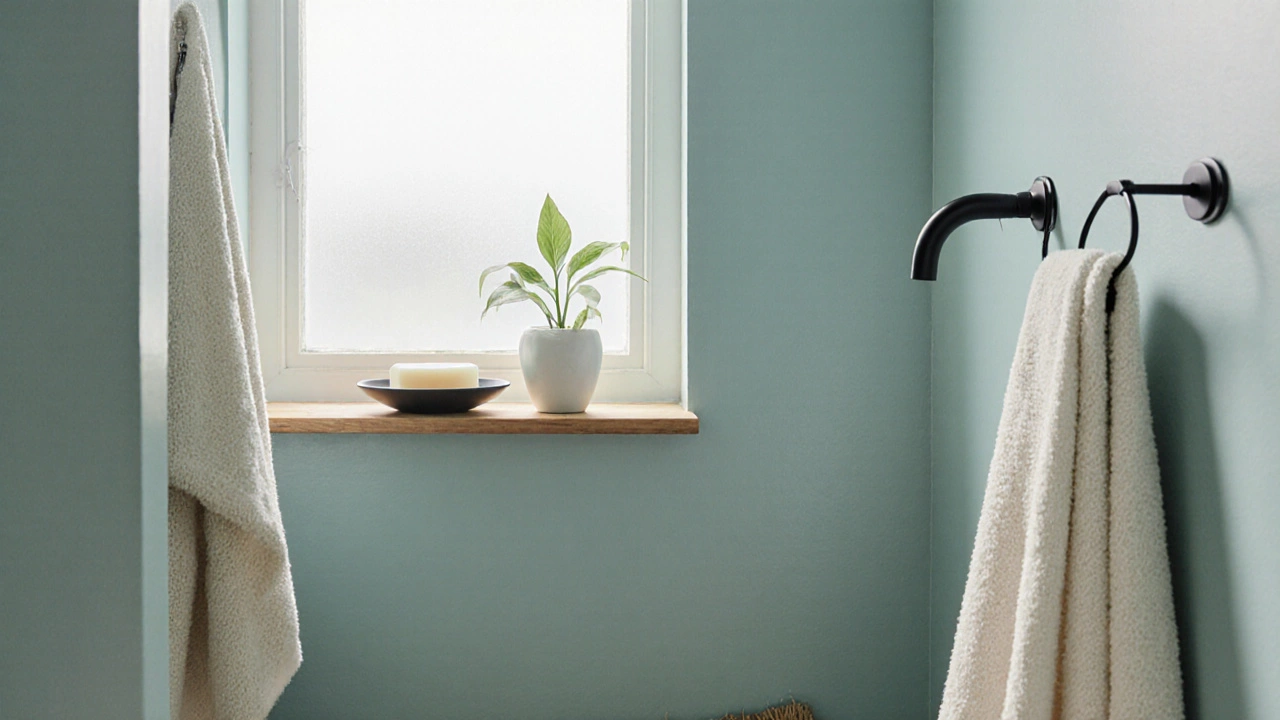
Bathroom Color Psychology: How Hue Affects Mood and Relaxation
When you step into your bathroom, the color around you isn’t just decoration—it’s silently shaping how you feel. bathroom color psychology, the study of how specific hues influence emotions and mental state in personal spaces. Also known as color therapy for interiors, it’s not about trends—it’s about biology. Blue lowers heart rate, green reduces cortisol, and warm neutrals trigger feelings of safety. Your walls don’t just reflect light—they reflect your calm. This isn’t guesswork. Studies from the Journal of Environmental Psychology show that people in blue-toned bathrooms report 27% more relaxation after a shower compared to those in stark white or bold red rooms. It’s not magic. It’s chemistry—your brain reacting to wavelengths of light, stored memories tied to color, and the subconscious need for safety in private spaces.
Related concepts like calming bathroom colors, specific paint shades proven to reduce anxiety and promote rest, aren’t just soft pastels. They’re carefully chosen tones that balance light reflection, saturation, and undertones. For example, a muted sage green with gray undertones works better than a bright lime green—even though both are "green." Similarly, color and mood, the direct link between visual stimuli and emotional response explains why deep navy feels luxurious and grounding, while pale yellow can energize but also trigger restlessness if too bright. These aren’t opinions—they’re patterns observed across thousands of homes and clinical environments. You don’t need a psychologist to pick your bathroom paint, but understanding how color works helps you avoid costly mistakes.
Most people focus on tiles and fixtures, but the color on the walls is the silent anchor of the whole space. A bathroom with poor color choices can make even the most expensive towel feel cold and unwelcoming. On the flip side, the right tone can turn a tiny powder room into a daily reset zone. The posts below cover exactly this: how weighted towels and dimmable lights work better when paired with the right hue, why mirrors look more expansive in soft gray than in stark white, and how luxury upgrades like natural stone or wooden accents gain their power from the colors surrounding them. You’ll find real examples from actual homes—no theory, no fluff. Just what works, why it works, and how to apply it without hiring a designer. Whether you’re redoing your whole bathroom or just repainting the walls, the right color doesn’t just look good—it makes you feel better, every single day.