5x5 Storage Unit Capacity: What Fits and How to Pack It
 Nov, 15 2026
5x5 Storage Capacity Planner
Select the items you plan to store to see if they fit within the ~200 cubic foot capacity of a standard 5x5 unit.
Select Your Items
Recommendations
- Tip: Use vertical space up to the ceiling.
- Tip: Disassemble furniture legs/drawers.
You’re staring at a pile of boxes in your hallway, wondering if that 5x5 storage unit you just booked is actually big enough. It’s a common panic. On paper, 25 square feet sounds like plenty of space for a few seasonal items. In reality, if you don’t pack it right, that same space fills up faster than you can say "climate control." The truth is, a 5x5 unit is the gold standard for minimalists, students, or anyone needing overflow space from their main home. But treating it like a closet will leave you with broken furniture and wasted money.
| Item Category | Estimated Quantity (5x5) | Packing Difficulty |
|---|---|---|
| Small Appliances | 1 Microwave + 1 Toaster Oven | Low |
| Furniture | 1 Queen Mattress (flat) OR 2 Dressers | Medium |
| Boxes | 10-15 Medium Boxes | High (if not stacked) |
| Clothing | 1 Full Wardrobe on Hangers | Low |
The Real Math Behind the Space
Let’s strip away the marketing fluff. A 5x5 storage unit measures 5 feet by 5 feet, giving you 25 square feet of floor space. Most units have an 8-foot ceiling, which means you have roughly 200 cubic feet of total volume. That number is what matters. You aren’t just buying floor tiles; you’re buying vertical air. If you only fill the bottom two feet, you’re wasting half your money. Think of it as a large walk-in closet. Could you fit a full bedroom set in there? No. Could you fit the contents of a dorm room or a studio apartment’s non-furniture items? Absolutely.
Why does this distinction matter? Because most people underestimate the height. They stack boxes three high and call it a day. But with proper shelving and strategic stacking, you can utilize that eighth foot of ceiling. This is where the difference between a cluttered mess and a functional storage solution happens. You need to treat every inch of that vertical column as prime real estate.
What Actually Fits Inside
So, what are we talking about here? If you’re moving out of a one-bedroom apartment, a 5x5 won’t hold your sofa, your TV stand, and your bed frame all at once. It’s too tight. However, it is perfect for specific scenarios. Imagine you’re renovating your kitchen. Your cabinets are out, but you need somewhere safe for your dishes, small appliances, and pantry goods. A 5x5 handles that easily. Or consider you’re a student heading abroad for a semester. You can store your textbooks, desk lamp, mini-fridge, and clothing bins without paying for a larger unit.
Here is a concrete breakdown of typical inventory that fits comfortably:
- Seasonal Gear: Two bicycles, a snowboard, and winter coats.
- Home Office: One office chair, a monitor, and ten boxes of files.
- Dorm Room Essentials: A twin mattress, a desk, a chair, and several plastic bins.
- Hobby Supplies: Camping gear, fishing rods, and art supplies.
If you try to shove a king-size bed frame in there, you’ll spend more time playing Tetris than actually storing things. The key is disassembly. Take apart table legs, remove drawers from dressers, and lay mattresses flat against the wall. This maximizes the footprint and leaves room for the smaller, denser items.
Packing Strategy: Verticality Is King
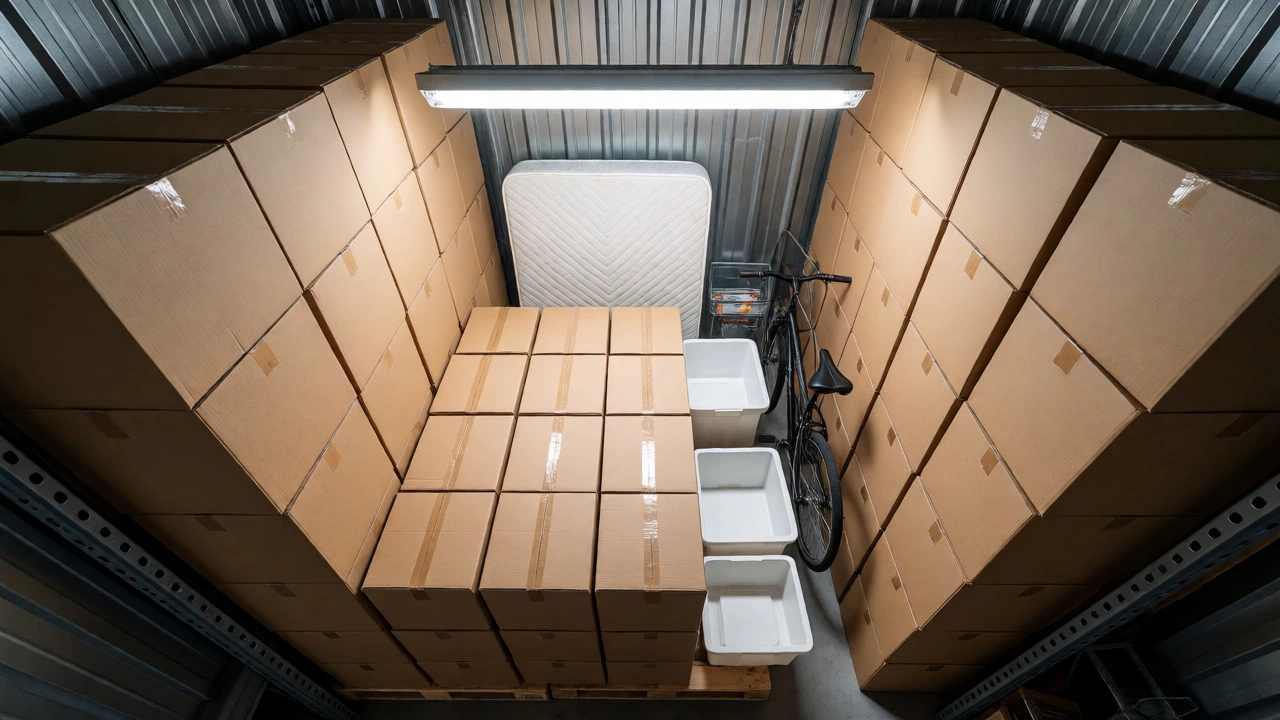
You might think piling everything in the middle is efficient. It’s not. It creates a dead zone around the edges. Start by placing your largest, heaviest items against the back wall. This anchors the unit. Next, build walls along the sides using uniform boxes. This technique, often called "building walls," allows you to stack vertically without crushing fragile items. Use pallets or wooden slats underneath cardboard boxes to prevent moisture damage from the concrete floor, especially in older facilities.
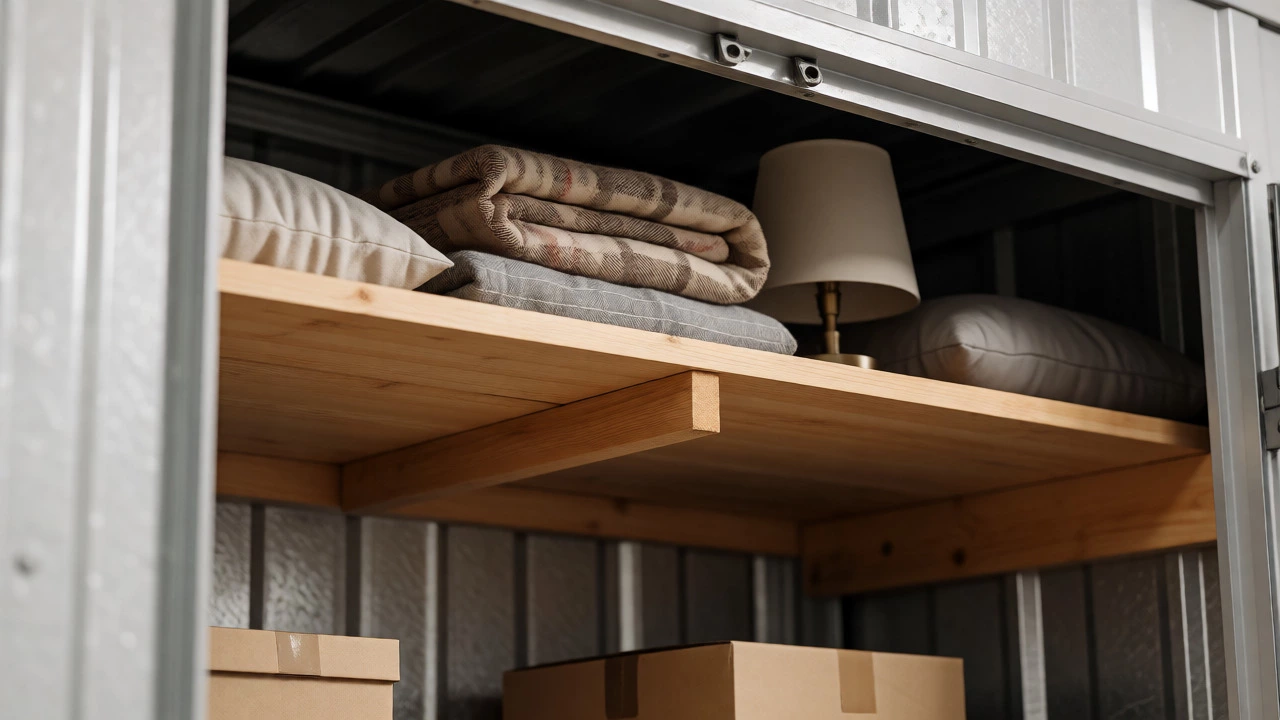
Don’t forget the gap above the door. Many people ignore the space directly above the entrance because they fear it’s hard to reach. But if you use a sturdy shelf or place a lightweight bin there, you gain significant capacity. Just make sure you can physically lift items onto it. If you’re storing heavy books, keep them lower. Light items like pillows or linens go higher.
Common Mistakes That Waste Space
The biggest error? Ignoring the shape of your items. A round exercise ball takes up way more space than a deflated one. Disassemble anything possible. Another mistake is leaving "air pockets" between irregularly shaped objects. Stuff small items inside larger ones. Put shoes inside suitcases. Fill empty drawers with cables and chargers. This nesting strategy reduces the overall volume significantly.
Also, avoid mixing fragile and heavy items haphazardly. If you put a heavy box on top of a glass lamp, you’re asking for trouble. Label boxes clearly on multiple sides. When you’re digging through a 5x5 unit, you don’t want to move fifteen boxes just to find the Christmas ornaments. Use color-coded labels or a simple index card system taped to the outside of each box.
Climate Control and Accessibility
Does a 5x5 unit need climate control? In Auckland, where humidity can spike, yes. Wooden furniture and electronics suffer in fluctuating temperatures. While a 5x5 is small, the cost difference between climate-controlled and non-climate-controlled is often negligible compared to the risk of warping wood or corroding metal. Check with your provider, but generally, for sensitive items, it’s worth the extra few dollars a month.
Accessibility is another factor. Since the unit is small, you’ll likely be able to see everything from the doorway if packed correctly. This is a huge advantage over larger units where you lose track of what’s in the back. Keep a clear path to the center if you need frequent access. If you’re storing things long-term, you can pack it tighter, knowing you won’t need to dig through it monthly.
Alternatives to Consider
If you find yourself constantly rearranging boxes to get to the back, maybe a 5x5 isn’t right. A 5x10 unit doubles the space for a modest price increase. Conversely, if you’re only storing a few boxes, a locker-style unit might save you cash. Assess your needs honestly. Do you need easy access? Go bigger. Are you storing sealed archives? Stick with the 5x5.
Can I fit a queen-sized mattress in a 5x5 storage unit?
Yes, but it depends on how you pack. A queen mattress laid flat against the back wall takes up significant floor space. If you stand it upright, it consumes less floor area but requires careful securing to prevent tipping. It is best paired with minimal other large furniture.
How many moving boxes fit in a 5x5 unit?
You can typically fit 10 to 15 medium-sized moving boxes if stacked efficiently to the ceiling. This assumes no large furniture pieces are included. If adding furniture, reduce the box count accordingly.
Is a 5x5 storage unit good for a one-bedroom apartment?
It is suitable for storing non-essential items from a one-bedroom apartment, such as seasonal clothes, books, and decor. It cannot hold the entire contents of a furnished one-bedroom apartment, including major furniture like sofas and beds.
Do I need a lock for my 5x5 unit?
Most facilities require a disc lock for security. Some provide locks, while others require you to bring your own. Always check with the facility manager before visiting to ensure compliance with their security policies.
Can I store a bicycle in a 5x5 unit?
Yes, a standard adult bicycle fits easily in a 5x5 unit. You can hang it on the wall or lean it against the side to maximize floor space for other items. Removing the front wheel can further optimize space.