Are built-in storage solutions worth it? Real pros and cons for modern homes
 Jan, 12 2026
Built-in Storage Value Calculator
Input your space details to see if built-in storage is worth the investment for your home.
Your Space Details
Your Budget & Timeline
Your Storage Value Score
Calculating your value score...
How many times have you walked into a closet and thought, Why does this feel so useless? You’ve got clothes spilling out, shoes piled in corners, and boxes you swore you’d sort last summer. Then you see a neighbor’s walk-in with sleek sliding doors, hidden drawers, and shelves that actually fit your boots. You wonder: Are built-in storage solutions worth it? The answer isn’t simple. It depends on your space, your budget, and how much you’re willing to live with what you install.
What exactly counts as built-in storage?
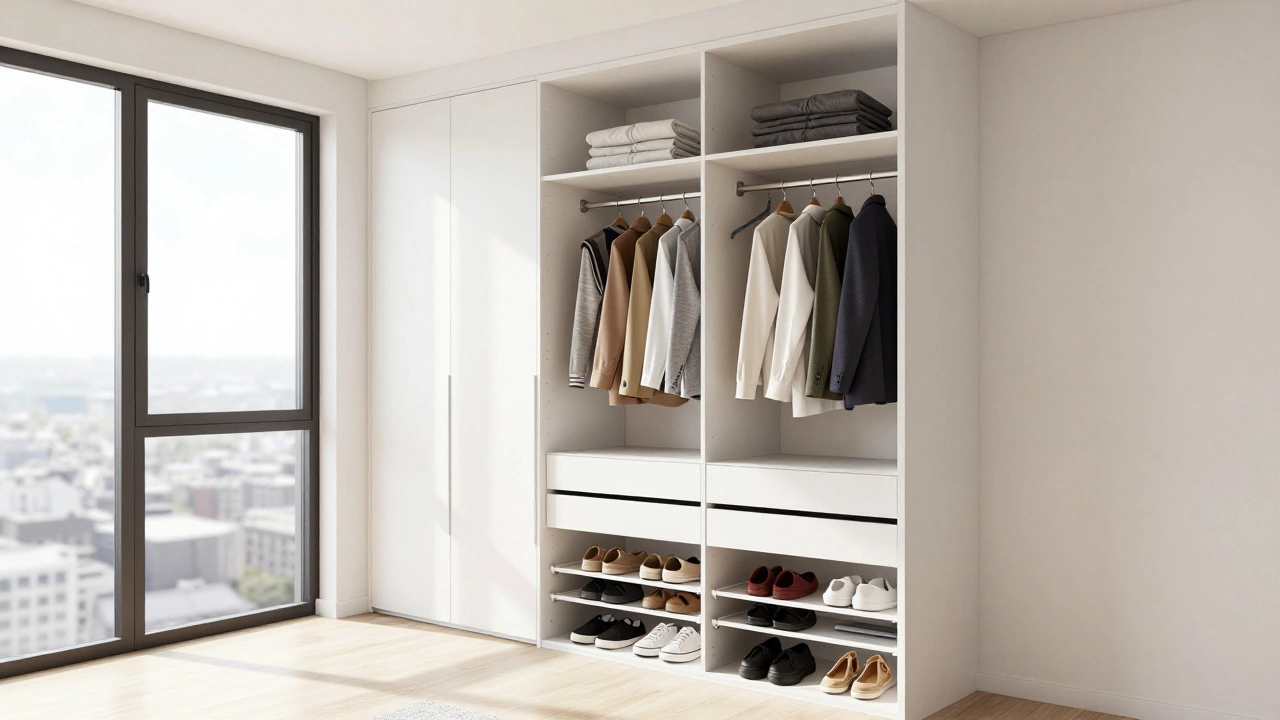
Built-in storage isn’t just a fancy cabinet. It’s anything permanently fixed into your home’s structure - walls, floors, ceilings - that’s designed to hold things. Think: under-stair drawers, wall-to-wall wardrobe systems, kitchen pantries built into the framing, window seat benches with lift-up storage, or even recessed bookshelves that look like part of the drywall. Unlike freestanding units, these don’t move. They’re not bought off a shelf. They’re planned, measured, and installed as part of your home’s bones.
They’re common in New Zealand homes built after 2010, especially in Auckland’s newer subdivisions where space is tight and buyers want maximum utility. But they’ve been around for decades - think of old Kiwi cottages with built-in cupboards behind kitchen doors. The difference today? Technology. Materials. Customization.
Why people love built-in storage
First, the obvious: they save space. A freestanding wardrobe might take up 1.2 square meters of floor space. A built-in wardrobe that fits into a 1.5m wide alcove? It uses zero floor space. That’s huge in a 70m² apartment or a small bungalow.
Second, they look clean. No mismatched drawers, no wobbly legs, no plastic bins you hate but keep because you don’t have better options. Built-ins blend in. They turn clutter into architecture. A study in Wellington showed that homes with custom storage systems were rated 37% more "calm" by interior designers during evaluations - not because they were more expensive, but because everything had a place.
Third, they increase home value. Not dramatically, but noticeably. A 2024 survey of Auckland real estate agents found that homes with well-designed built-in storage sold 11% faster than similar homes without. Buyers don’t always say it out loud, but they notice. A walk-in robe with LED lighting and pull-out shoe racks? That’s a selling point.
The hidden costs you can’t ignore
Here’s where it gets tricky. Built-ins aren’t cheap. A basic custom wardrobe in a 2.4m wide space? You’re looking at $3,500-$6,000. Add lighting, soft-close hinges, and premium finishes? That jumps to $9,000. Compare that to a $800 IKEA PAX system you can install yourself in a weekend. The price gap is real.
And then there’s the commitment. Once it’s installed, you can’t move it. If you decide you hate the color, or your kids grow out of the toy storage, or you want to convert the room into a home office - too late. You’re stuck. Or you pay to rip it out, which costs almost as much as installing it.
One homeowner in Takapuna told me she spent $7,000 on a full-wall pantry. Six months later, she realized she didn’t cook enough to fill it. Now it holds three boxes of holiday decorations and a dusty slow cooker. "I thought I’d use it," she said. "Turns out, I just needed a better fridge."

When built-ins make sense - and when they don’t
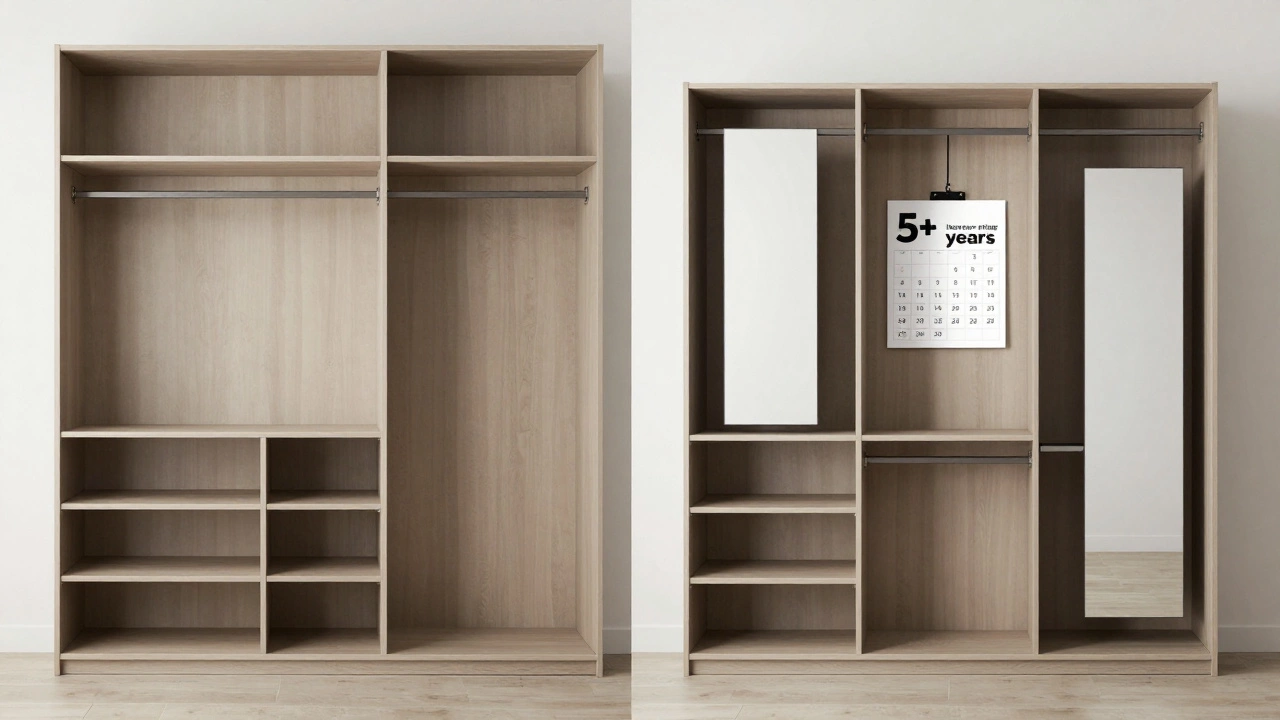
Here’s a simple rule: Only build in if you’re staying put for at least five years. If you’re planning to move in three, or you’re not sure what you’ll need next year, go with modular. Built-ins are for people who know their habits.
They’re worth it if:
- You have awkward spaces - corners, sloped ceilings, under stairs - that nothing else fits
- You’re renovating and already tearing down walls
- You have a consistent, predictable storage need - like 20 pairs of winter boots or 150 books
- You’re willing to pay for quality materials (solid timber, not particleboard)
They’re not worth it if:
- You’re still figuring out your lifestyle - maybe you’ll work from home next year, or your kids will outgrow their toys
- You’re renting - even if your landlord says "go ahead," you won’t get your money back
- You’re tempted by a "free upgrade" from a builder - those are usually the cheapest materials with no real customization
What to ask before you commit
Before you sign off on a built-in system, get answers to these five questions:
- What’s the warranty? Good builders offer 5-10 years on hardware, 2 years on finish.
- Can I change the configuration later? Some systems allow you to swap out shelves or add drawers without redoing the whole frame.
- What’s the material? Avoid MDF or low-grade particleboard. Look for FSC-certified timber or moisture-resistant plywood.
- Who installs it? A certified carpenter, or a team from a big-box store? Installation quality matters more than the product itself.
- What happens if I move? Can it be dismantled? Will the walls be damaged? Ask for a removal plan.
I once saw a $12,000 built-in closet that couldn’t be taken apart without destroying the wall. The owner had to leave it behind. That’s not luxury - that’s a trap.
Alternatives that feel just as good
You don’t need to go custom to get a clean, organized look. High-quality modular systems have gotten better. The PAX system from IKEA now comes with internal dividers, mirrored doors, and lighting kits. The Elfa system from The Container Store has metal frames and adjustable shelves that feel custom. Even local Kiwi brands like Storage Solutions NZ offer semi-custom units that fit into alcoves and cost half the price of full built-ins.
And here’s a secret: paint. A white wall with matching white bins and a simple rod looks like a built-in closet. Add a door, and no one can tell the difference. Sometimes, the best storage solution is a good illusion.
Final thought: It’s about habits, not hardware
The real question isn’t whether built-ins are worth it. It’s whether you are worth it. Do you have the discipline to keep things in their place? Do you know what you own? Do you use what you store?
I’ve seen homes with $20,000 of built-ins that were still messy. And I’ve seen tiny apartments with $300 of storage bins that looked like a magazine spread - because the owner took five minutes every Sunday to put things back.
Built-in storage doesn’t fix bad habits. It just hides them better. But if you’ve got the routine, the space, and the patience to wait for the install - then yes, they’re worth it. Just make sure you’re buying the system for your life, not for the Instagram photo.
Are built-in storage solutions worth the cost?
They’re worth it if you’re staying in your home for five or more years, have a clear storage need, and are willing to invest in quality materials. For short-term stays or uncertain needs, modular systems offer similar results at half the price and with full flexibility.
Can built-in storage be removed later?
Most built-ins can be removed, but it’s messy and expensive. The frame is usually nailed or screwed into wall studs, and removing it often damages drywall or flooring. Always ask your installer for a removal plan before signing off. Some systems are designed for disassembly - those are the ones to choose.
Do built-ins increase home value?
Yes, but not as much as you might think. Well-designed built-in storage can help a home sell 10-15% faster in competitive markets like Auckland, especially if it solves a common problem like lack of closet space. But it rarely adds direct dollar value - it just makes the home feel more complete.
What materials should I avoid in built-in storage?
Avoid low-grade particleboard and MDF, especially in humid areas like bathrooms or laundries. These swell and warp over time. Instead, look for moisture-resistant plywood, solid timber, or high-density HDF with a real wood veneer. Ask for the material spec sheet - don’t just trust the salesperson’s word.
Is it better to build in during renovation or after?
Always plan built-ins during renovation. Trying to install them after walls are finished means cutting into drywall, rerouting wiring, and risking structural damage. The best time is when you’re opening up walls for plumbing or electrical work - that’s when you get the best access and lowest cost.