Best Wood for Shelves That Won't Sag: A Guide to Stiffness and Support
 Jul, 19 2026
Shelf Sag Calculator
1. Select Wood Species
Select the type of wood you plan to use. Different woods have different stiffness ratings (MOE).
2. Shelf Dimensions & Load
Sag Analysis
There is nothing more frustrating than installing beautiful wooden shelves only to watch them droop like a tired cat after a few months. You load them with books, tools, or heavy kitchenware, and suddenly the center dips. It looks bad, but worse, it can become a safety hazard if items start sliding off. The question isn't just about strength; it's about stiffness. Most people assume that any hardwood will do, but in reality, the specific species of wood matters immensely when fighting gravity.
If you want shelves that stay flat under load, you need to understand shelf sag. This phenomenon occurs when the modulus of elasticity (stiffness) of the wood is insufficient for the span and weight involved. Not all woods are created equal in this regard. Some woods are naturally rigid, while others are flexible by design. Choosing the right material is the first step, but it is only half the battle. How you support those shelves determines their longevity just as much as the wood itself.
Understanding Stiffness: Why Some Woods Sag More
To pick the right wood, you have to look at its Modulus of Elasticity (MOE). Think of MOE as the wood's resistance to bending. A higher MOE means the wood is stiffer and less likely to bend under weight. When you compare common lumber options, the differences are stark. Softwoods generally have lower MOE values, making them prone to flexing over longer spans. Hardwoods typically offer better rigidity, but even among hardwoods, there is a hierarchy.
For example, pine has an MOE of roughly 1.2 million psi. It is easy to work with and affordable, but it will bow noticeably if you span more than 24 inches without support. On the other end of the spectrum, hard maple boasts an MOE of around 1.8 million psi. It is significantly stiffer, allowing for longer unsupported spans before sagging becomes visible. Understanding these numbers helps you make informed decisions rather than guessing based on how hard the wood feels when you knock on it.
| Wood Species | Modulus of Elasticity (MOE) | Best For | Sag Resistance |
|---|---|---|---|
| Hard Maple | ~1.8 Million PSI | Kitchen cabinets, heavy tool storage | Excellent |
| Red Oak | ~1.6 Million PSI | General shelving, bookcases | Very Good |
| Poplar | ~1.3 Million PSI | Painted shelves, light decor | Moderate |
| Pine | ~1.2 Million PSI | Light duty, short spans | Poor |
| Birch | ~1.5 Million PSI | Furniture, medium loads | Good |
Top Wood Choices for Non-Sagging Shelves
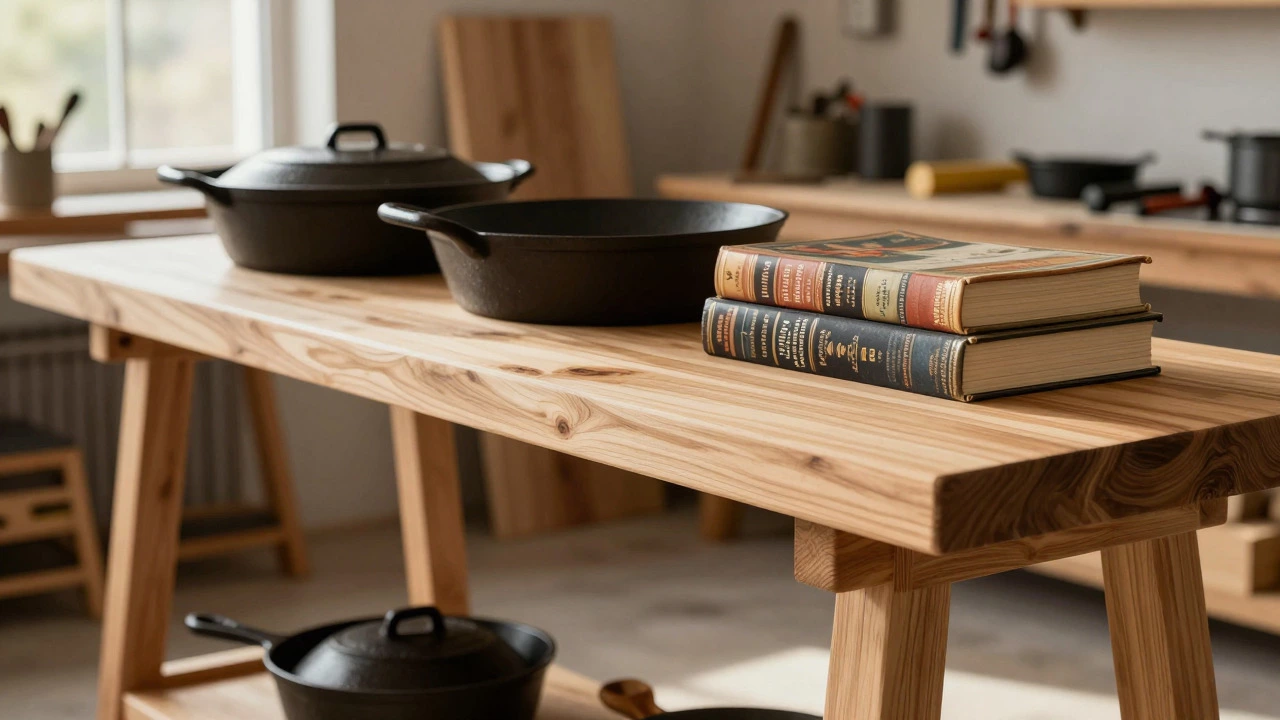
If you are building shelves from scratch, your best bets are dense hardwoods with high MOE ratings. Hard Maple is the gold standard for stiff, durable shelving. It is incredibly tough and resists wear and tear, making it ideal for workshops or kitchens where heavy pots and pans are stored. Because of its tight grain structure, it doesn't flex easily. However, it can be harder to cut and drill, so having sharp tools is essential.
Red Oak is a popular choice for general-purpose shelving due to its balance of cost and performance. It offers excellent stiffness, slightly less than maple but far superior to softwoods. Oak is widely available and relatively affordable, which makes it a practical option for large projects like floor-to-ceiling bookcases. Its open grain pattern also allows stains to penetrate evenly, giving you a rich finish that hides minor imperfections.
Another strong contender is Birch, specifically Yellow Birch. It has a smooth texture and good stiffness, sitting between oak and poplar in terms of performance. Birch takes paint beautifully, so if you prefer a painted look over natural wood grain, it is a solid structural choice. Just ensure you are buying yellow birch rather than paper birch, as the latter lacks the necessary density for heavy loads.
The Role of Shelf Thickness and Span
Even the stiffest wood will sag if it is too thin or spans too wide a gap. The thickness of the shelf board plays a critical role in its load-bearing capacity. Doubling the thickness of a board increases its stiffness by eight times. This is why you rarely see ¾-inch shelves spanning more than 30 inches without support. If you need wider shelves, consider using 1-inch or even 1¼-inch thick stock. The extra material adds significant rigidity without necessarily requiring heavier-duty brackets.
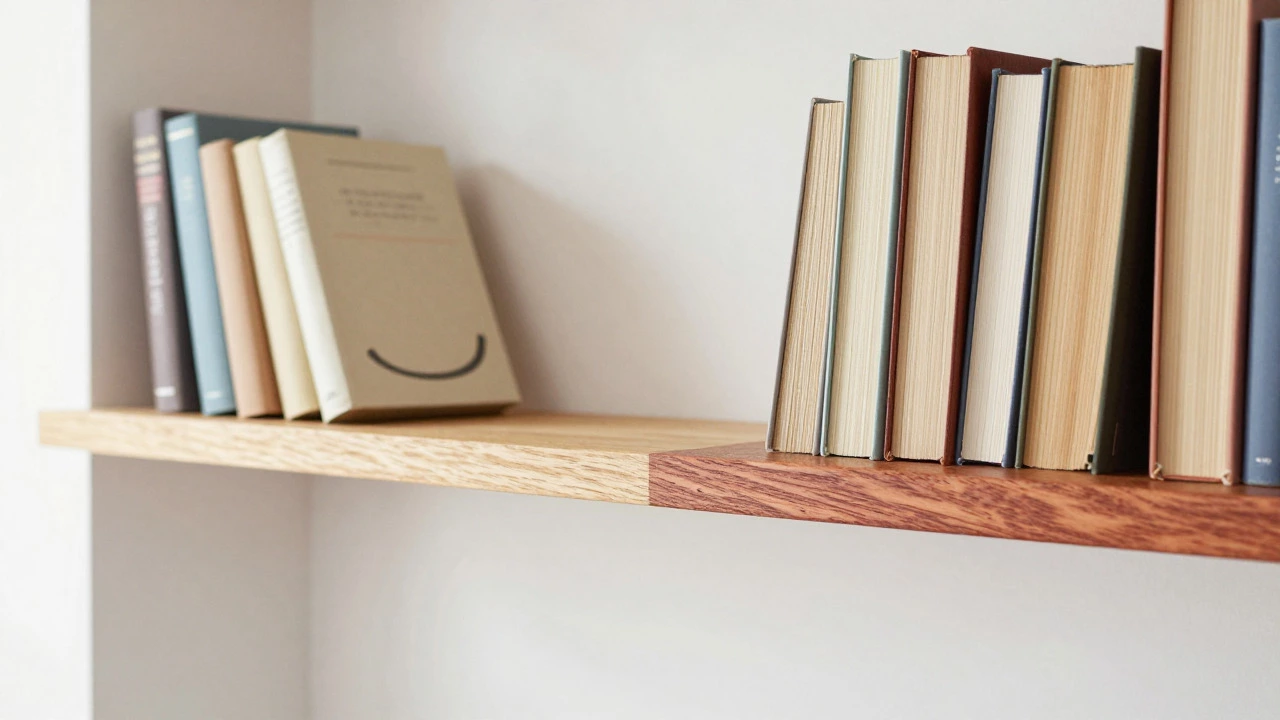
Span is the distance between supports. As a rule of thumb, for ¾-inch thick hardwood shelves, keep the unsupported span under 24 inches for heavy loads like encyclopedias or cast-iron skillets. For lighter items like magazines or decorative objects, you can push this to 30 inches. If you must go wider, add a center support bracket or use thicker wood. Ignoring these guidelines leads to the classic "smile" shape that ruins the aesthetic and function of your shelving unit.
Support Systems: Brackets and Backing
Choosing the right wood is only part of the equation. How you support the shelf determines whether it stays flat. Standard L-brackets are okay for light duty, but they often fail to provide adequate support against sagging because they only anchor at the ends. For heavy loads, use adjustable shelf pins spaced closer together or install continuous support tracks along the sides of the cabinet.
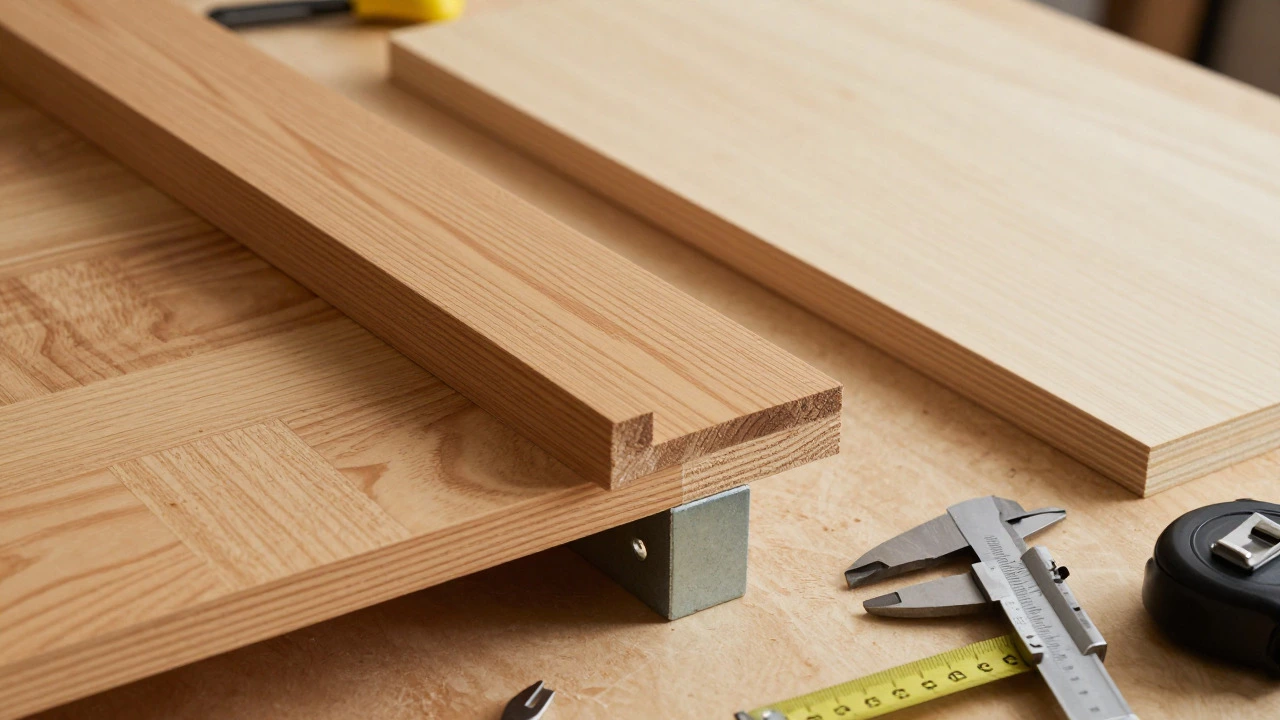
A clever trick used by professional carpenters is adding a lip or cleat to the front edge of the shelf. This simple addition acts as a beam, increasing the overall stiffness of the board. Alternatively, attaching a thin strip of plywood or MDF to the back of the shelf creates a T-beam effect, dramatically reducing deflection. These methods allow you to use thinner boards while maintaining structural integrity, saving on material costs without sacrificing performance.
Environmental Factors and Moisture
Wood is hygroscopic, meaning it absorbs and releases moisture from the air. In humid environments, wood swells and can warp, exacerbating sagging issues. In dry conditions, it shrinks, potentially loosening joints and supports. To minimize movement, ensure your wood is properly kiln-dried before installation. Acclimating the lumber to the room's humidity for a week or two before building helps stabilize it.
In areas like bathrooms or laundry rooms, consider using marine-grade plywood or sealed hardwoods. Water damage weakens the fibers, reducing the MOE and leading to premature failure. Sealing all surfaces, including the ends, with a quality polyurethane or varnish creates a barrier against moisture, preserving the wood's structural properties over time.
Common Mistakes to Avoid
- Using softwoods for heavy loads: Pine and fir may look nice, but they lack the stiffness for books or tools. Stick to hardwoods for anything substantial.
- Ignoring grain direction: Always orient the grain parallel to the length of the shelf. Cross-grain boards snap easily and offer minimal support.
- Overloading single points: Concentrated weight in the center causes maximum deflection. Distribute weight evenly across the shelf surface.
- Neglecting fasteners: Weak screws or nails pull out over time, causing the shelf to tilt and sag. Use long, coarse-threaded screws into wall studs or sturdy cabinet sides.
Alternatives to Solid Wood
If budget or availability is a concern, engineered woods like plywood and MDF offer viable alternatives. High-quality Baltic birch plywood has exceptional stiffness and stability due to its cross-laminated layers. It resists warping better than solid wood and provides consistent strength across the sheet. Medium-density fiberboard (MDF) is also very stiff and uniform, though it is heavier and susceptible to water damage if not sealed properly.
Laminated particleboard is another option, commonly found in ready-to-assemble furniture. While cheaper, it has lower shear strength and can swell if exposed to moisture. For DIY projects, Baltic birch plywood is often the smartest compromise between cost, ease of use, and performance.
What is the best wood for heavy-duty shelves?
Hard maple is widely considered the best wood for heavy-duty shelves due to its high Modulus of Elasticity (MOE), which provides superior stiffness and resistance to sagging. Red oak is a close second, offering excellent durability and widespread availability.
How thick should shelves be to prevent sagging?
For spans up to 24 inches, ¾-inch thick hardwood is sufficient. For wider spans or heavier loads, increase the thickness to 1 inch or 1¼ inches. Doubling the thickness increases stiffness eightfold, significantly reducing deflection.
Can I use pine for bookshelves?
Pine is not recommended for heavy bookshelves because it has a low MOE and sags easily under weight. If you must use pine, limit spans to under 20 inches and add frequent support brackets. For better results, choose a hardwood like oak or maple.
Does plywood sag less than solid wood?
High-quality Baltic birch plywood often sags less than many solid woods because its cross-laminated structure provides uniform strength and resists warping. It is an excellent choice for large, stable shelves, especially in varying humidity conditions.
How can I reinforce existing sagging shelves?
You can reinforce sagging shelves by adding center support brackets, installing a continuous support track along the cabinet sides, or gluing a stiffener strip to the underside. Removing some weight and redistributing it evenly can also help alleviate immediate stress.