Can Curtains Hang Above Baseboards? The Right Height for Style and Function
 Dec, 1 2025
Curtain Height Calculator
Result will appear here...
Ever stare at your windows and wonder why your curtains look off-even though they’re the right length? The problem might not be the fabric or the color. It could be where they’re hanging. Many people assume curtains should start right at the top of the window frame, but that’s not always the best choice. In fact, hanging curtains above baseboards isn’t just okay-it’s often the smartest move for both looks and function.
Why Hanging Curtains Above Baseboards Works
Baseboards are the horizontal trim pieces that run along the bottom of your walls, right where the wall meets the floor. They’re usually about 3 to 6 inches tall. When you hang curtains so they end right at the baseboard, you’re cutting off visual space. That makes ceilings feel lower and rooms feel smaller. But when you hang curtains so they start high and end just above the baseboard-or even slightly below-you create a clean, uninterrupted line from ceiling to floor.
This trick works because of how our eyes perceive height. When curtains stretch from near the ceiling down to just above the baseboard, they draw the eye upward and downward in one smooth motion. That optical illusion makes the room feel taller. It’s why professional designers always recommend hanging rods 4 to 6 inches above the window frame. When you add the extra space between the curtain’s bottom and the baseboard, you get a polished, intentional look.
What Happens If Curtains Touch the Baseboard?
Some people think curtains should kiss the floor-or in this case, the baseboard-for a neat finish. But baseboards aren’t flat, even if they look that way. They often have small gaps, uneven flooring, or baseboard heaters underneath. If your curtains drag along the baseboard, they’ll collect dust, get scuffed, or even trap moisture in humid climates like Auckland’s. That’s not just messy-it’s a maintenance headache.
Plus, baseboards aren’t designed to be the visual endpoint of a window treatment. They’re structural trim. Curtains are decorative. Mixing them up makes the room feel cluttered. A clean gap of 1 to 2 inches between the curtain hem and the baseboard gives breathing room. It signals intentionality, not accident.
How High Should You Hang the Rod?
Start by measuring from the ceiling down. Most rooms have ceiling heights between 8 and 9 feet. For standard windows, hang the curtain rod 4 to 6 inches above the top of the window frame. If your window is small or you want to make it look larger, go even higher-up to 8 inches above the frame. In rooms with tall ceilings, you can hang the rod halfway between the top of the window and the ceiling.
Now, check the length. Standard curtain panels are 84, 96, or 108 inches long. If you’re hanging the rod high, you’ll need longer panels. For example, if your rod is 84 inches from the floor, use 96-inch panels. That gives you about 12 inches of pool at the bottom, which looks luxurious. If you want no pooling, go with 84-inch panels and hang the rod 72 inches from the floor.
Here’s a quick rule: Always measure from the floor to the rod. Then pick the curtain length that leaves 1 to 2 inches of space above the baseboard. That’s the sweet spot.
What About Baseboard Heaters?
In older homes-especially in colder regions-you might have baseboard heaters. These run along the wall under windows and need airflow to work properly. If your curtains hang too low and cover the heater, you’re blocking heat and wasting energy. Worse, the fabric can get hot and fade or even catch fire over time.
If you have baseboard heaters, never let curtains touch them. Hang the rod higher and choose a shorter panel length so the bottom ends at least 3 inches above the heater. Use lightweight, breathable fabrics like cotton or linen. Avoid heavy velvet or blackout liners that trap heat. And always check local building codes-some areas require a minimum clearance for safety.
Style Matters: Curtains That Don’t Look Like an Afterthought
It’s not just about height-it’s about how the curtains relate to the rest of the room. If your baseboards are painted white and your walls are a soft gray, hanging curtains that stop just above them creates a subtle, modern contrast. If your baseboards are dark wood and your curtains are a bold pattern, leaving a gap gives the pattern room to breathe.
Also, consider the window’s shape. Tall, narrow windows benefit from floor-to-ceiling curtains that start high. Short windows? Hanging curtains high and letting them fall just above the baseboard makes them look taller. Wide windows? Use two panels instead of one to avoid bulk.
And don’t forget the hardware. A thin, sleek rod in matte black or brushed brass makes the curtain line feel intentional. Avoid bulky, ornate rods-they compete with the baseboard and make the whole setup look busy.
Real-World Examples from Auckland Homes
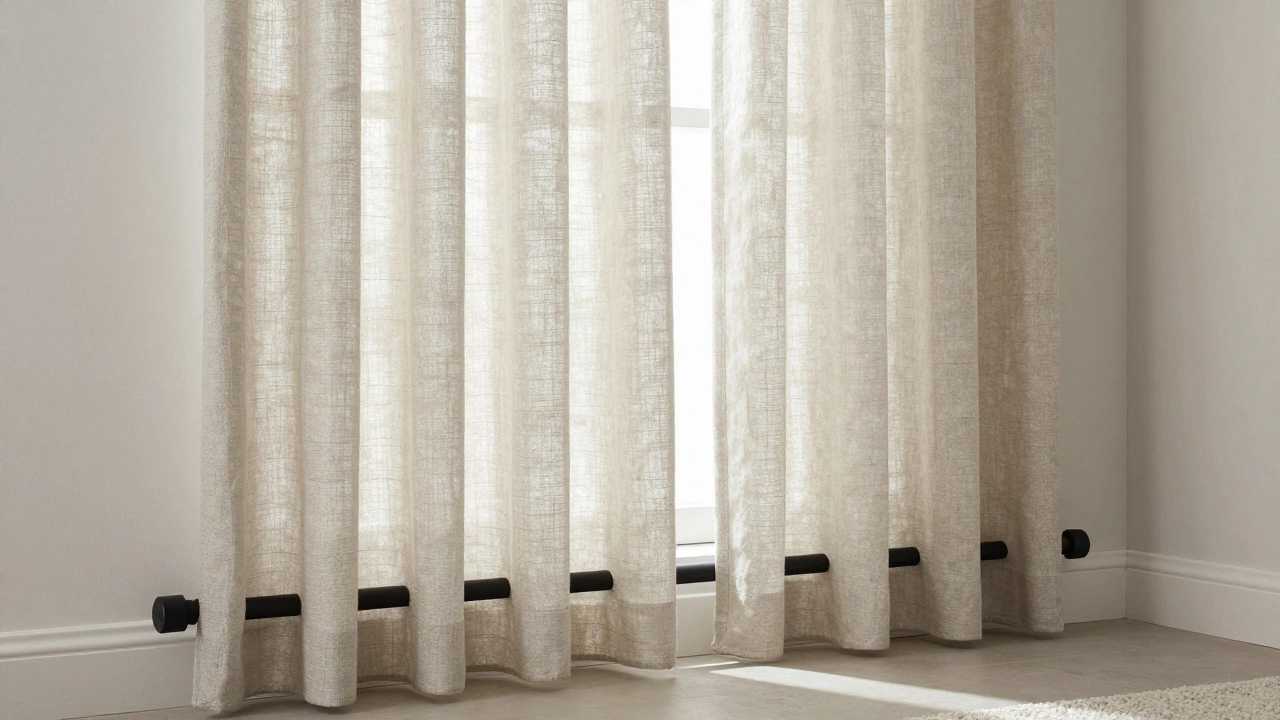
In a 1920s bungalow in Ponsonby, the owner had 8-foot ceilings and small windows. She hung her linen curtains 8 inches above the window frame and let them fall to 1.5 inches above the baseboard. The result? The room felt 10% larger, and the natural light looked brighter. No one could tell why-it just felt right.
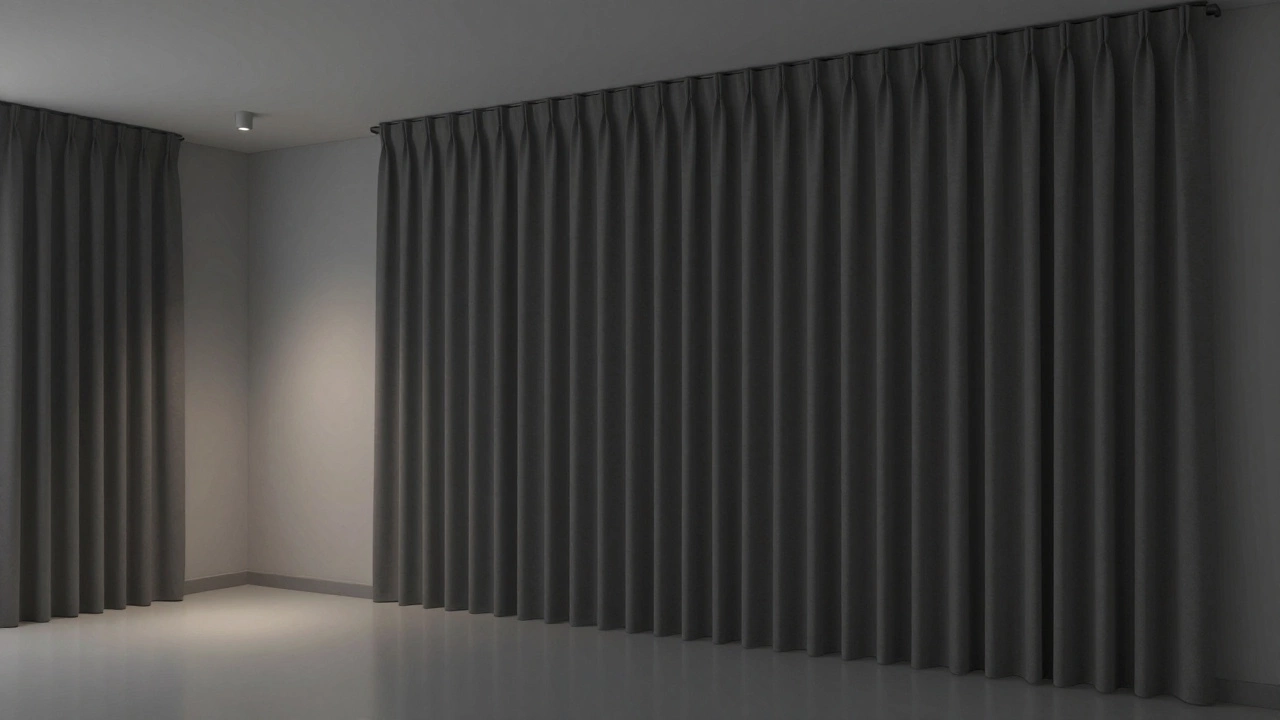
In a modern apartment in Wynyard Quarter, the designer used floor-to-ceiling blackout curtains in a charcoal gray. They started at the ceiling and ended 2 inches above the baseboard, which was painted the same shade as the wall. The effect was seamless-like the walls were extending down into the floor. It looked expensive, even though the curtains were from a budget store.
Both cases had one thing in common: they didn’t let the curtains touch the baseboard. That small gap made all the difference.

Common Mistakes to Avoid
- Using the wrong length: Don’t assume 84-inch curtains will work in every room. Measure your floor-to-rod distance first.
- Hanging too low: If the rod is at or below the window frame, your curtains will look like they’re shrinking the room.
- Ignoring the floor: If you have carpet, the curtain should still end above the baseboard-not sink into the pile. The baseboard is your guide, not the floor.
- Forgetting the heater: Safety first. Never cover a baseboard heater.
- Using cheap hardware: A flimsy rod will sag, and your curtains will look crooked. Invest in a sturdy, level rod.
Quick Checklist: Curtain Height Guide
- Measure from the floor to the bottom of your baseboard.
- Decide where to hang the rod-ideally 4 to 8 inches above the window frame.
- Calculate the distance from the floor to the rod.
- Pick a curtain length that ends 1 to 2 inches above the baseboard.
- If you have a baseboard heater, leave at least 3 inches of clearance.
- Use a level and sturdy rod to avoid sagging.
- Test the look with a tape measure before drilling holes.
It’s a small change, but it’s the kind of detail that turns a good-looking room into a great one. You don’t need to spend more. You just need to hang smarter.
Can curtains hang directly on top of baseboards?
Technically, yes-but it’s not recommended. Curtains should never rest on or cover baseboards. Doing so traps dust, blocks airflow if there’s a heater underneath, and makes the room feel visually cramped. The ideal gap is 1 to 2 inches above the baseboard for both style and function.
Should curtains touch the floor or stop above the baseboard?
Curtains should never touch the floor if there’s a baseboard in between. The baseboard is part of the wall structure, not the floor. Curtains should end 1 to 2 inches above the baseboard, regardless of whether you have carpet, tile, or hardwood. This keeps the look clean and avoids dragging or moisture buildup.
What if my baseboard is uneven or damaged?
Uneven baseboards are common in older homes. Don’t try to fix them with curtains. Instead, hang the rod higher and choose a curtain length that ends just above the lowest point of the baseboard. This hides imperfections without masking them. If the damage is severe, consider replacing the baseboard-it’s a simple DIY job that improves the whole room.
Do I need longer curtains if I hang the rod higher?
Yes. If you raise the rod 6 inches above the window, you’ll need longer panels to reach the right height. Standard 84-inch curtains work for rods hung 72 to 78 inches from the floor. For higher rods, go with 96-inch or even 108-inch panels. Always measure from the floor to the rod before buying.
Can I use the same curtain length for all windows in a room?
Only if all windows are the same height and the rods are hung at the same level. If your windows vary-like in a kitchen with a small window above the sink and a larger one beside it-adjust the rod height and curtain length for each. Consistency in height creates harmony. Mismatched lengths look sloppy, even if the fabric is the same.
Final Thought: It’s the Gap That Counts
Most people focus on color, pattern, or fabric when choosing curtains. But the real secret is the gap. That tiny space between the curtain hem and the baseboard? That’s what makes the difference between a room that looks hurried and one that feels thoughtfully designed. You don’t need expensive materials. You don’t need a designer. You just need to hang them higher than you think-and leave that gap.