How Long Does a Cheap Couch Last? Real Lifespan Expectations
 Nov, 5 2026
Sofa Cost-Per-Year Calculator
Compare the real financial impact of different sofas. Use the estimated lifespans from the article or your own experience to see which option offers better value over time.
Option A Cost Per Year
Based on input data
Option B Cost Per Year
Based on input data
Verdict
Enter values above to compare options.
Why This Matters
As noted in the article, a $400 sofa lasting 2 years costs $200/year. A $1,200 sofa lasting 8 years costs $150/year. The expensive sofa is technically cheaper annually, but only if you keep it long enough.
Buy Cheap If: You are renting, moving soon, or have pets/kids that cause high wear.
Invest More If: You own your home, plan to stay 5+ years, or prioritize comfort/resale value.
You just dropped $400 on a sofa from a big-box store. It looks fine in the showroom, but you’re wondering: will this thing survive your kids, your dog, and your Friday night movie marathons for more than two years? The short answer is usually no. A cheap couch typically lasts between 2 to 5 years before showing significant structural or comfort failure. But that number isn't random. It depends entirely on what’s hiding under the fabric.
Most people buy budget furniture because they need it now-maybe for a first apartment, a rental property, or a guest room that rarely gets used. That’s valid. But knowing exactly where these sofas break helps you decide if buying cheap is actually saving money, or just delaying the inevitable replacement bill. Let’s look at why some $300 sofas fall apart in six months while others hang in there for five years.
The Anatomy of Failure: What Actually Breaks?
When a sofa dies, it’s rarely one single thing. It’s a cascade. But three specific components are responsible for 90% of early failures in budget seating. Understanding these helps you spot a dud before you swipe your credit card.
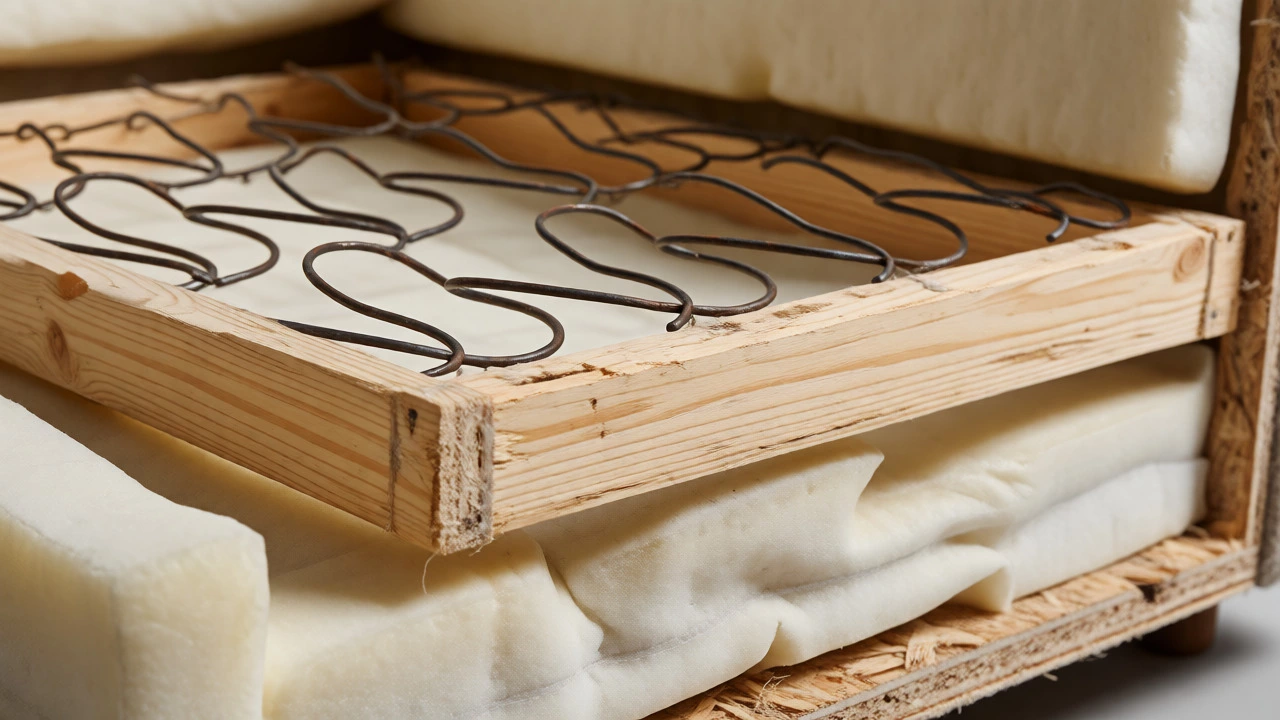
Sinuous springs are the metal wires stretched across the seat base. In high-end furniture, these are thick gauge steel tied tightly together. In a budget sofa, they are often thinner, loosely spaced, or made of lower-quality metal. Over time, constant weight causes them to stretch out or snap. Once one breaks, the tension shifts, causing neighbors to fail rapidly. You’ll feel this as a sudden "bottoming out" sensation where you hit the wooden frame when you sit down.
Then there’s the frame construction. High-quality frames use kiln-dried hardwood joined with mortise-and-tenon joints or corner blocks glued and screwed. Cheap couches rely on softwoods like pine, plywood, or particleboard held together by staples and glue. Softwood bends; plywood delaminates when exposed to humidity (a real issue in Auckland). If the frame wobbles, everything else fails faster.
Finally, consider the foam density. This is the biggest hidden cost-cutter. Premium sofas use high-resiliency (HR) foam with a density of 1.8 pounds per cubic foot or higher. Budget sofas often use low-density polyurethane foam, sometimes as low as 1.0 lb/ft³. Low-density foam collapses quickly. It doesn’t bounce back. Within a year, your seat cushions become flat pancakes, losing all support and shape.
Lifespan Benchmarks: What to Expect by Price Point
Not all "cheap" sofas are created equal. There’s a difference between a $200 clearance rack find and a $600 entry-level model from a mid-range retailer. Here’s how the timeline generally plays out based on market data and consumer reports.
| Category | Price Range (NZD) | Typical Lifespan | Common Failure Mode |
|---|---|---|---|
| Ultra-Budget (Big Box/Clearance) | $150 - $400 | 1 - 2 Years | Foam collapse, staple joint failure |
| Entry-Level (IKEA/Wayfair style) | $400 - $800 | 3 - 5 Years | Spring sagging, fabric pilling |
| Mid-Market (Local Retailers) | $800 - $1,500 | 5 - 7 Years | Minor frame stress, cushion wear |
| High-Quality Investment | $1,500+ | 10 - 15+ Years | Fabric fading, minor spring fatigue |
Notice the jump between Entry-Level and Mid-Market? That’s where the manufacturing standards shift. Below $800, you are essentially renting the sofa for a few years. Above $1,500, you are buying an asset that might last through several moves.

Usage Patterns That Kill Budget Sofas Faster
Your lifestyle dictates the clock. A cheap couch in a formal living room where guests only sit for ten minutes during holidays will last far longer than the same couch in a family den. Here are the specific habits that accelerate wear.
- The Dog Factor: Pets are brutal on upholstery. Claws snag loose-weave fabrics common in budget lines. More importantly, pet weight concentrates on small areas. If you have a large breed dog jumping on and off, expect the sinuous springs to fail 50% faster.
- The "Crunch" Position: Do you sit cross-legged or slide forward onto the edge of the seat? Sitting on the front edge puts immense leverage on the front rail of the frame. Budget frames aren’t reinforced for this torque. The wood splinters, and the legs loosen.
- Humidity and Climate: If you live in a coastal area like Auckland, humidity swells particleboard and softwood frames. Over time, this causes the glue joints to separate. A sofa that lasts 5 years in dry inland Otago might only last 3 in damp Wellington.
How to Spot a Durable Budget Sofa Before Buying
You don’t need a degree in engineering to check quality. When you’re in the store, perform these three quick tests. They reveal more than any spec sheet.
Test 1: The Shake Test. Grab the armrests and shake the sofa vigorously. If it feels solid and heavy, good. If it rattles, creaks, or feels light, the frame is likely weak or poorly assembled. A good frame should feel like a piece of solid furniture, not a hollow box.
Test 2: The Sit-and-Stand. Sit firmly in the middle of the seat. Stand up immediately. Look at the cushion. Does it return to its original shape within 10 seconds? If it stays depressed or looks wrinkled, the foam density is too low. It will flatten permanently within months.
Test 3: Check the Legs. Are the legs screwed into the frame, or are they glued/stapled? Screws indicate better repairability and strength. Also, check underneath. Can you see the suspension system? If you can’t see anything, ask. If they say "webbing," be cautious. Webbing stretches over time. Sinuous springs are better, even if thin.
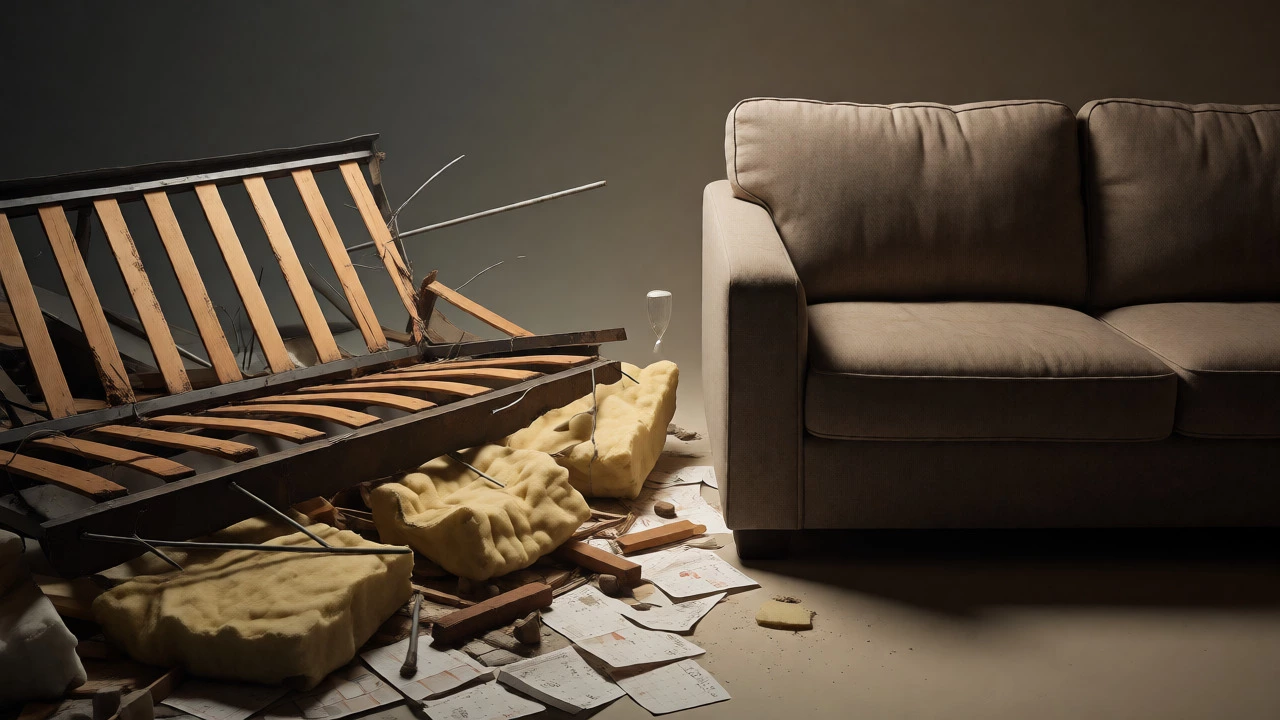
Extending the Life of Your Cheap Couch
If you already own a budget sofa, you can squeeze extra years out of it with minimal effort. These tactics work because they address the specific weaknesses of low-cost construction.
Rotate your cushions weekly. Most budget sofas come with non-reversible cushions. By flipping and rotating them, you distribute the wear evenly. This prevents the "body imprint" that makes a sofa look old prematurely.
Add a plywood board. If your sofa starts to sag, flip it over (if possible) and place a thin sheet of plywood between the springs and the frame. This adds rigidity and stops you from bottoming out. It’s a classic dorm-room hack that works surprisingly well for home furniture too.
Use slipcovers. Cheap fabrics pill and stain easily. A fitted slipcover protects the upholstery from UV damage and physical abrasion. Plus, if the fabric tears, you can replace the cover instead of the whole sofa.
Is Buying Cheap Actually Cheaper?
This is the math problem most people ignore. Let’s look at the "Cost Per Year" metric.
A $400 sofa lasting 2 years costs you $200 per year. A $1,200 sofa lasting 8 years costs you $150 per year. Technically, the expensive sofa is cheaper annually. However, this assumes you keep the expensive sofa for 8 years. If you move every 2 years, or if you hate the style after a year, the upfront cost matters more.
Buy cheap if:
- You are in a temporary housing situation (rental, student).
- You change your decor style frequently.
- You have pets/kids who will destroy it regardless of price.
Invest more if:
- You own your home and plan to stay put for 5+ years.
- You want resale value (high-end brands hold value better).
- You prioritize comfort and health (back support).
Ultimately, a cheap couch is a disposable product. Treat it as such. Don’t expect heirloom quality. Enjoy it for what it is-a functional piece of furniture that solves a problem today, without breaking the bank.
Do expensive sofas always last longer?
Generally yes, but brand name alone isn't a guarantee. An expensive sofa with poor design choices (like ultra-soft feather-filled seats without support) can degrade faster than a well-built mid-range sofa. Always check the frame material and foam density rather than just the price tag.
Can I repair a broken cheap couch?
It depends on the damage. Reupholstering a cheap sofa often costs more than the sofa itself ($300-$600) because the underlying frame may also need reinforcement. However, replacing individual cushions or tightening leg screws is easy and cheap. If the main frame is cracked, it’s usually time to replace.
What is the best fabric for a durable budget sofa?
Microfiber and tight-weave polyester blends are excellent for budget sofas. They resist stains, repel pet hair, and withstand friction better than velvet or linen. Avoid loose weaves or delicate natural fibers if you have high traffic or pets.
Does sofa bed mechanism affect lifespan?
Yes. Sofa beds have moving parts (hinges, latches, folding frames) that add points of failure. A budget sofa bed will likely experience mechanical issues sooner than a static sofa of the same price. If you use the bed function daily, expect a shorter lifespan.
How do I know if my sofa has high-density foam?
Ask the retailer for the foam density rating in pounds per cubic foot (lb/ft³). Anything below 1.5 is low density. You can also test it physically: press hard into the cushion. If it rebounds instantly and feels firm, it’s likely decent quality. If it feels airy and stays compressed, it’s low density.