How TikTok Mirrors Work: A Guide to the Viral Home Decor Trend
 May, 3 2026
TikTok Mirror Trend Finder
Not sure which viral mirror trend is right for you? Select your preferences below to find the perfect match.
You’ve probably scrolled past it. That video of a room looking twice as big, or a person checking their hair in a mirror that seems to stretch infinitely. It’s mesmerizing, right? But here is the thing: those "mirrors" on TikTok are not magic spells, and they aren't always just standard glass reflecting light. The term "TikTok mirrors" actually covers three very different things depending on who you ask. Some are optical illusions using specific shapes, others are high-tech smart devices, and some are just clever camera angles.
If you’re trying to recreate that look in your own home, you need to know which one you’re dealing with. Buying a $500 smart mirror won’t help if you wanted the infinite hallway effect. Let’s break down exactly how these viral trends work, so you can stop guessing and start styling.
The Infinite Mirror Illusion
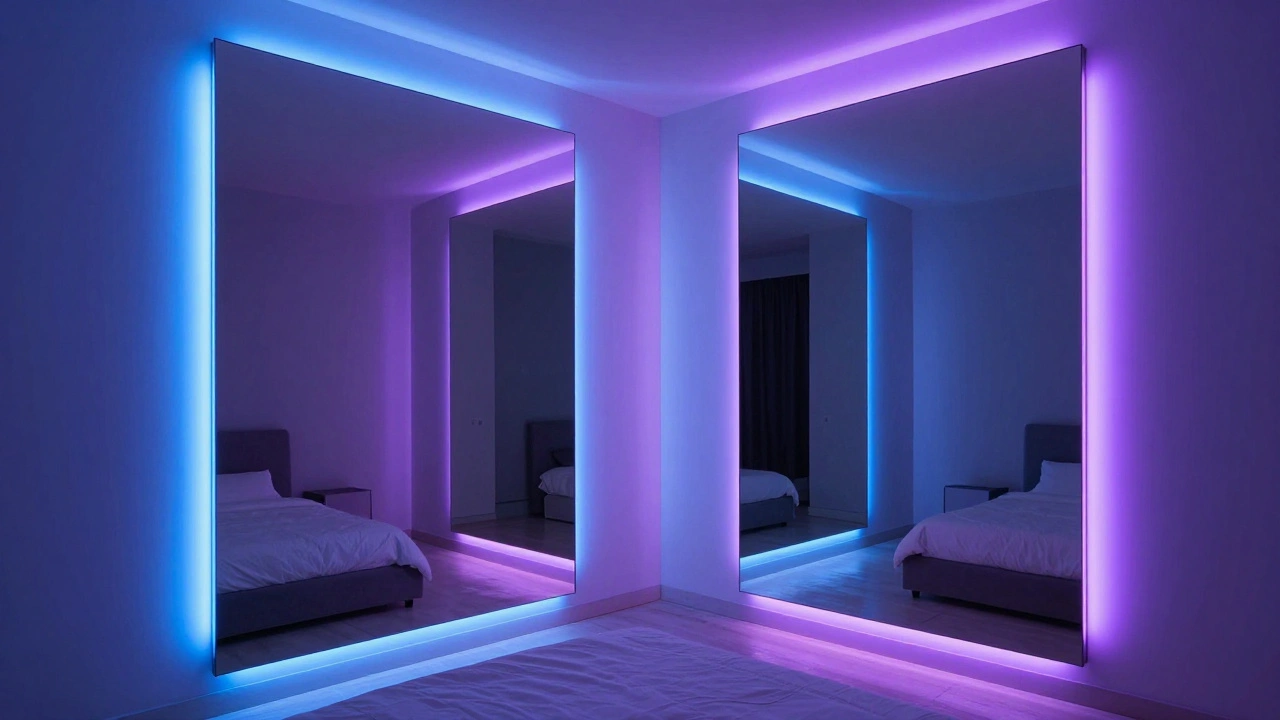
When people talk about "TikTok mirrors" creating endless depth, they are usually referring to an infinite mirror box or a setup using two parallel mirrors facing each other. This isn’t a new invention, but social media gave it a massive boost because it looks like sci-fi tech.
Here is the physics behind it. When you place two mirrors directly opposite each other, light bounces back and forth between them. Each reflection captures the previous reflection, creating a recursive loop. To your eye, this looks like a tunnel stretching into forever. On TikTok, creators often add LED strips inside this setup. The lights reflect along with the image, making the "tunnel" glow and appear even longer.
- The Setup: You need two flat mirrors placed perfectly parallel. Even a slight angle will distort the effect.
- The Lighting: RGB LED strips are key. They provide the visual cue that makes the depth feel real.
- The Camera Angle: Filming from the side or slightly above helps capture the full length of the reflections without blocking the view.
You don’t need expensive equipment for this. Two large wall mirrors and a strip of battery-operated LEDs can create the same vibe. Just make sure the mirrors are clean; smudges multiply infinitely too, and nobody wants a blurry void in their living room.
Convex Mirrors and the "Small Space" Hack
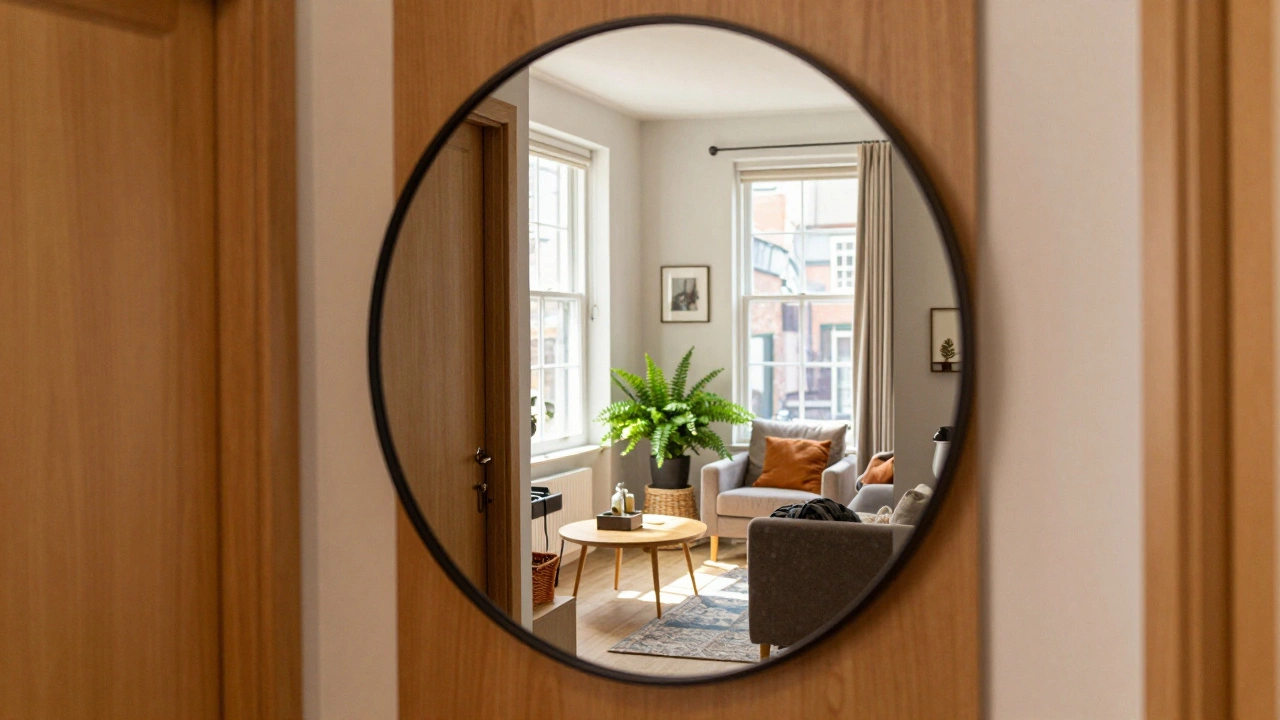
Another huge trend involves small, round mirrors that make rooms look bigger. These are convex mirrors, which are curved outward, causing light rays to diverge and create a wider field of view. You’ve seen them on cars as blind-spot mirrors, but on TikTok, they are interior design heroes.
Why do they work? A flat mirror shows you exactly what is in front of it, limited by its physical size. A convex mirror bends the light, allowing it to capture more of the room from a single point. If you hang a convex mirror in a narrow hallway or a small entryway, it reflects more of the space than a flat mirror of the same diameter. This tricks the brain into perceiving the room as larger and more open.
Creators love placing these on doors, closet fronts, or even hanging them from the ceiling. The distortion is minimal at close range but significant enough to expand the perceived boundaries of the room. It’s a cheap fix for cramped apartments. Look for "security mirrors" or "wide-angle mirrors" online-they are the same product, just marketed differently.
Smart Mirrors and Digital Overlays
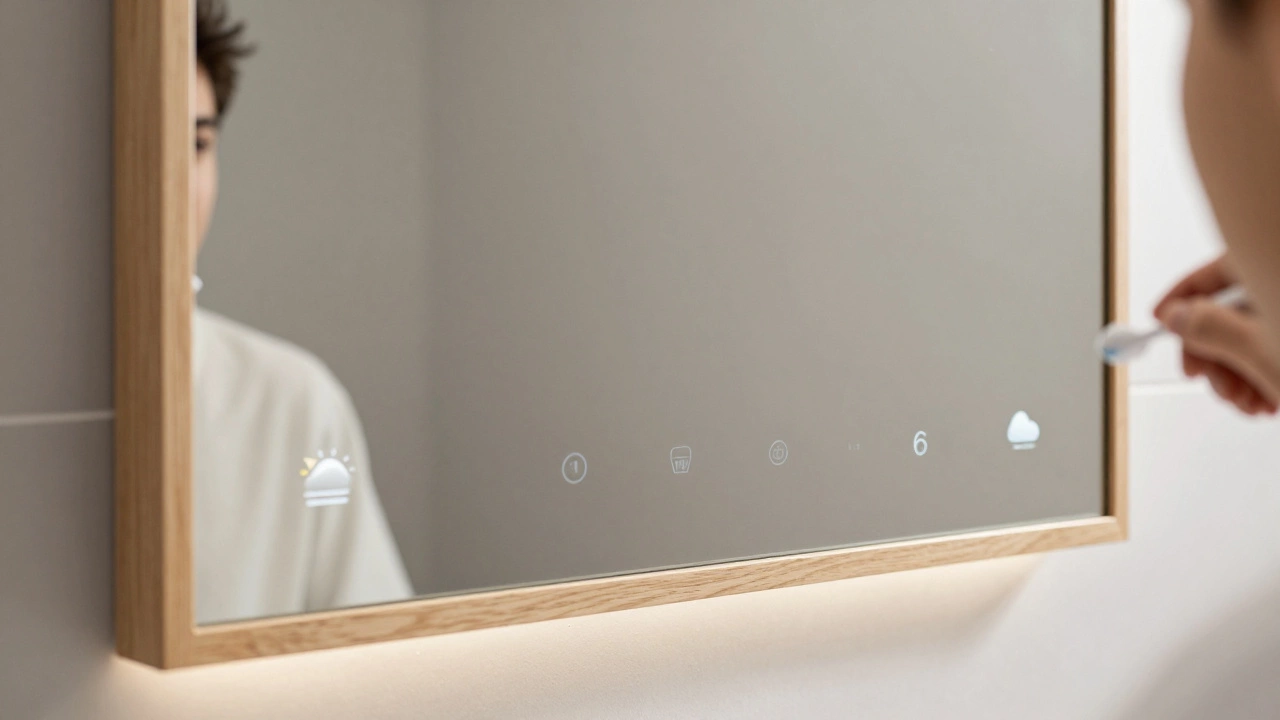
Then there are the mirrors that display weather, news, or fitness stats while you brush your teeth. These are smart mirrors, also known as two-way mirrors with digital displays behind them. This technology has been around for years in airports (for security screening), but DIY culture on TikTok made it accessible to homeowners.
How do they work? It’s simpler than you think. The mirror uses a piece of glass that is partially reflective and partially transparent-called a two-way mirror. Behind this glass, you mount a monitor or tablet. When the screen is off, the glass acts like a normal mirror because the ambient light in the room reflects off the surface. When the screen turns on, the bright pixels shine through the glass, allowing you to see the content while still seeing your reflection faintly over it.
Most DIYers use an old iPad or a Raspberry Pi connected to a monitor. They enclose everything in a wooden frame to hide the electronics. The result is a sleek, modern mirror that doubles as an information hub. If you want to buy one pre-made, expect to pay anywhere from $300 to $800 depending on the resolution and features.
The Role of Lighting and Filters
Sometimes, the mirror isn’t doing anything special at all. The "magic" is entirely in the lighting and the app’s filters. TikTok’s algorithm promotes videos with high engagement, and well-lit spaces naturally get more views. Creators often use ring lights or softbox lighting to eliminate shadows. This makes the mirror reflection look crisp and flattering, enhancing the perceived quality of the decor.
Additionally, many users apply subtle filters that increase brightness and contrast. This can make a standard mirror look brighter and more vibrant than it is in reality. If you’re trying to replicate a look and it doesn’t match up, check your lighting first. Harsh overhead lights create unflattering reflections, while angled, diffused light creates the "glow" seen in most viral videos.
| Type | Cost Estimate | Best For | Difficulty to Install |
|---|---|---|---|
| Infinite Mirror Box | $50 - $150 | Visual impact, bedrooms | Medium (requires precise alignment) |
| Convex Mirror | $20 - $60 | Small spaces, hallways | Easy (just hang it) |
| Smart Mirror | $300 - $800+ | Bathrooms, home offices | Hard (electrical work needed) |
Choosing the Right Mirror for Your Space
So, which one should you pick? It depends on your goal. If you want to wow guests with a cool visual trick, go for the infinite mirror setup. It’s conversation-starting and looks great in photos. If you’re struggling with a claustrophobic hallway, invest in a few convex mirrors. They are inexpensive and genuinely improve the sense of space.
For those who love tech integration, a smart mirror is a lifestyle upgrade. It consolidates your morning routine, showing you emails and weather without needing to grab your phone. However, keep in mind that smart mirrors require maintenance. Screens burn out, software updates fail, and cables need managing. An infinite mirror or a convex mirror will last decades with zero upkeep.
Remember, the best mirror is one that fits your actual life, not just your feed. Don’t buy something complex if you’ll end up hiding it away. Start simple, experiment with placement, and see how light interacts with your space before committing to a major purchase.
Can I make an infinite mirror at home?
Yes. You need two flat mirrors placed parallel to each other. Add LED strips between them for effect. Ensure the mirrors are perfectly aligned to avoid distortion.
Do convex mirrors really make rooms look bigger?
They do. By curving outward, convex mirrors capture a wider field of view than flat mirrors, tricking the eye into perceiving more space.
How much does a DIY smart mirror cost?
A basic DIY smart mirror can cost between $100 and $300, depending on whether you reuse an old tablet or buy a new monitor and Raspberry Pi.
What is the difference between a two-way mirror and a regular mirror?
A regular mirror fully reflects light. A two-way mirror is partially transparent, allowing light to pass through from the other side when it is brighter than the viewing side.
Are TikTok mirror trends safe?
Generally yes. However, ensure any electrical components for smart mirrors are properly insulated and installed away from water sources like bathtubs.