How to Keep Your Storage Clutter-Free and Organized
 Oct, 4 2026
Storage Zone & Solution Finder
Not sure where to put that item? Select its usage frequency and room type to get instant placement advice and storage tips.
Please select a usage frequency and a room type above to see recommendations.
You walk into the garage or open that deep closet door, and there it is: a wall of boxes, loose items, and things you haven't seen in years. It’s frustrating, right? You bought these shelves or bins to make life easier, but somehow they became black holes for clutter. Keeping your home storage free from unnecessary accumulation requires a mix of ruthless editing and smart system design. It isn’t just about shoving stuff away; it’s about creating a space where everything has a purpose and a place.
The One-Year Rule and Ruthless Editing
Before you buy another bin, you need to deal with what you already have. The biggest mistake people make is organizing their clutter instead of reducing it. If you organize junk, you just have organized junk. Start by pulling everything out. Yes, everything. This feels overwhelming, but it forces you to confront the reality of how much you own.
Apply the one-year rule. If you haven’t used an item in twelve months, you probably don’t need it. This applies to kitchen gadgets, seasonal clothes, and hobby supplies. Exceptions exist, of course-emergency kits, sentimental heirlooms, and seasonal gear like Christmas decorations need different criteria. But for daily-use items, if it’s been sitting untouched for a year, let it go. Donate it, sell it, or recycle it. This single step often frees up 30% of your storage capacity instantly.
Zoning Your Space for Efficiency
Once the excess is gone, you need a system. Random placement leads to chaos. Think of your storage area like a retail store layout. High-traffic zones should hold high-frequency items. Low-traffic zones are for long-term storage.
Daily Zone: Items you use every day or week (cleaning supplies, tools, frequently worn clothes). These belong at eye level or within arm’s reach. Weekly/Monthly Zone: Items you use regularly but not daily (linens, extra toiletries, work gear). These can go on higher shelves or lower cabinets. Seasonal/Rare Zone: Items used once or twice a year (holiday decor, camping gear, formal wear). These belong in the attic, under-bed storage, or the top shelf of the garage.
This zoning strategy reduces friction. When getting something takes too many steps, you’re more likely to leave it out, creating new clutter. Make the easy path the default.
Vertical Space Is Your Best Friend
Most people think of storage as floor space. They stack boxes until they topple over. But floors are expensive real estate in your home. Walls are free. Utilizing vertical space changes the game entirely.
In a garage, install pegboards for tools. In a pantry, add risers to double the shelf height usage. In closets, use hooks on the back of doors for bags, belts, or jewelry. Even in small apartments, over-the-door organizers can save precious square footage. If you have tall ceilings, consider adding a second tier of shelving or using ladder-accessible racks for rarely accessed items.
| Room | Common Problem | Recommended Solution | Effort Level |
|---|---|---|---|
| Kitchen Pantry | Items lost in back of shelves | Lazy Susans & Clear Bins | Low |
| Garage | Floor covered in boxes | Overhead Racks & Pegboards | Medium |
| Closet | Unworn clothes taking space | Uniform Hangers & Shelf Dividers | Low |
| Bathroom | Toiletries scattered on counters | Vanity Trays & Under-Sink Risers | Low |
| Office | Paperwork pile-up | File Folders & Digital Scanning | High |
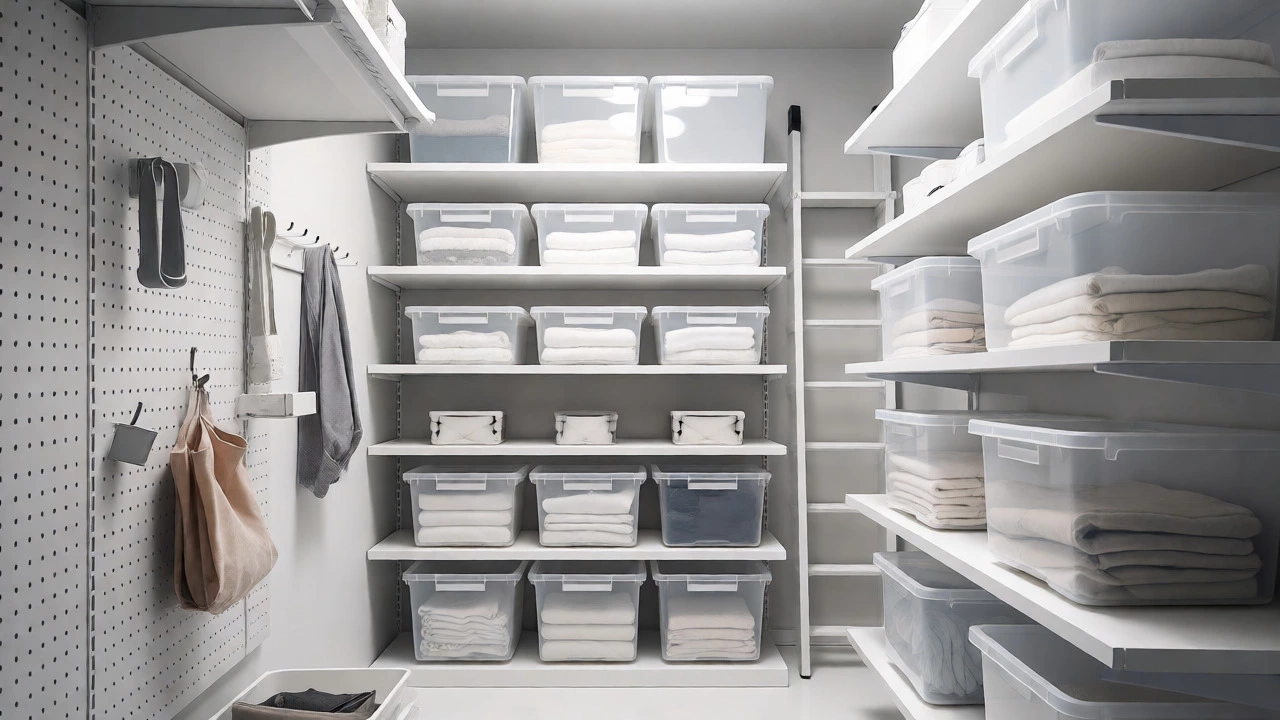
The Container Trap: Choosing the Right Bins
Buying containers before measuring is a classic error. You end up with bins that don’t fit the shelf depth, wasting inches of space. Measure first. Buy second.
When choosing containers, prioritize uniformity. A row of mismatched plastic tubs looks chaotic and makes stacking difficult. Opt for clear bins so you can see contents without opening them. Labeling is non-negotiable. Even if you think you’ll remember, you won’t. Use a label maker or waterproof markers. For fabric storage, vacuum bags are great for compressing bulky winter coats or duvets, freeing up significant volume. However, avoid vacuum sealing delicate fabrics or leather, as compression can damage fibers.
Maintaining the System: The Weekly Reset
Organization isn’t a one-time project; it’s a habit. Without maintenance, entropy wins. Set aside ten minutes each week for a "reset." Walk through your main storage areas. Put stray items back in their designated zones. Wipe down shelves. Check for new items that have crept in-mail, shopping bags, forgotten toys.
Adopt a "one-in, one-out" policy. If you buy a new pair of shoes, donate an old pair. If you bring home a new book, pass along one you’ve finished. This prevents the slow creep of clutter that eventually overwhelms even the best systems. It keeps the mental load light because you know exactly where everything lives.

Digital Storage: Don’t Forget the Cloud
Physical storage isn’t the only type that gets clogged. Digital hoarding is real. Thousands of photos, duplicate documents, and unused apps take up space on devices and cloud accounts. While this doesn’t affect your garage, it affects your mental clarity and device performance.
Regularly delete screenshots, old downloads, and blurry photos. Use cloud services like Google Drive or Dropbox for document backups, then delete local copies. This hybrid approach ensures safety without cluttering your hard drive. Just like physical spaces, digital files need a folder structure. Create broad categories (Finance, Work, Personal) and stick to them. Avoid creating fifty sub-folders for minor distinctions.
Special Cases: Sentimental and Bulky Items
Sentimental items are tricky. You can’t apply the one-year rule to your grandmother’s quilt or your child’s artwork. Instead of storing everything, curate. Take high-quality photos of large sentimental items. Keep only the most meaningful pieces physically. This preserves the memory without monopolizing shelf space.
For bulky items like sports equipment or furniture, consider off-site storage if your home space is premium. Self-storage units in Auckland, for example, offer climate-controlled options for sensitive items. Renting a small unit can be cheaper than renovating your home to accommodate clutter. Evaluate the cost-benefit: is keeping that old couch worth $150 a month in rent, or would selling it fund a nicer coffee table?
What is the fastest way to declutter a storage room?
The fastest method is the "four-box technique." Grab four boxes labeled Keep, Donate, Trash, and Relocate. Go through items quickly, making decisions in seconds rather than minutes. Do not sort while deciding; just categorize. Once done, immediately remove the Donate and Trash boxes from the house. This creates immediate visual relief and momentum.
How do I keep my pantry organized long-term?
Use clear, airtight containers for dry goods like pasta, rice, and flour. This extends shelf life and allows you to see when stocks are low. Group similar items together (baking supplies, breakfast items). Implement a "first in, first out" rotation when restocking groceries to prevent expired items hiding at the back.
Are vacuum storage bags good for all clothes?
No. Vacuum bags are excellent for synthetic fibers and down feathers, such as comforters and winter jackets. However, avoid using them for natural fibers like wool, silk, or leather, as prolonged compression can crush the fibers and cause permanent creases or damage. Always fold items neatly before vacuum sealing to minimize wrinkles.
How often should I reorganize my storage?
Perform a minor reset weekly and a major audit twice a year, typically during seasonal changes. Spring cleaning helps assess winter items for donation, while autumn preparation ensures holiday gear is accessible. Regular audits prevent the gradual buildup of clutter that becomes overwhelming to tackle later.
What should I do with items I’m unsure about?
Create a "Maybe Box." Place uncertain items in a sealed box and date it six months from now. Store it out of sight. If you haven’t opened the box by the expiration date, donate it unopened. This removes decision fatigue and proves whether you actually miss the items.