How to Spot a Quality Rug: A Buyer's Guide
 Oct, 15 2026
Rug Quality Inspector
Use this tool to assess a rug's potential value and durability. Answer the questions below based on your visual and tactile inspection.
1. Structural Integrity
2. Density & Materials
3. Craftsmanship Checks
Fill in the details on the left and click "Analyze" to get your assessment.
Quality Score
Based on standard industry benchmarks.
You’re standing in a store or scrolling online, staring at two rugs that look nearly identical. One costs $200. The other costs $2,000. Why the massive price gap? Is the expensive one actually better, or are you just paying for a fancy label? This is the dilemma most people face when buying home textiles. You want something that lasts, feels good underfoot, and looks great, but you don’t want to get ripped off.
Spotting a quality rug isn’t about guessing. It’s about knowing what to look for. Whether it’s the knot count, the type of wool, or how the fringe is attached, specific details tell the true story of a rug’s value. Once you know these signs, you’ll never accidentally buy a disposable mat again.
Check the Backing and Fringe
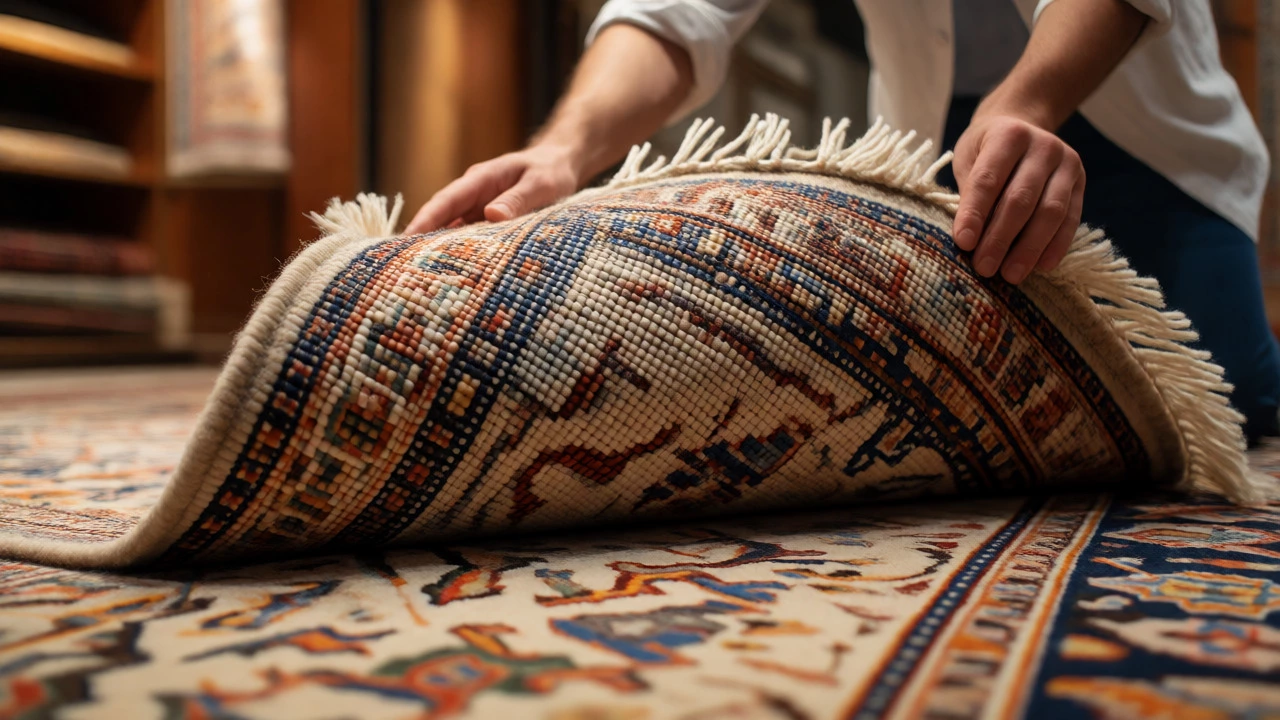
The quickest way to judge a rug is to flip it over. Seriously, do it. If you can’t see the pattern clearly on the back, walk away. In a high-quality hand-knotted rug, the design should be visible on the reverse side, though mirrored. This proves the colors go all the way through the fibers, not just printed on top. If the back is a flat, uniform sheet of latex or glue, you’re looking at a machine-made piece. That’s fine for a budget option, but it won’t last decades.
Look closely at the fringe. On a real hand-knotted rug, the fringe is part of the warp threads-the foundation strings running lengthwise. It comes directly out of the body of the rug. If the fringe is sewn on separately with stitching visible along the edge, it’s a shortcut. Over time, those sewn-on fringes will unravel and detach, leaving you with a bald edge. Authentic rugs have fringes that are integral to the structure. They might be knotted or braided, but they aren’t glued on as an afterthought.
Evaluate the Density and Knot Count
Density determines how durable a rug is. Think of it like fabric thread count. A higher density means more knots per square inch (KPSI), which translates to finer detail and greater strength. But here’s the trick: don’t just trust the sales tag. Check it yourself.
Fold the rug gently toward you so the pile spreads apart. Look at the base where the knots tie onto the warp threads. You want to see tight, compact rows with no gaps between them. If you can see white space between the knots, the rug is loosely woven. Loose weaves wear out faster because foot traffic pushes the fibers around too much. For a standard living room rug, aim for at least 100-150 KPSI. For intricate designs or high-traffic areas, you’d want 300+ KPSI, which usually signals a premium investment.
| Knots Per Square Inch (KPSI) | Quality Level | Best For | Expected Lifespan |
|---|---|---|---|
| Under 100 | Entry-level / Machine-made | Guest rooms, low traffic | 3-5 years |
| 100-200 | Good quality handmade | Living rooms, dining areas | 10-20 years |
| 200-400 | High quality | Formal spaces, detailed patterns | 20-50 years |
| 400+ | Museum grade | Collectibles, heirlooms | 50+ years |
Inspect the Materials and Dyes
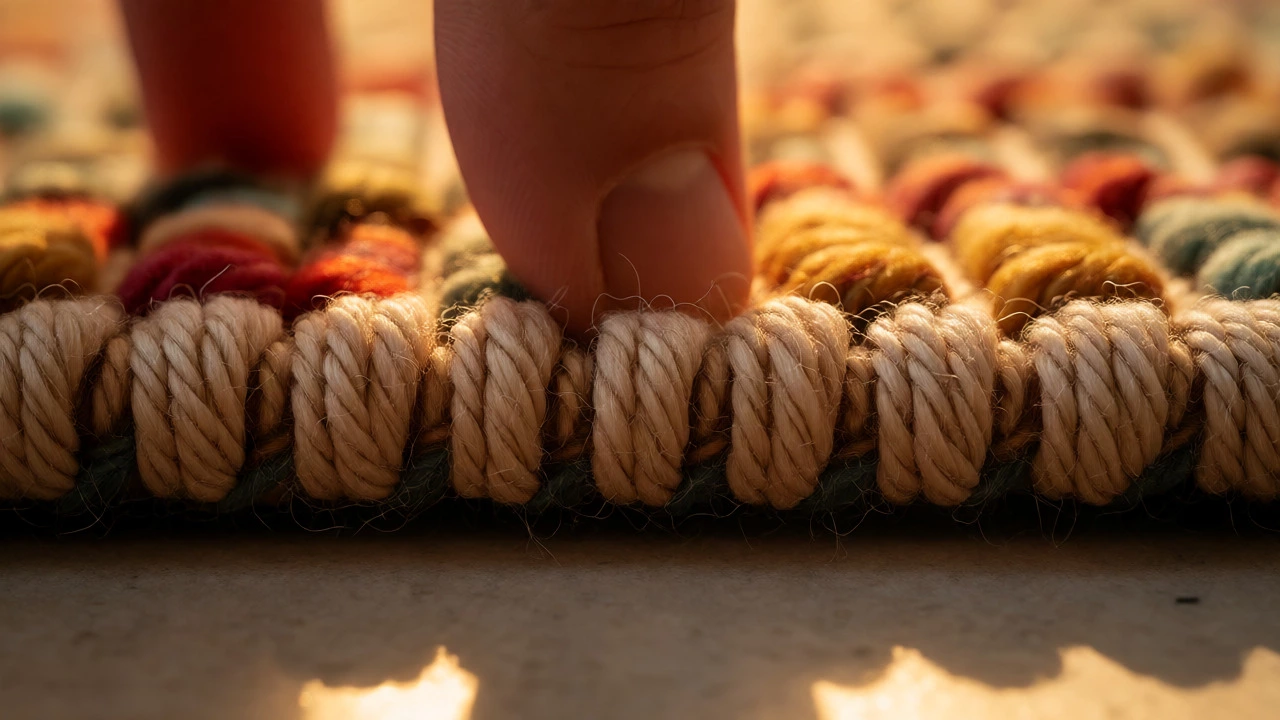
Material matters more than style. Most quality rugs use natural fibers like wool, silk, or cotton. Wool is the gold standard for durability. It resists crushing, repels stains naturally due to lanolin, and ages beautifully. When you touch a good wool rug, it should feel resilient. Press your thumb into the pile; it should spring back quickly. If it stays flattened, the fibers are likely synthetic or low-grade.
Watch out for "wool blend" labels. Sometimes, manufacturers mix cheap acrylics with a small percentage of wool to lower costs while keeping the name recognizable. Ask specifically: "Is this 100% wool?" If they hesitate, assume it’s blended. Synthetic fibers like polypropylene are stain-resistant but lack the depth and warmth of natural materials. They also tend to shed more initially and can feel plastic-like under bare feet.
Color fastness is another hidden factor. Cheap dyes bleed when cleaned. To test this, dampen a white cloth and rub it vigorously on a dark area of the rug. If color transfers to the cloth, the dye isn’t stable. Over time, cleaning such a rug will cause colors to fade unevenly or run into each other, ruining the design. High-quality vegetable dyes or modern acid dyes used in reputable workshops hold their color firmly.
Examine the Edges and Selvedge
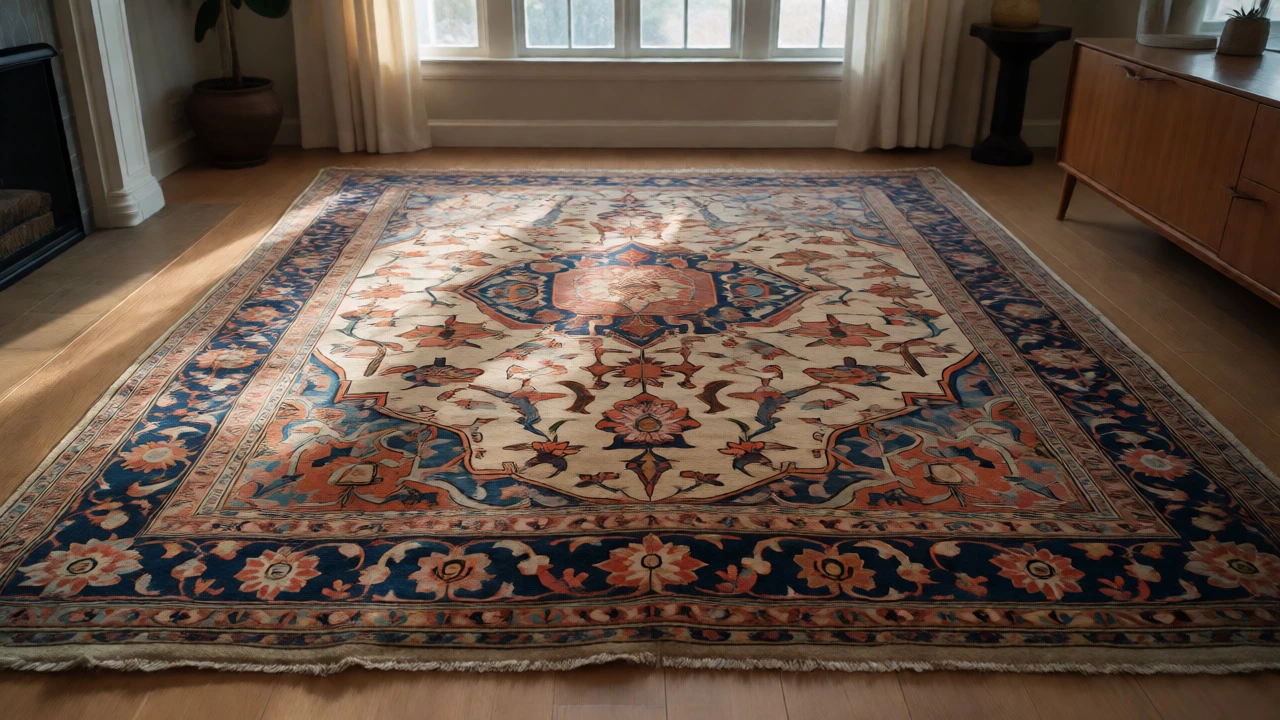
The edges are where rugs fail first. Poorly finished edges fray easily. Look at the selvedge-the binding along the sides. In a well-made rug, the selvedge is tightly wrapped and reinforced. It should lie flat against the floor without curling up excessively. Curling edges often indicate poor tension during weaving or low-quality backing materials that shrink differently than the pile.
Check for symmetry. Lay the rug flat and step back. Do the corners meet evenly? Are the borders parallel? Handmade rugs may have slight irregularities-that’s charm. But significant warping, where the rug doesn’t lay flat, suggests structural flaws. These defects worsen over time, creating tripping hazards and making the rug look messy even after professional cleaning.
Consider the Origin and Craftsmanship
Where a rug is made affects its price and quality. Regions like Persia (Iran), Turkey, Morocco, and India have distinct traditions. Persian rugs, for example, are known for intricate floral patterns and high knot counts. Turkish rugs often feature geometric designs and robust wool. Knowing the origin helps you verify authenticity claims.
Be wary of vague terms like "Oriental style." This often means machine-made copies of traditional designs. True regional rugs carry cultural heritage. For instance, a genuine Kashan rug from Iran has specific signature medallions and color palettes. If the seller can’t explain the region’s characteristics, they might not know what they’re selling. Ask questions: "Who wove this?" "What region does this pattern come from?" Honest dealers love sharing these stories.
Can machine-made rugs be good quality?
Yes, but they serve a different purpose. Modern power-loomed rugs can be dense and durable, especially if made with high-quality synthetic fibers like heat-set polypropylene. They are excellent for high-traffic areas, outdoor use, or rental properties because they are affordable and easy to clean. However, they generally lack the artistic value, longevity, and resale potential of handmade rugs. If you plan to keep a rug for less than five years, a good machine-made option is perfectly sensible.
Why do some expensive rugs feel rough?
Some traditional hand-knotted rugs, particularly those from tribal regions like Afghanistan or Pakistan, use coarser wool types intentionally for durability. Initially, they may feel scratchy. However, with regular use and proper cleaning, the fibers soften significantly-a process called "breaking in." This characteristic roughness is often a sign of authentic, heavy-duty construction rather than poor quality. If the rug feels uniformly soft and plush immediately, it might be heavily processed or made with softer, less durable fibers.
Does a higher knot count always mean better quality?
Not necessarily. While higher knot counts allow for finer detail, they don’t automatically make a rug better. A rug with 600 KPSI made from weak, poorly dyed wool might deteriorate faster than a sturdy 150 KPSI rug made from high-grade mountain wool. Balance is key. Consider the material quality, dye stability, and weave tightness alongside the knot count. A moderately dense rug with superior materials often outperforms a very dense rug with inferior inputs.
How can I tell if a rug is vintage or new?
Vintage rugs show signs of gentle wear. The pile should be slightly uneven, reflecting past traffic patterns. Colors may have softened naturally, avoiding the harsh brightness of new chemical dyes. Check the back for consistent patina-dirt embedded deep in the foundation threads takes years to accumulate. New rugs often have stiff edges and overly bright whites. Be cautious of artificially distressed rugs, where sellers burn or cut fringes to fake age. Real wear is gradual and organic.
Is shedding normal for quality rugs?
Light shedding is normal for new wool rugs, especially in the first few weeks. This is loose fiber working itself out of the weave. However, excessive shedding where large clumps come out indicates poor spinning or low-quality yarn. If shedding continues heavily after two months of regular vacuuming, the rug may be defective. Silk rugs shed less than wool, while synthetic blends vary widely depending on manufacturing standards.