How to Spot an Expensive Rug: 7 Signs of Quality and Value
 Jul, 23 2026
Rug Quality & Value Estimator
Quality Score
--
Pending Analysis
Analysis Summary
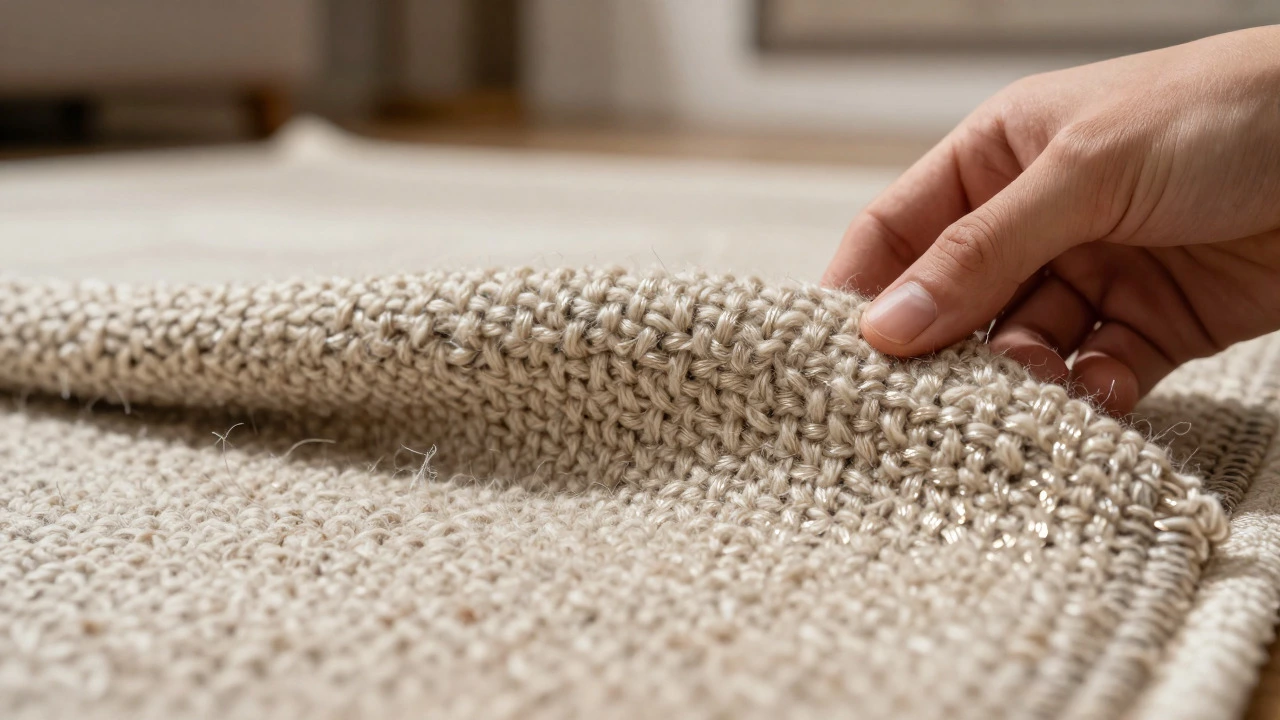
Ever walked into a high-end showroom, felt the plush pile under your fingers, and wondered why one rug costs $50 while the identical-looking neighbor tag says $2,000? It’s not just branding. There is a tangible difference between a mass-produced floor covering and a true investment piece. Knowing how to spot an expensive rug saves you from overpaying for cheap materials or missing out on a timeless heirloom.
You don’t need a degree in textile history to tell the difference. You just need to know where to look-and more importantly, what to ignore. Most buyers focus solely on color or pattern, but the real story is hidden in the construction, the fiber, and the origin. Let’s break down exactly what drives up the price tag so you can shop with confidence.
The Knot Count Myth vs. Reality
If you ask anyone about expensive rugs, they’ll likely mention "knot count." It’s the most cited metric in the industry, often touted as the ultimate indicator of luxury. While knot density matters, it’s only half the equation. A rug with 400 knots per square inch (KPSI) isn’t automatically better than one with 150 KPSI if the lower-count rug uses superior silk and natural dyes.
Think of knot count like resolution on a TV screen. Higher resolution allows for finer detail, sharper images, and smoother gradients. In rugs, higher KPSI means the weaver can create intricate patterns without pixelation. However, if the design is simple geometric shapes, a high knot count adds cost without adding aesthetic value. True luxury lies in the balance: a complex Persian medallion needs high density to shine, whereas a modern abstract might look best with a coarser weave that emphasizes texture over precision.
| Knot Range (KPSI) | Weave Type | Typical Use Case | Price Indicator |
|---|---|---|---|
| Below 50 | Tufted / Machine Made | High-traffic commercial areas | Budget / Low |
| 50 - 100 | Hand-Tufted | Casual home decor | Moderate |
| 100 - 300 | Hand-Knotted (Coarse) | Durable living rooms | Mid-Range |
| 300 - 600+ | Hand-Knotted (Fine) | Heirlooms, detailed art pieces | High / Investment |
Fiber Matters More Than You Think
The material your rug is made from dictates its feel, durability, and ultimately, its price. Synthetic fibers like polyester and nylon are cheap to produce and easy to clean, which keeps their market price low. They also tend to pill and flatten quickly under heavy foot traffic. If you want an expensive rug, you’re usually looking at natural fibers.
New Zealand Wool is a premium fiber known for its resilience, softness, and natural stain resistance. Rugs woven from this wool command higher prices because the fiber has a natural crimp that locks in air, providing insulation and bounce-back. It doesn’t crush easily, meaning the rug looks new even after years of use. Silk is another tier-up option. Pure silk rugs are incredibly lustrous and soft, but they are fragile. They show wear faster than wool, which makes them rare and costly due to the labor-intensive harvesting process.
A truly expensive rug often blends these materials. A wool base provides structure and durability, while silk highlights add shimmer and depth to specific parts of the pattern. This technique, called "silk highlighting," requires skilled artisans to integrate two different fibers seamlessly. When you see a rug that glows differently depending on the angle of light, you’re likely looking at a blend that justifies a higher price point.
Hand-Knotted vs. Hand-Tufted: The Construction Gap
This is where many buyers get tripped up. Both terms sound artisanal, but the processes-and the resulting values-are worlds apart. A hand-tufted rug is created using a gun-like tool that pushes yarn through a canvas backing. It’s faster, cheaper, and produces a thick, shaggy pile. However, it lacks the structural integrity of a knotted rug. Over time, tufted rugs can shed excessively or develop bald spots.
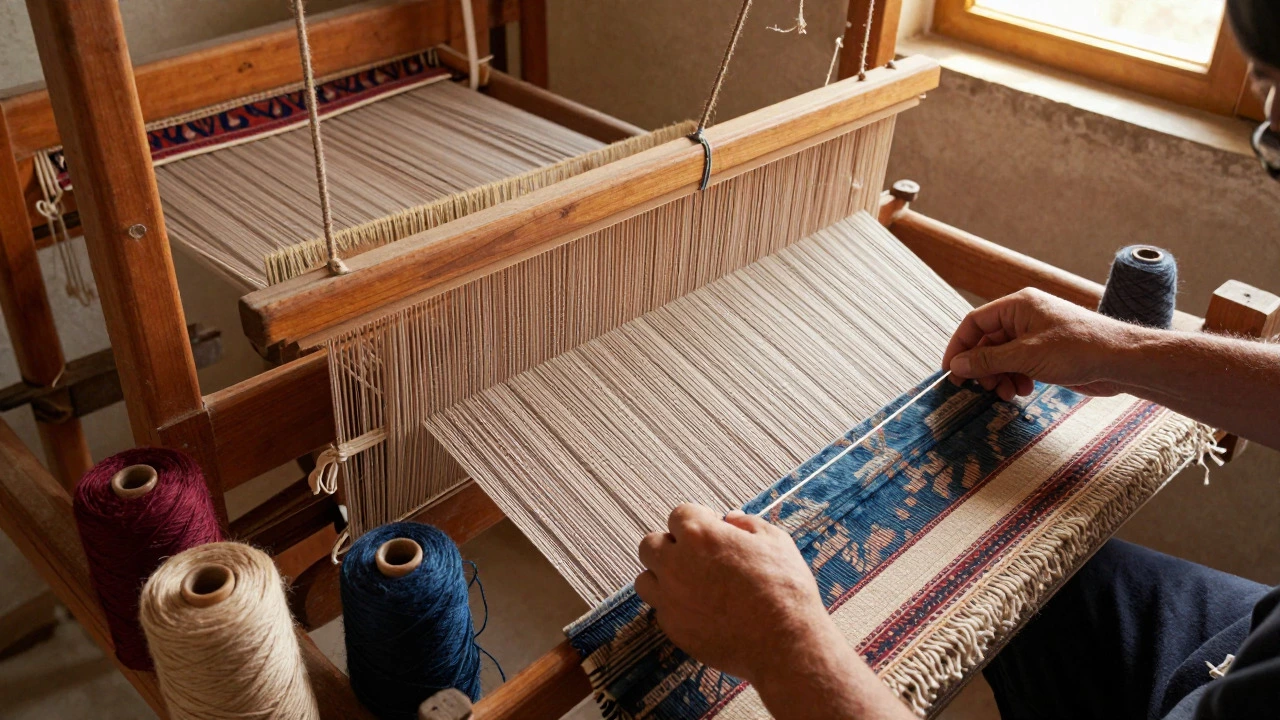
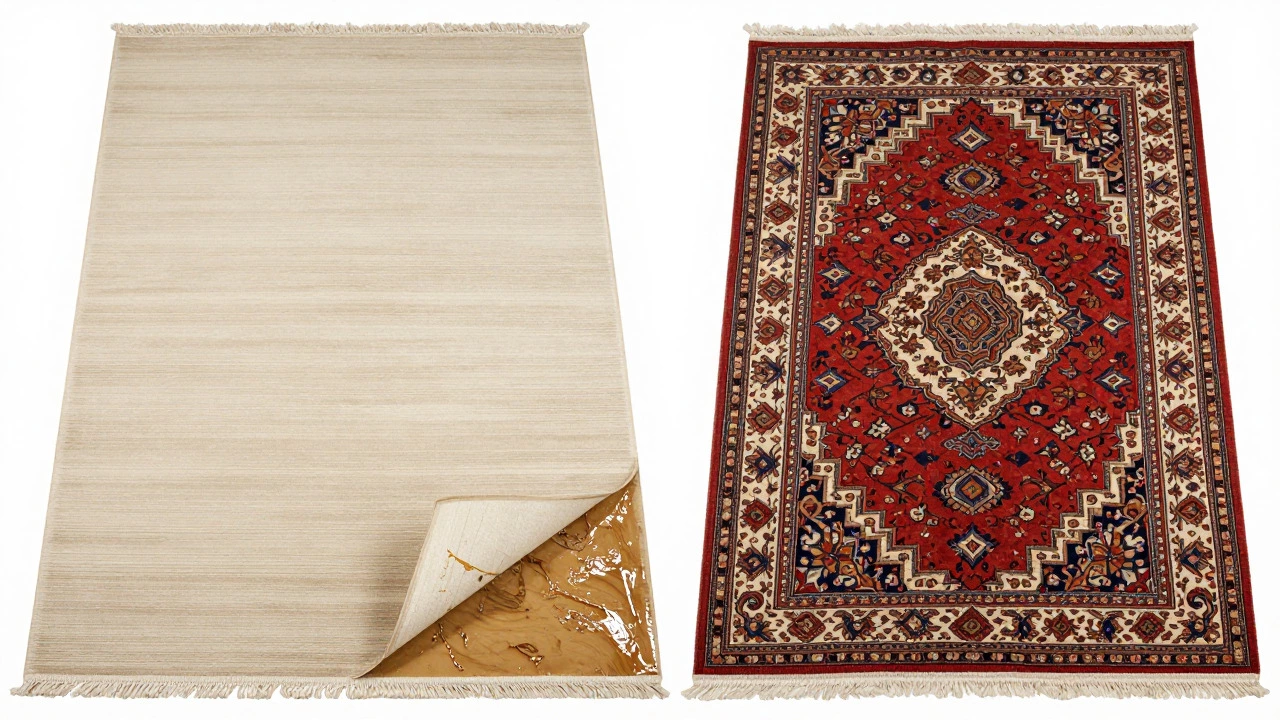
In contrast, a hand-knotted rug is woven entirely by tying individual knots around the warp threads on a loom. This process is slow. A single weaver might complete only a few square feet per week. Because each knot is tied individually, the rug is reversible-the pattern appears on both sides. This symmetry is a dead giveaway of quality. If you flip the rug over and see a messy backing with latex glue or no pattern, it’s likely tufted or machine-made. An expensive rug will have a clear, mirror-image pattern on the reverse side.
The Story Behind the Origin
Where a rug comes from plays a huge role in its valuation. Regions with centuries-old weaving traditions carry a premium. Persian rugs from cities like Tabriz or Isfahan, Turkish kilims from Anatolia, and Tibetan rugs from Nepal are recognized globally for their craftsmanship. These aren’t just products; they’re cultural artifacts.
Authenticity is key here. Many factories now mimic traditional designs using power looms to cut costs. To spot the real deal, look for slight imperfections. In a hand-knotted rug, knots aren’t perfectly uniform. There might be tiny variations in color due to natural vegetable dyes, or slight irregularities in the border alignment. These "flaws" are actually proof of human hands. A machine-made rug will be mathematically perfect, which ironically makes it less valuable in the collector’s market.
Vintage and antique rugs-those over 30 to 50 years old-often appreciate in value. Unlike furniture or electronics, well-maintained antique rugs can increase in worth as they age, provided they haven’t been over-cleaned or repaired poorly. The patina of age adds character that new reproductions simply can’t replicate.
Dye Quality: Natural vs. Synthetic
Have you ever noticed how some rugs look flat and plastic-like, while others seem to have depth and richness? That’s the dye. Cheap rugs use synthetic acid dyes that are bright and uniform but lack nuance. They can also fade harshly when exposed to sunlight.
Expensive rugs often use natural dyes derived from plants, insects, and minerals. Madder root gives reds, indigo yields blues, and pomegranate skins provide yellows. These dyes react differently with wool fibers, creating subtle tonal variations within a single color field. This effect, known as "abrash," is highly prized by collectors. It gives the rug a living, breathing quality. If every thread is the exact same shade of blue, it’s likely synthetic. If there are gentle shifts from deep navy to lighter azure, you’re looking at high-quality natural dyeing.
Size, Weight, and Density
Pick up the rug. Seriously. An expensive rug feels heavy. Why? Because it contains more material. High-density rugs pack more yarn into every square inch, making them thicker and heavier. This density contributes to longevity. A lightweight rug might tear or fray at the edges sooner. When shopping online, check the weight specifications. A standard 8x10 hand-knotted wool rug should weigh between 20 to 30 pounds. If it’s significantly lighter, question the material quality or knot density.
Also, inspect the fringe. On a genuine hand-knotted rug, the fringe is part of the foundation-it’s the continuation of the warp threads. It shouldn’t be sewn on later. If you pull gently on the fringe, it should feel integrated into the body of the rug. Sewn-on fringes are a common shortcut in lower-quality manufacturing.
Red Flags: What to Avoid
Not everything labeled "luxury" deserves the title. Here are quick checks to avoid overpaying:
- Latex Backing: If the back feels rubbery or smells like chemicals, it’s likely a tufted or machine-made rug glued to a backing. Real hand-knotted rugs breathe.
- Perfect Symmetry: As mentioned, minor imperfections indicate handcraft. Perfect repetition suggests a power loom.
- Vague Origins: Sellers who can’t specify the region or workshop are often hiding mass-production origins.
- Unrealistic Prices: If a "Persian silk rug" is priced under $500, it’s almost certainly fake. Silk alone costs more than that to harvest and weave.
Investing in Longevity
Buying an expensive rug isn’t just about status; it’s about economics. A $2,000 rug that lasts 50 years costs you $40 a year. A $200 rug that wears out in five years costs you $40 a year too-but you’ve bought four of them, dealt with replacement hassle, and contributed to landfill waste. High-quality rugs hold their shape, resist stains better, and maintain their color vibrancy.
When you find a rug that meets these criteria-hand-knotted, natural fibers, authentic origin, and proper density-you’re not just buying decor. You’re acquiring a piece of functional art. Take your time, touch the materials, and don’t be afraid to ask questions. The right rug anchors a room and rewards you with beauty for decades.
Is a higher knot count always better?
Not necessarily. While higher knot counts allow for more intricate designs, a lower knot count with superior materials like silk or fine wool can be more valuable. Focus on the combination of knot density, fiber quality, and design complexity rather than just the number.
How can I tell if a rug is hand-knotted or machine-made?
Flip the rug over. A hand-knotted rug will show the same pattern on the back, though slightly reversed. Machine-made rugs often have a latex or fabric backing with no visible pattern. Also, check the fringe; on hand-knotted rugs, the fringe is continuous with the rug's foundation, not sewn on.
Why are natural dyes more expensive?
Natural dyes require more labor to extract and apply, and they yield subtle color variations (abrash) that are highly prized. They are also more eco-friendly and tend to age gracefully, developing a rich patina over time, unlike synthetic dyes which may fade uniformly.
Do vintage rugs increase in value?
Yes, authentic antique and vintage rugs (typically 30+ years old) can appreciate in value, especially if they are from renowned weaving regions like Persia or Turkey and are in good condition. They are considered collectible art pieces.
What is the best fiber for a durable expensive rug?
Wool, particularly New Zealand or Tibetan wool, is ideal for durability and resilience. It naturally resists crushing and stains. Silk is luxurious but less durable, making it better for low-traffic areas. Blends of wool and silk offer a balance of strength and sheen.