Should You Spend a Lot of Money on a Sofa? Here’s What Actually Matters
 Dec, 1 2025
Sofa Quality Rating Tool
How to Use This Tool
Select your sofa's key features below based on the article's recommendations. This tool calculates a quality score and tells you if you're getting value for your money.
How much should you really spend on a sofa? You’ve seen the ads - $5,000 sectional with Italian leather, hand-stitched seams, and a lifetime warranty. Then there’s the $600 couch from a big-box store that looks great in the showroom but sags after six months. So which one makes sense? The truth isn’t about price tags. It’s about how you live.
Most people overspend on looks, not longevity
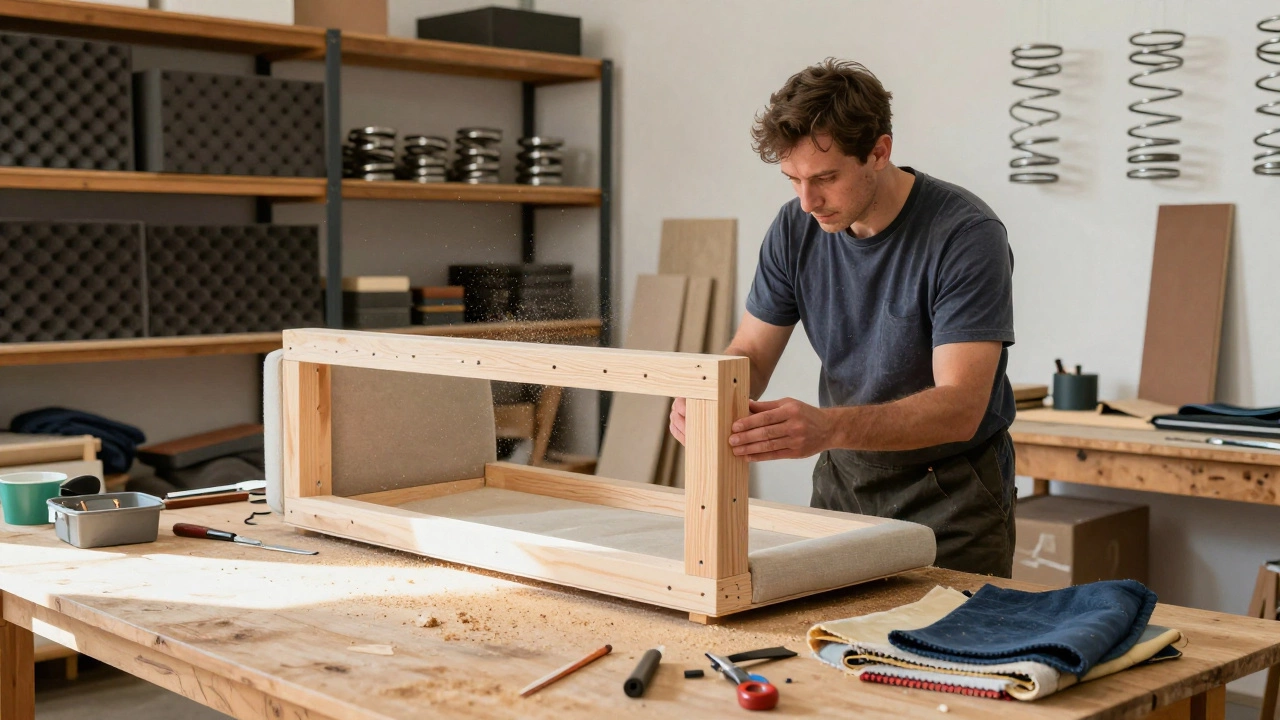
You walk into a showroom and fall for a sofa because of the fabric, the color, the way it catches the light. That’s normal. But here’s what no one tells you: fabric is the easiest thing to replace. The frame, the springs, the foam - those are what last. And those are the parts you can’t see until it’s too late.
A $1,200 sofa from a reputable local maker in Auckland can outlast a $3,000 imported one if it’s built right. How? Look for kiln-dried hardwood frames. Avoid particleboard or plywood. Check if the joints are screwed and glued, not just stapled. Ask if the suspension system uses eight-way hand-tied springs or sinuous steel. Those details cost more upfront but mean your sofa won’t collapse after three years.
What a $1,500 sofa can do that a $500 one can’t
Let’s compare two real sofas bought by people I know. One was $520 from a chain store. It had polyester-blend fabric, low-density foam, and a frame made of engineered wood. Two years later, the cushions were flat, the arms were loose, and the fabric had pilled badly.
The other was $1,450 from a small Wellington workshop. It had 2.5 lb density foam, a solid beech frame, and a 100% cotton-linen blend. Five years later? Still firm, still clean, still comfortable. The difference isn’t just the price - it’s the density of the foam and the quality of the frame.
Here’s the rule: if the foam is under 1.8 lb density, skip it. If the frame feels hollow when you knock on it, walk away. These aren’t marketing tricks - they’re measurable specs. Good foam doesn’t compress into a pancake. Good wood doesn’t crack under normal use.
Leather isn’t always better - and it’s not always worth it
People think leather means luxury and longevity. But full-grain leather is expensive because it’s rare. Most sofas labeled "leather" are actually bonded leather - a thin layer of real leather scraps glued onto a synthetic backing. It cracks after a year in Auckland’s dry winters. Real leather needs conditioning every six months. It stains easily. And if you have kids or pets? It’s a nightmare to clean.
High-performance fabrics like Crypton, Sunbrella, or even tightly woven performance linen are better for most homes. They’re stain-resistant, durable, and don’t require special care. A $1,800 sofa with Crypton fabric will outperform a $3,500 leather one if you’re spilling coffee, tracking in mud, or have a dog that loves to curl up on it.
Size matters more than brand
Buying a sofa that’s too big for your space is one of the most common regrets. I’ve seen people spend $4,000 on a sectional that blocks their doorway and leaves no room to walk. Then they’re stuck with it for years.
Measure your space. Leave at least 18 inches between the sofa and the coffee table. Make sure you can open doors and drawers without hitting the arms. If your living room is small, go for a slim-arm design or a loveseat with a matching ottoman. You can always add a chair later. A $900 two-seater with great construction is better than a $3,000 monster that doesn’t fit.
Warranty isn’t magic - read the fine print
"Lifetime warranty" sounds amazing. But what does it actually cover? Most warranties cover the frame only - not the fabric, not the cushions, not the zippers. Some exclude normal wear and tear. Others require you to pay for shipping if something breaks.
A good warranty should cover:
- Frame for 10+ years
- Suspension system for 5+ years
- Fabric and foam for at least 2 years
And if they won’t tell you the details in writing? That’s a red flag. A company that stands behind its product will give you a printed warranty, not just a website link.
When it’s okay to spend less
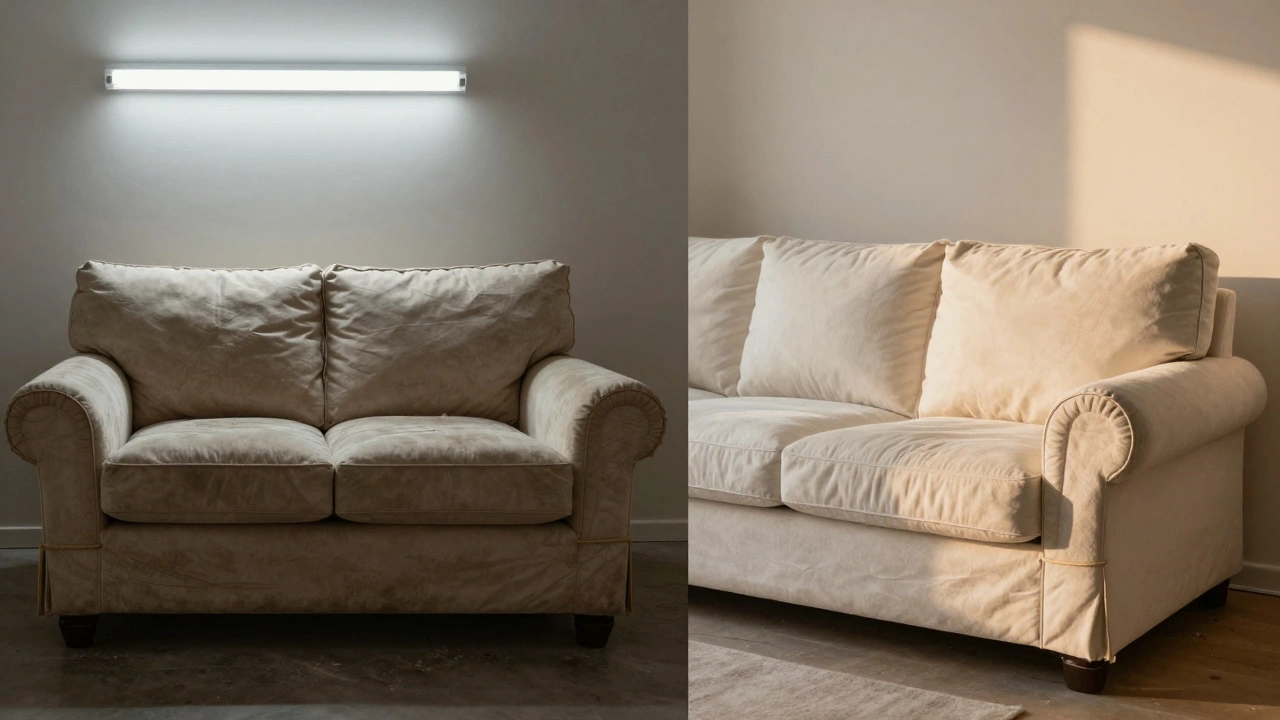
Not everyone needs a $2,500 sofa. If you’re renting, moving in two years, or just want something temporary, a well-made $800-$1,200 sofa is perfectly fine. Look for brands that offer replaceable cushions and removable covers. That way, when the fabric wears out, you don’t have to buy a whole new sofa - just new cushions.
Some local manufacturers in New Zealand offer modular designs where you can swap out sections. That’s smart design. You start with a loveseat, add a chaise later, or replace a worn arm. It’s cheaper in the long run than buying a single-piece sofa that’s built to die.
What to look for in a sofa - a quick checklist
Before you buy, ask these questions:
- Is the frame made of solid hardwood? (Not plywood or MDF)
- Are the cushions at least 2.0 lb density foam? (Higher = longer life)
- Is the suspension hand-tied springs or sinuous steel?
- Can you remove and wash the cover?
- Does the warranty cover more than just the frame?
- Can I sit on it for 10 minutes without it feeling too soft or too hard?
If you can’t get clear answers, keep looking. A good salesperson won’t get defensive. They’ll show you the inside of the frame, lift the cushions, and explain the materials.
Final thought: Your sofa is a daily companion
You don’t need the most expensive sofa. But you do need one that lasts. Think of it like a good pair of shoes. You wouldn’t buy $30 sneakers for daily wear if you’re walking 10,000 steps a day. A sofa gets used every day - for relaxing, watching TV, reading, hosting guests, even sleeping on.
Spending more isn’t about showing off. It’s about not having to replace it every three years. A well-built sofa can last 15-20 years. That’s less than $100 a year. That’s cheaper than a monthly subscription service.
Don’t buy based on trends. Buy based on how you live. Choose quality where it counts - the frame, the foam, the construction. And save your money on the stuff that can change - the pillows, the throws, the color.