Synonyms for Cups, Saucers, and Plates: Kitchenware Terminology Guide
 Sep, 28 2026
Kitchenware Terminology Explorer
Select a category below to view precise definitions and usage tips.
Tableware & Co.
Umbrella terms for all items
Chargers & Platters
Flat serving vessels
Mugs & Tumblers
Drinking vessels
China & Stoneware
Composition matters
Welcome
IntroductionClick on any card above to learn the specific differences between similar-sounding kitchenware terms. This tool helps you choose the right word for shopping, writing, or hosting.
Loading question...
Quiz Complete!
You scored 0 out of 0.
You are standing in the kitchen aisle at a home goods store, staring at a wall of white ceramics. The sign says "Dinnerware," but you need to buy specific items for a tea party or a formal dinner. You know what they look like, but do you know the exact words to describe them? Or perhaps you are writing a menu description, an inventory list, or a real estate listing, and you want to sound more precise than just saying "plates." Using the right terminology isn't just about sounding smart; it helps you communicate exactly what you need, whether you are shopping, selling, or describing your collection.
Most people use kitchenware as a catch-all term, but that is often too broad. It can include pots, pans, and utensils. When you specifically mean the ceramic items used for eating and drinking, there are better, more accurate words. Let's break down the specific synonyms for cups, saucers, and plates, and explain when to use each one so you never feel unsure about your vocabulary again.
The Umbrella Terms: What Do You Call Them All Together?
Before diving into individual items, you need a word for the group. If you say "dishes," people might think of dirty plates in the sink. If you say "kitchenware," they might picture spatulas. Here are the most common collective nouns for these items.
Tableware is the most professional and widely accepted term. It refers to all items used to set a table, including plates, glasses, and cutlery. If you are hosting a dinner party and asking guests to bring their own tableware, they will understand you mean the full setting. This term is neutral and covers everything from casual melamine bowls to fine bone china.
Dishware is slightly narrower. It usually refers specifically to the containers for food-plates, bowls, and platters-excluding glasses and silverware. You will often see this term in retail sections labeled "Dishware" rather than "Tableware." It is a practical word for everyday use, especially when talking about washing up or storing items in a cupboard.
Crockery is a term you will hear frequently in the UK, Australia, and parts of Europe. In American English, it is less common but still understood. Crockery specifically refers to earthenware, stoneware, or porcelain items. It excludes glass and metal. If you are buying handmade pottery from a local artisan, you are buying crockery. It carries a connotation of durability and traditional craftsmanship.
| Term | Scope | Best Used For | Regional Preference |
|---|---|---|---|
| Tableware | All items on the table (plates, glasses, cutlery) | Formal events, hospitality industry, general descriptions | Global |
| Dishware | Food containers only (plates, bowls) | Retail shopping, household chores, storage | North America |
| Crockery | Ceramic items only (no glass/metal) | Pottery markets, antique collections, UK/AU contexts | UK, Australia, NZ |
| China | Fine porcelain or bone china sets | Weddings, heirlooms, formal dining | Global |
Synonyms for Plates: Beyond the Flat Disc
A plate is a round, flat dish, but not all plates are created equal. The shape, size, and material dictate the name. If you are looking for a synonym because "plate" feels too simple, consider the context.
Platter is a large, flat serving dish. Unlike a standard plate meant for one person, a platter holds food for multiple people. Think of a turkey platter or a cheese board. If you are describing a large decorative piece that sits in the center of the table, call it a platter. It implies generosity and sharing.
Charger is a specific type of large plate used as a base under other dishes. It is rarely used for eating directly. Its purpose is aesthetic-it adds color, texture, or height to a place setting. In wedding planning or high-end restaurant reviews, you will hear about "charger plates." They are strictly decorative until the meal begins.
Bread Plate or Side Plate is smaller than a dinner plate, usually 6-8 inches in diameter. It is designed for bread, butter, or appetizers. Calling it a "side plate" distinguishes it from the main course vessel. This precision helps when you are setting a table and need to ensure everyone has space for their roll without cluttering the main area.
For those who prefer rustic or informal settings, the term Slab is sometimes used for thick, irregular ceramic pieces that function as plates. These are often hand-thrown and lack the perfect circular symmetry of factory-made ware. Using "slab" suggests an artisanal, organic vibe.
Naming Your Cups: Mugs, Tumblers, and Teacups
The world of drinking vessels is complex. A cup is generally small and has a handle, but variations exist based on material, shape, and intended beverage.
Mug is the most common synonym for a cup in casual settings. Mugs are larger than teacups, have sturdy handles, and are made of durable materials like stoneware or ceramic. They are designed for hot beverages like coffee or tea where volume matters. If you are buying items for a college dorm or an office breakroom, you are buying mugs, not cups.
Tumbler refers to a flat-bottomed drinking glass without a handle or stem. While often made of glass, modern insulated tumblers are made of stainless steel. The key feature is the lack of a handle. If you are describing a sleek, minimalist water vessel, "tumbler" is the correct technical term. It contrasts sharply with the cozy, handled image of a mug.
Goblet or Stemware applies when the cup has a stem and a foot. Goblets are typically associated with wine or beer. They elevate the drinking experience by keeping the hand away from the bowl, preserving the temperature of the liquid. If you are describing a fancy bar setup, avoid using "cup." Use "glassware" or specify "wine goblet."
In British English, a Cuppa is slang for a cup of tea, but the object itself remains a "teacup." However, if the cup is delicate, thin-walled, and paired with a saucer, it is a Teacup. If it is thick, heavy, and lacks a saucer, it is a Mug. The distinction is cultural and functional.
Saucers and Underplates: The Supporting Cast
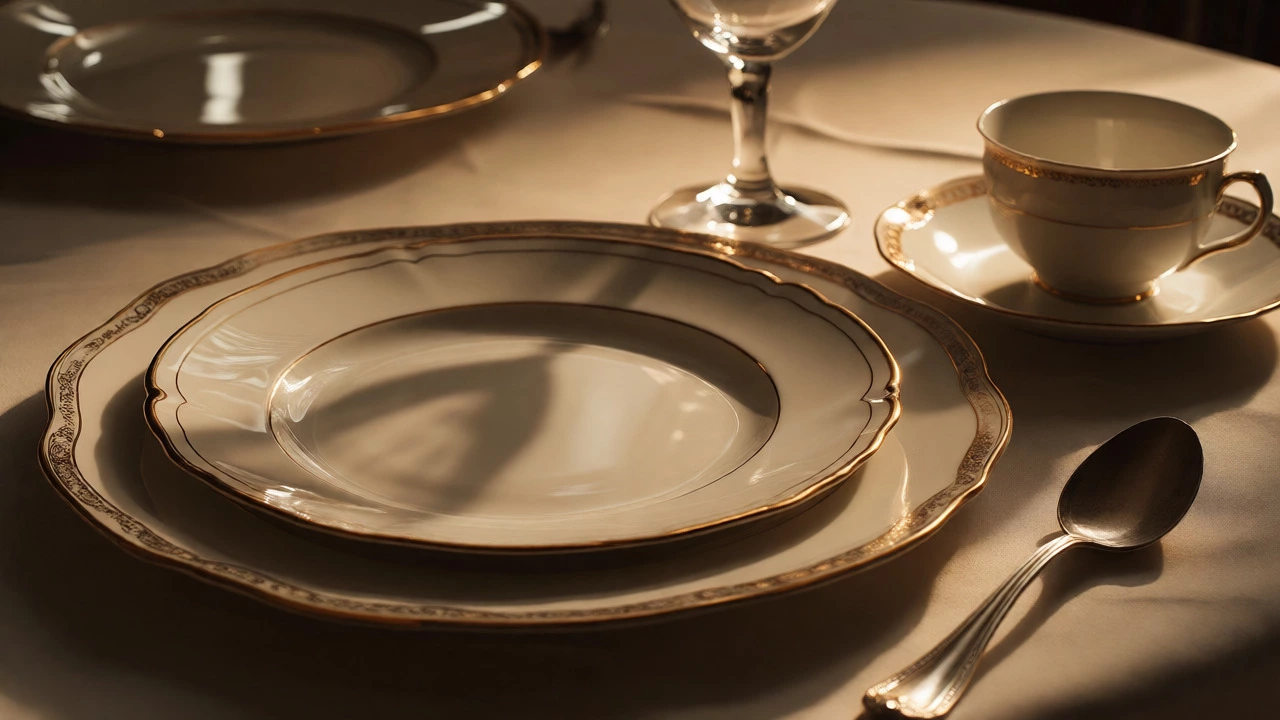
Saucers are often overlooked, but they serve critical functions: catching drips, providing a resting place for spoons, and adding visual balance. Finding synonyms for saucers can be tricky because the word is quite specific.
Underplate is a broader term that includes both chargers and saucers. It describes any plate placed beneath another plate or cup. In formal dining, an underplate protects the tablecloth from heat stains or spills. It is a protective layer. If you are describing a stack of dishes, referring to the bottom layer as the underplate clarifies its role.
Coaster is similar to a saucer but is primarily used for cold drinks. Coasters protect surfaces from condensation rings. While a saucer is part of the table setting for hot drinks, a coaster is an accessory. If you are selling wooden discs for beer bottles, call them coasters, not saucers. The distinction lies in the material (often cork, wood, or stone) and the intent (protection vs. service).
Some vintage collectors refer to small decorative plates as Doilies if they are lace-like, but this is rare. More commonly, small saucers used for espresso are called Demitasse Saucers. Precision here matters for collectors and interior designers who care about scale. An espresso saucer is tiny, barely bigger than the cup itself, whereas a tea saucer is wide enough to hold a spoon and a biscuit.
Material Matters: Porcelain, Bone China, and Stoneware
Sometimes the best synonym isn't a different word for the object, but a more descriptive word for the material. This changes how people perceive the value and fragility of the item.
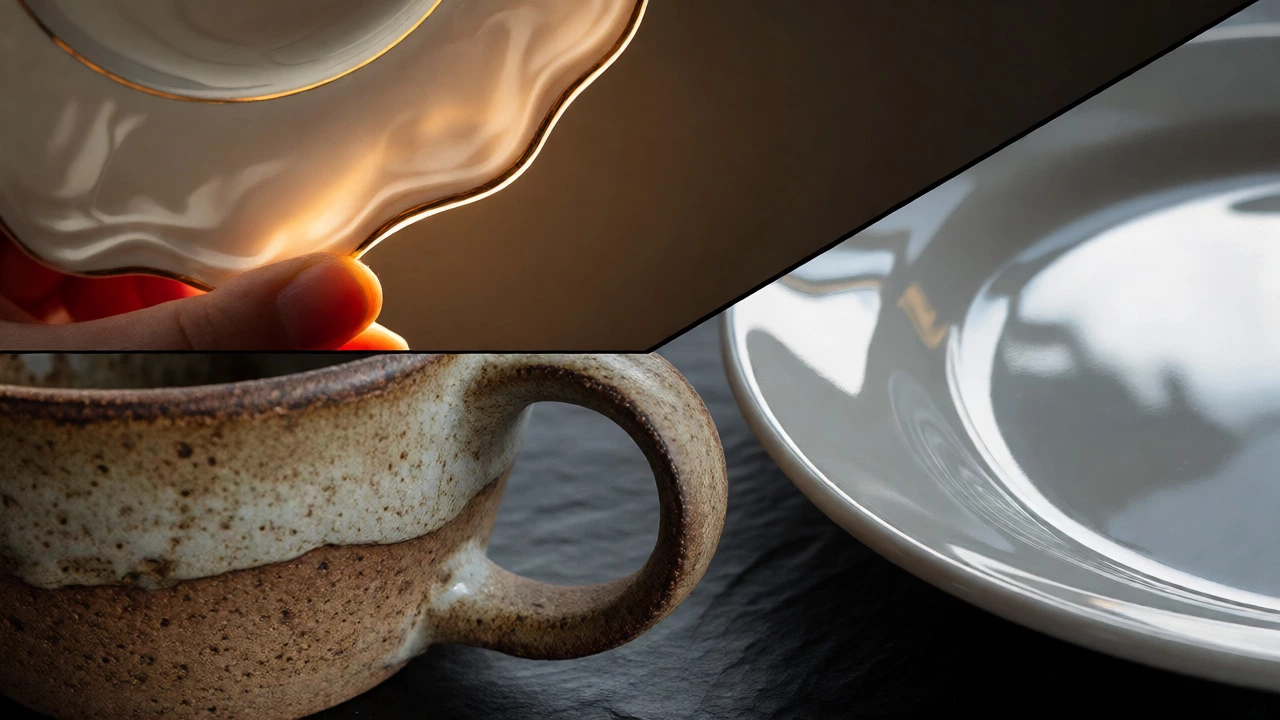
Bone China is a type of porcelain containing animal bone ash. It is translucent, strong, and expensive. If you are describing a high-end wedding gift, calling it "bone china" signals luxury. It is thinner and lighter than regular porcelain.
Porcelain is fired at high temperatures, making it non-porous and vitreous. It is white, smooth, and elegant. Fine dining restaurants almost exclusively use porcelain. It is distinct from earthenware, which is porous and requires glazing.
Stoneware is dense, non-porous, and chip-resistant. It often has a rustic, earthy appearance. Cafes love stoneware because it survives dishwasher cycles and accidental drops. If you want to convey durability and a modern industrial aesthetic, use "stoneware" instead of generic "ceramics."
Melamine is a plastic composite used for outdoor or children's tableware. It looks like ceramic but is unbreakable. Never call melamine "china" unless you are being ironic. It is a functional, budget-friendly alternative.
Contextual Usage: When to Use Which Word
Choosing the right synonym depends entirely on your audience and goal. Here is a quick guide to help you decide.
- For Real Estate Listings: Use "fine china" or "custom cabinetry with display shelving for crockery." Avoid "dishes" as it sounds mundane. "Tableware" works well for staged homes.
- For Restaurant Menus: Describe the presentation, not just the vessel. "Served on a slate platter" sounds better than "served on a plate." Use "goblet" for wine pairings.
- For Online Shopping: Search engines rely on specific keywords. If you search for "cups," you get mugs and teacups mixed. Search for "bone china teacup set" to narrow results. Sellers should use "dishware" in titles to capture traffic from users looking for replacements.
- For Creative Writing: Don't just say "she picked up the plate." Say "she lifted the bone china charger" or "she wrapped her hands around the stoneware mug." The material adds sensory detail.
Common Mistakes to Avoid
One frequent error is confusing "flatware" with "tableware." Flatware refers to knives, forks, and spoons. It does not include plates or cups. If you ask someone to bring flatware to a picnic, they won't bring plates. Another mistake is using "china" for any white ceramic. Not all white ceramics are china; many are simply glazed earthenware. Accuracy builds trust.
Also, be careful with "serveware." Serveware includes platters, gravy boats, and tureens. It is not for individual place settings. If you are buying a set for four people, you want "place settings" or "dinnerware," not serveware.
What is the difference between crockery and chinaware?
Crockery is a broad term, especially in the UK, for all ceramic kitchenware including plates, bowls, and cups. Chinaware specifically refers to items made of porcelain or bone china. All chinaware is crockery, but not all crockery is chinaware. Crockery can also include stoneware and earthenware, which are heavier and less translucent than fine china.
Is a mug considered a cup?
Technically, yes, a mug is a type of cup. However, in common usage, they are distinguished by size, thickness, and the presence of a handle. A cup is typically smaller, thinner, and often comes with a saucer. A mug is larger, thicker, and usually stands alone. In retail categorization, they are often listed separately to help customers find what they need quickly.
What do you call the plate under a cup?
The standard term is a "saucer." If the plate is larger and used for decoration or protection under a dinner plate, it is called a "charger" or "underplate." If it is used to catch condensation from a cold drink, it is a "coaster." The term "saucer" is reserved for the small dish accompanying a teacup or coffee cup.
Why is it called "bone china"?
Bone china contains approximately 30-50% bone ash derived from cattle bones. This ingredient gives the ceramic its characteristic translucency, whiteness, and strength compared to standard porcelain. Despite the name, the final product does not taste or smell of bones, and the process renders the material inert and safe for food.
What is the most formal term for eating dishes?
"Tableware" is the most formal and comprehensive term. It encompasses all items used to set a table, including plates, glassware, and cutlery. "Dinnerware" is also formal but specifically refers to the plates and bowls used for the main meal. In high-end hospitality, staff may refer to "silverware" for cutlery and "chinaware" for plates, reserving "tableware" for the entire ensemble.