What Are the 5 Essential Pieces in a Bathroom?
 Jan, 18 2026
Bathroom Essentials Checklist
Check your bathroom essentials
According to bathroom experts, the five essential pieces make your bathroom functional. Check all that apply to your bathroom.
Modern dual-flush model with soft-close hinge and sealed base for water efficiency and mold prevention.
With adequate storage underneath and moisture-resistant construction to keep your bathroom organized.
Low-flow showerhead or deep soaking tub with proper drainage to prevent water damage and mold.
With built-in LED lighting and defogger for practical grooming and shadow-free illumination.
With at least two towel bars and proper ventilation to keep towels dry and prevent mold.
Most people think a bathroom is just a sink, toilet, and shower. But if you want it to actually work well - not just look nice - you need five core pieces. These aren’t optional decor items. They’re the functional backbone of any bathroom that gets daily use. Skip one, and your morning routine turns into a hassle. Skip two, and you’re constantly hunting for towels or fighting with a dripping faucet.
The Toilet
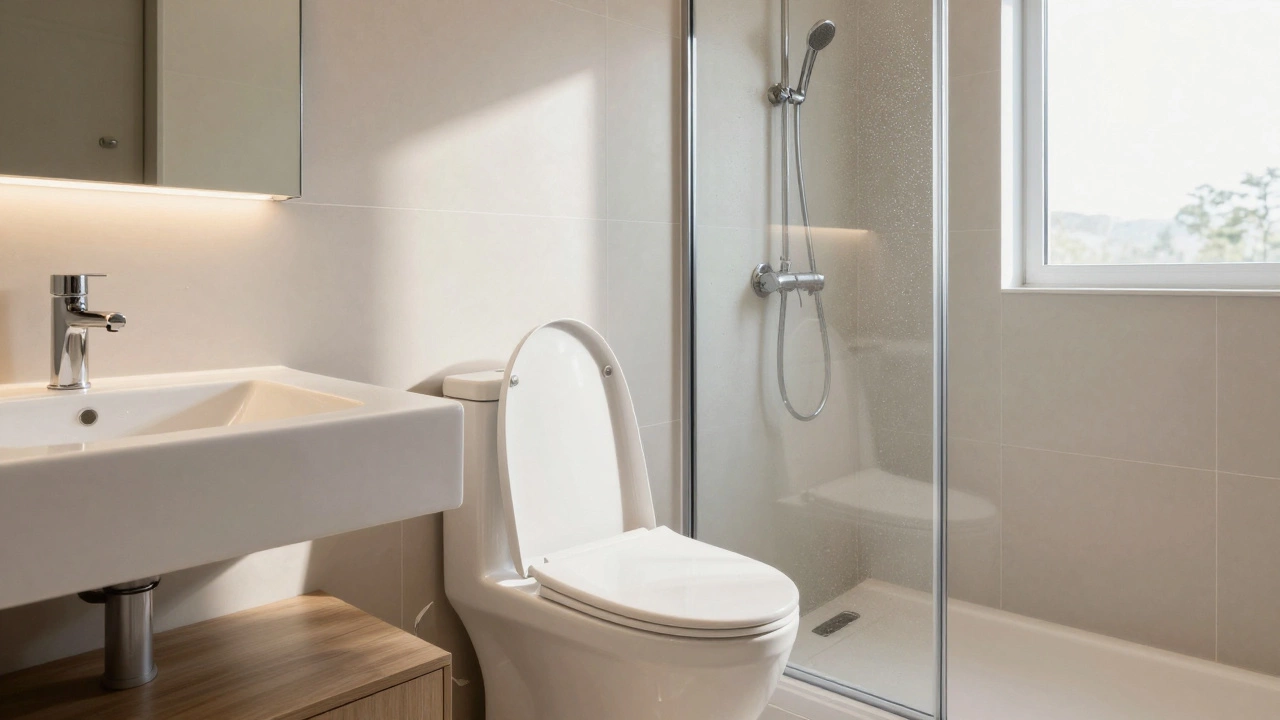
The toilet isn’t just a fixture. It’s the one thing you can’t live without in a bathroom. Modern toilets aren’t just about flushing - they’re designed for water efficiency, comfort, and ease of cleaning. A standard toilet uses about 1.28 gallons per flush, while older models can use up to 3.5 gallons. If you’re replacing one, go for a dual-flush model. It gives you a half-flush for liquid waste and a full flush for solids. That saves water without sacrificing performance.
Don’t overlook the seat. A soft-close hinge isn’t just quiet - it stops the lid from slamming and prevents cracks. A heated seat? Nice, but not essential. A clean, well-sealed base? That’s non-negotiable. Mold grows fast in damp spaces, and a loose toilet base is a breeding ground.
The Sink and Vanity
The sink is where you start your day - brushing teeth, washing face, shaving. But it’s not just the basin. It’s the whole vanity unit underneath. A good vanity holds your toothpaste, medications, makeup, and extra towels. Without storage, your counter turns into a cluttered mess.
Look for solid wood or moisture-resistant MDF. Laminate is cheaper, but it peels when water seeps in. The sink itself? Porcelain is durable and easy to clean. Ceramic is similar but more fragile. Stainless steel works well in modern setups but shows water spots. Choose a depth of at least 5 inches to prevent splashing.
Mounting matters too. Wall-mounted vanities save floor space and make cleaning easier. But if you have kids or elderly users, a floor-standing unit with a lower counter (30-32 inches) is more comfortable.
The Shower or Tub
Most homes have either a shower, a tub, or both. But if you only have one, it should be the shower. Why? Showers use less water, take less time, and are easier to maintain. A standard showerhead flows at 2.5 gallons per minute. Low-flow models cut that to 1.5 or even 1.2 - and still feel strong if they’re well-designed.
Shower doors or curtains? Glass doors are sleek but need regular cleaning to avoid hard water stains. Vinyl curtains are cheaper and easier to replace, but they mildew fast unless you dry them after each use. A shower pan with a slight slope and a good drain prevents water pooling - which leads to mold under the tiles.
If you have a tub, make sure it’s deep enough to sit in comfortably. Standard tubs are 14-16 inches deep. Soaking tubs go up to 20 inches. But if you’re not using it for baths, skip it. A tub takes up space, costs more to install, and requires more water to fill.
The Mirror
A mirror isn’t just for checking your hair. It’s a practical tool for grooming, applying makeup, brushing teeth, and even helping with balance if you’re getting out of the shower. But a basic wall mirror? That’s not enough.
Look for one with built-in lighting. LED strips around the edges give even, shadow-free light. Avoid overhead lights alone - they cast shadows under your eyes and nose. A mirror with a defogger is a game-changer. After a hot shower, fog wipes away in seconds. No more wiping with your towel.
Size matters too. A mirror should be at least as wide as your sink. If your sink is 36 inches wide, your mirror should be too. Mount it so the center is about 5 feet from the floor - that’s eye level for most adults.
Towel Racks and Storage
This is the piece most people forget until they’re standing in the bathroom with a wet towel in their hand, wondering where to put it. Towels need to dry quickly. If they stay damp, they smell. And if you don’t have enough space, you end up piling them on the toilet lid or the floor.
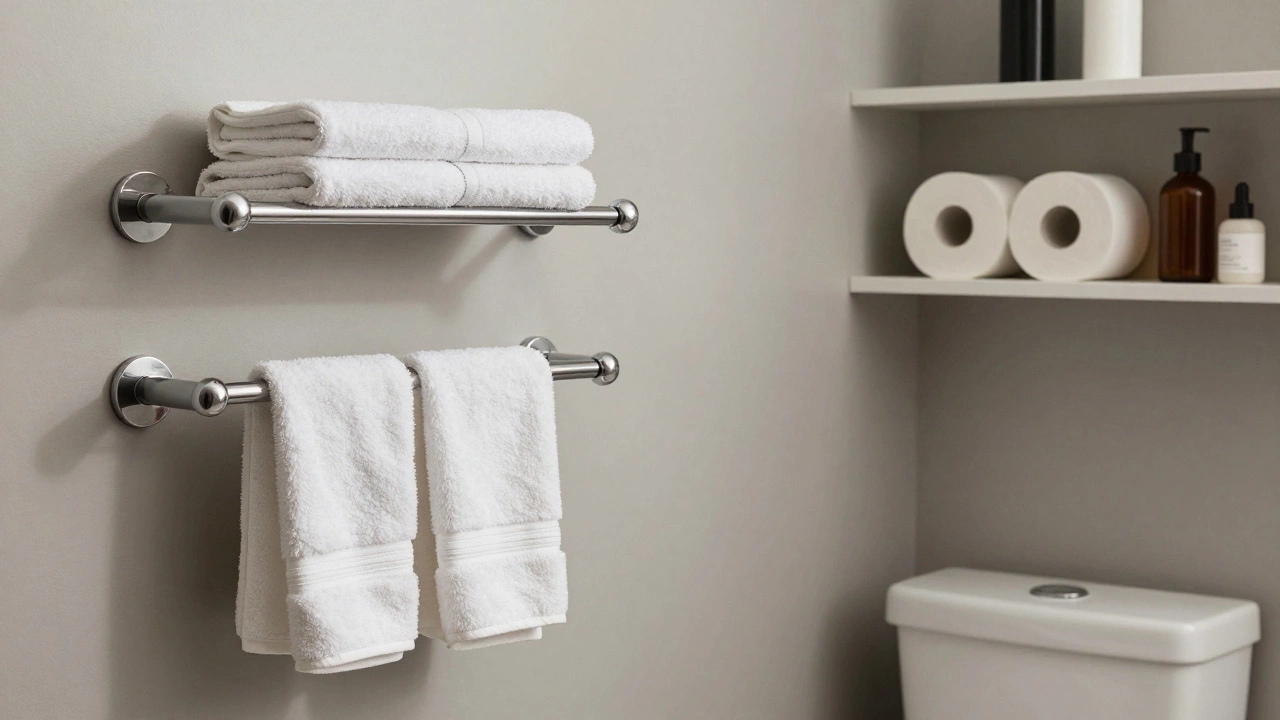
At minimum, you need two towel bars: one for hand towels, one for bath towels. Add a heated towel rack if you live in a cold climate - it dries towels fast and makes them cozy. Wall-mounted shelves above the toilet or beside the vanity hold extra rolls, toiletries, and cleaning supplies.
Don’t rely on baskets on the floor. They trap moisture and collect dust. Instead, use open shelves or cabinets with ventilation. If you have limited space, a vertical towel ladder or a multi-tiered rack saves floor space.
Pro tip: Keep one hand towel per person, and replace them every two days. Wet towels breed bacteria faster than you think.
Why These Five? The Real Rules
Some people add a bidet, a water softener, or fancy aromatherapy diffusers. Those are extras. The five pieces above are the baseline. If you’re renovating or setting up a new bathroom, start here. Everything else is decoration.
Here’s the rule: if it doesn’t help you clean, dry, use the toilet, or get ready - it’s not essential. A decorative soap dispenser? Fine. A marble countertop? Nice. But if you’re short on budget or space, prioritize function over looks.
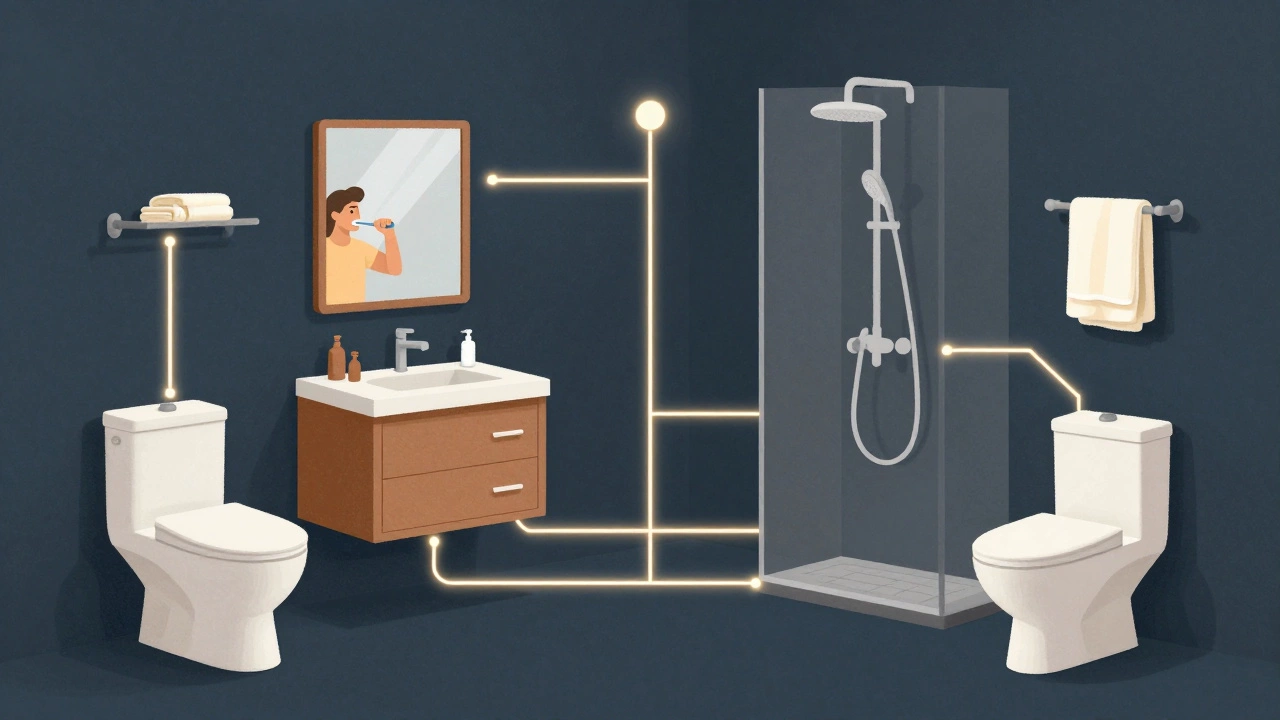
These five pieces work together. The sink needs the mirror. The shower needs the towel rack. The toilet needs the vanity for storage. They’re not separate items - they’re a system. Get the system right, and your bathroom stops being a chore and starts being a place you actually enjoy using.
What About the Sixth Thing?
Some experts say you need a sixth: a garbage can. It’s true - bathroom trash collects cotton swabs, used tissues, and hair. But a small, lidded bin isn’t a core fixture. It’s a hygiene add-on. Same with a toilet paper holder - it’s part of the toilet setup, not a separate category. You don’t count the paper roll as a piece. You count the holder as part of the toilet’s function.
So stick with five. They’re the foundation. Everything else is optional.