What Are the 5 Main Categories of Kitchen Utensils? A Practical Guide
 Nov, 22 2026
Kitchen Utensil Explorer & Quiz
Master the basics by exploring the five essential categories professional chefs rely on, then test your understanding with a quick quiz.
1. Explore the Categories
Click a category below to see examples, functions, and material tips.
Cutting & Prep
FoundationMixing & Blending
CombiningMeasuring
PrecisionCooking & Heating
Heat ApplicationServing & Eating
Presentation2. Test Your Knowledge
Loading question...
Quiz Complete!
You scored 0/0
You’ve just moved into a new place, or maybe you’re finally replacing that warped wooden spoon from college. You walk down the aisle at your local hardware store or browse an online retailer, and suddenly, there are hundreds of options. Spatulas, ladles, whisks, tongs-it’s overwhelming. If you’ve ever stared at a shelf wondering which tool actually does what, you aren’t alone. Most people think they need every gadget under the sun to cook well, but the truth is simpler: professional chefs rely on five core kitchen utensil categories to handle 90% of daily tasks. Understanding these groups helps you buy less, organize better, and cook with more confidence.
| Category | Primary Function | Top Examples | Material Tip |
|---|---|---|---|
| Cutting & Prep | Slicing, dicing, peeling | Knives, peelers, graters | Stainless steel for durability |
| Mixing & Blending | Combining ingredients | Whisks, spoons, bowls | Silicone for heat resistance |
| Measuring | Portion control | Cups, scales, thermometers | Glass or stainless steel |
| Cooking & Heating | Applying heat, stirring | Pans, spatulas, tongs | Non-stick compatible heads |
| Serving & Eating | Presenting and consuming | Ladles, platters, cutlery | Ergonomic handles |
Cutting and Prep Tools: The Foundation of Every Meal
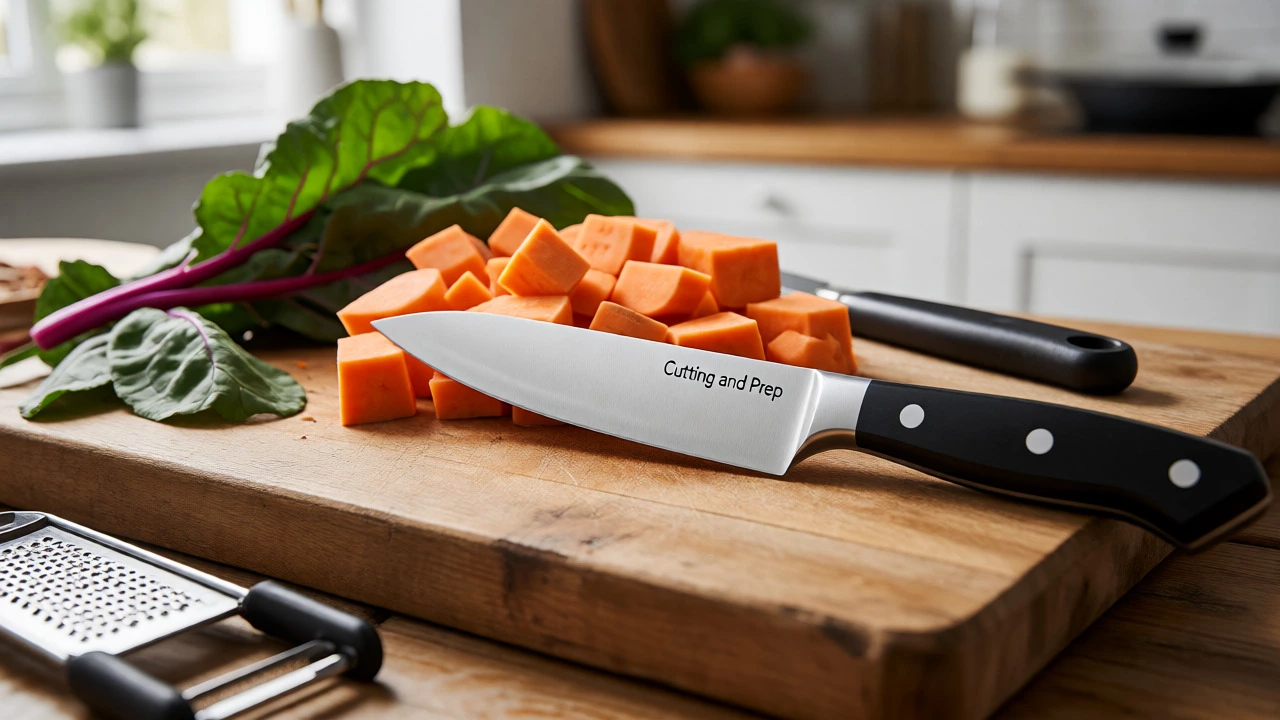
Before anything hits the stove, it has to be processed. This category includes everything used to change the shape or size of raw ingredients. Think of your chef’s knife, paring knife, vegetable peeler, and box grater. These tools define how fast you work and how consistent your food cooks. A dull knife isn’t just annoying; it’s dangerous because you have to press harder, increasing slip risks. In Auckland homes, where we often prep fresh produce like kumara or silverbeet, sharp prep tools save significant time.
When building this set, prioritize quality over quantity. You don’t need twelve different knives. A solid eight-inch chef’s knife handles onions, meat, and herbs. A small paring knife manages strawberries and garlic skins. For peeling, a Y-peeler offers better leverage than swivel models. Graters come in handheld or box styles; if you bake often, invest in a microplane for zesting lemons or grating hard cheeses. Keep these tools separate from others in your drawer using a divider-mixing them with soft silicone spatulas dulls blades faster.
Mixing and Blending Essentials
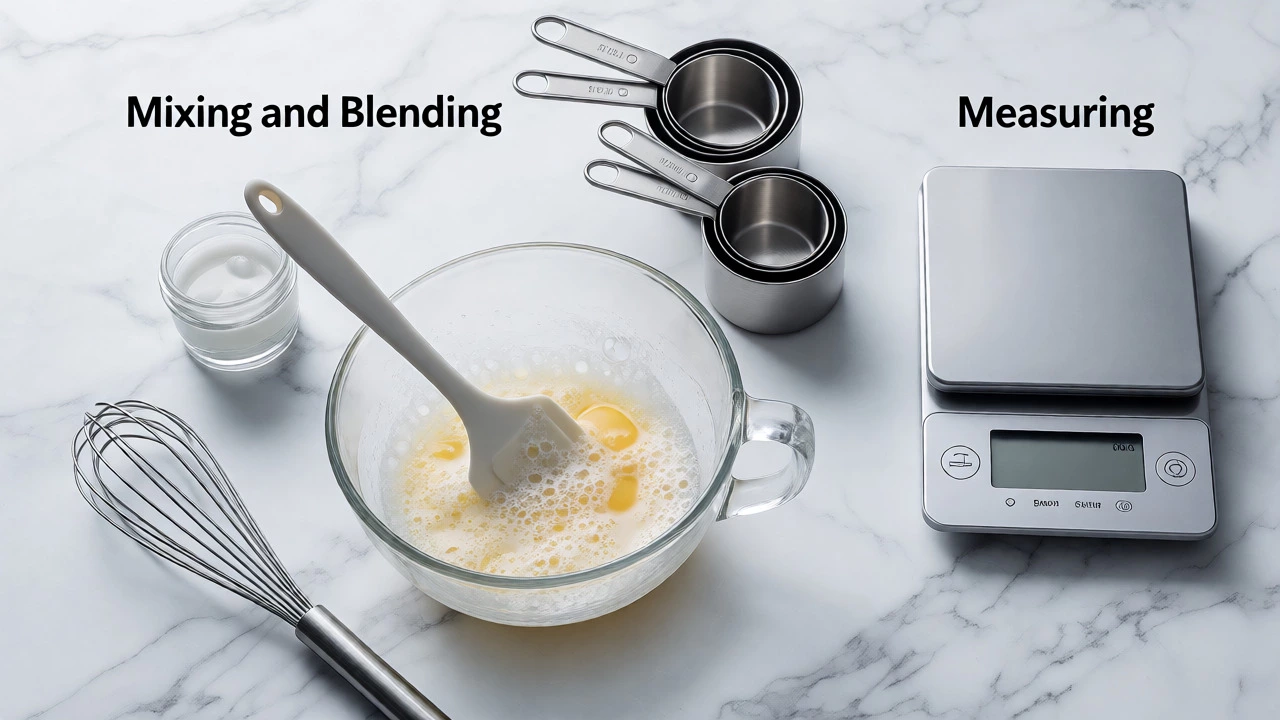
Once ingredients are prepped, they need combining. Mixing tools range from simple wooden spoons to high-powered blenders. At the basic level, you need a whisk for emulsifying vinaigrettes or whipping eggs, and a sturdy mixing bowl set. Silicone spatulas belong here too, despite their use in cooking, because their primary job is scraping batter out of bowls without waste.
Consider material compatibility carefully. Wooden spoons are classic but can harbor bacteria if not dried properly. Silicone is non-porous, heat-resistant up to 230°C (450°F), and safe for non-stick pans. Metal whisks work best for heavy batters, while balloon whisks introduce air into lighter mixtures like meringues. If you make smoothies frequently, a countertop blender falls into this category, though it borders on appliances. Stick to manual tools first-they’re cheaper, quieter, and easier to clean.
Measuring Precision for Consistent Results
Cooking by eye works for stir-fries, but baking demands accuracy. Measuring utensils ensure repeatability. This group includes dry measuring cups, liquid measuring jugs, kitchen scales, and instant-read thermometers. Many beginners skip the scale, relying solely on volume measurements. But flour compresses differently depending on how you scoop it, leading to dense cakes. Weighing ingredients in grams eliminates this variable.
Digital scales offer higher precision than analog dial versions. Look for one with a tare function, allowing you to zero out the weight of a bowl before adding ingredients. Liquid measures should have clear markings on the side, not just the top, so you can read them at eye level on a counter. Thermometers prevent undercooked chicken or burnt custards. An instant-read probe takes seconds to register temperature, making it indispensable for roasting meats. Store these items near your prep station, not buried in a back cupboard.
Cooking and Heating Instruments
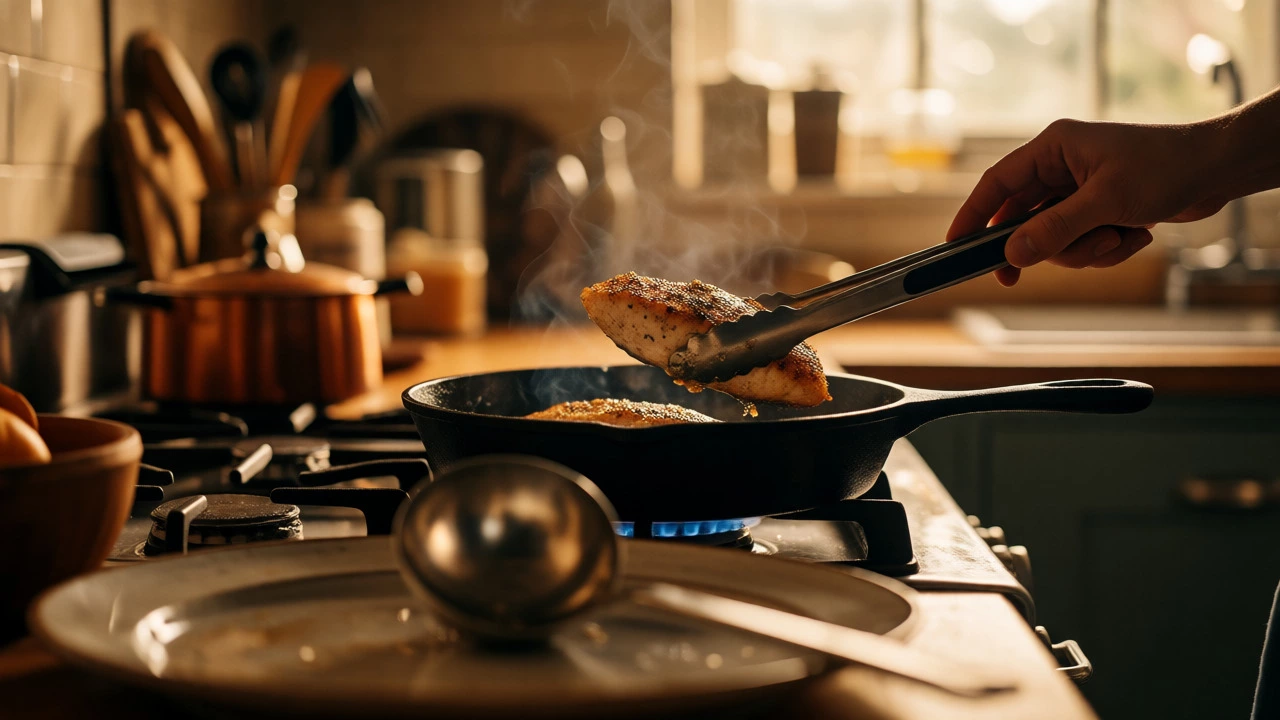
This is the broadest category, covering tools used directly on heat sources. It includes pots, pans, skillets, and the hand-held tools that manipulate food inside them: spatulas, tongs, slotted spoons, and ladles. Each serves a distinct mechanical purpose. Tongs provide grip without piercing delicate fish fillets. Slotted spoons lift pasta from boiling water while letting steam escape. Ladles transfer soups smoothly.
Material choice matters heavily here. Nylon or silicone heads won’t scratch ceramic-coated pans, unlike metal. However, metal spatulas excel at flipping burgers on cast iron because they create a crisp crust. Heat resistance ratings vary widely; check packaging before buying. Cheap plastic handles melt easily on gas burners. Opt for ergonomic designs with rubberized grips, especially if you cook for long periods. In New Zealand kitchens, where open-plan layouts are common, noise reduction matters-silicone clanging against stainless steel is quieter than metal-on-metal.
Serving and Eating Accessories
The final step moves food from pot to plate. Serving utensils bridge the gap between preparation and consumption. This includes salad servers, cake slices, butter knives, and serving spoons. While often overlooked, poor serving tools ruin presentation. A flimsy plastic spoon bends when scooping thick risotto. A jagged cake server tears layers instead of cutting cleanly.
Match your serving tools to your dining style. Formal dinners call for polished stainless steel sets. Casual family meals might prefer durable bamboo or matte black finishes. Cutlery itself-forks, knives, spoons-falls here too. Invest in balanced handles that feel comfortable during extended meals. Storage solutions matter: use drawer organizers with slots for each piece type to prevent scratching. If space is tight, magnetic strips on walls keep metal cutlery accessible and visible.
How to Organize Your Kitchen Drawer Efficiently
Knowing the categories helps you declutter. Start by emptying your junk drawer entirely. Sort items into the five groups above. Discard duplicates-if you have six spatulas but only two good ones, toss the rest. Use compartmentalized trays sized for your specific tools. Place prep tools near your chopping board, cooking tools near the stove, and serving items near the table or dishwasher exit.
A common mistake is storing heavy pots together with light utensils. This creates instability and makes retrieval difficult. Instead, hang frequently used tools on rails or hooks. This frees up drawer space for smaller items like peelers and measuring spoons. Label sections if multiple household members cook. Visual cues reduce friction and encourage everyone to put things back correctly.
Common Pitfalls When Buying Kitchen Tools
Marketing tricks lure buyers into purchasing single-use gadgets. The avocado slicer, egg separator, or strawberry huller seem handy until they gather dust. Before buying any niche tool, ask: Can I do this with my existing five-category kit? Usually, yes. A sharp knife hulls strawberries fine. A spoon separates eggs easily.
Another trap is ignoring maintenance requirements. Cast iron needs seasoning; copper requires polishing. If you dislike upkeep, stick to stainless steel or enamel-coated options. Also, check dishwasher safety labels. Some premium wooden handles crack after repeated hot washes. Hand-washing extends lifespan significantly. Finally, avoid cheap multi-piece sets sold as "complete kits." They often include inferior versions of essential tools while missing key items like a reliable thermometer.
Frequently Asked Questions
Do I really need all five categories?
Yes, for functional cooking. While you can survive with minimal gear, lacking one category limits meal variety. Without measuring tools, baking becomes guesswork. Without proper cutting tools, prep time doubles. Covering all five ensures you can handle any recipe confidently.
Are silicone utensils safe for high-heat cooking?
High-quality food-grade silicone withstands temperatures up to 230°C (450°F). However, leaving them resting against pan edges on high flame can degrade them over time. Always check manufacturer specs and replace if discoloration or warping occurs.
What is the most important tool in the cutting category?
The chef’s knife. It performs slicing, dicing, mincing, and crushing. Investing in one high-quality blade (German or Japanese steel) yields better results than owning ten cheap ones. Keep it sharp with regular honing.
How often should I replace kitchen utensils?
It depends on usage and material. Wooden spoons last years if maintained. Silicone may warp after 2-3 years of daily use. Knives require sharpening annually but can last decades. Replace tools showing cracks, deep scratches, or loose handles immediately for hygiene reasons.
Can I store all utensils in one drawer?
You can, but it’s inefficient. Large drawers become chaotic quickly. Split storage: keep prep and cooking tools near the stove/prep area, and serving/eating tools near the dishwasher or dining zone. Use dividers to maintain order within each section.