What Are the Bits Left in a Pan Called? The Science of Pan Residue
 Feb, 26 2026
Deglazing Liquid Calculator
Recommended Deglazing Liquid
For your , we suggest:
How to use:
After cooking, turn heat to medium-high and pour in of . Let it bubble for 1-2 minutes, scraping the pan to lift fond. Reduce heat and simmer to desired consistency.
Ever finished cooking a steak, chicken thigh, or sautéed onions and noticed those sticky, dark bits stuck to the bottom of your pan? You might’ve scraped them off with a spatula, tossed them out, or just ignored them. But those bits? They’re not trash. They’re the secret flavor engine behind some of the best meals you’ve ever eaten.
What Are Those Bits Actually Called?
The technical term for those brown, caramelized bits left in the pan after cooking is fond. It’s a French word that literally means "base" or "foundation." In cooking, it refers to the concentrated, flavorful residue that forms when proteins and sugars react with heat - the Maillard reaction in action.
This isn’t just fancy terminology. Fond is what turns a simple pan-seared chicken breast into something rich, deep, and restaurant-worthy. Without fond, you’re missing the backbone of pan sauces, gravies, and deglazed stews. It’s the reason your grandmother’s beef stew tasted like it had been simmering for hours, even if it hadn’t.
How Does Fond Form?
Fond develops when food hits a hot surface - usually metal, like stainless steel or cast iron. As the surface heats up, moisture on the food evaporates, and the natural sugars and amino acids begin to react. This is the Maillard reaction: a chemical process that creates hundreds of new flavor compounds. It’s why toast is brown and smells amazing, why seared meat has that crust, and why caramelized onions taste sweet and complex.
It’s not the same as burnt food. Burnt bits are bitter, blackened, and ruined. Fond is deep brown, almost mahogany in color, and smells like roasted nuts, meat, or toasted spices. It sticks to the pan because it’s concentrated - not because it’s stuck by accident.
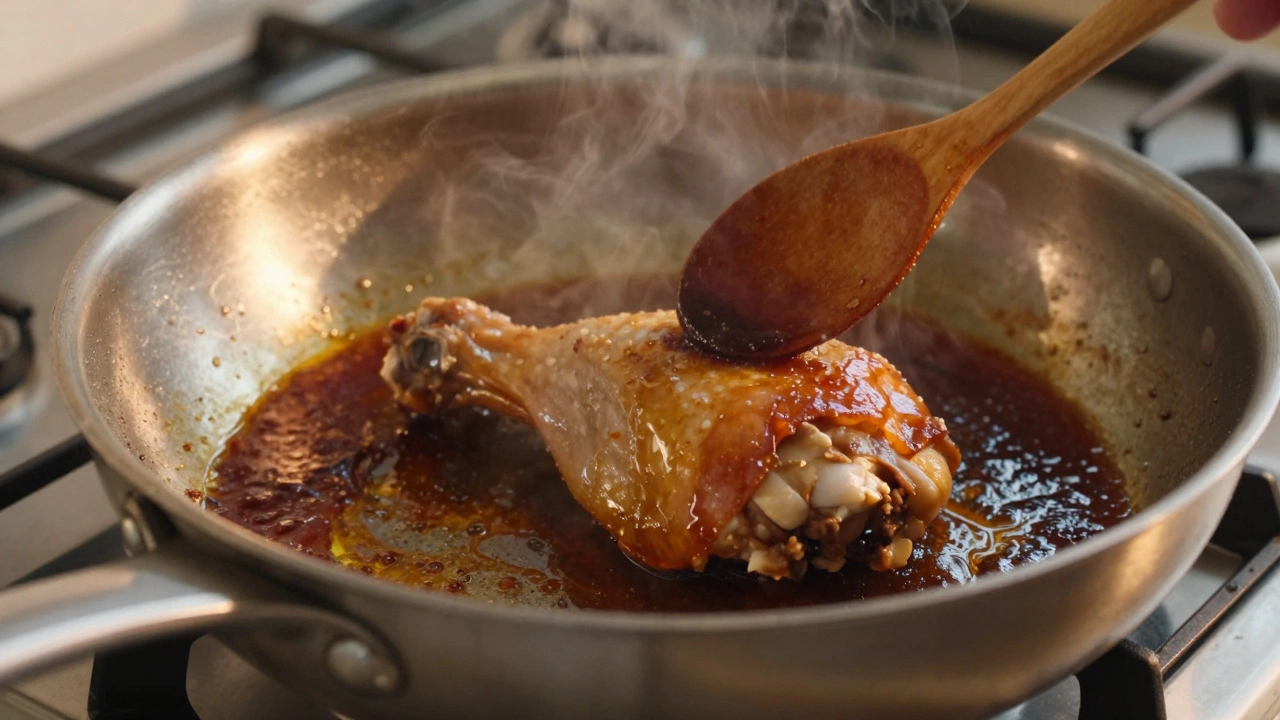
Here’s a simple test: cook a chicken thigh in a dry stainless steel pan over medium heat. After 5-7 minutes, flip it. You’ll see a dark, glossy layer on the pan’s surface. That’s fond. If you try to scrape it off too early, it’ll stick. Wait until it naturally releases - that’s when you know it’s ready.
Why Do Some Pans Make More Fond Than Others?
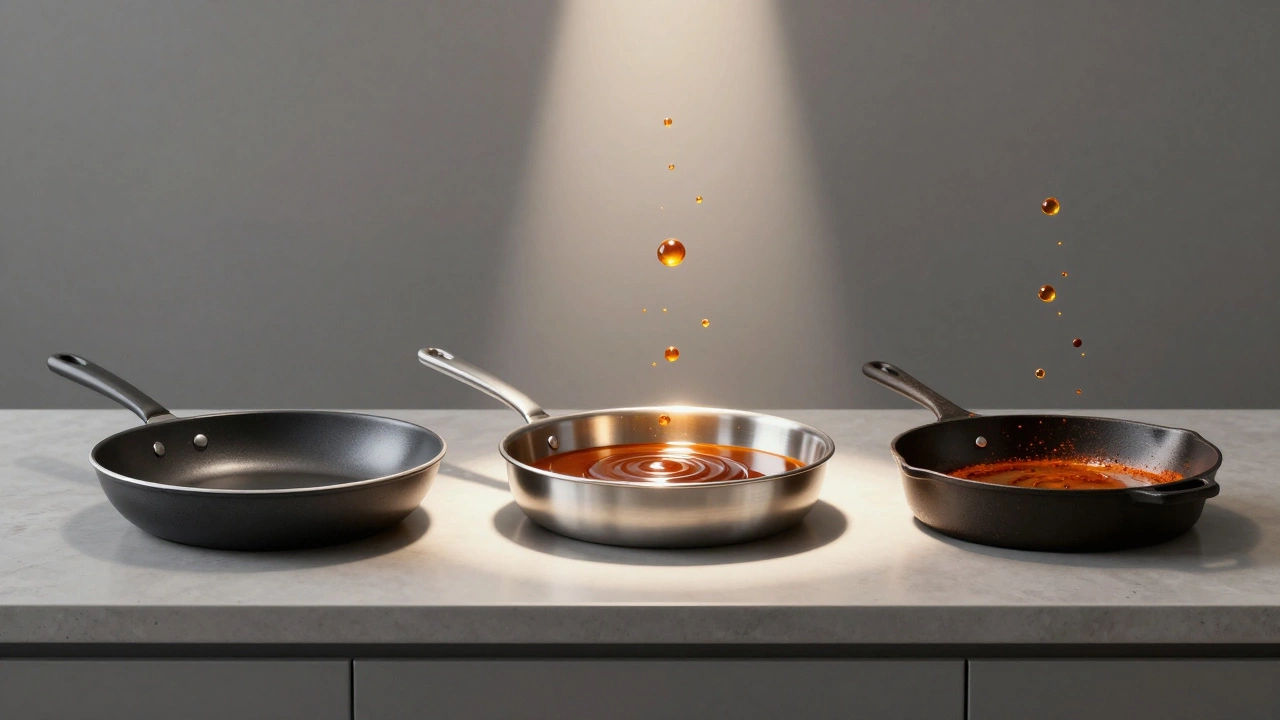
Not all pans are created equal when it comes to building fond. Stainless steel is the gold standard. It heats evenly, doesn’t have a nonstick coating to interfere with browning, and lets food develop that crust you want.
Cast iron works great too. It holds heat well, so it maintains a steady sear. But it needs seasoning - a layer of polymerized oil - to prevent sticking before fond even forms.
Nonstick pans? They’re the enemy of fond. The coating prevents direct contact between food and metal, so browning doesn’t happen the same way. You’ll get color, maybe, but not the concentrated flavor. If you’re trying to make a pan sauce, skip the nonstick. Grab the stainless steel.
How to Use Fond - The Art of Deglazing
Fond is useless unless you unlock it. That’s where deglazing comes in.
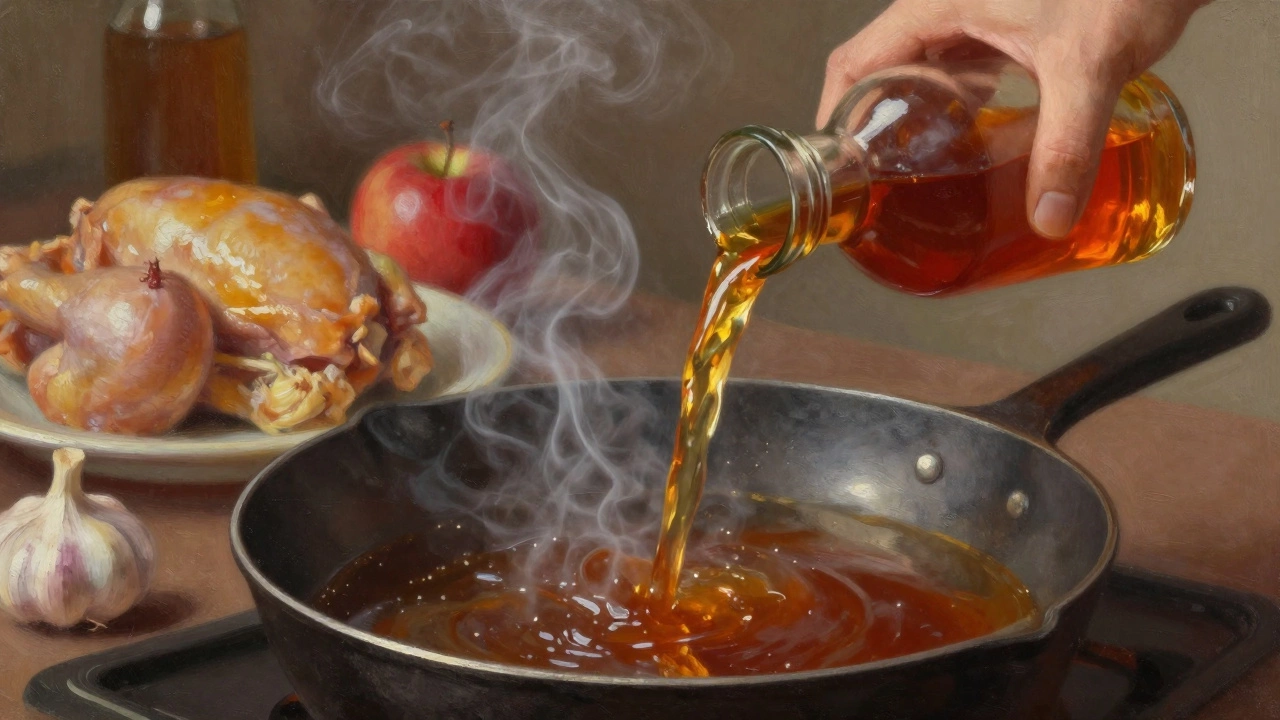
After removing your protein, turn the heat up slightly and pour in a liquid - wine, broth, vinegar, even water. As it hits the hot pan, it bubbles and hisses, lifting the fond off the bottom. Stir gently with a wooden spoon or silicone spatula. You’ll see the brown bits dissolve into the liquid, turning it into a rich, savory sauce.
Here’s a real example: after searing pork chops, add ½ cup of apple cider vinegar and a splash of chicken stock. Let it boil for a minute, scraping the pan. Then swirl in a knob of cold butter. That’s your sauce - no cream, no flour, no fancy ingredients. Just fond, heat, and time.
Same goes for vegetables. Sauté mushrooms until they release their water and start to brown. Deglaze with a splash of soy sauce or balsamic. Suddenly, your side dish has depth.
Common Mistakes People Make
Most home cooks either ignore fond or ruin it.
- Scraping too soon - Fond needs time to develop. If you move the food too early, it tears instead of searing.
- Using cold liquid - Cold broth won’t lift fond effectively. Warm it first, or let the pan heat up before adding liquid.
- Overcrowding the pan - Too much food in one pan = steam, not sear. You need space for moisture to escape.
- Using nonstick pans - Again, no fond means no flavor.
- Throwing away the pan after cooking - If you’re not deglazing, you’re wasting flavor.
Fond in Everyday Cooking
You don’t need to be a chef to use fond. It’s in your daily meals.
Ever made spaghetti sauce in a skillet? The brown bits left after browning ground beef? That’s fond. Add tomato paste, then a splash of water - it dissolves into the sauce and makes it taste richer.
Or how about fried eggs? If you cook them in a cast iron pan and then use the same pan to sauté spinach, the bits from the eggs add a subtle umami note. It’s not a trick - it’s just good technique.
Even baking benefits. When you roast vegetables, the bits stuck to the baking sheet? Deglaze that pan with a little olive oil and garlic after roasting, then drizzle it over the veggies. It’s a flavor upgrade most people never think to try.
Why This Matters Beyond Taste
Using fond isn’t just about flavor - it’s about reducing waste and maximizing value. Every bit of that residue is concentrated nutrition: proteins, minerals, and natural sugars that would otherwise be thrown away. In a world where food waste is a real problem, learning to use what’s left in the pan is practical, sustainable, and smart.
It also means you don’t need to buy expensive sauces or flavor boosters. Your pan already has everything you need.
Final Tip: Clean Your Pan Right
After deglazing, don’t scrub your pan with soap and steel wool. That’s how you lose the seasoning (on cast iron) or damage the surface (on stainless steel). Instead, add hot water and let it sit for a few minutes. The residue will loosen. Use a wooden spoon or paper towel to wipe it out. Rinse, dry, and you’re done. Your pan will thank you.