What Board is Best for Shelving? A Practical Guide
 Nov, 1 2026
Shelving Material & Thickness Estimator
Enter your project details below to get a personalized recommendation for shelf material and thickness.
Recommended Setup
-
-
-
-
You’ve cleared the wall space, bought the brackets, and maybe even painted the room. But then you hit a wall-literally. You’re standing in the hardware aisle staring at stacks of wood, wondering which one won’t bow under the weight of your books or crack when you drop a heavy pot. It’s a common headache. Choosing the wrong board can turn a sleek storage solution into a sagging disaster within months.
The truth is, there isn’t one single "best" board for every situation. The right choice depends entirely on what you plan to put on those shelves, how long they are, and whether they’ll be hidden behind doors or displayed as part of your decor. Let’s break down the real contenders so you can pick the right material without wasting money or time.
Plywood: The Heavy-Duty Workhorse
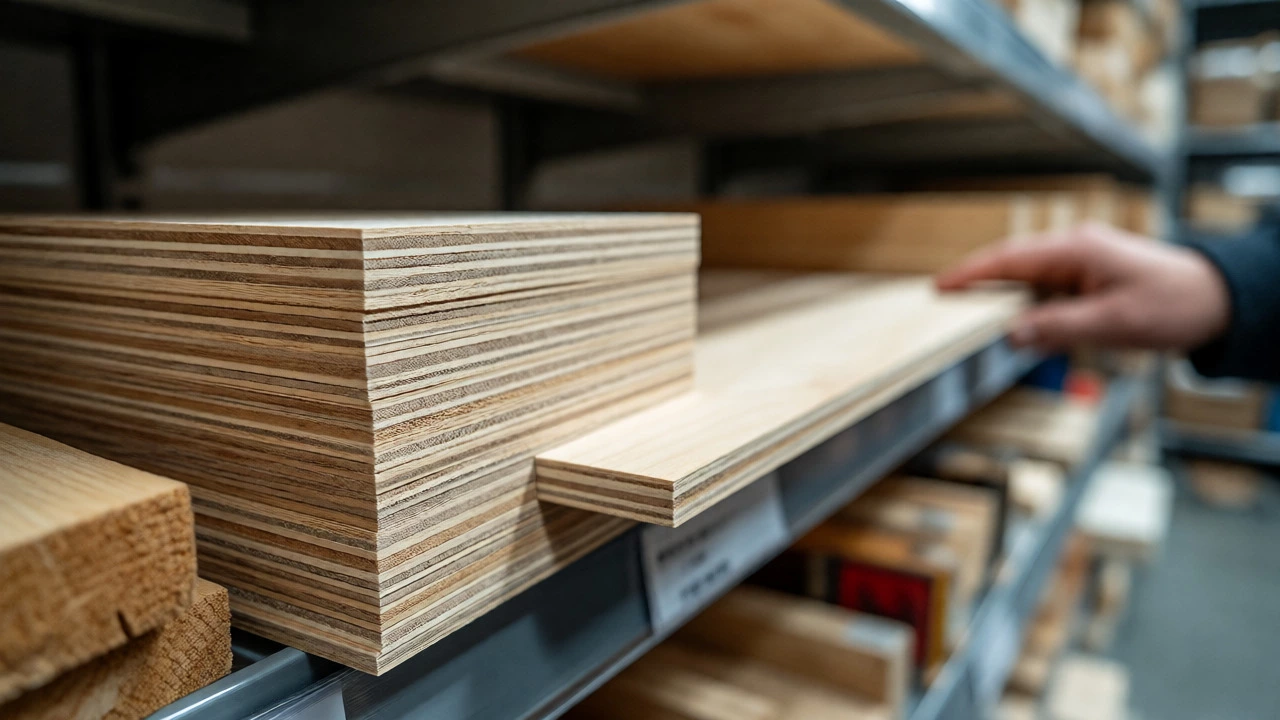
If you ask most carpenters what they use for custom built-ins, they’ll point to plywood. Unlike solid lumber, plywood is an engineered wood product made by gluing layers of thin wood veneer together, usually with the grain of adjacent layers rotated up to 90 degrees. This cross-grain construction makes it incredibly stable. It doesn’t warp easily with humidity changes, and it resists splitting when you drive screws near the edge.
For shelving, you want furniture-grade plywood (often labeled as BB or BC grade). Avoid the rough construction plywood used for subfloors; it’s ugly and splinters easily. If you’re building open shelves that will hold heavy items like encyclopedias or vinyl records, go for 18mm (3/4 inch) thick plywood. For lighter decorative items, 12mm (1/2 inch) might suffice if the span between supports is short (under 60cm).
Pro Tip: Plywood edges look messy because you see all those layers. Always finish them. You can buy iron-on edge banding that matches the veneer, or simply paint the edges after sanding them smooth. This small step makes cheap plywood look like expensive solid wood.
MDF: The Smooth Surface King
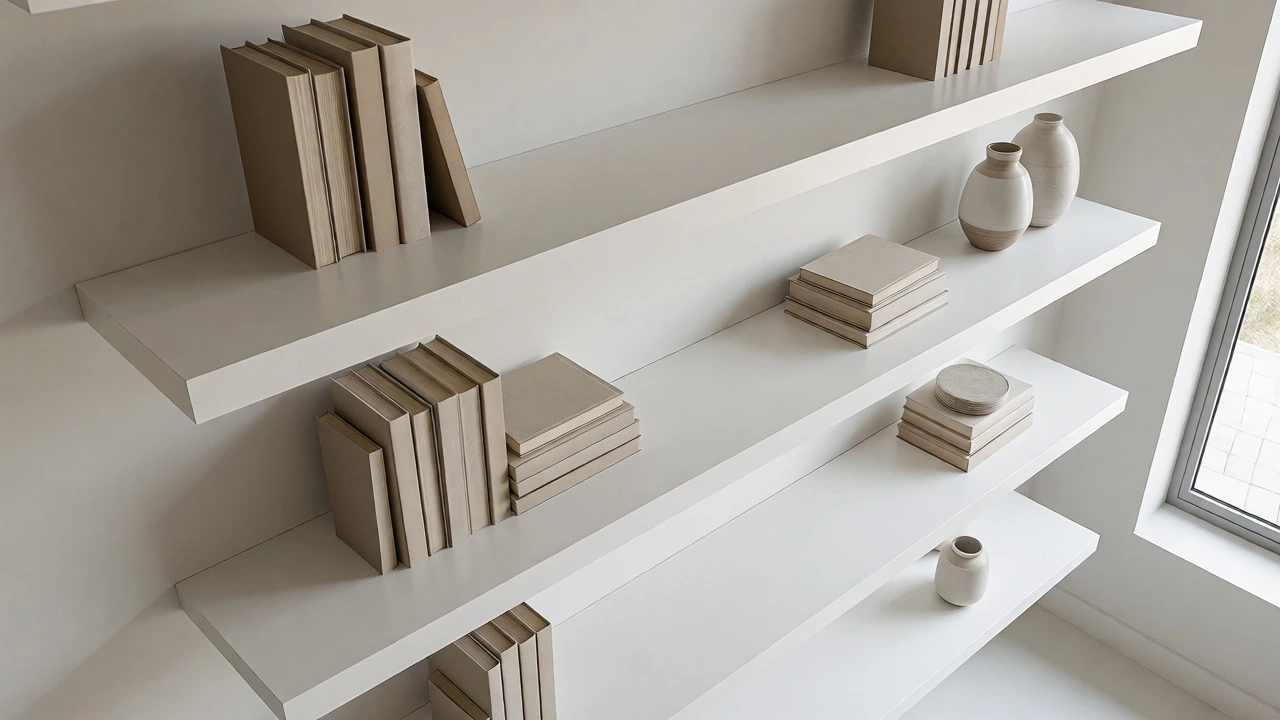
MDF (Medium-Density Fiberboard) is made from broken-down hardwood fibers that are combined with wax and resin, formed into panels, and heated to high pressure. It’s dense, uniform, and has no grain direction. This makes it perfect for painting. If you want crisp, white, modern-looking shelves, MDF is often cheaper and easier to work with than plywood.
However, MDF has two major weaknesses: moisture and weight. It absorbs water like a sponge, swelling and crumbling if it gets wet. Never use raw MDF in bathrooms or kitchens unless it’s sealed thoroughly on all six sides. Also, MDF is heavy. A standard 2440x1220mm sheet weighs significantly more than a comparable sheet of plywood. This means your brackets need to be rated for higher loads.
When using MDF for shelves, stick to 18mm thickness. Anything thinner tends to sag over spans longer than 70cm, especially if you’re loading it with books. And remember: MDF produces fine, irritating dust when cut. Wear a mask and eye protection.
Solid Wood: The Aesthetic Choice
Nothing beats the warmth and character of solid wood for visible shelving. Species like Oak, Pine, and Walnut offer natural beauty that laminates can’t quite replicate. Solid wood is strong, but it’s also reactive. It expands and contracts with temperature and humidity changes, which can lead to warping or cracking if not properly acclimated and finished.
For shelving, Pine is the budget-friendly option, but it dents easily. Oak is harder and more durable but costs more. Walnut is stunning but expensive. If you choose solid wood, ensure it’s kiln-dried to prevent future movement. Also, consider the width. Wide boards (over 200mm) are prone to cupping. Narrower strips glued together (laminated lumber) are more stable than single wide planks.
Laminate and Particleboard: The Budget Option
You’ll find pre-made shelves in big-box stores made from particleboard or chipboard, often covered with a melamine laminate. These are cheap and ready to install. They’re great for closets, pantries, or areas where aesthetics don’t matter much.
But here’s the catch: particleboard has poor screw-holding strength. Once a screw hole is stripped, it’s nearly impossible to fix. It also hates water. Even a small leak can ruin a particleboard shelf permanently. Use these only for light loads and dry environments. If you must use them, reinforce the back edge with a strip of wood to help distribute the load.
How Thickness Affects Sagging
The biggest enemy of any shelf is sag. It’s physics, not just quality. The longer the distance between supports (the span), the thicker the board needs to be to prevent bending. Here’s a general rule of thumb based on real-world experience:
| Span Length (Distance between brackets) | Minimum Thickness for Light Loads (Decor) | Minimum Thickness for Heavy Loads (Books/Appliances) |
|---|---|---|
| Up to 60 cm (24 inches) | 12 mm (1/2") | 18 mm (3/4") |
| 60-90 cm (24-36 inches) | 18 mm (3/4") | 25 mm (1") or add a support |
| Over 90 cm (36+ inches) | 25 mm (1") | Use steel backing or center support |
Notice that for long spans, thickness alone isn’t enough. You often need structural reinforcement. A common trick is to glue a piece of angle iron or flat steel bar to the underside of the shelf. This invisible support adds immense stiffness without changing the look.
Material Comparison: Which One Fits Your Project?
Let’s put these materials side-by-side to help you decide quickly.
| Feature | Plywood | MDF | Solid Wood | Particleboard |
|---|---|---|---|---|
| Cost | $$ | $ | $$$ - $$$$ | $ |
| Strength | High | Medium-High | High | Low-Medium |
| Moisture Resistance | Good (if sealed) | Poor | Fair (varies by species) | Very Poor |
| Paintability | Good (needs primer) | Excellent | Variable (knots bleed) | N/A (pre-laminated) |
| Best For | Custom builds, heavy loads | Painted cabinets, modern looks | Visible display shelves | Closets, temporary setups |
Don’t Forget the Hardware
Your board is only as good as what holds it up. Standard plastic drywall anchors often fail under dynamic loads (like pulling a book off a shelf). For anything heavier than 10kg, try to hit a wall stud. If you can’t, use toggle bolts or heavy-duty masonry anchors depending on your wall type.
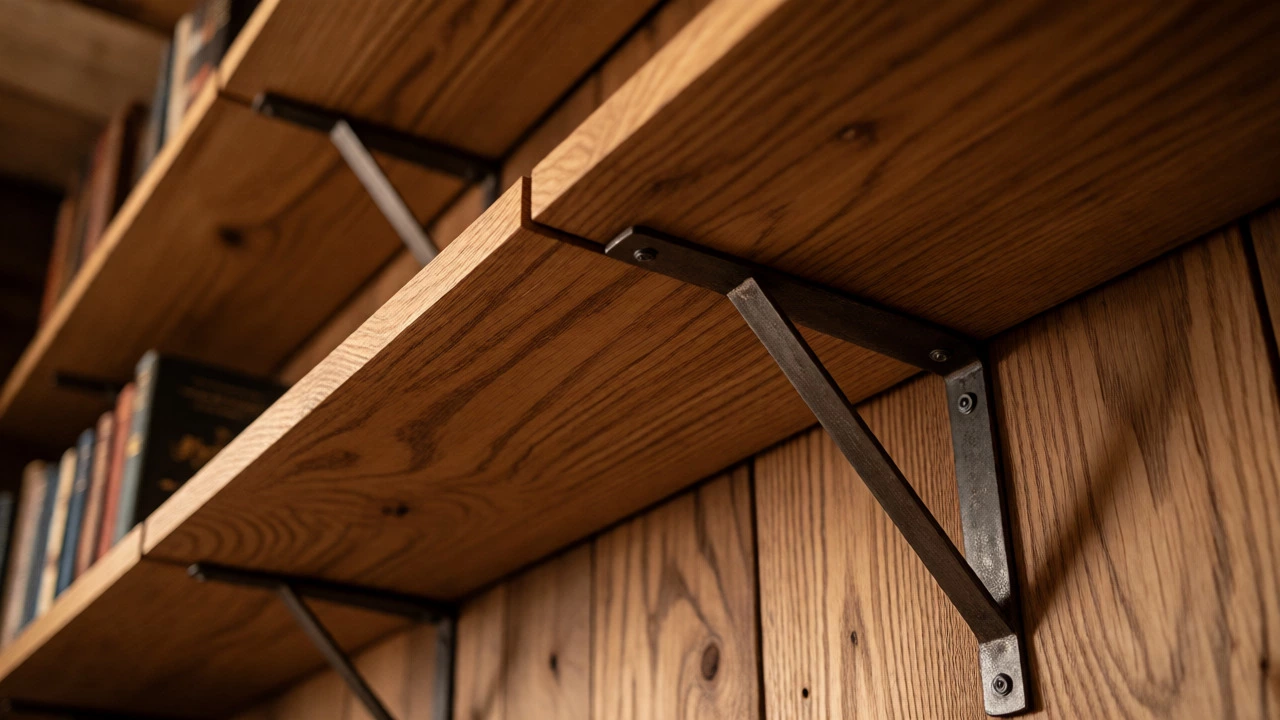
Also, consider bracket design. L-shaped brackets are common, but they transfer all the stress to the top screw. Look for brackets with a triangular brace or a wider footprint. These distribute the weight better and reduce the chance of the shelf tilting forward.
Auckland Humidity and Other Local Factors
If you live in a humid climate like Auckland, New Zealand, moisture management is critical. Even "dry" indoor air can have enough humidity to affect wood. Acclimate your boards before installation. Leave them in the room for at least 48 hours so they adjust to the ambient temperature and humidity. This prevents post-installation warping.
In coastal areas, salt air can corrode metal brackets faster. Choose stainless steel or powder-coated aluminum hardware instead of plain zinc-plated steel. It costs a bit more but saves you from rust stains on your walls years down the line.
Final Checklist Before You Buy
- Measure the span: How far apart are your supports? Longer spans need thicker boards or reinforcement.
- Weigh your items: Estimate the total weight per shelf. Add 20% safety margin.
- Check the environment: Is it dry? Moist? Will it get splashed? Choose moisture-resistant materials accordingly.
- Decide on finish: Painting? Go MDF or primed plywood. Staining? Go solid wood or high-quality veneer plywood.
- Verify hardware ratings: Ensure brackets and anchors are rated for the calculated load, not just the board weight.
Choosing the right board isn’t about finding the most expensive option. It’s about matching the material’s strengths to your specific project constraints. Plywood offers the best balance of strength and cost for most DIYers. MDF wins for painted, uniform looks. Solid wood brings unmatched charm. And particleboard serves its purpose for low-stakes, budget-conscious tasks. Pick wisely, measure twice, and your shelves will stay straight for years.
Is MDF stronger than plywood for shelves?
No, plywood is generally stronger and more rigid than MDF for the same thickness. MDF is denser but lacks the tensile strength of plywood's layered structure. Plywood resists sagging better over long spans, while MDF is more likely to bow under heavy loads unless reinforced.
Can I use OSB for shelving?
You can, but it's rarely recommended for visible shelving. Oriented Strand Board (OSB) is structurally strong but has a rough, uneven surface that is difficult to paint smoothly. It's also prone to swelling at the edges if exposed to moisture. It's best suited for garage storage or hidden utility shelves where appearance doesn't matter.
How thick should shelves be for books?
For standard bookcases with spans under 80cm, 18mm (3/4 inch) plywood or solid wood is sufficient. If your shelves are wider than 80cm, you should increase the thickness to 25mm (1 inch) or add a vertical support in the middle to prevent sagging under the significant weight of paper books.
Does pine warp easily?
Yes, pine is a softwood that is prone to warping and twisting, especially if it wasn't properly dried during manufacturing. To minimize this, buy kiln-dried pine, store it flat before use, and seal both sides of the board with paint or varnish immediately after cutting to equalize moisture absorption.
What is the cheapest way to make sturdy shelves?
The most cost-effective sturdy option is usually 18mm furniture-grade plywood. While particleboard is cheaper upfront, it often fails sooner. Plywood offers superior longevity and strength-to-weight ratio. Pair it with simple wooden cleats instead of expensive metal brackets to save further on hardware costs.