What Does XL Mean in Bedding? Size Guide for Sheets and Duvets
 Jan, 26 2026
Ever bought a set of sheets labeled 'XL' only to find they don’t fit your bed properly? You’re not alone. The term 'XL' in bedding sounds simple, but it’s one of the most confusing labels out there. Unlike clothing, where XL usually means one thing, bedding sizes vary wildly by country, brand, and even mattress type. So what does XL actually mean when you’re shopping for sheets, duvets, or pillowcases?
XL Bedding Isn’t One Size Fits All
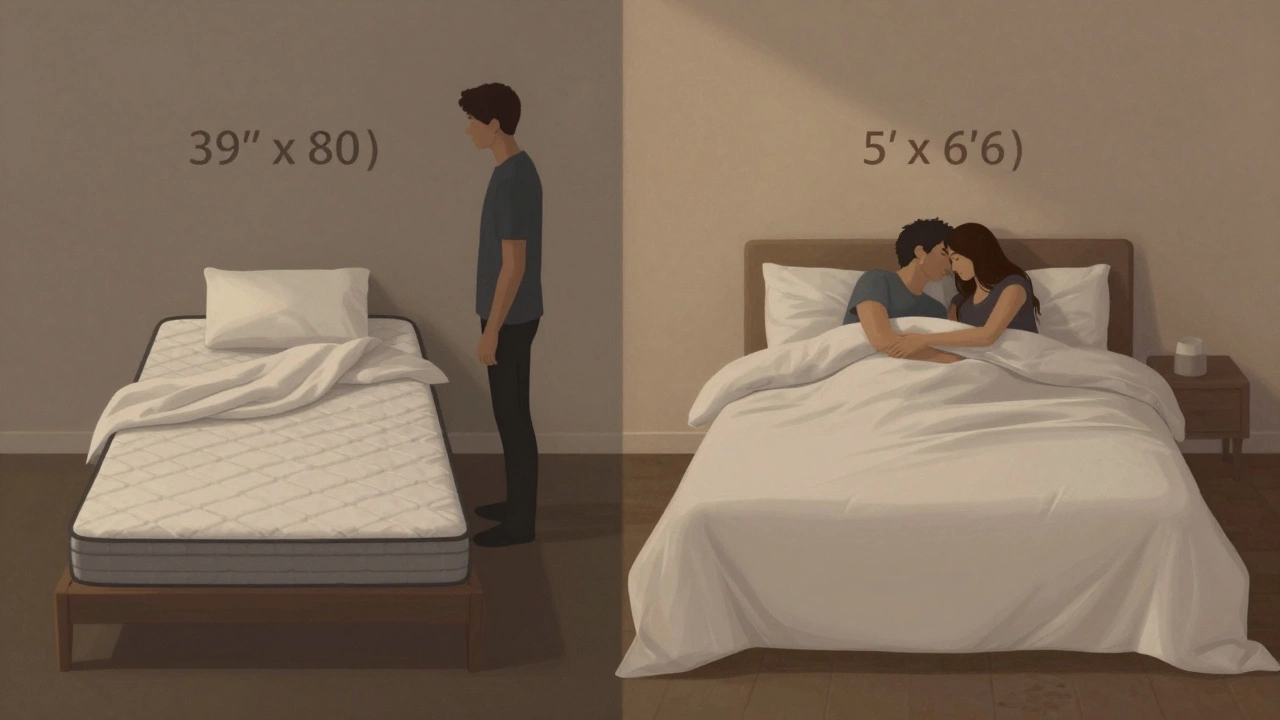
There’s no global standard for what 'XL' means in bedding. In the U.S., XL often refers to an extra-long twin, which is 39 inches wide by 80 inches long. That’s five inches longer than a standard twin. But in the UK and Australia, XL usually means a king-sized bed-6 feet wide by 6 feet 6 inches long. If you’re buying online from a U.S. retailer while living in New Zealand, you could end up with sheets that are too short or too narrow.
Most bedding brands use 'XL' to mean one of two things: either a longer mattress (common for taller people) or a wider mattress (common for couples). But unless the product listing lists exact measurements, you’re guessing. That’s why measuring your mattress is the only reliable way to know if XL will work.
What Are the Standard Bedding Sizes Around the World?
Here’s what you’re really up against when you see 'XL' on a label:
- U.S. Twin XL: 39" x 80" - common in dorm rooms and for people over 6 feet tall.
- U.S. Full XL: 54" x 80" - wider than a full, same length as twin XL.
- U.S. Queen: 60" x 80" - the most popular size for couples.
- U.S. King: 76" x 80" - for couples who want space.
- UK King: 5' x 6'6" (152 cm x 200 cm) - often labeled 'XL' here.
- UK Super King: 6' x 6'6" (183 cm x 200 cm) - sometimes called 'XL' by mistake.
- Australia King: 183 cm x 203 cm - closest to a U.S. king but slightly wider.
Many online retailers, especially those based in the U.S., use 'XL' to mean Twin XL or Full XL. But in Europe and Oceania, 'XL' often refers to a king or super king. This mismatch is why so many people return sheets - they thought they were getting a king, but got a long twin.
How to Measure Your Mattress Correctly
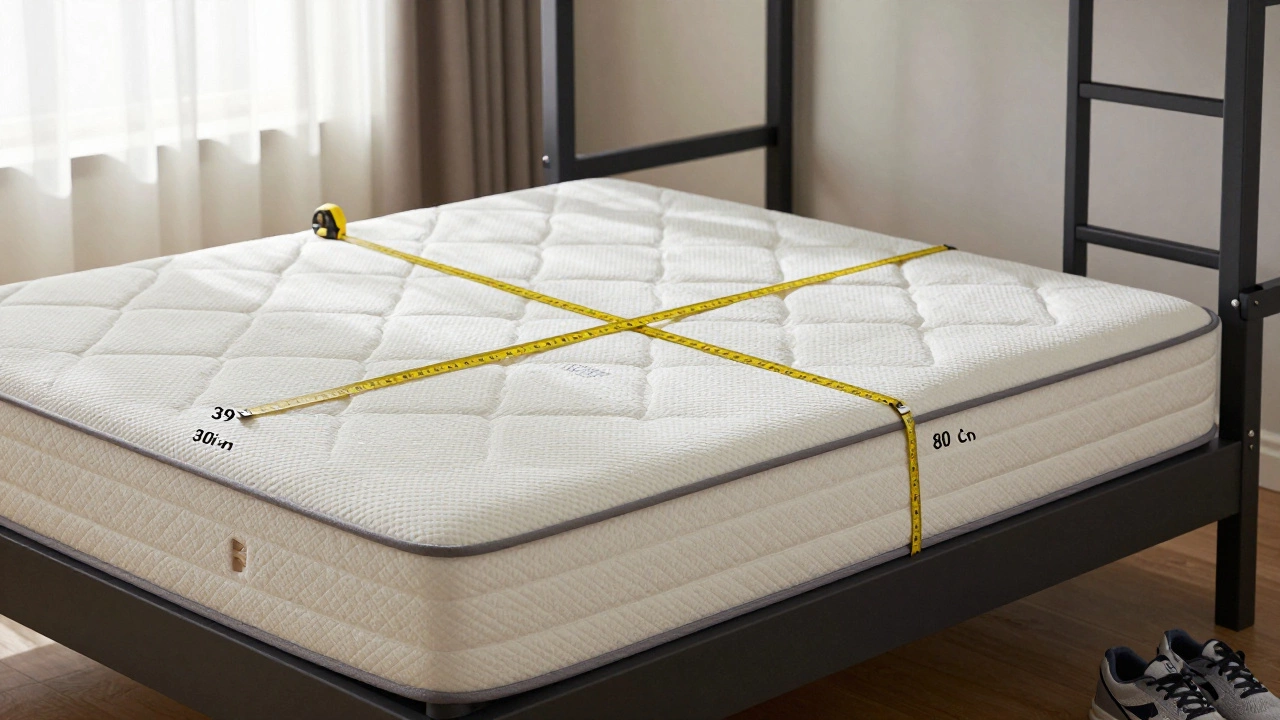
Stop guessing. Grab a tape measure and do this:
- Measure the width - from one side of the mattress to the other.
- Measure the length - from head to foot.
- Measure the depth - how thick the mattress is. Most modern mattresses are 10 to 16 inches deep.
Now compare those numbers to the product specs. If your mattress is 80 inches long and 60 inches wide, you need a queen. If it’s 80 inches long but only 39 inches wide, you need a Twin XL. Depth matters too - if your mattress is 14 inches thick and the fitted sheet claims to fit up to 12 inches, it won’t stay on.
Pro tip: Always check the ‘pocket depth’ on fitted sheets. That’s how deep the elasticized corners go. A 16-inch pocket depth is safe for most thick mattresses today.
Why XL Sizes Exist - It’s Not Just About Size
XL bedding didn’t appear just to confuse shoppers. It exists because people are taller, and mattresses are thicker.
Thirty years ago, the average American man was about 5’9”. Now he’s closer to 5’10.5”. Women are taller too. Many people over 6 feet find standard twin or full beds too short - their feet hang off. That’s why Twin XL and Full XL became popular in dorms and guest rooms.
Also, modern mattresses are packed with memory foam, latex, and hybrid layers. A 12-inch mattress today isn’t unusual. Older fitted sheets were designed for 8-inch mattresses. They just slide off now. XL-sized sheets often come with deeper pockets to handle this.
And then there’s the couple factor. A queen might feel tight if two people like to spread out. Some brands call a queen 'XL' if it’s marketed as a 'couples’ size'. That’s marketing speak, not a real size.
What to Look for When Buying XL Bedding Online
Here’s how to avoid returns and frustration:
- Always check dimensions in inches or centimeters. Don’t rely on 'XL', 'King', or 'Super King' alone.
- Look for 'pocket depth'. If it’s not listed, contact customer service. Most good brands list it.
- Check the country of origin. A U.S. brand’s 'XL' is not the same as a UK brand’s.
- Read reviews. People often mention if sheets were too short or tight.
- Buy from retailers with free returns. Even with measurements, things can go wrong.
For example, if you live in Auckland and buy from a U.S. site that says 'XL Queen', it might mean a 60" x 80" queen - which is standard. But if it says 'XL Twin', that’s 39" x 80". Make sure the label doesn’t just say 'XL' - it should say 'Twin XL' or 'Full XL' with exact numbers.
Common Mistakes People Make
Here are the top three errors:
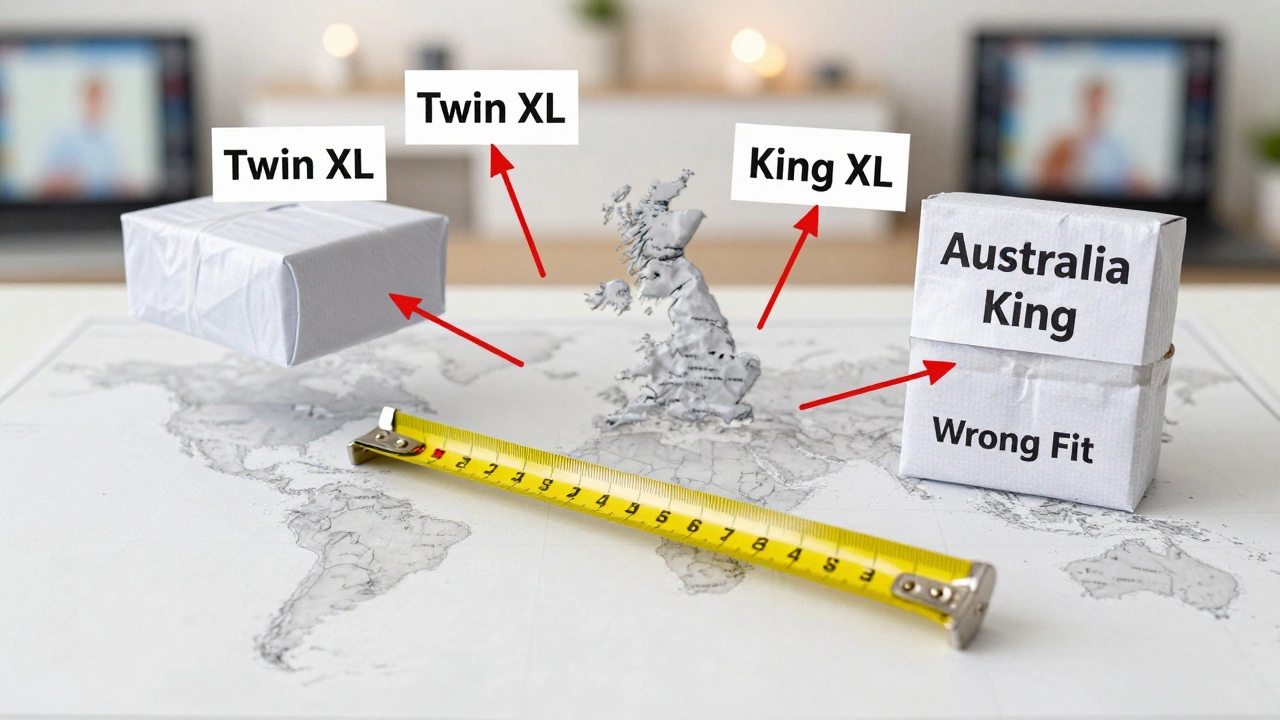
- Assuming 'XL' means king. It rarely does in the U.S. It usually means longer, not wider.
- Ignoring depth. A 15-inch mattress needs a fitted sheet with at least a 14-inch pocket. Otherwise, the corners pop off.
- Buying based on bed frame size. Your bed frame might be queen-sized, but the mattress could be a full. Always measure the mattress, not the frame.
One real example: A customer in Wellington bought a set labeled 'XL King' from a U.S. site. They expected 76" x 80". They got 60" x 80" - a queen. The sheets were too narrow. They had to return them. The label didn’t clarify the actual size.
What to Do If You’re Still Unsure
If you’re stuck, here’s what to do:
- Take a photo of your mattress with a tape measure next to it.
- Send it to the retailer’s customer service with the question: 'Is this XL size?'
- Use a sizing chart from a trusted brand like Brooklinen, Parachute, or IKEA - they list exact dimensions.
- When in doubt, go one size larger. A king sheet on a queen mattress will drape nicely. A twin XL on a queen? Not so much.
Don’t trust brand names alone. 'Luxury' or 'Premium' doesn’t mean 'XL' is standardized. Only measurements do.
Final Tip: Keep a Bedding Size Card
Write down your mattress dimensions on a small card and keep it in your drawer or phone notes. Include width, length, and depth. Next time you shop, you’ll have the facts ready. No more guessing. No more returns.
XL in bedding isn’t a mystery - it’s just poorly labeled. Once you know how to read the numbers, you’ll never buy the wrong size again.