What Is Another Name for Plates and Utensils? A Guide to Tableware Terminology
 Aug, 3 2026
Tableware Terminology Guide
Not sure whether to say "flatware" or "cutlery"? Use this guide to find the most appropriate term for your specific situation.
Term
Definition goes here.
Why this term?
Explanation goes here.
You’ve probably found yourself in this exact spot before. You’re at a home goods store, scrolling through an online catalog, or maybe trying to explain your inventory to a supplier, and the words get tangled up. You know you need the things you eat off of and the tools you use to eat with, but what do you actually call them as a group? Is it crockery? Flatware? Dinnerware? The confusion is real because English doesn’t have just one word for "plates and utensils." Instead, we have a whole vocabulary that shifts depending on where you are in the world and exactly what items you’re talking about.
Getting these terms right matters more than you might think. If you search for "flatware" when you want plates, you’ll end up with forks and spoons. If you order "china" thinking it means any ceramic dish, you might be surprised by the price tag. Understanding the difference between tableware, dinnerware, flatware, and cutlery helps you shop smarter, communicate clearly, and even appreciate the history behind the objects sitting on your table every night.
The Umbrella Term: What Is Tableware?
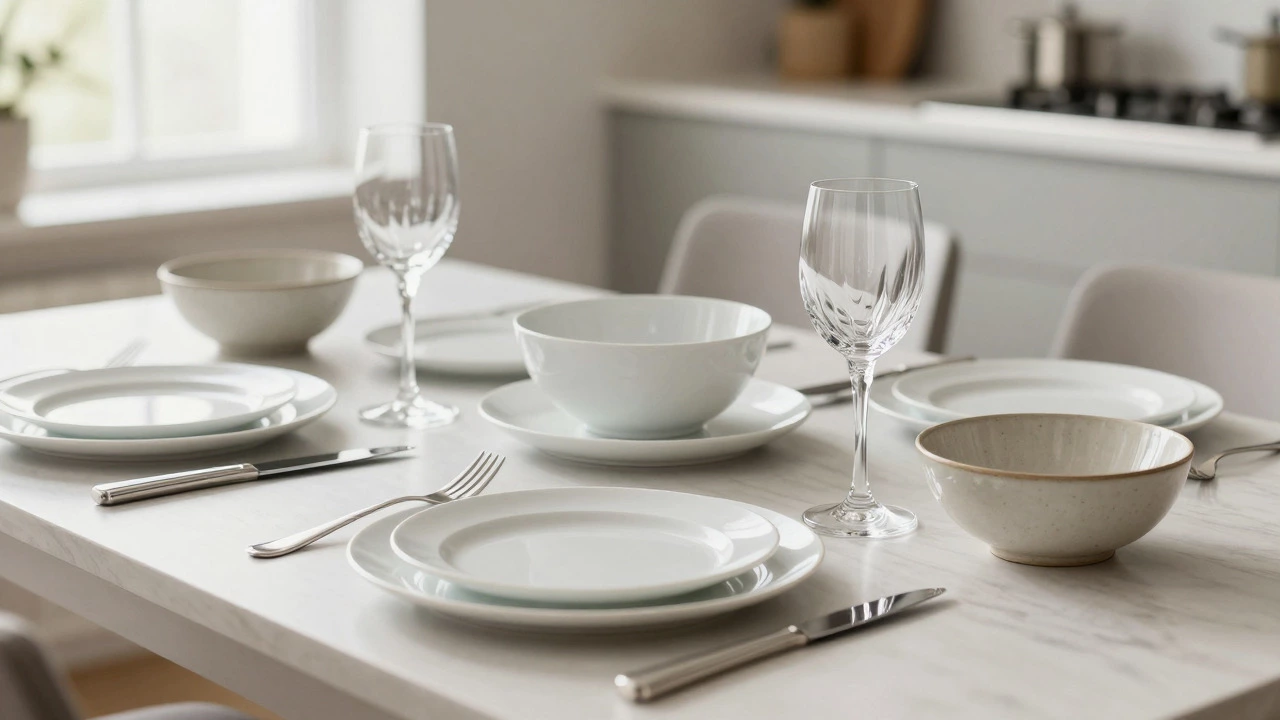
If you want one single word that covers everything from the heavy porcelain platter to the stainless steel fork, that word is Tableware. It is the collective term for all dishes, utensils, and accessories used to serve and consume food at the table. Think of it as the parent category. Under the roof of "tableware," you find several distinct families of items. This is the most accurate answer to your question if you need a broad label that includes both the vessel (plate) and the tool (utensil).
However, "tableware" can sometimes feel too formal or vague for everyday conversation. In casual settings, people often split the group into two main buckets: the stuff you put food on, and the stuff you pick up food with. Let’s break down those specific terms so you never mix them up again.
Dinnerware vs. Crockery: Naming the Plates
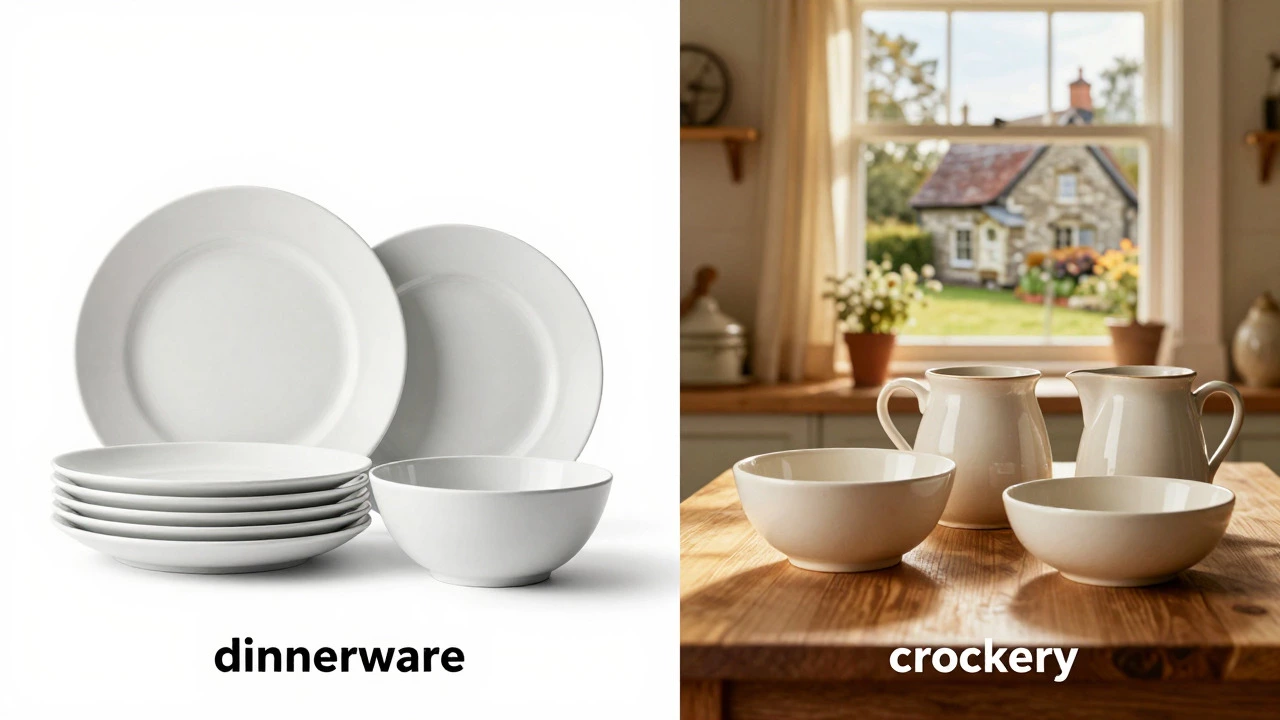
When you are specifically talking about plates, bowls, saucers, and serving dishes, you are referring to Dinnerware. It is a subset of tableware consisting of vessels used for holding food during a meal. This term is widely used in North America. If you walk into a department store in the US, the aisle labeled "Dinnerware" will contain your plates, mugs, and serving bowls. It implies items made for dining, regardless of whether they are made of ceramic, glass, melamine, or wood.
In the UK, Australia, and parts of Europe, you will hear the word Crockery. It is a British and Commonwealth term for earthenware, pottery, or china used for eating and drinking. The origin of the word comes from "crock," which referred to a coarse earthenware pot. While "dinnerware" can include plastic or metal trays, "crockery" traditionally refers specifically to ceramic-based materials like stoneware, porcelain, and earthenware. If you are buying handmade pottery, "crockery" is the precise term. If you are buying a set of melamine plates for a picnic, "dinnerware" fits better.
There is also the term China. It is high-quality porcelain dinnerware, often decorated and fragile, historically imported from China. People often use "china" interchangeably with "dinnerware," but technically, not all dinnerware is china. Your everyday stoneware plate is dinnerware, but it isn’t china. Using "china" suggests a level of delicacy, value, and formality that plain "dinnerware" does not carry.
Flatware vs. Cutlery: Naming the Utensils
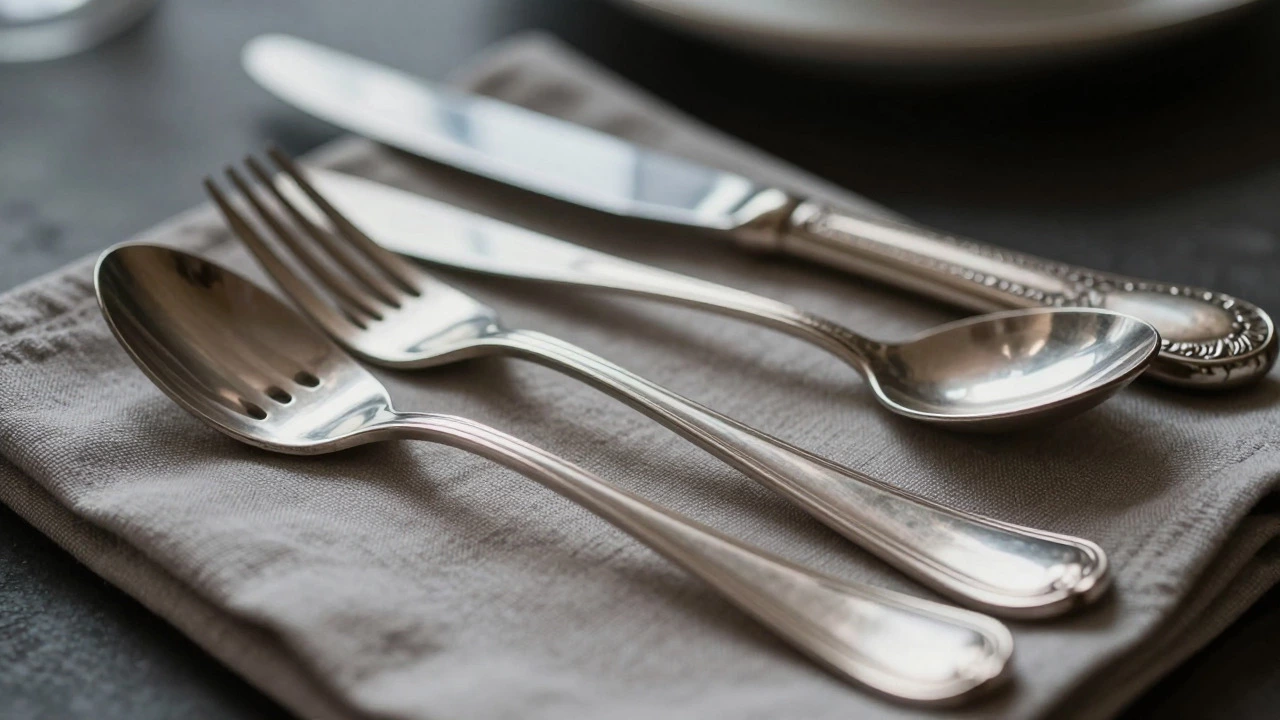
Now let’s look at the other half of your question: the utensils. Here is where geography plays the biggest role. In the United States, the standard term for forks, knives, and spoons is Flatware. It is the American term for eating utensils such as forks, knives, and spoons, named for their flat profile compared to hollowware like cups. The name comes from the fact that these items are flat pieces of metal, distinguishing them from "hollowware" (which includes pitchers, teapots, and cups). When you buy a "silverware set" in the US, you are buying flatware, even if it isn’t made of silver.
Across the Atlantic, the story changes. In the UK, Ireland, and much of the Commonwealth, the word is Cutlery. It is the British term for eating utensils, derived from the Latin word 'cutellus' meaning knife. Historically, this term emphasized the cutting tool-the knife-as the primary instrument. While Americans might say "pass me some silverware," a Brit would likely say "pass me some cutlery." Interestingly, in many European countries, the word for "knife" and "cutlery" is linguistically linked, reinforcing the idea that the knife is the central piece of the set.
So, if you are looking for a synonym for "utensils" in the context of eating, "flatware" is your go-to for American audiences, while "cutlery" works best for international or British contexts. Both terms exclude the plates themselves.
Silverware: Why We Call Metal Plastic
You might wonder why we use the word Silverware. It is a colloquial term for eating utensils, originating from the historical use of sterling silver for fine dining sets. Even though most of us are eating off stainless steel, aluminum, or even plastic, the term stuck. This is a classic example of linguistic inertia. Just as we still "dial" a phone number even though there is no rotary dial, we still call our plastic forks "silverware."
This term is almost exclusively used in North America. If you tell someone in London you are buying "silverware," they might assume you are purchasing actual precious metal heirlooms or antique pieces. For everyday utensils, "cutlery" is the safer bet outside of the US. However, within the US, "silverware" is completely acceptable and widely understood, even if "flatware" is the more technically accurate retail term.
Hollowware and Glassware: The Missing Pieces
To fully understand the landscape of "plates and utensils," you have to acknowledge what falls outside those categories. Hollowware is tableware items that hold liquid or bulk food, such as pitchers, teapots, coffee pots, and tureens. These are neither plates nor utensils, but they are part of the complete place setting. Similarly, Glassware is drinking vessels made of glass, including wine glasses, water goblets, and beer mugs.
When you are organizing your kitchen or shopping for a full set, you aren’t just buying dinnerware and flatware. You are building a collection that includes hollowware and glassware. Recognizing these distinctions helps you avoid ordering mistakes. For instance, if you search for "dinnerware set," you might get plates and bowls, but you won’t get the wine glasses unless you explicitly add "glassware" to your search.
| Term | Primary Region | Includes Plates? | Includes Utensils? | Material Implication |
|---|---|---|---|---|
| Tableware | Global | Yes | Yes | All materials |
| Dinnerware | North America | Yes | No | All materials |
| Crockery | UK/Commonwealth | Yes | No | Ceramic/Pottery only |
| Flatware | North America | No | Yes | Metal/Plastic/Wood |
| Cutlery | UK/Commonwealth | No | Yes | Metal primarily |
| Silverware | North America | No | Yes | Historically Silver; now generic |
Why Precision Matters in Shopping and Design
Understanding these terms isn’t just about sounding smart at a dinner party. It has practical applications. If you are designing a website for a kitchen store, using the wrong terminology can hurt your SEO and confuse customers. An American customer searching for "cutlery" might be looking for professional chef knives, whereas a British customer searching for "flatware" might be confused because it’s not a common term in their region.
For interior designers and event planners, the distinction affects budgeting and sourcing. "China" commands a higher price point due to its fragility and aesthetic appeal. "Crockery" might imply rustic, handcrafted items. "Flatware" suggests durability and everyday use. Knowing which term to use helps you target the right product line. If you are hosting a formal gala, you wouldn’t reach for "melamine dinnerware"; you’d choose "fine china" and "sterling silver flatware." The language shapes the expectation of the experience.
Common Pitfalls and Misconceptions
One common mistake is assuming "kitchenware" is a synonym for tableware. Kitchenware is tools and equipment used for preparing food, such as pots, pans, mixing bowls, and spatulas. Kitchenware stays in the kitchen. Tableware goes to the table. Your cast-iron skillet is kitchenware; the plate you serve the steak on is dinnerware. Mixing these up leads to cluttered storage and inefficient organization.
Another pitfall is the overuse of "china." Many people refer to any white ceramic plate as "china." While convenient, this dilutes the meaning of true porcelain. True china is translucent, rings when tapped, and requires careful handling. Calling your sturdy stoneware "china" might lead you to treat it too gently, or conversely, expect delicate handling for something meant to be tossed in the dishwasher.
How to Choose the Right Term for Your Needs
If you are writing content, creating a menu, or shopping, here is a quick guide to picking the right word:
- Use "Tableware" when you need a comprehensive term that includes everything on the table. This is best for general descriptions, inventory lists, or broad categories.
- Use "Dinnerware" if you are in the US and talking specifically about plates, bowls, and mugs. It is clear, modern, and material-neutral.
- Use "Crockery" if you are in the UK or dealing with ceramic-specific products. It carries a warm, traditional connotation.
- Use "Flatware" for American audiences when discussing forks, knives, and spoons. It is the standard retail term.
- Use "Cutlery" for international audiences or when emphasizing the functional aspect of the utensils, particularly knives.
- Avoid "Silverware" in formal writing or international contexts, as it can be misleading regarding material composition.
By mastering these distinctions, you transform a simple question about names into a deeper understanding of how we organize our domestic spaces. The next time you sit down to eat, take a moment to notice the items in front of you. Are they dinnerware or crockery? Is that fork flatware or cutlery? The answers might seem small, but they connect you to a global history of craftsmanship, trade, and daily ritual.
Is tableware the same as kitchenware?
No, they are different. Tableware refers to items used for serving and eating food at the table, such as plates, bowls, and utensils. Kitchenware refers to tools used for preparing food in the kitchen, such as pots, pans, and blenders. While there is some overlap in storage, their functions are distinct.
What is the difference between flatware and cutlery?
The difference is primarily regional. "Flatware" is the term commonly used in North America for eating utensils like forks, knives, and spoons. "Cutlery" is the term used in the UK, Australia, and other Commonwealth countries for the same items. Both refer to the tools you use to eat, not the plates.
Can I use the word "china" for any ceramic plate?
Technically, no. "China" specifically refers to high-quality porcelain that is often translucent and fragile. While many people use it casually to describe any white ceramic dinnerware, using the term accurately helps distinguish between everyday stoneware and fine, delicate porcelain sets.
What does "hollowware" mean?
Hollowware refers to tableware items that are hollow and used for holding liquids or large quantities of food. Examples include pitchers, teapots, coffee pots, creamers, and tureens. It is distinct from flatware (utensils) and dinnerware (plates/bowls).
Why is it called silverware if it's not made of silver?
The term "silverware" originated when fine dining utensils were actually made of sterling silver. Over time, cheaper materials like stainless steel became common, but the name persisted due to habit. It is now a generic term in North America for eating utensils, regardless of the material.
Which term should I use for SEO purposes?
It depends on your target audience. If you are targeting the US market, use "dinnerware" and "flatware." If you are targeting the UK or international markets, use "crockery" and "cutlery." Using the locally preferred terms will improve your search engine visibility and user engagement.