What Is Cooking Wares? A Simple Guide to Kitchen Pots, Pans, and Tools
 Dec, 25 2025
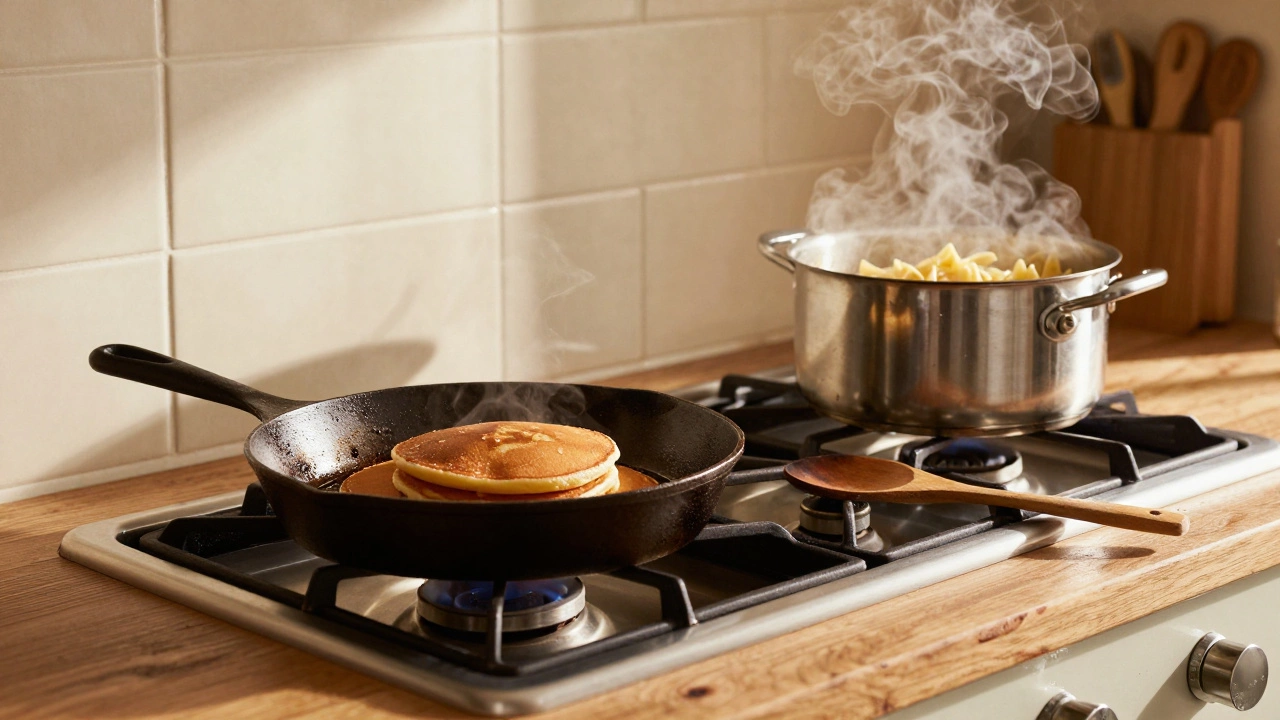
When you walk into a kitchen, the first thing you notice isn’t the cabinets or the backsplash-it’s the cooking wares. Pots bubbling on the stove, a cast iron skillet sizzling, a wooden spoon resting on the counter. These aren’t just tools. They’re the reason meals happen. But what exactly counts as cooking wares? And why does it matter which ones you use?
What Cooking Wares Actually Are
Cooking wares are the physical tools you use to prepare food on the stove, in the oven, or over a flame. That includes pots, pans, skillets, saucepans, stockpots, baking sheets, steamers, and even things like whisks, spatulas, and tongs if they’re directly involved in cooking. It’s not about serving dishes or storage containers. It’s about what touches the heat and transforms raw ingredients into food.Think of it this way: a mixing bowl is kitchenware, but not cooking ware. A Dutch oven? That’s cooking ware. A silicone spatula you use to scrape batter? It’s kitchenware. But if you’re using it to flip burgers in a hot pan, now it’s part of your cooking wares.
Common Types of Cooking Wares and What They Do
Not all cookware is the same. Each type is built for a job. Using the wrong one can ruin a dish-or even damage your stove.- Skillets and frying pans are shallow with sloped sides. Perfect for searing, sautéing, and frying. Cast iron holds heat like no other. Nonstick is great for eggs, but can’t handle high heat.
- Saucepans are deeper with straight sides and lids. Ideal for simmering sauces, boiling pasta, or making oatmeal. A 2-quart size is the most versatile.
- Stockpots are tall and wide, holding 6 to 12 quarts. Used for soups, stews, and boiling large batches of pasta or corn on the cob.
- Dutch ovens are heavy, lidded pots, usually made of enameled cast iron. They go from stove to oven. Perfect for braising meats, making bread, or slow-cooking chili.
- Baking sheets and roasting pans are for the oven. Baking sheets are flat; roasting pans have raised edges. Both handle everything from cookies to roast chicken.
- Steamers sit inside pots and lift food above boiling water. Great for vegetables, fish, and dumplings without losing nutrients.
Each of these has a material that affects how it performs. Aluminum heats fast but can warp. Stainless steel is durable but needs a copper or aluminum core to conduct heat evenly. Cast iron lasts decades but requires seasoning. Ceramic-coated pans are nonstick and easy to clean, but the coating can chip after a few years.
Why Material Matters More Than You Think
You’ve probably heard people argue about whether copper is better than stainless steel. The truth? It depends on what you’re cooking.Heat conductivity is the key. Copper conducts heat 5 times better than stainless steel. That’s why professional chefs use copper pans-they give precise control. But copper is expensive, reactive with acidic foods, and needs polishing. Most home cooks don’t need it.
Stainless steel is the workhorse. It’s durable, doesn’t react with food, and works on any stove-including induction. But it doesn’t heat evenly unless it has an aluminum or copper core sandwiched between layers. Look for “clad” or “tri-ply” in the product description.
Cast iron is the quiet hero. It holds heat like a brick oven. A well-seasoned cast iron skillet can make the crispiest pancakes, sear a steak like a restaurant, and last longer than your kitchen. The catch? It’s heavy, needs care, and shouldn’t be soaked in water.
Nonstick pans? They’re great for eggs, pancakes, and delicate fish. But they’re not for high-heat cooking. If you crank the burner to high, the coating can break down and release fumes. Most nonstick pans last 2 to 5 years, depending on use. If the surface starts scratching, replace it.

What to Avoid in Cooking Wares
Not every shiny pot on the shelf is worth buying. Here’s what to skip:- Thin, flimsy aluminum pans-they warp on the stove and create hot spots. Your food burns in one corner and stays raw in another.
- Plastic handles on pots-if they’re not heat-resistant, they’ll melt or crack when you put the pot in the oven.
- Unmarked or no-name cookware-if the brand doesn’t say what material it’s made of, avoid it. You don’t want to cook in unknown metals that could leach into food.
- Nonstick pans with scratched surfaces-even if they still look okay, the coating can flake off into your food. It’s not toxic in small amounts, but it’s not something you want to eat.
Also, avoid buying cookware sets that include 15 pieces you’ll never use. A 3-piece starter set-skillet, saucepan, and Dutch oven-is all most people need. You can always add pieces later.
How to Choose Cooking Wares for Your Kitchen
You don’t need a professional kitchen to cook well. Here’s how to pick what works for you:- Match your stove. If you have an induction cooktop, your pots must be magnetic. Test with a fridge magnet-if it sticks, it’ll work.
- Think about how you cook. Do you sear steaks? Get cast iron. Do you make sauces daily? A heavy-bottomed saucepan is essential.
- Start small. Buy one good skillet and one good pot. Use them for months. Then add what’s missing.
- Look for warranties. Brands like All-Clad, Le Creuset, and Lodge offer lifetime warranties. That tells you they stand by their products.
- Don’t chase trends. Copper pots look fancy, but unless you’re cooking professionally, they’re overkill. Stainless steel with an aluminum core does 90% of the job.
How to Care for Your Cooking Wares
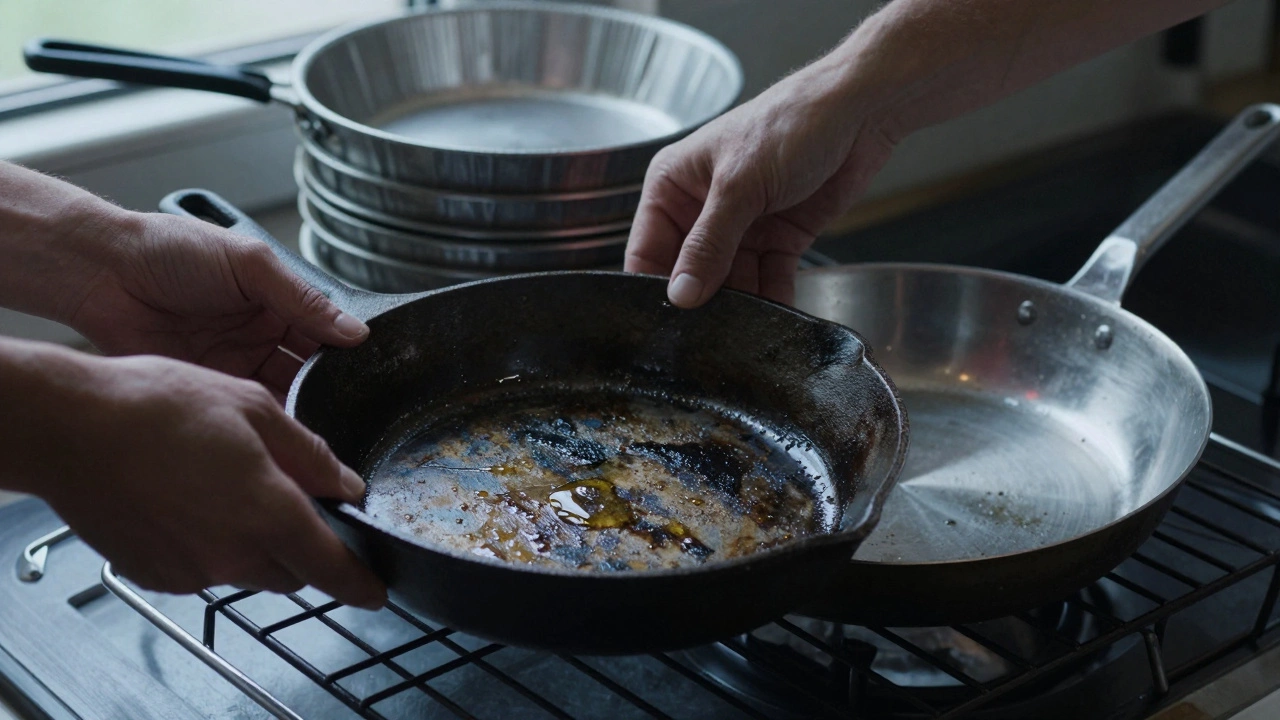
Good cookware lasts decades-if you treat it right.- Cast iron: Clean with hot water and a brush. No soap. Dry it on the stove. Rub a thin layer of oil on it after each use.
- Stainless steel: Soak stuck-on food in warm water. Use baking soda and a non-scratch sponge. Avoid steel wool-it scratches the surface.
- Nonstick: Use wooden or silicone utensils. Wash by hand. Never use metal spatulas or abrasive cleaners.
- All cookware: Don’t put hot pans in cold water. Thermal shock can warp metal.
Pro tip: If your stainless steel pan has brown stains, boil a mix of water and vinegar in it. The stains will lift right off.
When to Replace Your Cooking Wares
You don’t need to replace everything at once. But here’s when it’s time:- Your nonstick pan has deep scratches or peeling.
- A pot’s handle is loose or cracked.
- Cast iron has rust you can’t remove with scrubbing and re-seasoning.
- Aluminum pans are warped and don’t sit flat on the burner.
- You notice a strange taste in food after cooking-it could mean metal is leaching.
Replacing worn cookware isn’t a loss. It’s an upgrade. A good pan makes cooking easier, faster, and more enjoyable.
Final Thought: Cooking Wares Are an Investment
You wouldn’t buy cheap shoes and expect them to last five years. The same goes for cooking wares. A $30 nonstick pan might seem like a bargain. But if it fails in a year, you’ve spent $30 every 12 months. A $120 clad stainless steel skillet might feel expensive-but if it lasts 20 years, you’ve paid $6 a year.Cooking wares are the unsung heroes of every kitchen. They don’t need to be fancy. But they do need to be right for you. Start with one solid piece. Learn how it works. Build from there. The best cookware isn’t the most expensive. It’s the one you reach for every day.
What’s the difference between cookware and bakeware?
Cookware is used on the stovetop-pots, pans, skillets. Bakeware is used in the oven-baking sheets, casserole dishes, loaf pans. Some items, like Dutch ovens, can be both. But if it’s designed for direct heat on a burner, it’s cookware.
Can I use metal utensils with nonstick pans?
No. Metal utensils scratch the nonstick coating. Once it’s scratched, the coating can flake off into your food. Use wooden, silicone, or plastic tools instead. Even a fork can cause damage over time.
Do I need a full cookware set?
No. Most cookware sets include pieces you’ll rarely use, like a steam insert or a sauté pan with a lid you don’t need. Start with a skillet, a saucepan, and a Dutch oven. Add more only when you have a clear need.
Is stainless steel better than nonstick?
It depends. Stainless steel is more durable, works at high heat, and lets you build fond (browned bits) for flavorful sauces. Nonstick is easier for eggs and delicate foods but can’t handle high heat and wears out faster. Many home cooks use both.
What’s the best cookware for beginners?
A 10-inch stainless steel skillet with a helper handle, a 2-quart saucepan with a lid, and a 5- to 6-quart Dutch oven. These three pieces cover 80% of home cooking tasks. Look for brands like Cuisinart MultiClad or Tramontina. They’re affordable, reliable, and widely available.