What is the 2/3 Rule for Sofas? A Guide to Perfect Proportions
 Oct, 18 2026
Sofa Proportion Calculator
Enter your sofa's total width to find the perfect dimensions for your accessories based on the 2/3 Rule.
Visual Preview
Ideal Coffee Table
--
Length (inches)
Ideal Artwork
--
Width (inches)
Rug Tip
Front legs on
Recommended placement
You walk into a furniture store, see a gorgeous sofa that looks perfect in the showroom, buy it, and then... disaster. It swallows your living room whole, or worse, it looks like a tiny toy boat in a vast ocean of carpet. Why does this happen? Usually, it’s not because you have bad taste; it’s because you ignored the math.
Enter the 2/3 Rule. This isn’t some obscure architectural secret reserved for professionals with expensive degrees. It’s a simple heuristic-a mental shortcut-that helps you balance visual weight in any room. If you’re wondering what is the 2 3 rule sofa and how it can save you from a $2,000 mistake, you’re in the right place. Let’s break down why two-thirds is the magic number and how to apply it without pulling out a protractor.
The Core Concept: Balancing Visual Weight
At its heart, the 2/3 Rule states that an object placed on or near another larger object should occupy roughly two-thirds of that larger object’s width or length. When applied to sofas, this usually refers to two specific scenarios: choosing the right size rug under the sofa, or selecting the correct scale of artwork above it.
Why two-thirds? It’s about proportion. If a rug is too small (say, half the width of the sofa), it creates a disjointed look where the furniture feels disconnected from the floor plan. If the rug is too big (covering the entire room), it can make the space feel undefined and cluttered. The two-thirds mark hits the sweet spot: it anchors the seating area while leaving enough negative space around the edges to let the room breathe.
This principle extends beyond just rugs. Think about coffee tables, side tables, and even the wall art hanging above your backrest. Human eyes are naturally drawn to asymmetry that feels balanced but not perfectly mirrored. A perfect 50/50 split often looks static and boring. A 100% coverage looks heavy. But 66%? That feels intentional and harmonious.
Rug Sizing: The Most Common Application
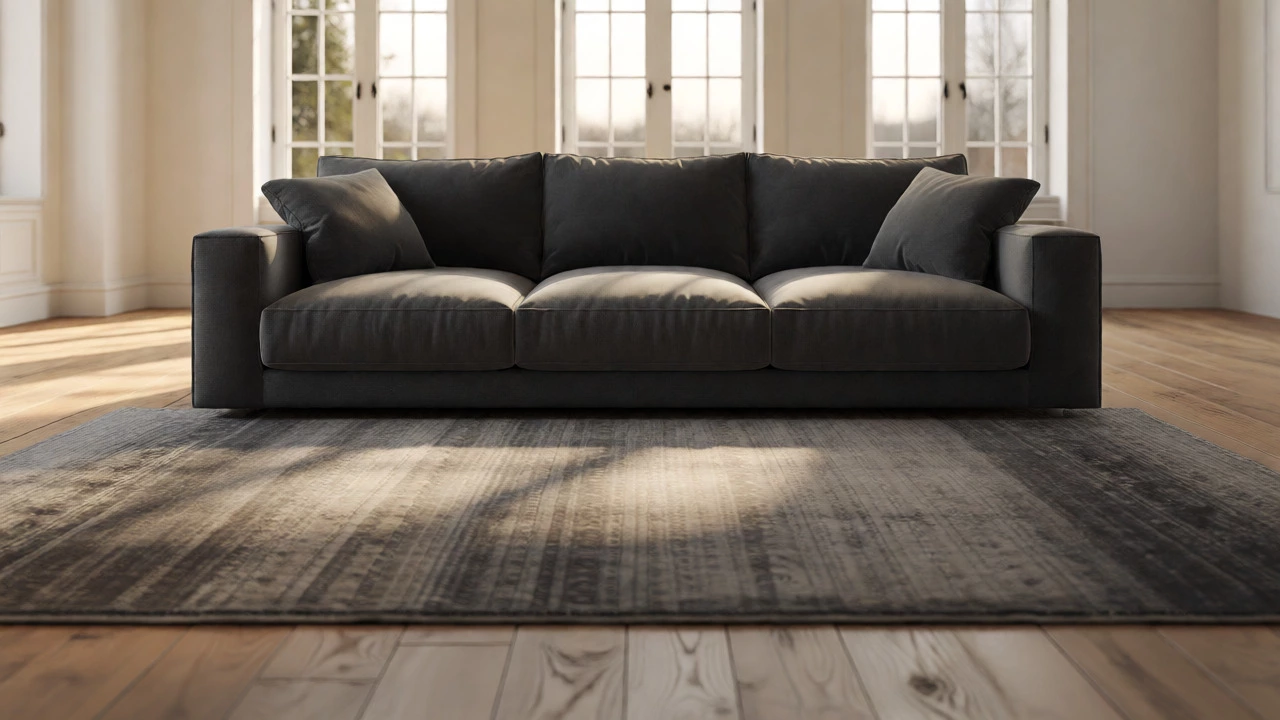
The most frequent question homeowners ask is, "How big should my rug be?" While there are three main ways to lay a rug (all legs on, front legs on, or floating), the 2/3 Rule specifically applies to the "front legs on" method, which is popular in medium-to-large living rooms.
Here’s the practical application: Measure the total width of your sofa. Multiply that number by 0.66 (or simply take two-thirds of the measurement). That result is the minimum width your rug should ideally extend beyond the sofa on both sides combined, or more commonly, the rug itself should cover approximately two-thirds of the seating footprint if you aren't placing all legs on it.
Wait, let’s clarify. Actually, the more standard interpretation for rug placement relative to the sofa is that the rug should be large enough so that at least the front two legs of the sofa sit on it. However, when people refer to the "2/3 rule" in the context of the rug’s relationship to the room or the coffee table, they mean the rug should cover two-thirds of the open floor space in the seating zone. But let’s stick to the most direct sofa-centric definition:
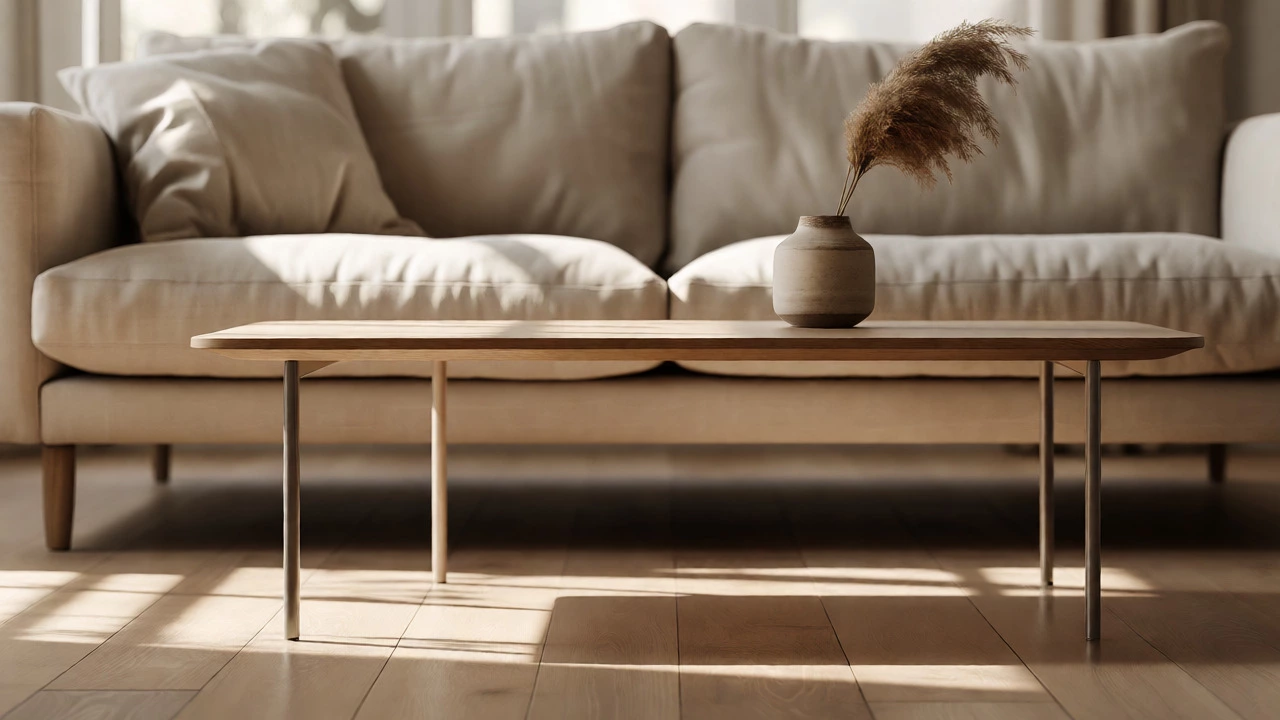
- The Coffee Table Ratio: Your coffee table should be no longer than two-thirds the length of your sofa. This ensures you don’t bump your knees and maintains visual lightness.
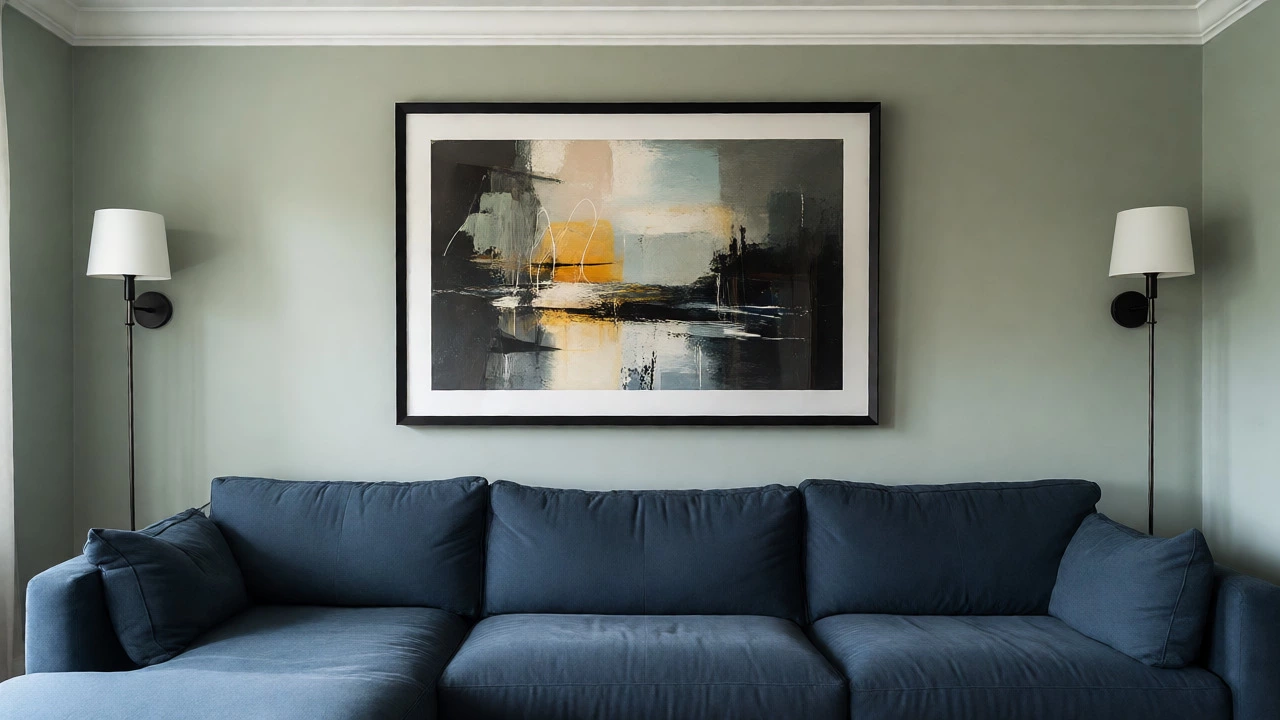
- The Artwork Ratio: The width of the artwork (or gallery wall) centered above your sofa should be roughly two-thirds the width of the sofa itself.
Let’s look at the coffee table example because it’s where most people get tripped up. If you have a 90-inch wide sectional, a 72-inch long coffee table might feel cramped. You want breathing room. A 60-inch table (which is exactly two-thirds of 90) leaves 15 inches of empty space on either end of the table relative to the sofa arms. This gap is crucial. It prevents the setup from looking like one giant block of wood and fabric.
Artwork Above the Sofa: Hanging Height and Width
You’ve bought the perfect painting. Now you’re staring at a blank wall above your couch, holding a hammer and feeling anxious. Should the art be as wide as the sofa? No. That’s too aggressive. Should it be tiny? That looks accidental.
Apply the 2/3 Rule here. If your sofa is 84 inches wide, aim for a piece of art (or a grouped collection) that is between 56 and 60 inches wide. This creates a cohesive unit. The art doesn’t compete with the sofa; it complements it. It draws the eye upward without overwhelming the horizontal line of the furniture.
Height matters too. While the 2/3 rule focuses on width, the vertical gap between the top of the sofa back and the bottom of the frame should be 4 to 6 inches. Anything higher disconnects the pieces. Anything lower risks knocking heads. By combining the width ratio with the proper height clearance, you create a focal point that feels professionally styled.
| Sofa Width | Ideal Coffee Table Length (2/3) | Ideal Artwork Width (2/3) | Recommended Rug Coverage |
|---|---|---|---|
| 60 inches | 40 inches | 40 inches | Front legs on (approx. 5x8 ft) |
| 72 inches | 48 inches | 48 inches | Front legs on (approx. 6x9 ft) |
| 84 inches | 56 inches | 56 inches | All legs on (approx. 8x10 ft) |
| 96 inches (Sectional) | 64 inches | 64 inches | All legs on (approx. 9x12 ft) |
When to Break the Rules
Is the 2/3 Rule law? Absolutely not. It’s a guideline. Design is subjective, and sometimes breaking the rule creates a better outcome. For instance, in very small apartments, following the strict two-thirds ratio for a coffee table might leave you with a table so small it’s useless. In those cases, prioritize function over form. Use nesting tables instead, which allow you to pull them apart for utility and push them together to respect the spatial constraints.
Similarly, if you have a massive statement piece of art that you love, don’t chop it down to fit the ratio. Hang it centered. If it’s wider than the sofa, ensure the surrounding walls are neutral to prevent visual chaos. The rule exists to help you when you’re unsure. If you have a clear vision, trust your gut.
Another exception: L-shaped sectionals. Calculating two-thirds of an L-shape is tricky. Do you measure the longest side? The total perimeter? Generally, treat each "arm" of the sectional as its own entity. If you have a chaise lounge extending out, the coffee table should still adhere to the 2/3 rule relative to the main seating back, not the extended chaise. This keeps the center of gravity aligned with where people actually sit.
Step-by-Step: Measuring Your Space
Ready to try this? Grab a tape measure. Don’t eyeball it. Here is the exact process to avoid returns.
- Measure the Sofa: Get the total width from arm to arm. Write this number down.
- Calculate the Target: Multiply that number by 0.66. Round to the nearest inch. This is your target dimension for accessories like coffee tables or art.
- Check Clearance: Ensure there are at least 18 inches between the sofa and the coffee table for legroom. The 2/3 rule dictates size, but ergonomics dictate spacing.
- Visualize with Tape: Before buying, use painter’s tape on the floor. Mark out the dimensions of the proposed coffee table or rug. Walk around it. Does it feel crowded? Does it feel lost?
- Buy Accordingly: Choose items that match your calculated numbers. If you find a coffee table that is 70 inches long for a 90-inch sofa (which is closer to 3/4), check the depth. A shallow table might work, but a deep one will likely overwhelm the space.
Common Mistakes to Avoid
People often confuse the 2/3 rule with the "rule of thirds" in photography, which divides an image into nine equal parts. They are related concepts but serve different purposes. The photographic rule is about composition within a frame; the furniture rule is about physical scale in three-dimensional space.
Another error is ignoring the depth of the sofa. A deep-seated sectional (over 40 inches deep) consumes more visual volume than a slim apartment sofa. In these cases, you might need to deviate slightly from the 2/3 rule for the coffee table, opting for something lighter in material (like glass or thin metal) rather than bulky wood, even if the length is technically correct. Visual weight matters as much as physical weight.
Finally, don’t forget the rug. If you are using the 2/3 rule for the rug size relative to the open floor area of the seating zone, remember that the rug should define the conversation area. If everyone sits on the edge of the rug, it’s too small. If the rug touches the walls, it’s too big. The goal is to create a distinct "island" of comfort.
Final Thoughts on Proportion
Understanding what is the 2 3 rule sofa gives you a tool, not a cage. It removes the guesswork from buying furniture online, where you can’t physically stand next to the product. By calculating these ratios before you click "add to cart," you ensure that your living room flows logically. Your guests won’t notice the math; they’ll just feel comfortable. And isn’t that the ultimate goal of interior design?
Does the 2/3 rule apply to all types of sofas?
Yes, the principle applies universally, whether you have a loveseat, a standard three-seater, or a large sectional. However, for sectionals, apply the rule to the longest straight section of the backrest to determine coffee table and art sizes, rather than the total perimeter.
What if my coffee table is wider than two-thirds of the sofa?
If your coffee table exceeds the two-thirds width, it may visually crowd the sofa. To mitigate this, choose a table with a transparent surface (glass) or thin legs to reduce visual bulk. Alternatively, consider replacing it with two smaller nesting tables, which offer flexibility and maintain better proportion.
How far should a rug extend past the sofa?
While the 2/3 rule helps determine the rug's overall size relative to the room or seating group, a common standard is to have the rug extend at least 6 to 8 inches beyond the front legs of the sofa. This ensures the rug acts as an anchor rather than a trip hazard.
Can I use the 2/3 rule for side tables?
Side tables operate differently. Instead of width, focus on height. Side tables should generally be level with or slightly below the armrests of the sofa. The 2/3 rule is primarily for horizontal alignment (length/width) of central elements like coffee tables and art.
What is the best way to visualize the 2/3 rule before buying?
Use blue painter's tape on your floor to outline the dimensions of the potential coffee table or rug. Step back and view it from across the room. This low-cost simulation allows you to judge the proportion in real-time without committing to a purchase.