What Is the Average Price of a Good Quality Couch? 2026 Guide
 Jan, 5 2026
Couch Quality & Price Estimator
Your Couch Quality Assessment
Your Couch Quality Assessment
$1,200 - $2,000 (Recommended range for good quality)
- High-quality hardwood frame with corner blocks
- 8-way hand-tied springs for durability
- 2.5 lb+ density foam with 5+ year warranty
- Performance fabric or top-grain leather
When you’re shopping for a new couch, you don’t want to overspend on something that falls apart in a year. But you also don’t want to buy the cheapest option only to regret it when the cushions flatten or the frame starts creaking. So what’s the real price of a good quality couch in 2026?
What Makes a Couch "Good Quality"?
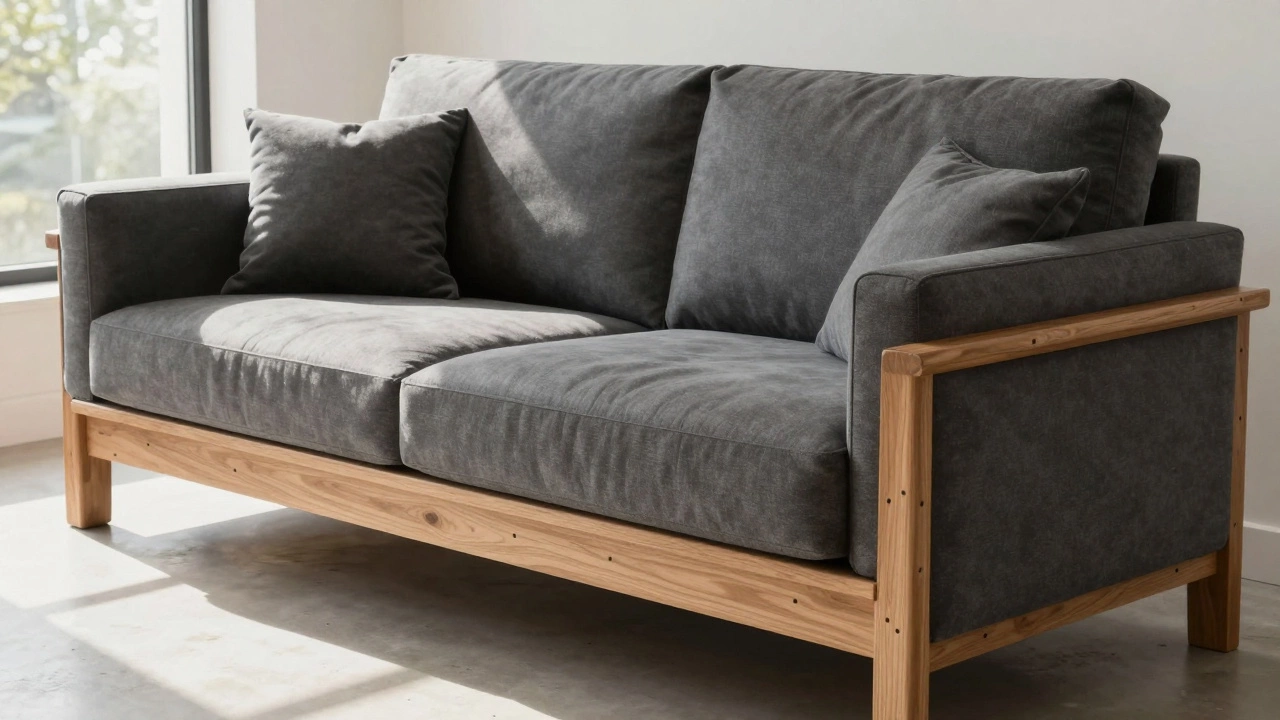
A good quality couch isn’t just about looks. It’s about how it holds up over time. The best ones have solid hardwood frames-like kiln-dried oak, maple, or beech-that don’t warp or crack. You’ll know it’s solid if you lift one corner and the whole couch stays level. Cheap ones use particleboard or softwood that bends under pressure.
Look at the joints. Good couches are held together with dowels, corner blocks, and screws. If you see staples or glue only, walk away. The frame should feel heavy. A quality couch usually weighs over 150 pounds. If it feels light, it’s probably not built to last.
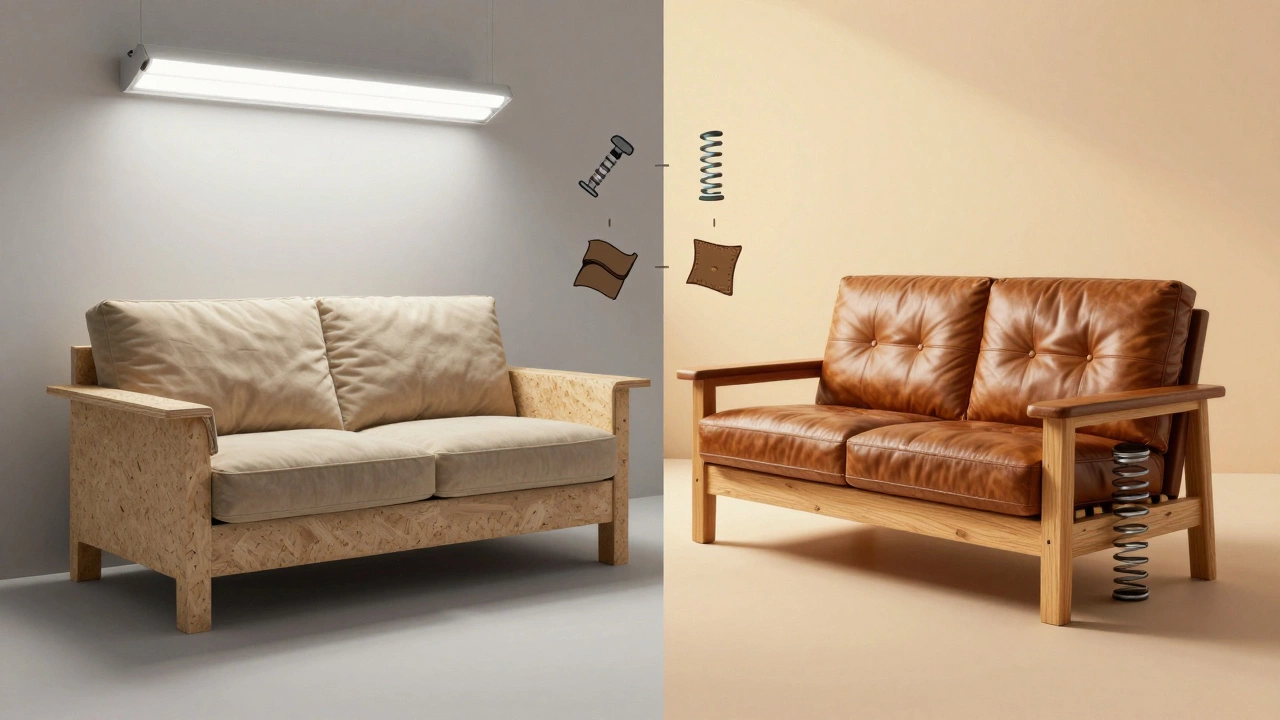
Spring systems matter too. Eight-way hand-tied springs are the gold standard. They’re durable, supportive, and let the couch contour to your body. If you hear a spring squeak or feel uneven spots when you sit down, it’s likely using cheaper sinuous springs or elastic webbing that sags after 1-2 years.
Upholstery is another big factor. Top-grain leather lasts decades and gets better with age. Performance fabrics like Crypton or Sunbrella are stain-resistant, fade-resistant, and hold up to daily use. Avoid low-grade microfiber that pills after a few washes or polyester blends that look shiny and fake after a year.
Price Ranges for Different Quality Levels
Not all couches are created equal. Here’s what you can expect to pay in 2026 based on build quality and materials:
- Under $800: These are typically mass-produced couches from big-box stores. They use engineered wood frames, elastic webbing, and low-density foam. You might get 2-3 years of use before the cushions lose shape or the fabric wears thin.
- $800-$1,500: This is the sweet spot for most families. You’ll find solid hardwood frames, better foam (at least 2.5 lb density), and decent fabric options. Brands like IKEA’s higher-end lines, Wayfair’s curated selections, and local furniture makers often fall here. These couches last 5-8 years with normal use.
- $1,500-$2,500: This is where real quality begins. You’re getting hand-tied springs, premium leather or performance fabrics, and custom options. Brands like Article, Floyd, and local New Zealand makers like Stitch & Co. or Homegrown Furniture operate in this range. These couches are built to last 10-15 years.
- $2,500+: These are luxury or custom-made pieces. Think Italian leather, hand-carved wood, and artisan craftsmanship. They’re often made to order and can be passed down through generations. This price includes design time, shipping, and premium materials.
In Auckland, you’ll find the best value at the $1,200-$2,000 range. That’s where you get the strongest combination of durability, comfort, and style without paying for brand prestige.
Where to Buy for the Best Value
Big retailers like Kmart or The Warehouse often have couches under $600. They’re tempting, but most of them are designed to be replaced, not repaired. If something breaks, you can’t replace the springs or reupholster the seat. You just throw it out.
Local furniture makers in Auckland-like those in Ponsonby, Newmarket, or Mt. Eden-offer better quality at fair prices. Many use locally sourced timber and fabric, and they’ll let you choose the cushion firmness, leg style, and fabric. You’re not just buying a couch; you’re investing in something made for your home.
Online brands like Article and Floyd ship to New Zealand and offer transparent material specs. Their couches come with 10-year warranties on frames and 5-year warranties on upholstery. That’s rare in this price range.
Secondhand markets are also worth checking. A well-maintained couch from a thrift store or Facebook Marketplace can be a steal. Look for solid frames, no sagging, and clean fabric. Reupholstering a good frame costs $500-$800, which is still cheaper than buying new.
What You’re Really Paying For
When you pay more, you’re not just paying for a bigger logo. You’re paying for:
- Longevity: A $2,000 couch lasts 12 years. A $700 couch lasts 4. That’s $167 a year vs. $175 a year. The cheaper one costs more over time.
- Comfort: High-density foam (3.0 lb or higher) doesn’t flatten. It supports your back and hips properly. Low-density foam turns into a pancake after six months.
- Health: Poorly designed couches force you into bad posture. Over time, that leads to back pain. A good couch supports your spine’s natural curve.
- Sustainability: Buying once instead of three times reduces waste. A couch that lasts 15 years is better for the planet than three that last 5 each.
Think of it like buying shoes. You wouldn’t buy $30 sneakers for daily use if you knew they’d fall apart in six months. Why treat your couch any differently?

Red Flags to Watch Out For
Even if a couch looks nice, watch for these warning signs:
- The cushions are too soft and sink in too deep. That means low-density foam.
- The fabric feels thin or slippery. Real performance fabric has a slight texture and resists pilling.
- You can’t see the frame. If the manufacturer won’t tell you what wood they use, they’re hiding something.
- No warranty, or only a 1-year warranty. Anything less than 5 years on the frame is a red flag.
- It’s labeled "assembly required" with no tools or instructions. That’s a sign it’s not meant to be fixed later.
Ask to sit on it for at least 5 minutes. Lie down. Stand up. Twist. If it feels like it’s collapsing or making noise, it’s not worth the price.
Final Tip: Buy Once, Buy Right
There’s no magic number. A $1,200 couch from a local maker can be better than a $2,800 couch from a flashy brand. Focus on materials, not marketing.
Look for: hardwood frame, high-density foam (2.5 lb+), 8-way hand-tied springs, and fabric with a rub count over 30,000 (Martindale test). If you see those, you’ve got a good one.
And don’t rush. Take your time. Test multiple couches. Compare warranties. Ask if you can see the frame underneath. The right couch doesn’t just fit your room-it fits your life.
Is it worth spending over $2,000 on a couch?
It depends on how you use it. If you have kids, pets, or use the couch daily, yes. A $2,500 couch with top-grain leather and a 15-year warranty will outlast three cheaper ones. If you only use it occasionally or plan to move in a few years, a $1,200-$1,800 couch is smarter. The goal is to match the price to your lifestyle, not your budget.
Can I get a good couch for under $1,000?
Yes, but you’ll have to compromise. Look for models with solid hardwood frames and foam density above 2.0 lb. Avoid anything with elastic webbing or polyester blends. Brands like Article and some local makers occasionally have sales that bring quality couches under $1,000. Check end-of-season sales or warehouse clearances. Just don’t expect leather or hand-tied springs at that price.
What’s the best fabric for a couch with pets?
Crypton, Sunbrella, or tightly woven performance polyester are your best bets. They resist stains, don’t hold pet hair, and can be wiped clean. Avoid velvet, linen, or open-weave fabrics-they trap fur and show every scratch. Dark colors hide dirt better, but medium gray or charcoal works well for both pets and style.
How long should a good couch last?
A well-built couch should last 10-15 years with regular use. That means daily sitting, occasional spills, and normal wear. If it starts sagging, squeaking, or losing shape before 7 years, the materials were subpar. Reupholstering or replacing cushions can extend its life, but only if the frame is still solid.
Should I buy a sectional or a regular couch?
It depends on your space and how you use it. Sectionals are great for large living rooms and families who like to sprawl. But they’re harder to move and often more expensive. A standard 3-seater couch gives you more flexibility in layout and usually costs less. If you’re unsure, start with a 3-seater and add a loveseat or ottoman later.