What Is the Bathroom Trend in 2025? Key Styles and Accessories You Need to Know
 Jan, 22 2026
Bathroom Trend Checker 2025
Assess your bathroom against key 2025 trends and get personalized recommendations. Select elements you currently have, then check your score.
By 2025, the bathroom isn’t just a place to wash up-it’s become the quietest, most intentional room in the house. People aren’t just upgrading fixtures anymore. They’re redesigning entire spaces to feel like a daily retreat. If you’ve walked into a modern bathroom lately, you’ve probably noticed it: less chrome, more texture. Less clutter, more calm. This isn’t about luxury for luxury’s sake. It’s about design that works with how we live now.
Texture Over Shine
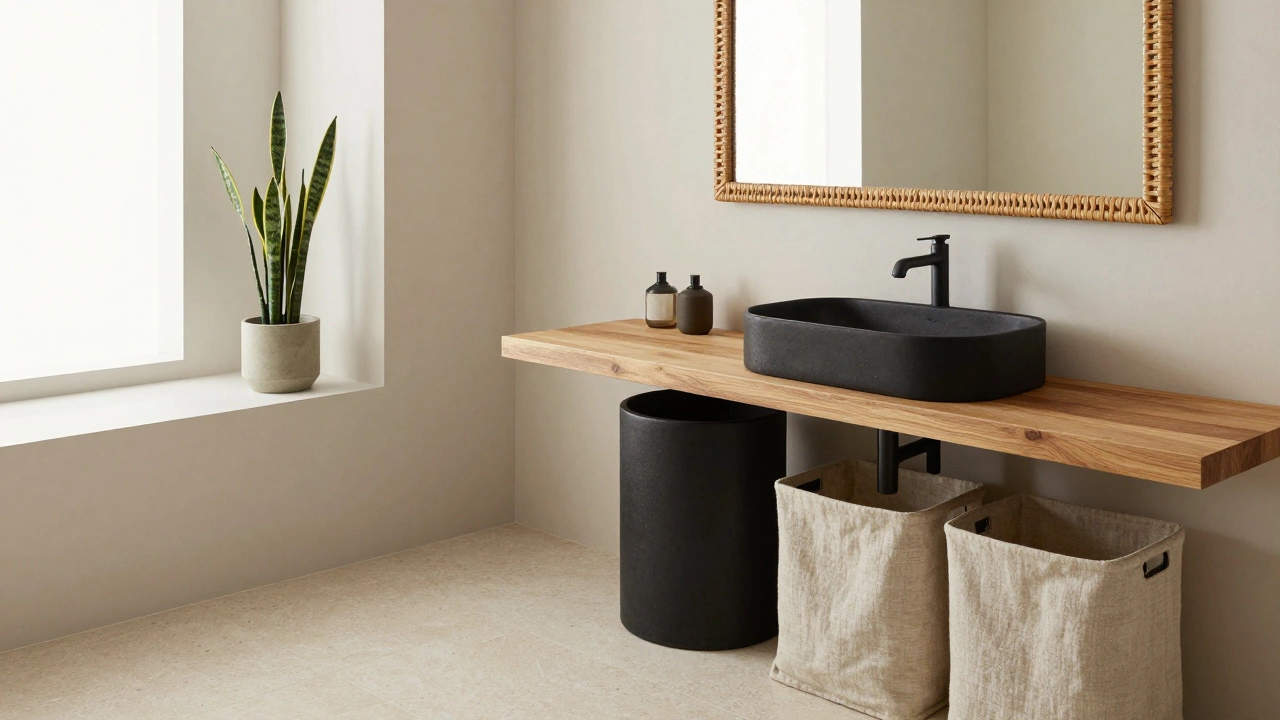
Remember when brushed nickel and glossy white tiles ruled the bathroom? That’s fading fast. In 2025, the focus is on materials that feel alive. Think honed travertine, hand-thrown ceramic sinks, and matte black finishes that don’t show water spots. Even the mirrors are getting a texture upgrade-some now come with woven bamboo frames or stone edges that catch the light softly.
Why? Because people are tired of surfaces that look cold or clinical. A bathroom with warm, tactile materials-like oak vanity tops or linen-wrapped storage bins-feels more grounding. In Auckland, where homes often blend indoor and outdoor spaces, this shift makes sense. Natural textures help the bathroom feel like an extension of the garden, not a sterile box.
Spa-Like Simplicity
The spa bathroom trend isn’t new, but in 2025, it’s evolved. No more fake candlelit steam rooms with lavender oil dispensers. Real spa vibes now come from quiet, intentional design. That means hidden storage, integrated lighting, and fixtures that disappear when not in use.
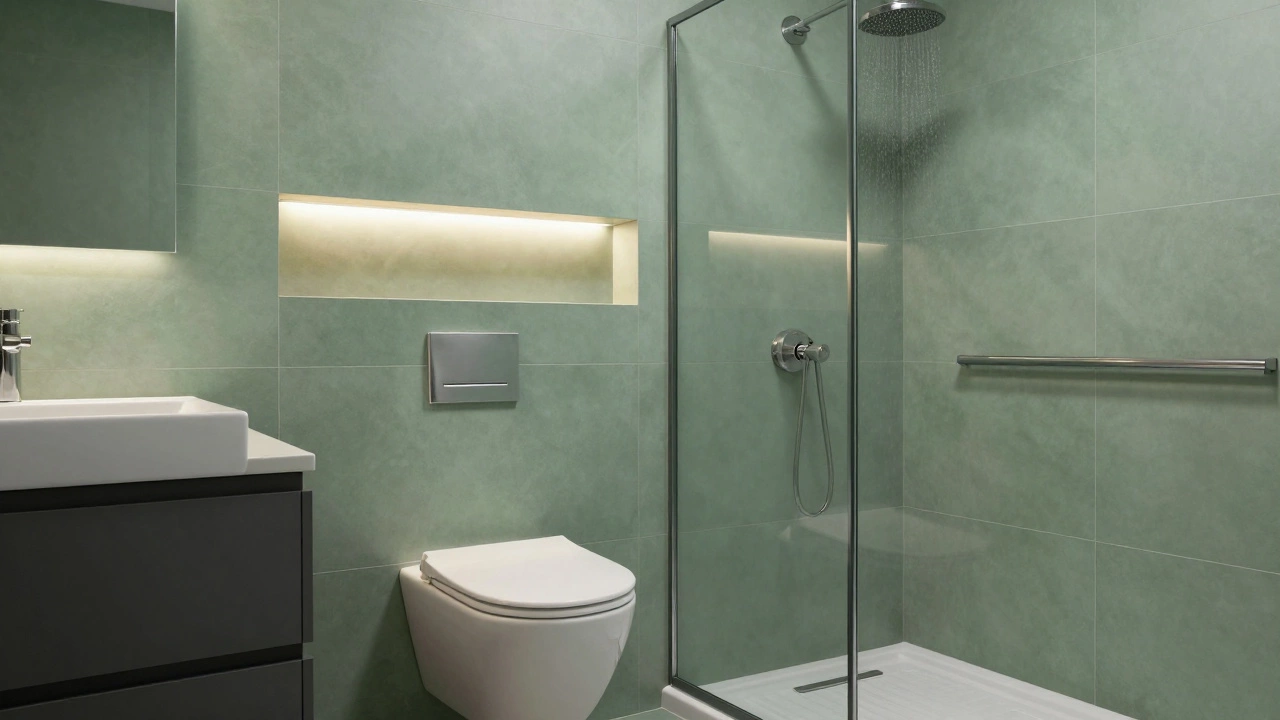
Wall-mounted toilets are becoming standard. Why? They free up floor space, make cleaning easier, and create a cleaner visual line. Built-in niches in showers replace bulky shelves. Even towel racks are being tucked into walls or designed as slim, recessed ledges. The goal? No visual noise. Just a smooth, uninterrupted surface that invites you to breathe.
One homeowner in Wellington told me she removed her over-the-toilet cabinet and replaced it with a single, deep shelf holding just a folded towel and a small plant. “It’s not about having more,” she said. “It’s about having less that actually matters.”
Sustainable Materials Are Non-Negotiable
By 2025, sustainability isn’t a buzzword-it’s a baseline expectation. Buyers are asking for details: Where was this faucet made? Is the wood FSC-certified? Is the tile made with recycled content?
Brands like Kohler and Roca now offer sinks made from 80% recycled ceramic. Bamboo is being used for everything from toilet paper holders to vanity doors. Even grout is changing: epoxy-free, mold-resistant formulas made from natural resins are gaining traction. In New Zealand, where water conservation is critical, low-flow showerheads with smart sensors that shut off when you step out are becoming common.
One big shift? People are buying less, but buying better. A single high-quality, repairable faucet is preferred over five cheap ones that break in two years. The trend isn’t just eco-friendly-it’s economical in the long run.
Smart, But Not Obnoxious
Smart bathrooms are here, but no one wants a control panel where the mirror used to be. The smart features that stick in 2025 are the ones you don’t notice until you need them.
Heated floors are now standard in new builds. Motion-sensor lighting turns on softly when you walk in at night. Toilets with auto-flush and self-cleaning functions are no longer luxury items-they’re expected in mid-range homes. Even the mirrors are getting smarter: some now have built-in fog-resistant coatings and Bluetooth speakers hidden in the frame.
The trick? Everything works quietly. No apps to download. No voice commands to remember. Just seamless, silent help. If you have to think about it, it’s not smart enough.
Color Is Quietly Bold
White and gray bathrooms are still around, but they’re no longer the default. In 2025, color is used like a whisper, not a shout. Deep greens, warm taupes, and soft terracottas are showing up on walls, tiles, and even plumbing fixtures.
One popular combo? A matte charcoal vanity paired with a sage green wall tile. It’s calming, grounding, and feels rich without being flashy. Even bathrooms with all-white fixtures are getting color through accessories-think woven baskets in oatmeal, or a single ceramic soap dish in burnt sienna.
Color isn’t just about looks. Studies show that earth tones lower heart rate and reduce stress. In a world that’s always buzzing, the bathroom is becoming a reset button.
Accessories That Serve a Purpose
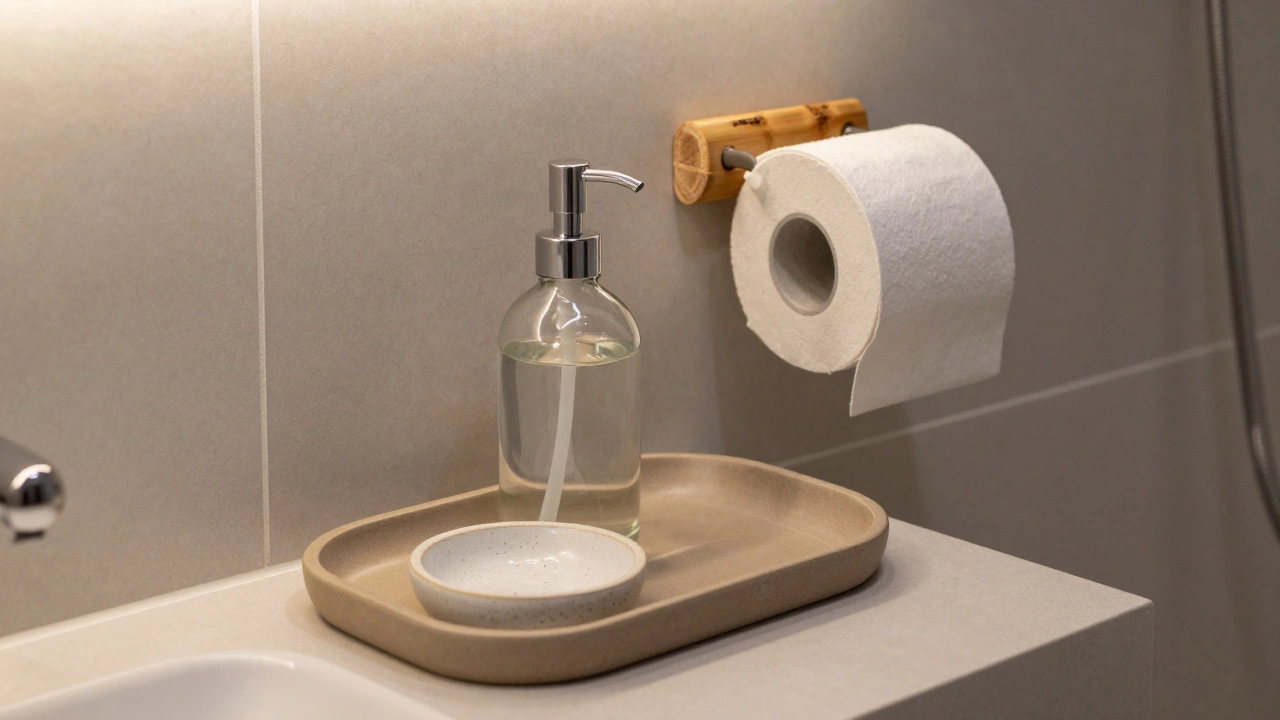
Bathroom accessories in 2025 aren’t decorative afterthoughts. They’re carefully chosen tools that fit into a larger system. A soap dispenser isn’t just a container-it’s refillable, made from recycled glass, and matches the faucet finish. A toothbrush holder isn’t plastic-it’s ceramic, hand-glazed, and sits on a matching tray.
Storage is hidden but accessible. Pull-out drawers inside vanities hold toiletries. Magnetic strips on the side of the mirror hold metal razors and tweezers. Even toilet paper holders are being redesigned: some now have built-in dispensers that release one sheet at a time, reducing waste.
The rule? If it doesn’t have a clear job, it doesn’t belong. No more plastic trinkets. No more mismatched soap dispensers. Every item must earn its place.
What’s Out in 2025?
Some trends are officially retired:
- Gold hardware-too flashy, too hard to maintain
- Large, ornate mirrors-replaced by slim, frameless designs
- Separate tub and shower-combined units with rainfall heads are now preferred
- Plastic storage bins-replaced by woven, ceramic, or wooden containers
- Over-the-toilet shelving-too cluttered, too hard to clean
If you’re renovating, ask yourself: Does this look like it belongs in a 2015 magazine? If yes, it’s probably out of date.
What to Do Now
You don’t need to gut your bathroom to keep up. Start small:
- Swap out plastic soap dispensers for glass or ceramic ones.
- Add a single plant-snake plant or ZZ plant-both thrive in low light.
- Replace harsh overhead lights with warm LED strips under the vanity.
- Choose a towel set in a muted tone-olive, clay, or charcoal.
- Install a low-flow showerhead. You’ll save water and money.
These changes cost under $200 and make a real difference. They also make your bathroom feel intentional, not just functional.
Why This Matters
The bathroom trend in 2025 isn’t about aesthetics. It’s about reclaiming a quiet space in a noisy world. We’re spending more time at home. We’re more aware of our impact on the planet. We’re tired of things that don’t last.
A bathroom designed for 2025 doesn’t shout. It doesn’t follow trends. It just works-beautifully, quietly, and sustainably. It’s the one room where you can truly unplug. And that’s worth more than any shiny fixture ever could.
What are the most popular bathroom colors in 2025?
The most popular colors in 2025 are muted earth tones: deep sage green, warm taupe, soft terracotta, and matte charcoal. These shades create a calming atmosphere and pair well with natural materials like wood, stone, and linen. White is still used, but mostly as a neutral backdrop rather than the main color.
Are smart bathrooms worth it in 2025?
Yes-but only if the tech is seamless. Heated floors, motion-sensor lighting, and auto-flush toilets add comfort without requiring constant interaction. Avoid gadgets that need apps, voice commands, or frequent updates. The best smart features are the ones you don’t notice until they help you.
What bathroom accessories should I avoid in 2025?
Avoid plastic storage bins, overly ornate mirrors, gold hardware, and over-the-toilet shelving. These items look dated, are hard to clean, and add visual clutter. Instead, choose integrated storage, natural materials, and minimalist designs that blend into the space.
Is it expensive to update a bathroom to 2025 standards?
Not necessarily. You can update your bathroom for under $200 by swapping accessories, adding lighting, and installing a low-flow showerhead. Major renovations cost more, but the trend favors quality over quantity. One well-made, sustainable faucet can last 15+ years, making it cheaper than replacing cheap fixtures every few years.
What materials are best for a sustainable bathroom?
The best sustainable materials include FSC-certified wood, recycled ceramic and glass, bamboo, and natural stone. Look for low-VOC paints, epoxy-free grout, and fixtures made with at least 50% recycled content. Brands like Kohler, Roca, and Toto now offer transparent sourcing reports for their products.