What Is the Best Time of Year to Buy a Rug?
 Feb, 8 2026
Rug Buying Season Calculator
Find the best time to buy a rug based on the article's seasonal sales patterns. Enter your location and rug preferences to see when prices drop most significantly.
Optimal Buying Window:
Select options to see results
Buying a rug isn’t just about picking a pattern you like. It’s about timing. A great rug can cost hundreds-or even thousands-of dollars. But if you know when to look, you could save 30%, 50%, or more. And no, it’s not just during Black Friday. The best time to buy a rug depends on seasonal sales cycles, inventory turnover, and even weather patterns in your region.
Spring: The Quiet Reset
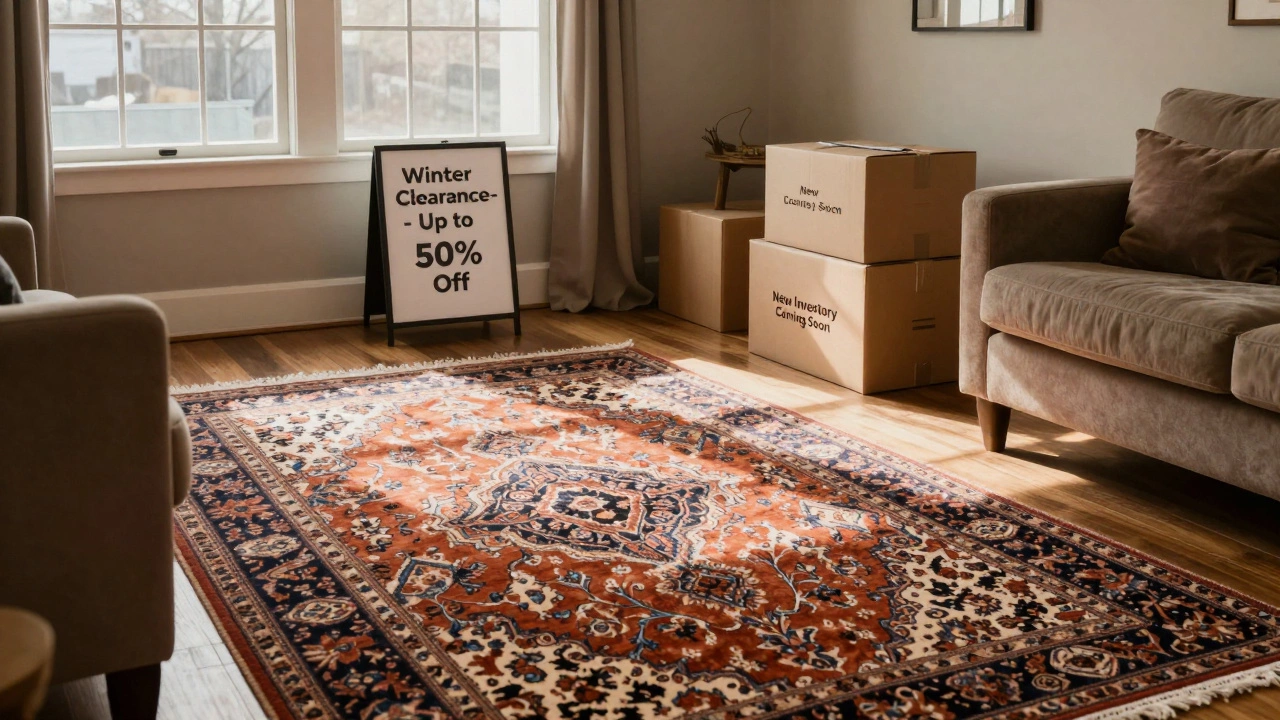
March through May is when most home decor stores reset their inventory. Winter rugs-thick wool, shaggy textures, dark tones-are cleared out to make room for lighter, brighter options. This is when retailers start discounting last season’s stock to free up warehouse space. In New Zealand, where spring arrives in September, you’ll see the biggest markdowns in late August and early September. Stores like The Warehouse, Kmart, and independent rug shops often run clearance sales around Labour Day weekend. You’ll find high-quality wool rugs from Nepal or Turkey at prices that feel like a mistake.
Summer: Outdoor to Indoor Transition
Summer is the season for outdoor living. That means indoor rugs get sidelined. If you’re shopping between November and January, you’re not just avoiding the heat-you’re catching retailers who need to move stock before the next big season. Many stores offer 20% to 40% off indoor rugs during this time. Why? Because they’re already thinking ahead to autumn and winter collections. Look for sales on synthetic fiber rugs (polypropylene, polyester) that are easy to clean and perfect for high-traffic areas. Brands like Safavieh, IKEA, and Bazaar often have summer clearance events with no minimum spend.
Autumn: The Real Bargain Window
Here’s the truth most people miss: autumn is the best time to buy a rug. In March and April, as winter approaches, demand spikes. But the real deals happen in late February and early March, right before the cold hits. That’s when stores start stocking up for winter-but they still have last year’s unsold inventory. Retailers are desperate to clear out old stock before new shipments arrive. You’ll find rugs with intricate Persian designs, hand-knotted wool, and even custom sizes at prices you won’t see again for a year. In Auckland, major rug retailers like Rug Gallery and The Rug Store run their biggest promotions during this window. Some even offer free delivery and underlay with purchase.
Winter: Holiday Sales and Post-Christmas Clearance
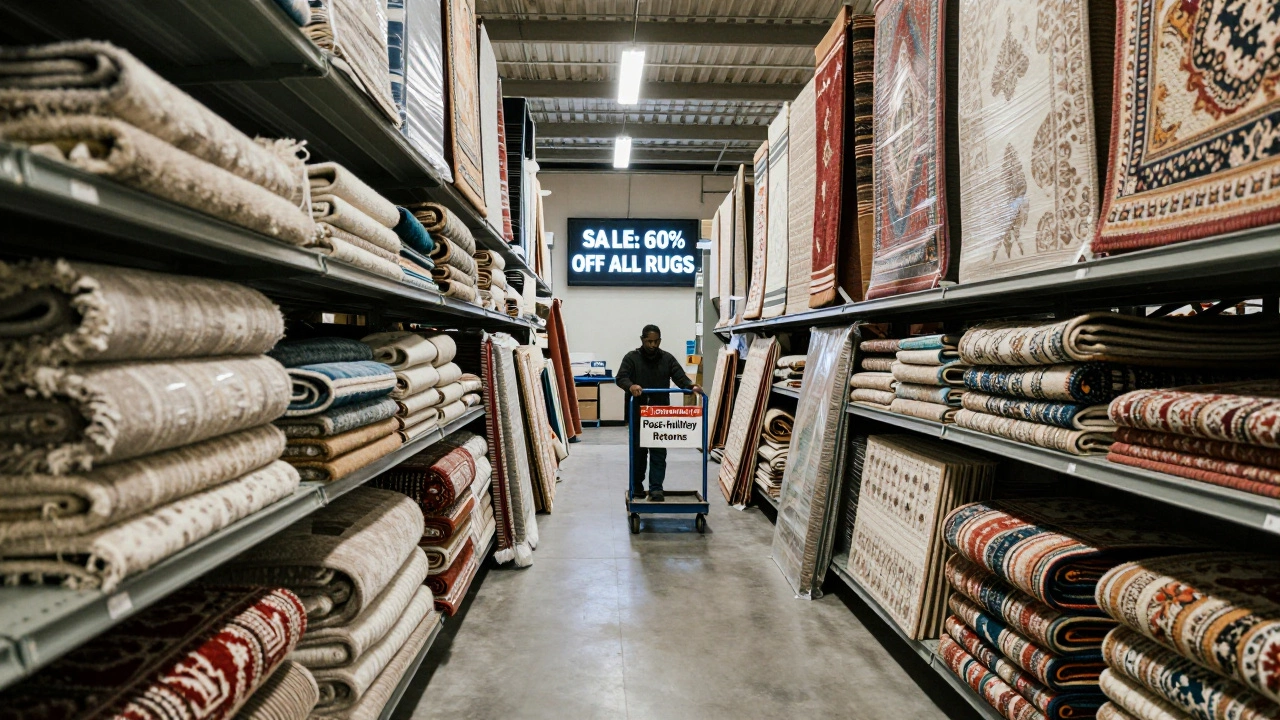
December is the obvious time to think about rugs. But the best deals don’t come on Christmas Eve-they come after. January is the quietest month for home decor. People are broke, budgets are reset, and stores are drowning in unsold holiday inventory. That’s when rug retailers slash prices by up to 60%. You’ll find premium rugs from India, Pakistan, and Morocco at half their original price. Many stores also bundle rugs with matching cushions or throw blankets. This is especially true for online retailers who don’t have physical overhead. Sites like Etsy, Wayfair, and Amazon often have post-holiday rug sales that last through mid-February.
What About Online vs. In-Store?
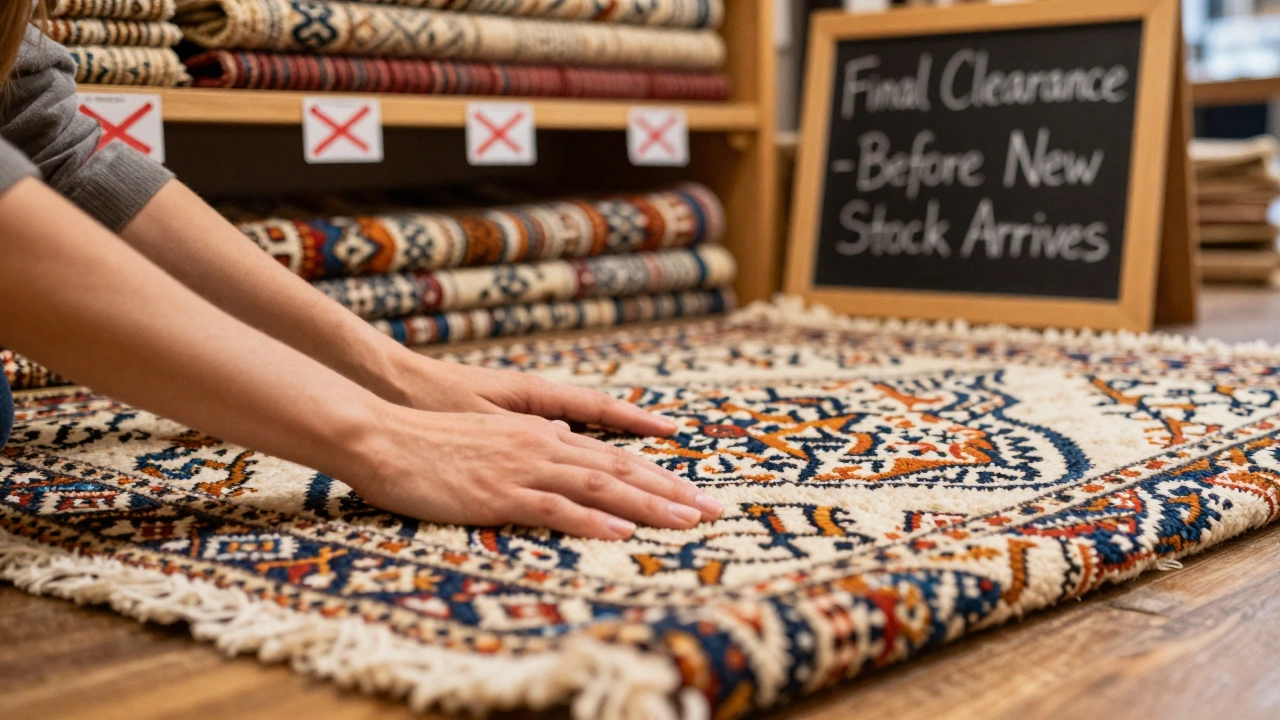
Online stores have more flexibility. They can run sales anytime, anywhere. But physical stores have one advantage: you can feel the rug. A thick pile might look luxurious online, but if it’s too stiff or sheds too much, you’re stuck. In-store shopping lets you test texture, thickness, and backing quality. That said, online retailers often have deeper discounts because they don’t pay for rent or staff. If you’re buying a rug over $500, consider this: check in-store for quality, then search online for the same model. You’ll often find it cheaper. Use reverse image search tools to find identical rugs across platforms.
What to Look For in a Sale
- Material matters: Wool is durable and naturally stain-resistant. Synthetic fibers like nylon and polypropylene are cheaper and easier to clean. Avoid rugs labeled “polyester blend” unless they’re priced under $100-those often flatten fast.
- Size is key: Standard sizes (8x10, 9x12) are discounted more often than odd sizes. If you need a custom fit, wait for end-of-season sales-stores sometimes cut down large rugs to fit smaller spaces and sell them as seconds.
- Backings and fringes: A sturdy cotton or latex backing means the rug won’t slide or curl. Hand-knotted fringes are a sign of quality. Machine-made fringes often unravel within a year.
- Check the label: Look for “hand-tufted” or “hand-knotted.” Avoid “machine-made” unless it’s a budget option. Handmade rugs last decades. Machine-made ones wear out in 3-5 years.
When Not to Buy
Don’t buy a rug in late April or early May if you live in a humid climate. Moisture can settle into fibers and cause mildew, especially in wool rugs. Same goes for buying right after heavy rain. Wait for dry, stable weather. Also avoid buying during local holidays like Easter or ANZAC Day if you’re in New Zealand-those are peak shopping times, not sale times. Retailers raise prices, not lower them.
Pro Tip: Track Price History
Use free tools like Google Shopping or PriceRunner to track rug prices over time. Enter the exact product name and check how it’s priced over the last 6 months. If a rug has been at $499 for three months, then drops to $349, that’s your signal. Most rugs don’t go on sale more than twice a year. If you see a price drop, act fast. Stock changes quickly.
Final Rule of Thumb
The absolute best time to buy a rug? Late February to early April. That’s when winter demand peaks, stores are clearing last year’s stock, and new inventory hasn’t arrived yet. You’ll find the widest selection, the deepest discounts, and the highest quality all at once. If you miss it, your next best bet is January-right after the holidays. Anything else is just paying full price.
Is it better to buy a rug in summer or winter?
Winter is usually better for buying rugs because retailers are stocking up for the season, and they still have last year’s unsold inventory. But the deepest discounts happen in late summer and early autumn, especially in March and April, when stores clear out old stock before new shipments arrive. Summer sales exist, but they’re mostly for synthetic rugs meant for high-traffic areas-not premium wool or hand-knotted pieces.
Do rug prices drop after Christmas?
Yes, rug prices often drop significantly after Christmas. January is one of the slowest months for home decor sales, so retailers slash prices to move leftover holiday inventory. Many online stores offer 40%-60% off rugs during this time. This is especially true for large, high-end rugs that didn’t sell during the holiday rush. Look for deals on Etsy, Wayfair, and Amazon.
Are handmade rugs worth the extra cost?
Absolutely-if you plan to keep the rug for more than 5 years. Hand-knotted rugs from Nepal, India, or Turkey can last 20-50 years with proper care. They’re made with natural dyes and wool, and each knot is tied by hand. Machine-made rugs flatten, fade, and fray much faster. A handmade rug might cost $800, but it’s an investment. A $200 machine-made rug might need replacing in 3 years. Over time, the handmade one saves you money.
Can I negotiate rug prices in-store?
Yes, especially at independent rug shops. Big chains like IKEA or The Warehouse usually have fixed prices. But smaller retailers, particularly those selling handmade or imported rugs, often have room to negotiate. If you’re buying multiple rugs, or if the rug has a small flaw (a loose fringe, slight color variation), politely ask if they can lower the price. Many will offer 10%-20% off just to close the sale.
What’s the best rug material for high-traffic areas?
For high-traffic areas like hallways or living rooms, choose wool or nylon. Wool is naturally stain-resistant, durable, and soft underfoot. Nylon is synthetic but holds up better than polyester or polypropylene. Avoid rugs labeled “polyester blend” in busy areas-they flatten quickly and look worn after a year. Look for rugs with a dense pile (at least 8,000 knots per square meter) for maximum durability.