What Is the Easiest Rug to Keep Clean? Top 5 Low-Maintenance Rugs for Busy Homes
 Jan, 4 2026
Rug Maintenance Calculator
Find Your Perfect Low-Maintenance Rug
Answer these quick questions to get a personalized recommendation based on your household needs.
Your Household
Your Needs
Answer the questions above to see your personalized recommendation.
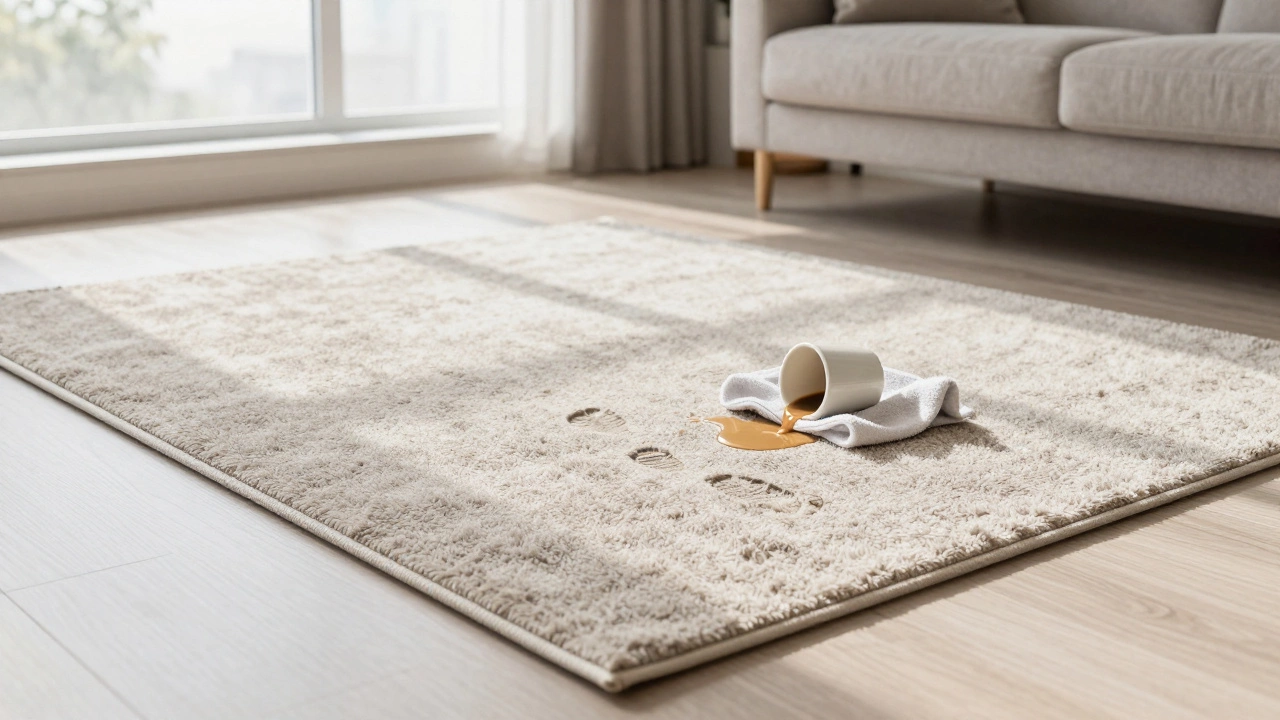
If you’ve ever spilled coffee on a white rug or watched your dog track mud across the living room, you know the panic that comes with a dirty rug. The good news? Not all rugs are created equal when it comes to cleaning. Some are designed to laugh at spills, shed dirt like water off a duck’s back, and survive daily chaos without looking worn out. If you want a rug that doesn’t demand constant vacuuming, professional cleaning, or endless spot-treating, you need the right material and weave.
What Makes a Rug Easy to Clean?
It’s not just about the color-though a dark or patterned rug hides dirt better. The real difference comes down to fiber, construction, and finish. A rug that’s easy to clean has fibers that repel liquids, resist stains, and don’t trap dust deep in the pile. It also needs a tight weave or low pile so dirt doesn’t sink in and become impossible to remove.
High-pile shag rugs? Beautiful, but a dust magnet. Wool rugs? Great for comfort, but they soak up spills like a sponge. Synthetic fibers like polypropylene, nylon, and polyester are the winners here. They’re engineered to be water-resistant, fade-resistant, and easy to wipe down. And when paired with a low pile or flatweave design, they become the most practical choices for busy households.
1. Polypropylene Rugs - The No-Brainer Choice
Polypropylene, also called olefin, is the most common material in indoor-outdoor rugs-and for good reason. It doesn’t absorb water. Spill wine? Pour vinegar? Track in rain? Just blot it with a towel and rinse with a hose if it’s outside. Indoors, a quick vacuum or wipe with a damp cloth takes care of it.
These rugs are also fade-resistant, so they won’t turn patchy in sunny rooms. They’re cheap, too-most decent ones cost under $100 for a 5x8 size. Brands like Safavieh, Unique Loom, and IKEA all offer solid polypropylene options. Look for a tightly woven, low-pile design. Avoid looped styles if you have pets; claws can snag them.
Real-world use: In Auckland homes, polypropylene rugs are everywhere-from entryways to kids’ playrooms. One mother I know uses the same rug for three years, even after her toddler painted it with finger paint. A scrub with dish soap and water, and it looked brand new.
2. Nylon Rugs - Tougher Than You Think
Nylon is the heavyweight champion of rug durability. It’s used in commercial spaces because it can handle foot traffic that would destroy other materials. It’s also naturally stain-resistant, especially when treated with Scotchgard-style finishes. Unlike wool, nylon doesn’t attract dirt electrostatically, so vacuuming removes more debris with less effort.
High-end nylon rugs from brands like Mohawk or Karastan often come with lifetime stain warranties. They’re more expensive than polypropylene-usually $150-$400 for a 5x8-but they last longer and hold up better under heavy use. If you have kids, dogs, or a home office with rolling chairs, nylon is worth the investment.
Pro tip: Look for nylon rugs with a cut-pile texture. They’re easier to clean than berber or looped styles, which trap crumbs and pet hair in the loops.
3. Flatweave Rugs - Simple, Washable, and Stylish
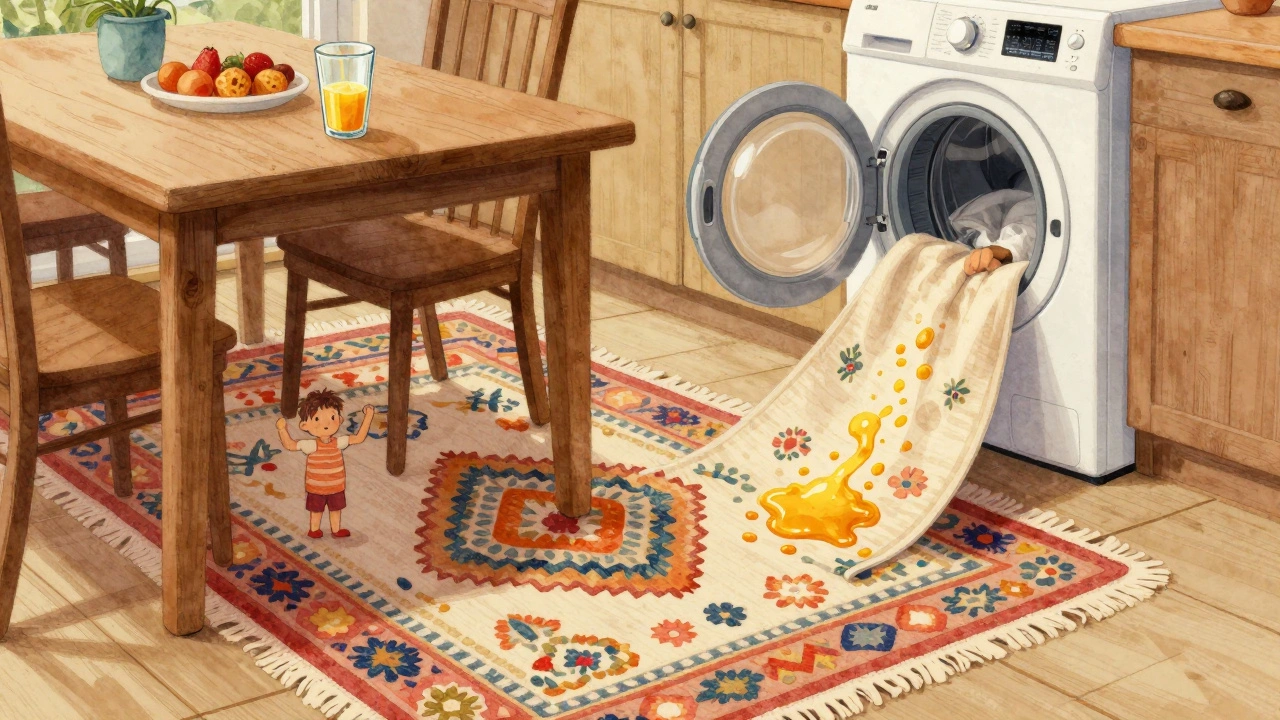
Flatweave rugs have no pile at all. They’re woven like a tapestry, making them thin, reversible, and machine-washable. Think of them as a giant, soft tablecloth for your floor. They’re perfect for high-traffic areas like hallways, kitchens, and mudrooms.
Materials vary-cotton, polyester, or a blend-but all flatweaves share the same advantage: you can pull them up, toss them in the washing machine, and hang them out to dry. No steam cleaning. No professional cleaners. Just toss, wash, repeat.
Popular styles include kilim, dhurrie, and jute blends. Jute itself isn’t stain-resistant, but when blended with synthetic fibers, it becomes practical. Brands like Ruggable and West Elm offer machine-washable flatweaves in modern patterns. One family in Devonport uses a flatweave rug under their kitchen table. Their kids spill juice daily. The rug goes in the wash every two weeks. No stains. No odor. No hassle.
4. Polyester Rugs - The Budget-Friendly Winner
Polyester is the middle ground between polypropylene and nylon. It’s softer than polypropylene, more stain-resistant than cotton, and cheaper than nylon. It doesn’t hold up as long under heavy wear, but for light to moderate use, it’s excellent.
Many polyester rugs are designed to mimic the look of wool without the upkeep. They’re great for bedrooms, home offices, or living rooms where spills are occasional. They resist fading and are easy to spot-clean with mild detergent.
One downside: polyester can attract static, so it might cling to pet hair. But a quick pass with a rubber broom or lint roller solves that. If you want a soft, colorful rug that doesn’t require special care, polyester is your best bet under $120.
5. Indoor-Outdoor Rugs - Built for Real Life
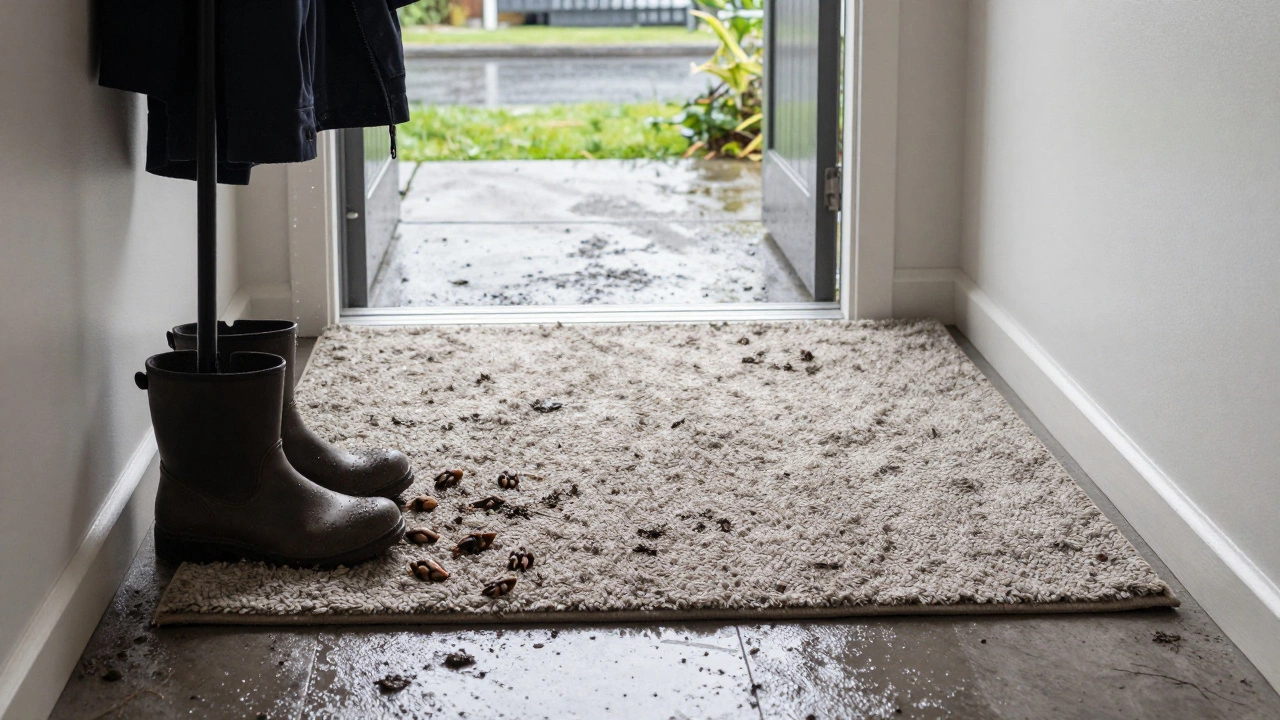
Indoor-outdoor rugs aren’t just for patios. They’re the ultimate cleanable rug because they’re designed to survive rain, sun, sand, and muddy boots. That means they’re perfect for front entries, mudrooms, and even bathrooms.
Most are made from polypropylene or recycled plastic bottles. They’re mold-resistant, fade-proof, and can be hosed down. Even pet accidents don’t leave lasting marks. You can leave them outside in winter, and they won’t rot or mildew.
They come in bold patterns and colors, so you don’t sacrifice style for function. In New Zealand homes, where weather changes fast, indoor-outdoor rugs are a smart pick. One couple in Takapuna uses the same rug in their entryway for four years. It’s seen snow, rain, sand, and two dogs. It still looks new.
What to Avoid
Not all rugs are low-maintenance. Skip these if cleaning is your priority:
- Wool rugs - They’re beautiful and soft, but they absorb liquids and stains easily. Spills can leave permanent marks unless treated immediately.
- Shag or high-pile rugs - Dirt sinks deep into the fibers. Vacuuming won’t reach it. You’ll need professional cleaning every few months.
- Hand-knotted silk or viscose rugs - These are decorative pieces, not functional ones. Water ruins them. Even humidity can cause discoloration.
- Unbacked jute or sisal - They trap dust and shed fibers. They’re also rough on bare feet and hard to clean thoroughly.
How to Maintain Your Cleanable Rug
Even the easiest rug needs basic care to last. Here’s what works:
- Vacuum weekly - Use a standard vacuum, no beater bar needed. For flatweaves, go over them gently to avoid fraying.
- Blot spills immediately - Don’t rub. Use a clean, dry towel to soak up liquid. Then dab with water and mild soap if needed.
- Rotate every 6 months - This prevents uneven wear and fading, especially in sunny rooms.
- Use a rug pad - It keeps the rug from sliding, reduces wear on the backing, and makes vacuuming more effective.
- Wash machine-washable rugs every 2-4 weeks - Cold water, gentle cycle, air dry. Never put them in the dryer.
Final Verdict: What’s the Easiest Rug to Keep Clean?
If you want the absolute easiest rug to clean, go with polypropylene. It’s affordable, tough, and requires almost zero effort. For a slightly softer feel and longer lifespan, choose nylon. If you want the ability to throw it in the washing machine, pick a flatweave. And if you live in a rainy, muddy, or pet-filled home, an indoor-outdoor rug is your best friend.
There’s no magic material that makes cleaning disappear-but with the right rug, you’ll spend less time scrubbing and more time living.
Can I clean a rug with vinegar and water?
Yes, for most synthetic rugs like polypropylene, nylon, and polyester. Mix one part white vinegar with two parts water. Blot the stain with the solution, then rinse with clean water and dry thoroughly. Avoid vinegar on wool, silk, or natural fiber rugs-it can damage the fibers and cause discoloration.
Are washable rugs worth it?
Absolutely-if you have kids, pets, or allergies. Machine-washable flatweave rugs let you deep-clean without hiring professionals. They’re cheaper in the long run than replacing stained rugs or paying for steam cleaning every few months. Just make sure the rug is labeled machine-washable and follow the care instructions.
Do dark rugs show less dirt?
Yes, but only visually. A dark rug hides dust and crumbs better than a light one, but dirt still accumulates. You still need to vacuum regularly. Don’t rely on color alone-choose a cleanable material first, then pick a color that matches your style.
Can I use a steam cleaner on my rug?
Only if the manufacturer says it’s safe. Steam can damage synthetic backings, cause shrinkage, or leave behind moisture that leads to mold. For most cleanable rugs, a vacuum and spot cleaning are enough. If you must steam, test a small corner first and dry the rug completely afterward.
How often should I replace a cleanable rug?
With proper care, a polypropylene or nylon rug lasts 5-10 years. Flatweaves may wear out faster if heavily used-around 3-5 years. Replace it when the fibers start thinning, the backing cracks, or stains won’t come out even after cleaning. Most people replace rugs for style, not because they’re ruined.