What is the Most Comfortable Couch Material? A Practical Guide
 Sep, 7 2026
Couch Material Comfort Finder
Tell Us About Your Home
Recommended Material
You know that feeling when you sit down after a long day, and the couch feels like a cloud? Or maybe it sticks to your legs in summer and freezes your skin in winter. The difference often comes down to one thing: the material covering your couch is not just about looks; it dictates how the furniture feels against your skin, how it handles spills, and how long it lasts.
Most people think "comfort" means softness. But if you have kids or pets, soft velvet might be a nightmare to clean. If you live in a humid climate, thick wool could make you sweat. There is no single "best" material for everyone. It depends on your lifestyle, your climate, and what you actually do on that sofa. Let’s break down the real contenders so you can pick the right one without regretting it two years later.
Defining Comfort: It Is Not Just Softness
Before we look at specific fabrics, we need to agree on what comfort actually means in a living room context. Comfort is a mix of three things: tactile feel (how it touches you), thermal regulation (does it keep you cool or warm?), and maintenance anxiety (do you worry about every crumb?).
A linen sofa feels incredibly breathable and crisp, which is great for hot climates. But linen wrinkles easily and stains are hard to remove. Is that comfortable? For some, yes. For a family with toddlers, no. Conversely, microfiber is tough and stain-resistant, but it can feel synthetic and sometimes traps heat. The goal is to balance these factors based on your daily reality.
The Top Contenders for Pure Comfort
If your main goal is maximum physical relaxation and you don’t mind a bit of upkeep, here are the materials that consistently rank highest for tactile pleasure.
Linen: The Breathable Luxury
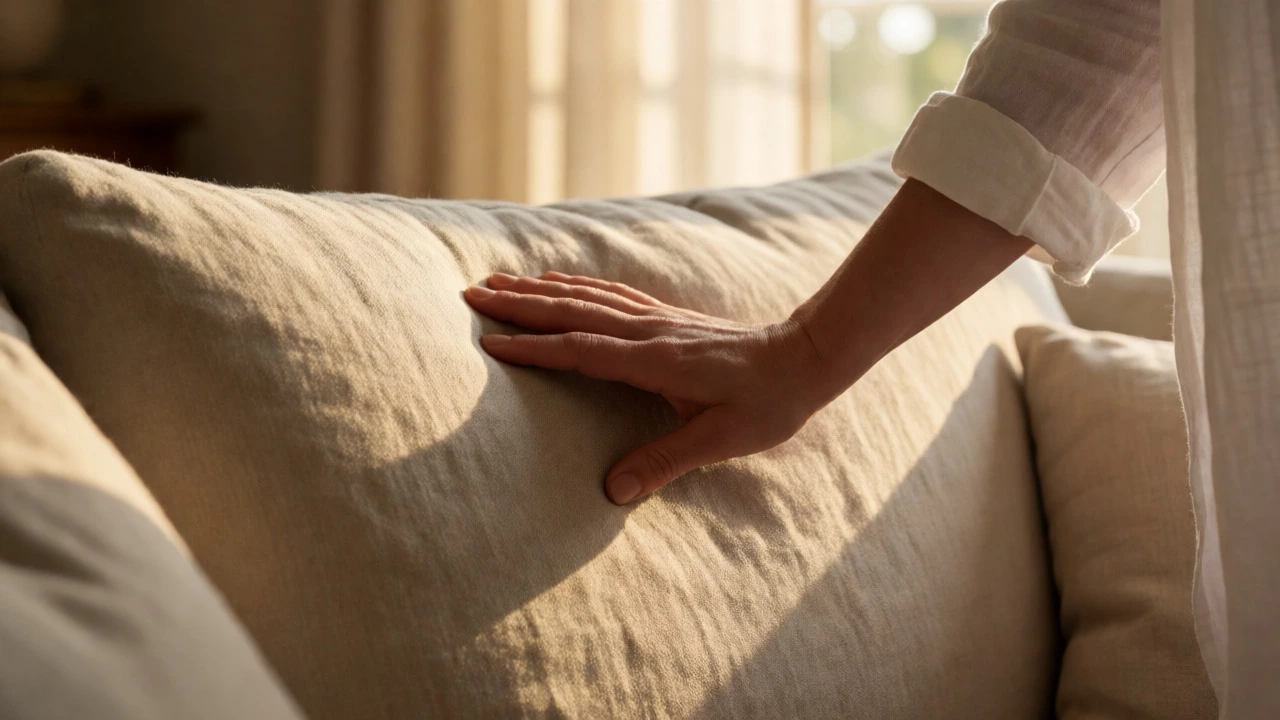
Linen is a natural fiber made from the flax plant, known for its exceptional breathability and durability. It doesn’t cling to your body. In the summer, it stays cool; in the winter, it warms up quickly to your body temperature. The texture starts off slightly rough but softens significantly over time, developing a lived-in look that many designers love.
However, linen has a reputation for wrinkling. If you want a pristine, hotel-lobby look, linen will frustrate you. It also absorbs liquids quickly, so red wine spills are a genuine risk unless you treat the fabric immediately. Choose linen if you value natural fibers and don’t mind a relaxed, casual aesthetic.
Cotton Canvas: The Everyday Workhorse
Cotton is arguably the most versatile couch material. Cotton canvas is durable, hypoallergenic, and generally affordable. It feels soft but substantial under your hand. Unlike linen, it holds its shape better and resists wrinkling more effectively.
The downside? Standard cotton can shrink if washed incorrectly and may fade in direct sunlight. To boost comfort and durability, look for cotton blends. A mix of cotton and polyester adds strength and helps the fabric resist stains, making it a safer bet for high-traffic areas.
Velvet: The Plush Indulgence
If you want your couch to feel like a hug, velvet is the answer. Modern velvet is often made from synthetic fibers like polyester or nylon, which makes it surprisingly durable and easy to clean compared to traditional silk velvet. It reflects light beautifully, adding depth to a room, and feels incredibly smooth against bare skin.
But velvet has a catch: it shows every fingerprint, pet hair, and dust particle. You will find yourself vacuuming it more than any other fabric. Also, velvet tends to retain heat, so it might feel too cozy in a sweltering apartment. It is perfect for formal living rooms or bedrooms where you want a touch of elegance and warmth.
Leather: Cool, Classy, and Complex
People often ask if leather is comfortable. The honest answer is: it depends on the quality and the temperature. Genuine leather is luxurious and ages gracefully, developing a patina that tells the story of your life. It does not trap allergens, making it a favorite for allergy sufferers.
However, leather reacts strongly to temperature. Sitting on a leather couch in January can be shocking cold. Sitting on it in July can result in sticky thighs. To mitigate this, choose top-grain or full-grain leather, which is softer and more porous than corrected grain. Pair it with throw blankets in winter and keep the room well-ventilated in summer. If you hate cleaning crumbs out of fabric weave, leather is a dream-just wipe it down.
Microfiber and Chenille: The Family-Friendly Options
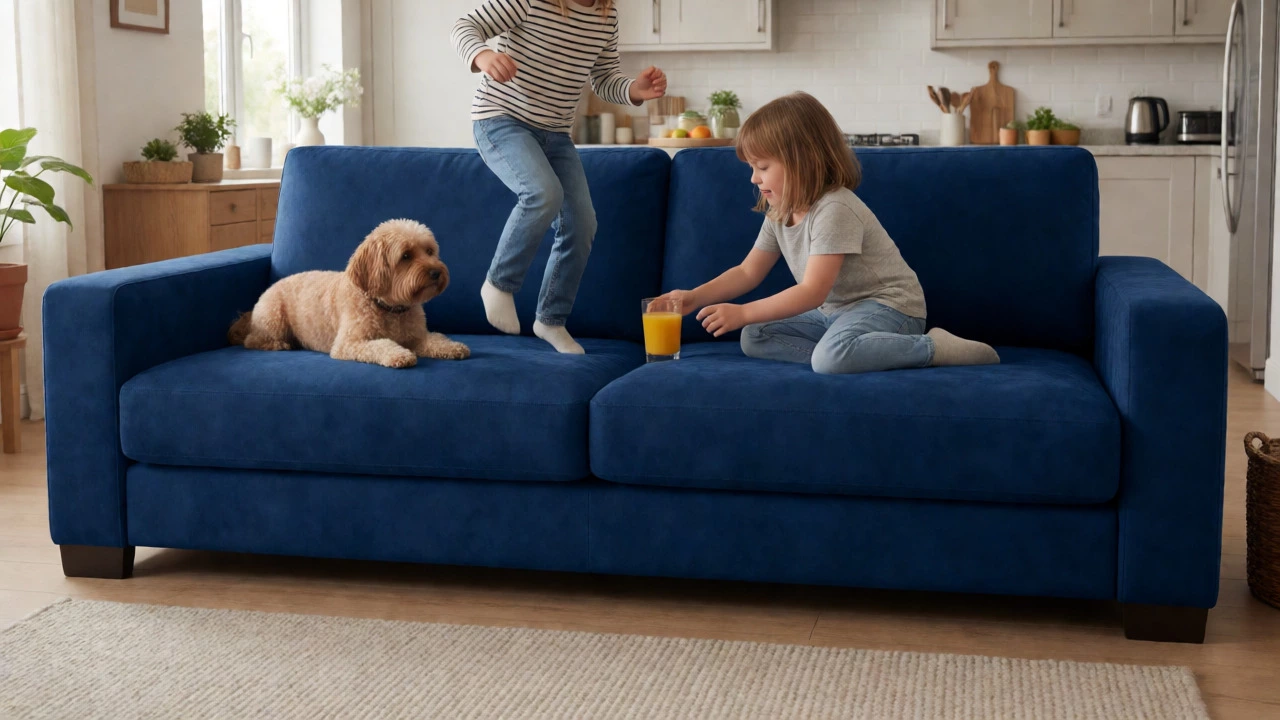
If you have children or pets, comfort cannot come at the cost of durability. This is where engineered fabrics shine.
Microfiber
Microfiber is a synthetic fabric made from ultra-fine polyester fibers, designed to mimic the softness of suede while being highly resistant to stains and scratches. It is tough. Cat claws slide off it rather than digging in. Spills bead up on the surface instead of soaking in. While it doesn’t breathe as well as natural fibers, modern weaves have improved airflow significantly. It is the pragmatic choice for busy households who still want a soft feel.
Chenille
Chenille offers a textured, fuzzy feel that invites lounging. It is heavier than cotton, giving the couch a sense of weight and stability. However, chenille is notorious for snagging. Jewelry, dog collars, and even rough denim can pull threads loose. If you choose chenille, ensure it is tightly woven. Look for high rub counts (Martindale test) to ensure it won’t pill after six months of use.
Comparison Table: Choosing Your Material
To help you decide, here is a quick breakdown of how these materials stack up against common household scenarios.
| Material | Tactile Feel | Breathability | Maintenance | Best For |
|---|---|---|---|---|
| Linen | Crisp, cool, softens over time | Excellent | High (wrinkles, stains) | Hot climates, adults-only homes |
| Cotton | Soft, neutral, sturdy | Good | Moderate | Families, general use |
| Velvet | Plush, smooth, warm | Poor (retains heat) | Moderate (shows lint) | Formal spaces, cool climates |
| Leather | Smooth, cool initially | Moderate | Low (wipe clean) | Allergy sufferers, minimalists |
| Microfiber | Suede-like, soft | Low to Moderate | Very Low (stain resistant) | Pet owners, kids |

How to Test Comfort Before Buying
You cannot judge a couch by looking at a photo online. You must sit on it. But don’t just plop down. Here is a quick checklist to run through in the showroom:
- The Sit Test: Sit normally. Does the cushion support your lower back? If you sink too deep, you might struggle to stand up.
- The Skin Test: Rub your forearm against the fabric. Does it itch? Does it feel static-y?
- The Temperature Check: Place your palm flat on the seat for ten seconds. Does it feel clammy or overly warm?
- The Armrest Reach: Lean forward and lean back. Do your arms rest naturally? Awkward armrests ruin comfort faster than bad cushions.
Also, check the fill. A great fabric on top of cheap foam will flatten out in a year. Look for high-density foam or feather-blend cushions. Feather wraps around high-density foam provide the best balance of initial softness and long-term support.
Making the Final Decision
There is no universal winner. If you live alone in a temperate city, linen or velvet might offer the ultimate luxury. If you have three dogs and a toddler, microfiber or performance cotton is the only sane choice. If you suffer from allergies, leather is your best friend.
Think about your actual life, not the magazine photos. Do you eat dinner on the couch? Do you nap there? Do you bring guests over often? Match the material to those habits. Once you do that, comfort becomes inevitable.
Which couch material is the most durable?
Microfiber and heavy-duty cotton canvas are typically the most durable options for everyday wear and tear. They resist abrasion and maintain their structure longer than delicate fabrics like silk or thin linen. Leather is also extremely durable but requires conditioning to prevent cracking.
Is linen or cotton better for a sofa?
It depends on your priorities. Linen is more breathable and has a distinct, upscale texture but wrinkles easily and stains harder. Cotton is more forgiving, easier to clean, and generally more affordable, though it lacks the unique drape of linen. For most families, cotton blends offer a better balance of practicality and comfort.
Does velvet get hot?
Yes, velvet tends to retain body heat because of its dense pile. Synthetic velvets may breathe slightly better than natural ones, but they are generally warmer than linen or cotton. If you sleep on the couch or live in a hot climate, velvet might feel uncomfortable during summer months.
What is the best couch material for pets?
Microfiber is widely considered the best choice for pet owners. Its tight weave prevents claws from snagging, and it is highly resistant to stains and odors. Leather is another good option because hair wipes off easily, but sharp claws can scratch it. Avoid loose-weave fabrics like boucle or chenille, which cats love to shred.
How do I keep my couch material comfortable over time?
Regular maintenance is key. Vacuum fabric sofas weekly to remove dust and grit that grind down fibers. Rotate cushions monthly to ensure even wear. For leather, condition it every 6-12 months to keep it supple. Using slipcovers can also protect delicate materials like linen or velvet from daily abuse while maintaining a fresh look.