What Is the Most Used Utensil in the Kitchen? The Truth About Spoons, Knives, and Ladles
 Aug, 10 2026
Kitchen Workhorse Calculator
Configure Your Cooking Habits
Your Analysis
Select your options and click calculate to find out which tool works the hardest in your kitchen.
The Spoon
The Ultimate Multi-Tasker
Based on your habits, this tool is your daily driver.
You open your drawer. You reach for something to stir the soup, flip the pancake, or taste the sauce. What do you grab? If you’re like most home cooks, it’s probably a spoon. But is that really the most used utensil in the kitchen? The answer isn’t as simple as pointing to one single tool. It depends on whether you define “utensil” strictly as handheld tools or include larger cookware, and it varies wildly based on what you actually cook.
While professional chefs might argue for the chef’s knife as the undisputed king of the kitchen, data from household surveys and culinary usage patterns suggests a different winner for the average person: the spoon. Specifically, the stainless steel tablespoon or serving spoon. It is the Swiss Army knife of eating vessels-used for stirring, tasting, mixing, serving, and even scraping bowls clean. But before we crown the spoon, let’s look at why this question is trickier than it seems and which other tools are fighting for the top spot.
The Definition Problem: What Counts as a Utensil?
To figure out the most used item, we first have to agree on what a utensil is. In common language, people often use "utensil" to mean any tool used in food preparation. This creates a huge gray area. Does a frying pan count? Probably not-that’s cookware. Does a spatula count? Yes, that’s a utensil. Does a whisk count? Yes.
If we broaden the definition to include cookware like pots and pans, the cast iron skillet or the non-stick frying pan would easily win. They touch almost every meal. However, in the strict sense of handheld implements, the competition narrows down to three main categories:
- Cutting Tools: Chef’s knives, paring knives, serrated bread knives.
- Mixing and Stirring Tools: Spoons (wooden, metal, silicone), whisks, spatulas.
- Serving and Eating Tools: Forks, ladles, tongs, serving spoons.
When we isolate these handheld tools, the frequency of use becomes the deciding factor. You might only cut vegetables once a day, but you stir, taste, and mix multiple times during that same cooking session.
The Case for the Spoon: The Ultimate Multi-Tasker
Why does the spoon take the lead? Versatility. A standard stainless steel tablespoon or a wooden cooking spoon performs dozens of functions without ever leaving your hand.
Think about a typical dinner preparation. You chop onions (knife). You sauté them (spatula or turner). You add broth (ladle or cup). Now, you need to bring it to a boil. You stir it occasionally to prevent sticking. You taste it to check seasoning. You adjust the salt. You stir again. When serving, you scoop the food onto plates. That is five distinct actions performed by one tool.
Stainless steel spoons are particularly dominant because they are durable, heat-resistant (to a degree), and easy to clean. Unlike plastic spoons, they don’t melt near high heat. Unlike glass, they don’t shatter. And unlike wood, they can be sanitized in a dishwasher without warping. This durability means they stay in rotation longer, increasing their cumulative usage time.
Furthermore, the spoon is the primary tool for tasting. Every serious cook tastes their food repeatedly. Whether it’s a pinch of salt in a pasta sauce or a dash of vinegar in a salad dressing, the spoon is the bridge between the pot and your palate. Without constant tasting, cooking is just guessing. This makes the spoon an essential quality-control device, not just a mixing tool.
The Challenger: The Chef’s Knife
If you ask a professional chef, they will likely tell you the Chef’s knife is the most important tool in the kitchen. Importance, however, is not the same as frequency of use. A chef’s knife is critical for prep work-chopping herbs, dicing vegetables, slicing proteins. But once the prep is done, the knife goes back into its block.
For many home cooks, especially those who rely on pre-chopped ingredients, frozen meals, or slow-cooker recipes, the knife sees very little action. In contrast, the spoon is used even if you are just heating up leftovers. You still need to stir the rice or mix the pasta with sauce. The knife sits idle while the spoon works overtime.
That said, if you cook from scratch daily, the gap narrows. A good 8-inch chef’s knife made of high-carbon stainless steel can handle 90% of cutting tasks. Its ergonomic handle and balanced blade make it a joy to use, which encourages more frequent use. But statistically, the number of stirs per meal far outweighs the number of cuts.
The Rising Star: Silicone Spatulas and Turners
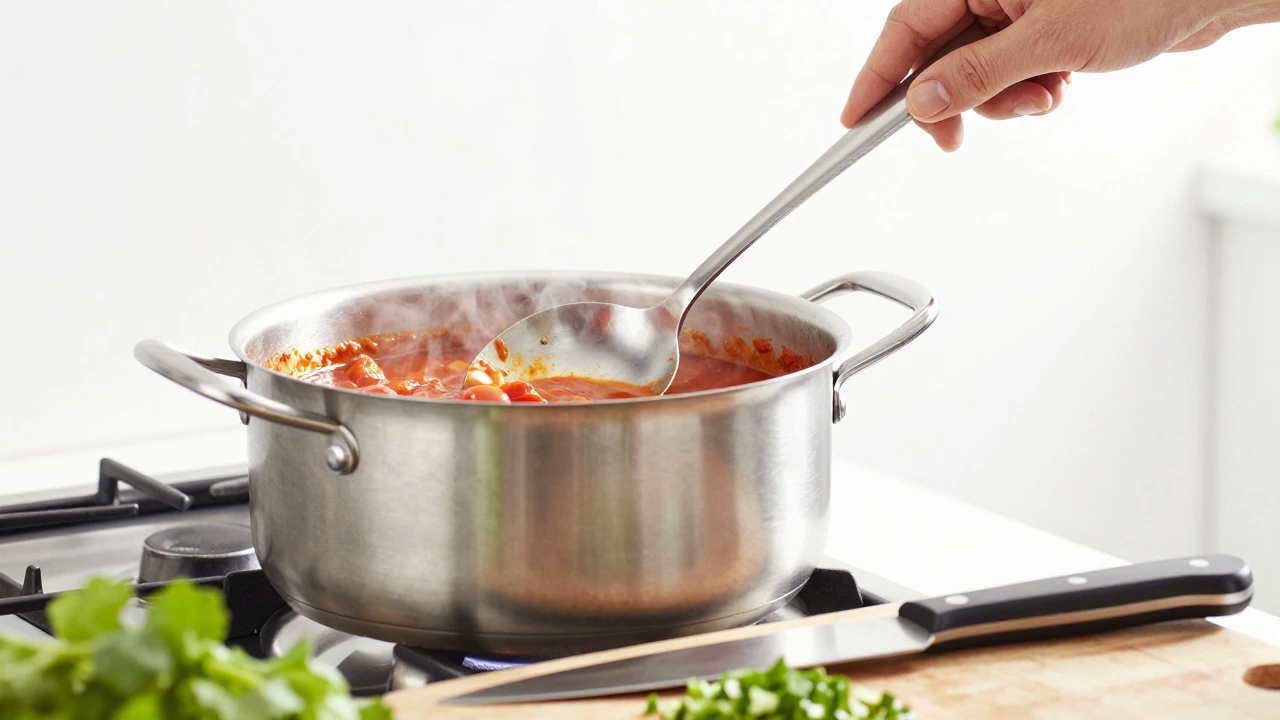
In recent years, Silicone spatulas have surged in popularity. Why? Because modern cookware relies heavily on non-stick coatings. Metal utensils can scratch Teflon and ceramic surfaces, ruining expensive pans. Silicone is soft enough to protect the coating but firm enough to scrape the bottom of a pan clean.
This material shift has changed the hierarchy. In kitchens dominated by non-stick woks, frying pans, and dutch ovens, the silicone spatula or turner might actually surpass the spoon in frequency. You use it to flip eggs, stir fry vegetables, fold batter, and scrape down the sides of a mixing bowl. It is the go-to tool for delicate maneuvers where a rigid spoon would fail.
However, silicone has limits. It can’t withstand direct flame contact for long, and it’s not ideal for heavy-duty stirring of thick soups or batters where rigidity is needed. So, while it competes closely, it hasn’t fully dethroned the traditional spoon.
| Utensil | Primary Function | Durability | Versatility Score (1-10) | Best For |
|---|---|---|---|---|
| Stainless Steel Spoon | Stirring, tasting, serving | High | 9/10 | General cooking, soups, sauces |
| Chef’s Knife | Cutting, chopping, slicing | Very High | 7/10 | Prep work, raw ingredients |
| Silicone Spatula | Folding, scraping, flipping | Medium | 8/10 | Non-stick cookware, baking |
| Wooden Spoon | Stirring, mashing | Medium | 8/10 | Acidic foods, gentle mixing |
| Ladle | Serving liquids | High | 4/10 | Soups, stews, sauces |
Material Matters: Wood vs. Metal vs. Plastic
The type of spoon you use also affects how often you use it. Many traditionalists swear by Wooden spoons. They are gentle on cookware, don’t conduct heat (so your fingers don’t burn), and have a natural antibacterial property. However, they require hand washing and occasional oiling to prevent cracking. This maintenance friction can reduce their usage frequency compared to low-maintenance alternatives.
Plastic utensils are cheap and colorful, but they degrade quickly. They stain with turmeric, warp in the dishwasher, and eventually break. Because they wear out fast, you replace them often, but you don’t necessarily *use* them more effectively. Their flimsiness makes them less reliable for heavy stirring, pushing cooks back toward sturdier options.
This brings us back to stainless steel. It is the gold standard for longevity. A well-made stainless steel spoon from a brand like Zwilling or Victorinox can last decades. Because it doesn’t break, stain, or warp, it remains the default choice for quick, dirty jobs. You don’t hesitate to use it. You just grab it and go.
Context Changes Everything: Cultural and Dietary Factors
Your diet plays a massive role in determining your most-used utensil. If you eat a lot of Asian cuisine, the Chopsticks might be the most frequently handled tool, both for cooking (stir-frying) and eating. In Indian households, the Ladle (or kadhai spoon) is central to preparing curries and dals, making it a top contender for daily use.
For bakers, the Whisk and Rubber scraper are indispensable. You whisk eggs, cream butter, and fold flour. You scrape bowls to ensure no ingredient is wasted. In a baking-heavy kitchen, the spoon takes a backseat to these specialized tools.
But for the general population-cooking balanced meals with proteins, vegetables, and starches-the spoon remains the consistent performer. It handles the pasta water, the gravy, the marinade, and the final garnish.
How to Choose Your Daily Driver
If you want to optimize your kitchen for efficiency, invest in a few high-quality spoons rather than one fancy knife. Here is what to look for:
- Handle Comfort: The handle should fit your grip naturally. Look for riveted handles where the metal is securely attached to the wood or silicone. Loose handles are annoying and unsanitary.
- Bowl Depth: A deeper bowl holds more liquid when tasting or scooping. Shallow spoons spill easily.
- Edge Design: Some spoons have a spout on one side for pouring sauces cleanly. This is a small feature that makes a big difference when plating.
- Heat Resistance: If you buy a silicone-coated spoon, ensure the core is metal so it doesn’t bend under pressure. Pure silicone can be too floppy for heavy stirring.
Avoid buying sets of mismatched, cheap plastic spoons. They clutter drawers and frustrate users. Instead, keep two or three identical stainless steel spoons in a dedicated holder. Consistency reduces decision fatigue. You know exactly where it is and how it feels in your hand.
The Verdict: Simplicity Wins
So, what is the most used utensil in the kitchen? For the vast majority of people, it is the spoon. It is the tool that bridges the gap between preparation and consumption. It is used before, during, and after cooking. It requires minimal skill to operate, yet it is essential for achieving good flavor through tasting and proper mixing.
While the chef’s knife is the hero of prep, and the spatula is the guardian of non-stick pans, the spoon is the workhorse. It is humble, ubiquitous, and utterly indispensable. Next time you walk into your kitchen, pay attention to your hands. Chances are, you’ll be holding a spoon long before you pick up anything else.
Is a knife considered a kitchen utensil?
Yes, a knife is technically a kitchen utensil. However, in common parlance, people often distinguish between "cutlery" (knives, forks, spoons for eating) and "cooking utensils" (tools for preparing food). A chef's knife is definitely a cooking utensil, but it is used less frequently than stirring tools like spoons for most home cooks.
What is the difference between a utensil and cookware?
Cookware refers to large containers used for cooking, such as pots, pans, and skillets. Utensils are smaller, handheld tools used to manipulate food within that cookware, such as spoons, spatulas, and tongs. Cutlery refers to the tools used for eating, like forks and knives.
Are wooden spoons better than metal ones?
It depends on your needs. Wooden spoons are quieter, don't scratch non-stick surfaces, and don't conduct heat, making them comfortable to hold. Metal spoons are more durable, easier to sanitize in a dishwasher, and better for heavy-duty stirring. Many cooks keep both for different tasks.
Can I use a plastic spoon in hot oil?
Generally, no. Most standard plastics will melt or warp when exposed to high temperatures found in frying oil. Use a silicone, wooden, or stainless steel utensil for high-heat cooking to avoid contaminating your food with melted plastic.
Why do chefs prefer stainless steel spoons?
Chefs value stainless steel for its hygiene, durability, and precision. It doesn't absorb odors or stains, can withstand high heat, and provides a rigid structure for effective stirring and tasting. It is also easy to clean and sanitize quickly in a busy kitchen environment.