What is the Strongest Wood for Shelving? A Practical Guide
 Nov, 23 2026
Shelf Sag Calculator & Wood Selector
Select your wood type and shelf dimensions to see if it will hold up under weight without bowing.
Select options and click Calculate to see results.
Wood Name
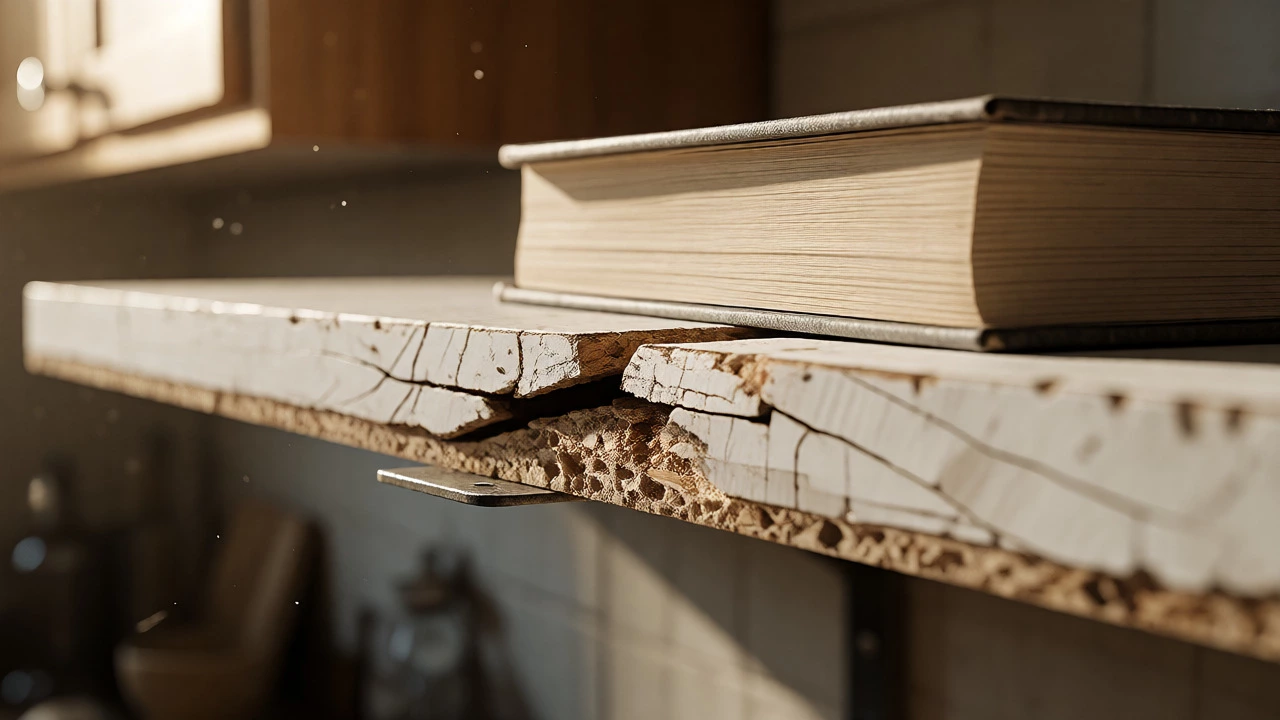
RatingYou’ve probably been there. You buy a nice set of floating shelves from a big-box store, mount them perfectly, and then put your heavy hardcover book collection or a few large potted plants on them. Two weeks later, you hear that dreaded crack. The shelf has bowed in the middle, or worse, it’s snapped right off the bracket. It’s frustrating because you thought you were buying quality.
The truth is, not all wood is created equal when it comes to holding weight over time. Some woods are stiff enough to span three feet without a hint of sag, while others will start looking like a hammock after holding a stack of textbooks for a month. If you’re planning a custom built-in or just want to replace those flimsy particleboard units, knowing which timber actually holds up is half the battle.
Hickory is widely considered one of the hardest and strongest domestic woods available for shelving applications, boasting a Janka hardness rating of 1,820 lbf. While hickory is tough, it can be brittle and difficult to work with. For most DIYers and homeowners, Hard Maple or White Oak offer a better balance of strength, stability, and workability.
Understanding Strength: Hardness vs. Stiffness
Before we list the best options, let’s clear up a common misconception. When people ask for the "strongest" wood, they usually mean two different things: resistance to dents (hardness) and resistance to bending (stiffness). For shelving, stiffness is often more critical than hardness.
Imagine putting a heavy box on a shelf made of very hard but flexible bamboo. It might resist scratches, but if it bows significantly under the weight, it feels unstable and looks bad. Conversely, a softer wood like Pine might dent easily if you drop a tool on it, but if it’s thick enough, it won’t bend much. However, softwoods generally lack the structural integrity needed for long spans without support.
We measure hardness using the Janka Hardness Scale, which tests how much force is required to embed an 11.28mm steel ball halfway into the wood. Higher numbers mean harder wood. But for shelf sagging, we look at the Modulus of Elasticity (MOE). This measures stiffness. A higher MOE means the wood resists bending under load.
The Top Contenders for Heavy-Duty Shelving
If you want shelves that won’t quit, these are the species you should consider. I’ve ranked them based on a combination of stiffness, availability, and cost-effectiveness for residential use.
| Wood Species | Janka Hardness (lbf) | Stiffness (MOE - PSI) | Best Use Case |
|---|---|---|---|
| Hickory | 1,820 | 2,020,000 | Industrial style, extreme loads |
| Hard Maple | 1,450 | 1,830,000 | Kitchen cabinets, heavy books |
| White Oak | 1,360 | 1,780,000 | Bathrooms, humid environments |
| Ash | 1,320 | 1,740,000 | Modern minimalist designs |
| Walnut | 1,010 | 1,580,000 | Aesthetic focus, medium loads |
| Pine (Softwood) | 380-870 | 1,100,000-1,600,000 | Light decor, short spans only |
Hickory: The Unbeatable Powerhouse
If raw power is your only metric, Hickory wins. It is incredibly dense and resistant to shock. This is why it’s used for tool handles and axe shafts. A hickory shelf can hold a massive amount of weight without showing signs of stress. The downside? It’s hard on your tools, prone to splitting if you’re not careful with screws, and the grain pattern is quite busy, which doesn’t suit every interior design style.
Hard Maple: The Balanced Choice
For most homes, Hard Maple is the sweet spot. It’s nearly as strong as hickory but much easier to cut, sand, and finish. It has a tight, uniform grain that takes stain well (though it can blotch, so pre-stain conditioner is a must). Maple is also resistant to abrasion, making it perfect for kitchen pantries where you’re sliding heavy pots around. If you’re building open shelving in a high-traffic area, maple is a reliable bet.
White Oak: Stability Meets Strength
While Red Oak is popular, White Oak is superior for shelving in damp areas. It has closed pores, making it naturally water-resistant. This prevents warping and swelling, which can compromise structural integrity over time. White oak is extremely stiff and durable. It’s slightly more expensive than red oak, but if your shelves are in a bathroom or near a kitchen sink, the extra cost buys you peace of mind against moisture damage.
Why Softwoods Often Fail
You might be tempted to save money by using Pine or Fir. They are cheap, lightweight, and easy to find at any hardware store. But here is the problem: they are soft. A Janka rating of 380-870 sounds fine until you realize that’s less than half the hardness of Maple.
More importantly, softwoods have lower stiffness. To get a pine shelf to hold the same weight as a maple shelf without sagging, you often need to make it twice as thick. That bulky look isn’t always desirable. Plus, pine dents easily. Drag a heavy vase across a pine shelf, and you’ll leave a groove. Over time, this weakens the surface and looks messy. If you do choose pine, keep spans short-under 24 inches-and limit the load to light decorative items.
Span Length Matters More Than Wood Type
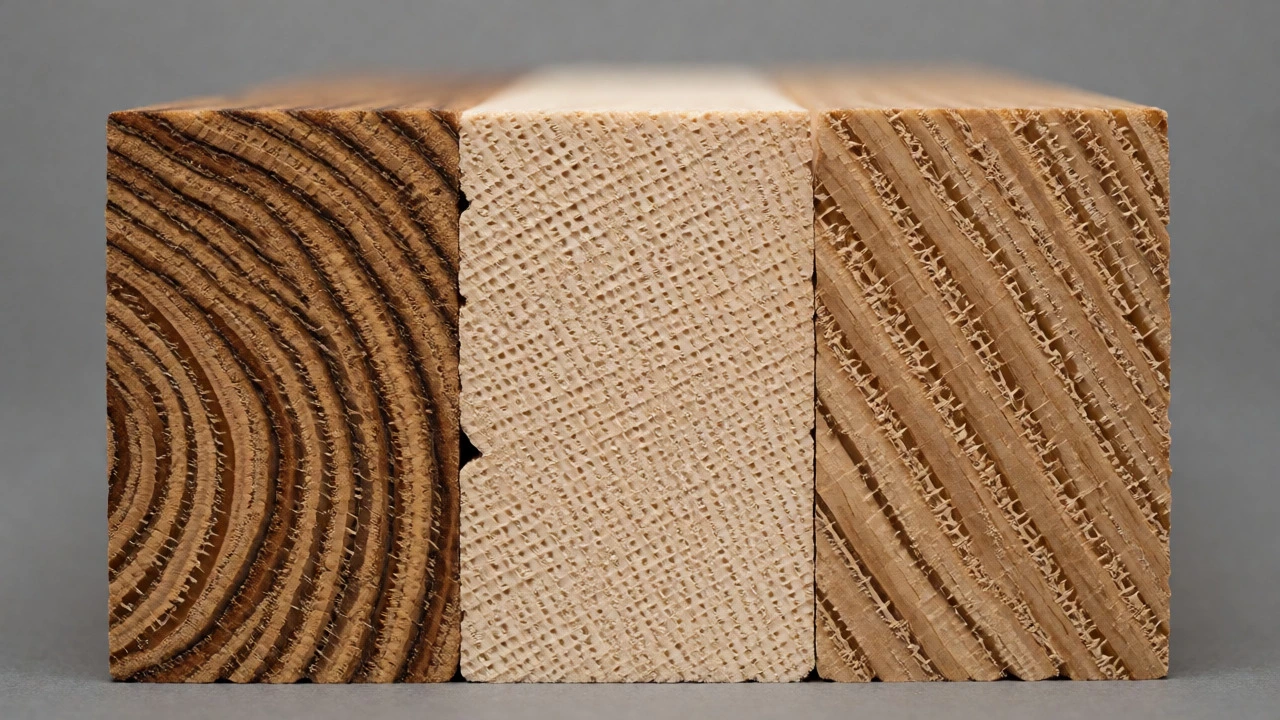
Here is a rule of thumb that saves many DIY projects: The longer the unsupported span, the thicker the wood needs to be. Even the strongest wood will sag if you try to span six feet with a thin piece of board.
- Short Spans (Under 24 inches): Most hardwoods, even Walnut or Cherry, will handle significant weight without visible sag.
- Medium Spans (24-36 inches): Stick to High-MOE woods like Maple, Oak, or Hickory. Ensure the thickness is at least ¾ inch.
- Long Spans (Over 36 inches): You need maximum stiffness. Use 1-inch thick Maple or Oak, or add a support bracket in the middle. Alternatively, use engineered wood products like LVL (Laminated Veneer Lumber), which are designed specifically for load-bearing spans.
Sagging is progressive. It starts small and worsens over months. If you plan to load shelves heavily, err on the side of caution. Thicker is better. A 1-inch thick Maple shelf spanning 30 inches will hold hundreds of pounds effortlessly. A ½-inch thick Pine shelf spanning the same distance might bow visibly with just 20 pounds.
Engineered Alternatives: When Solid Wood Isn’t Enough
Sometimes, solid wood isn’t the practical answer. If you need a very long shelf for a home office or library, solid hardwood becomes prohibitively expensive and heavy. In these cases, consider Birch Plywood or MDF (Medium Density Fiberboard).
High-quality Birch Plywood, especially ¾-inch thick cabinet-grade sheets, is surprisingly strong. Because the layers are cross-grained, it resists warping better than some solid woods. It’s stable and consistent. However, plywood edges need to be finished carefully (edge banding) to look professional.
MDF is cheap and smooth, great for painting. But it has poor screw-holding capacity and sags significantly under heavy loads. Avoid MDF for shelves longer than 24 inches unless they are supported frequently. If you paint your shelves, MDF is okay for light items; for heavy books, stick to plywood or solid hardwood.
How to Maximize Shelf Strength
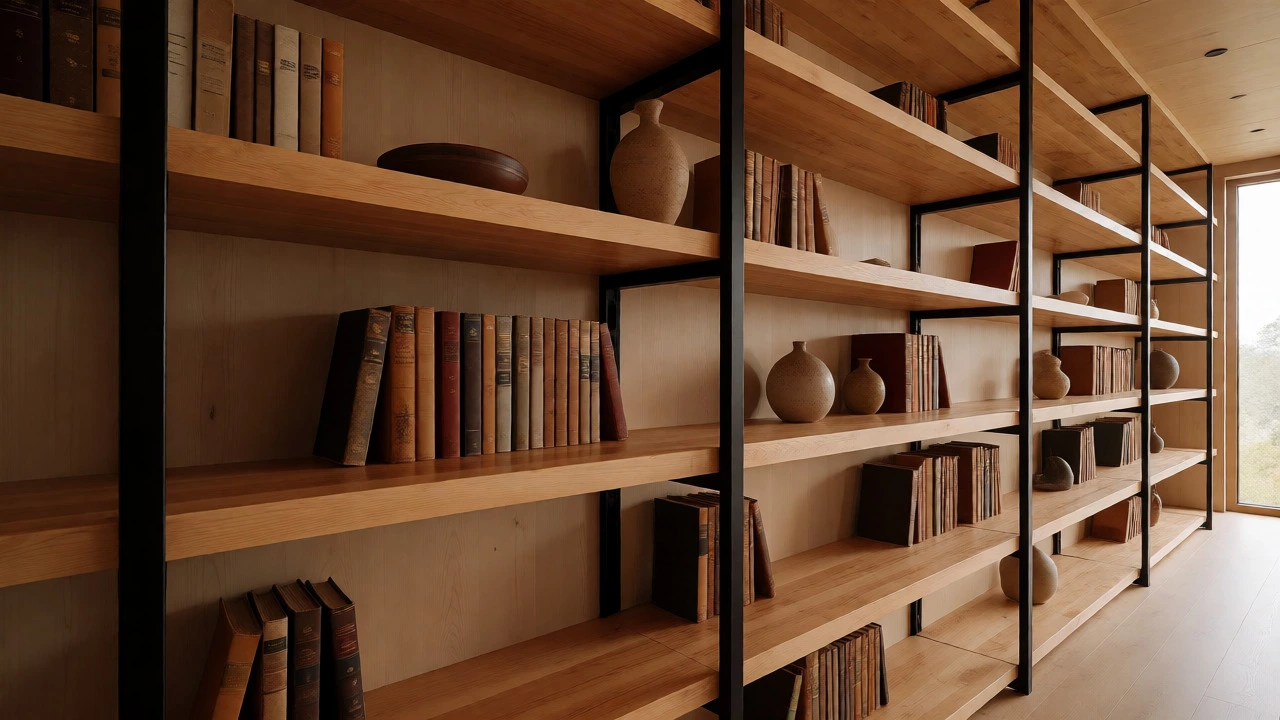
Choosing the right wood is step one. Step two is installation. Even the strongest Oak shelf will fail if mounted poorly.
- Use Brackets Wisely: Place brackets no more than 24 inches apart for heavy loads. For lighter loads, 30-36 inches is acceptable.
- Anchor to Studs: Never rely solely on drywall anchors for heavy shelves. Find the wall studs and drive screws directly into them. If you can’t hit a stud, use toggle bolts rated for the total weight plus a safety margin.
- Distribute Weight: Place the heaviest items near the ends of the shelf (close to the supports) rather than in the center. This reduces the bending moment in the middle.
- Finish Properly: Seal all sides of the wood, including the back and bottom. Uneven moisture absorption causes warping. A full seal keeps the wood dimensionally stable.
Final Verdict: What Should You Buy?
If you want the absolute strongest wood and don’t mind the cost and difficulty, go with Hickory. It’s the tank of the wood world.
For 90% of homeowners, Hard Maple is the best choice. It offers exceptional strength, durability, and a clean look that fits modern interiors. It’s easy to work with and widely available.
If you live in a humid climate or are installing shelves in a bathroom, choose White Oak. Its moisture resistance ensures longevity.
Avoid cheap softwoods for anything other than light decoration. Your future self will thank you for investing in hardwood that stays straight and sturdy for decades.
Is oak stronger than maple for shelving?
Hard Maple is technically stronger than Oak. Maple has a higher Janka hardness rating (1,450 vs. 1,360 for White Oak) and a higher Modulus of Elasticity, meaning it is stiffer and more resistant to denting and bending. However, White Oak is more rot-resistant, making it better for bathrooms.
Can I use pine for heavy bookshelves?
You can, but it’s risky. Pine is soft and prone to sagging. To use pine for heavy books, you need thick boards (at least 1 inch) and short spans (under 24 inches). Otherwise, the shelves will likely bow in the middle within a year.
What is the cheapest strong wood for shelves?
Poplar is often the most affordable hardwood option. While not as hard as Maple or Oak, it is significantly stronger than Pine and works well for medium-weight loads if the spans are kept reasonable. Ash is another mid-range option that offers excellent strength for its price.
Does plywood sag less than solid wood?
High-quality birch plywood can be more stable than solid wood because it resists warping due to humidity changes. However, standard construction plywood may sag under heavy loads over long spans. Cabinet-grade plywood with proper edge support performs very well.
How thick should wood shelves be?
For most hardwoods, ¾ inch is the standard minimum. For spans over 30 inches or heavy loads, increase thickness to 1 inch or add a support bracket. Softwoods require greater thickness to achieve similar rigidity.