What Type of Rug Is Easiest to Keep Clean? Practical Guide for Busy Homes
 Aug, 16 2026
Rug Maintenance Effort Calculator
Select a rug material and style to see how much time you'll spend keeping it clean.
to calculate your effort score.
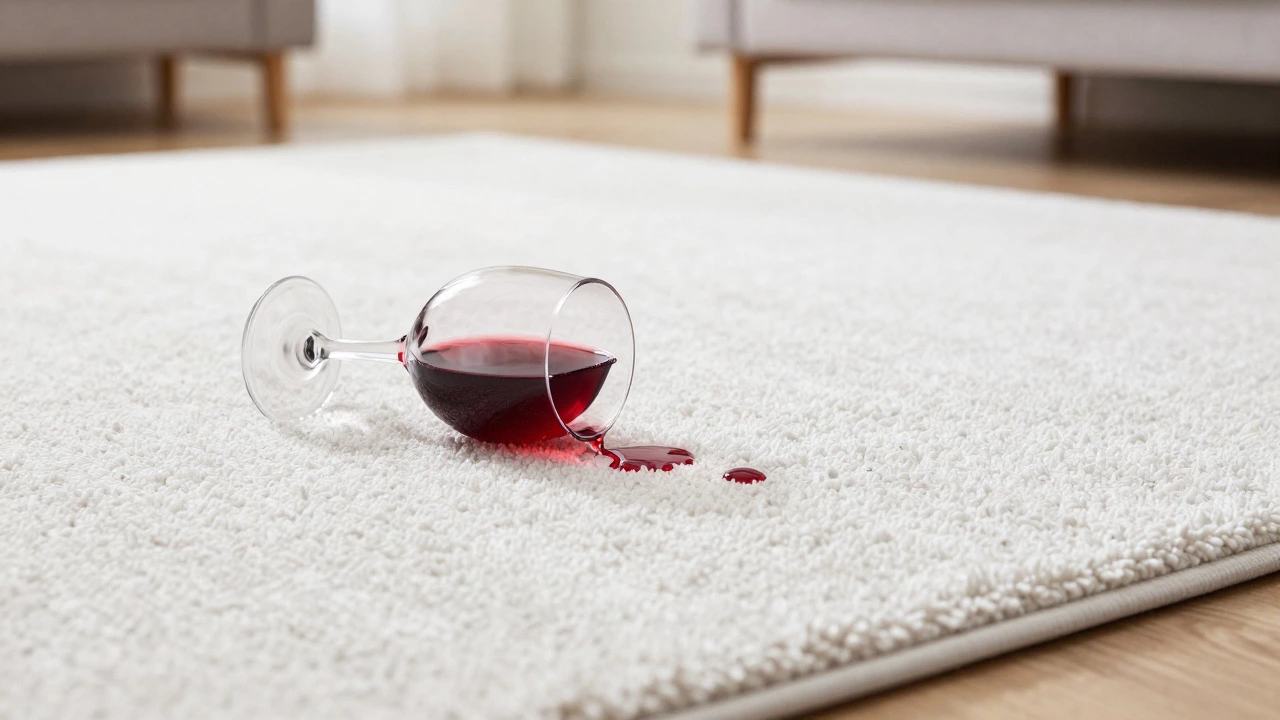
Spilling red wine on a white carpet is a nightmare. But what if your floor covering didn’t care? Choosing the right material can save you hours of scrubbing and expensive professional cleaning bills. The answer isn't just about looks; it’s about how the fibers react to dirt, liquids, and daily wear.
Easy clean rugs are defined by their resistance to staining, ease of vacuuming, and durability against foot traffic. While no rug is truly "maintenance-free," certain materials and constructions significantly reduce the effort required to keep them looking fresh. This guide breaks down which types hold up best in real-life scenarios, from kids' rooms to high-traffic living areas.
Key Takeaways
- Synthetic fibers like nylon and polypropylene are the easiest to clean due to stain resistance and machine-washable options. >Natural fibers like wool offer excellent dirt retention but require more careful spot-cleaning than synthetics.
- Low-pile or flat-weave styles prevent debris from getting trapped deep into the pile, making vacuuming faster.
- Backing matters: Non-slip rubber backings can trap moisture if not dried properly, while breathable cotton backs dry faster.
- Regular vacuuming (twice a week) prevents soil from embedding deeper than occasional deep cleans.
The Material Factor: Synthetics vs. Naturals
When you look at a rug, the fiber type is the single biggest predictor of how hard it will be to clean. Let's compare the main contenders.
| Material | Stain Resistance | Cleaning Method | Best For | Durability |
|---|---|---|---|---|
| Nylon | High | Spot clean, some machine washable | Living rooms, hallways | Very High |
| Polypropylene (Olefin) | Very High | Wipe down, machine washable | Kids' rooms, play areas | Medium |
| Wool | Medium-High | Spot clean only, professional deep clean | Formal living spaces | High |
| Cotton | Low | Machine washable | Bedrooms, low-traffic areas | Low-Medium |
| Jute / Sisal | Low | Dry vacuum only, avoid water | Decorative accents | Medium |
Nylon is a synthetic polymer known for its exceptional resilience and ability to bounce back after compression. It handles foot traffic better than almost any other fiber. Because it’s hydrophobic, liquids sit on top rather than soaking in immediately, giving you time to blot them up. If you have a family with young children, nylon is often the sweet spot between performance and longevity.
Polypropylene, also known as olefin, takes the crown for stain resistance. Its smooth surface repels most liquids and resists fading from sunlight. You can literally wipe up mud or juice with a damp cloth. However, it can feel slightly plastic-like underfoot and may pill over time in high-abrasion zones. For a child’s bedroom or a reading nook where spills happen weekly, this is the pragmatic choice.
Wool is a natural protein fiber that has been used for centuries. It naturally repels dirt because the scales on the fiber shaft push particles away. It’s biodegradable and feels luxurious. The catch? It requires gentle handling. Harsh chemicals can damage it, and heavy wet cleaning can cause shrinkage. If you choose wool, invest in a good vacuum with a suction-only mode for delicate carpets.
Construction Styles That Save Time
It’s not just what the rug is made of, but how it’s built. The pile height and weave density directly impact how much dust and hair get trapped.
Flat Weaves and Low Piles
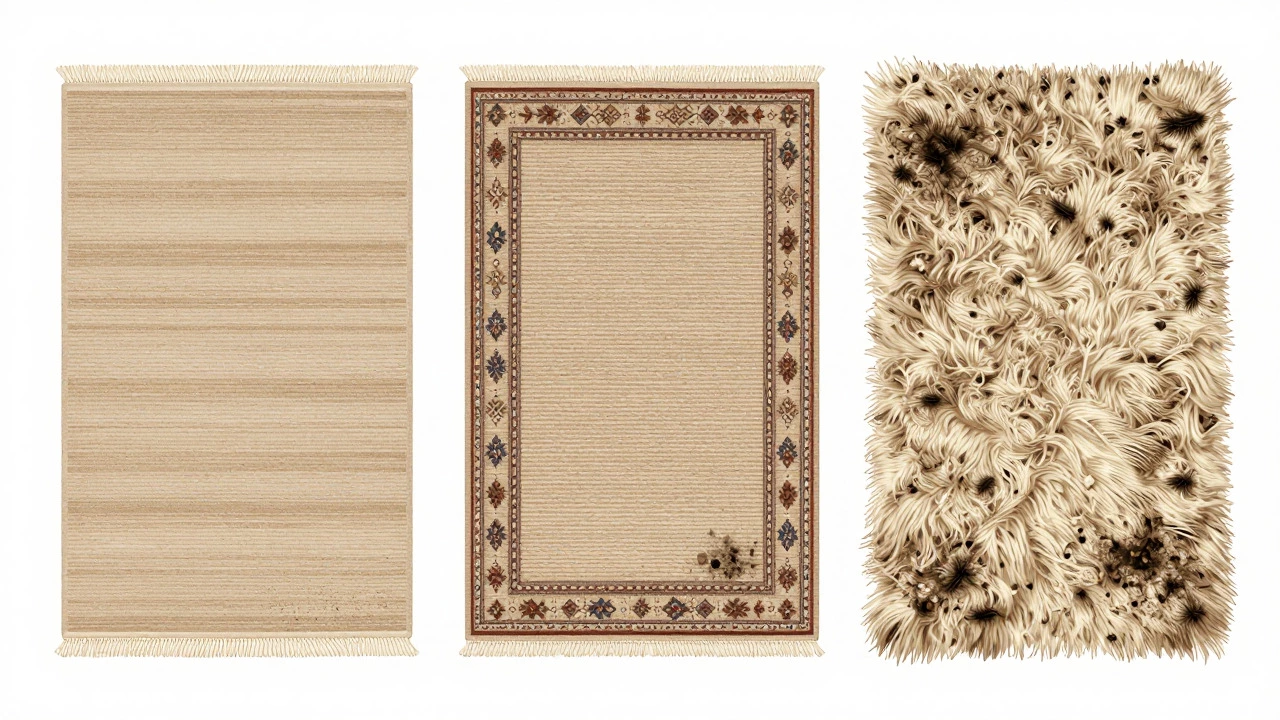
Flat weaves, such as kilims or sisal mats, have no pile. Dust doesn’t settle deep; it stays on the surface. A quick pass with a vacuum or even a broom clears it away. These are ideal for entryways or kitchens where you want to avoid tripping hazards and make cleanup instant.
Looped Piles
Looped rugs, like Berber style, have yarns looped upward rather than cut. This creates a tight structure that resists matting. They are generally easier to vacuum than shaggy or high-pile rugs because there are fewer crevices for crumbs to hide in. Just be aware that loose threads can snag on pet claws or furniture legs.
Avoiding the Shag Trap
If you love the cozy aesthetic of shag rugs, know that they are the hardest to maintain. Long fibers trap pet hair, lint, and small debris deep within the pile. You’ll need a powerful vacuum with a dedicated upholstery tool, and even then, deep cleaning is difficult. If you have pets, consider a short-pile alternative or limit shag rugs to low-traffic corners.
Real-Life Scenarios: What Works Where?
Let’s apply this to actual room setups.
The Kitchen: This is the zone of grease, sugar, and sticky spills. A polypropylene rug with a non-slip backing is your best friend. It wipes clean easily and dries fast. Avoid wool here; grease stains set permanently in natural fibers.
The Living Room: High traffic means constant dust accumulation. A medium-pile nylon rug balances comfort and cleanliness. It’s tough enough to handle sofas being moved and guests walking across, yet easy to spot-clean if someone drops a drink.
The Bedroom: Since you’re likely barefoot, comfort matters. A cotton or wool blend works well here. Traffic is low, so you don’t need extreme durability. You can hand-wash smaller cotton rugs in the sink if they get dusty, which is a refreshing change from using harsh cleaners.
Care Routines That Actually Work
Even the easiest rugs need basic maintenance. Here is a simple routine that keeps them looking new without taking up your weekend.
- Vacuum Twice Weekly: Use a suction-only setting for delicate fibers. Rotate the direction of vacuuming once a month to ensure even wear.
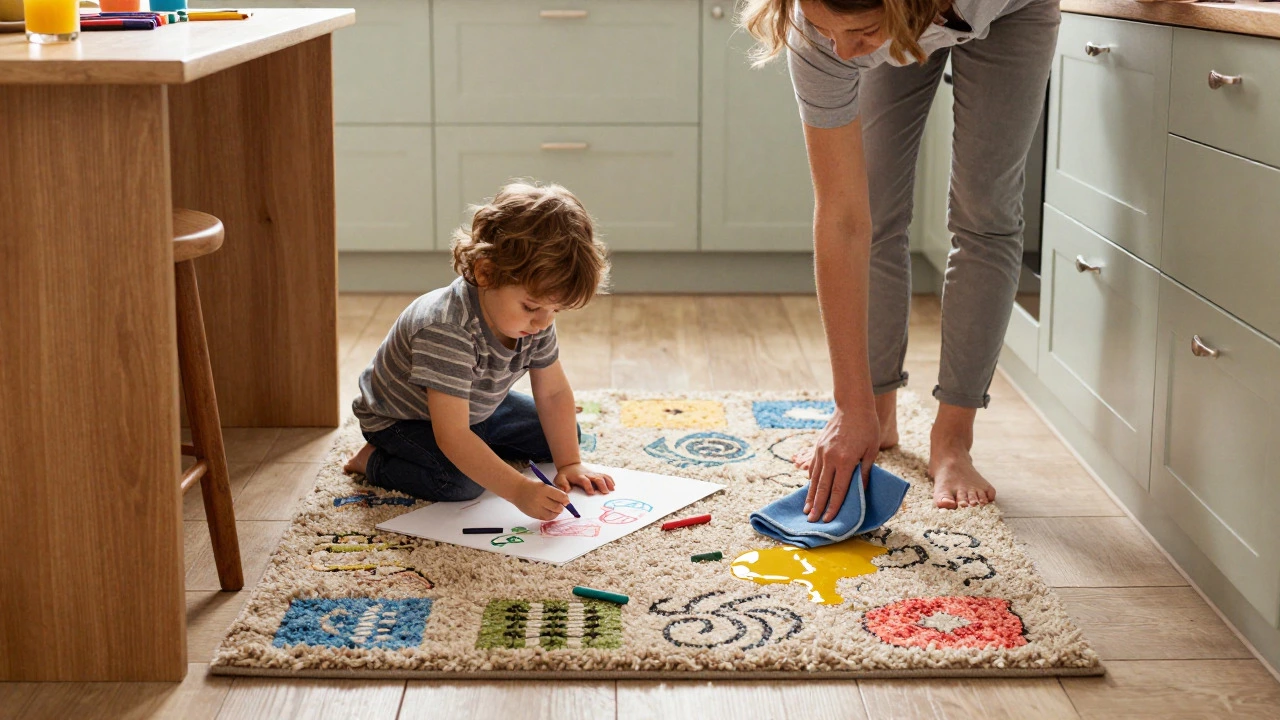
- Blot, Don’t Rub: When a spill happens, use a white cloth to blot from the outside in. Rubbing pushes dirt deeper and damages fibers.
- Rotate Seasonally: Flip or rotate your rug every six months. Sunlight fades colors unevenly, and weight distribution wears out specific spots.
- Use a Protector: Apply a fabric protector spray designed for your fiber type. It creates an invisible barrier that makes liquids bead up.
Pro tip: Keep a small bottle of vinegar-water solution (50/50 mix) in a spray bottle for quick neutralizing of odors and minor stains. It’s cheap, safe for most materials, and effective.
Common Mistakes to Avoid
Many people ruin "easy clean" rugs through improper care. Here are the pitfalls to watch for.
- Over-wetting: Most rugs, especially natural ones, hate excess water. Over-saturating leads to mold growth underneath and warping of the base.
- Ignoring the Backing: If your rug has a latex backing, make sure it dries completely after cleaning. Trapped moisture causes a musty smell that won’t go away.
- Using Bleach on Colors: Unless the label says otherwise, bleach can strip color from dyed fibers instantly. Stick to mild detergents.
- Skipping the Vacuum Before Wet Cleaning: Always vacuum first. Otherwise, you’re just turning dry dirt into mud when you add water.
Frequently Asked Questions
Are machine-washable rugs really worth it?
Yes, for small to medium-sized rugs in bedrooms or kids' rooms. They allow you to do a full deep clean at home, removing embedded dirt that vacuums miss. Just check the size limit of your washing machine and use a gentle cycle with cold water.
Which rug material is best for pet owners?
Nylon or polypropylene are top choices. They resist urine smells better than wool and don’t trap pet hair as aggressively as shag piles. Look for rugs with a tightly woven structure to minimize snagging from claws.
How often should I professionally clean my rug?
For high-traffic areas, every 12-18 months. For low-traffic areas, every 24 months. Professional cleaning removes deep-seated soil and refreshes the fibers, extending the life of the rug significantly.
Can I use regular carpet cleaner on any rug?
Not always. Check the manufacturer’s label first. Wool rugs often require pH-neutral cleaners, while synthetics can handle stronger solutions. Always test a hidden area before applying any new product.
What is the most durable rug for a hallway?
A low-pile nylon rug with a dense weave. Hallways experience constant friction from shoes. Nylon’s resilience ensures it won’t flatten quickly, and the low pile makes it easy to sweep and vacuum frequently.