Which Is the Most Expensive Type of Storage?
 Feb, 9 2026
Storage Cost Calculator
Storage Cost Calculator
Compare costs of different storage types based on your needs. Based on the latest 2026 pricing data from the article.
Estimated Cost
When people talk about storage, they usually think of hard drives, cloud backups, or USB sticks. But not all storage is created equal-and some types cost more than a used car. If you're wondering which storage solution breaks the bank, the answer isn't what most people guess. It’s not the biggest external drive or the flash drive with 2TB of space. The most expensive type of storage isn’t even something you plug into your laptop. It’s enterprise-grade NVMe storage-the kind used by banks, hospitals, and cloud giants like Amazon and Google.
Why Enterprise NVMe Costs So Much
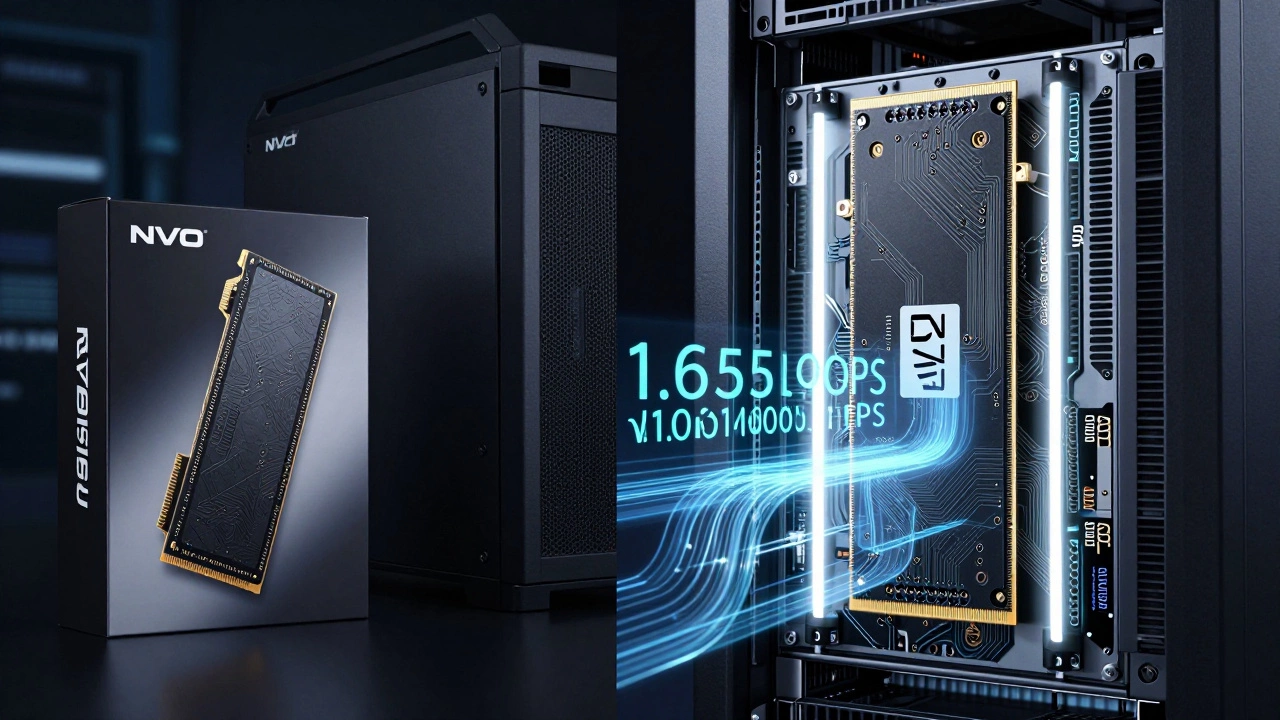
Most consumers pay $50 to $150 for a 2TB SSD. But enterprise NVMe drives? They start at $1,000 for 1.6TB and can go over $10,000 for a single drive with 30TB. Why? Because these aren’t just faster SSDs. They’re built to run 24/7 for years without failing, handle thousands of simultaneous read/write requests, and survive power outages without losing data.
Take a look at the Samsung PM1733a, a drive used in data centers. It costs around $7,500. That’s not because it’s shiny or has a fancy logo. It’s because it uses 144-layer 3D NAND flash, has built-in power-loss protection, and can sustain 1.6 million IOPS (input/output operations per second). Consumer SSDs max out at about 700,000 IOPS under ideal conditions. Enterprise drives also come with firmware that monitors wear at the cell level, redistributes data in real time, and self-heals when errors pop up.
How It Compares to Other Storage Types
Let’s break down the cost per gigabyte across common storage types. This isn’t about total price-it’s about how much you pay for every single gigabyte of space.
| Storage Type | Cost per GB | Typical Use Case | Lifespan (Years) |
|---|---|---|---|
| Hard Disk Drive (HDD) | $0.02 | Backup archives, media storage | 3-5 |
| Consumer SSD | $0.05 | Laptops, gaming PCs | 5-7 |
| Enterprise SSD | $0.15 | Small business servers | 7-10 |
| Enterprise NVMe | $0.50 | Cloud data centers, AI training | 8-12 |
| DRAM-based Storage (Persistent Memory) | $2.00+ | High-frequency trading, real-time analytics | 5-8 |
Notice the jump from enterprise SSD to NVMe? That’s where the real cost skyrockets. But the real outlier? DRAM-based persistent memory. These aren’t flash drives at all. They use volatile memory (like your RAM) but have battery backups or capacitors that keep data alive during power loss. Companies like Intel and Micron make these modules. A single 512GB module can cost over $1,000. That’s $2 per gigabyte. For context, that’s 100 times more than a consumer SSD.
Why Would Anyone Pay This Much?
If you’re not running a financial exchange or training AI models, why should you care? Because the cost isn’t just about the drive-it’s about what happens if it fails.
Imagine a hospital’s patient records system going down for even 10 minutes. Or a stock trading platform missing a trade because a drive took 0.002 seconds too long to respond. In those cases, downtime costs hundreds of thousands-or millions-per minute. Enterprise NVMe and DRAM storage eliminate those delays. They’re designed to respond in under 10 microseconds. Consumer drives? They’re in the 50-100 microsecond range.
Also, these systems don’t just store data. They protect it. Enterprise drives include end-to-end data path protection. That means every bit of data is checksummed from the moment it leaves the CPU until it hits the flash cells. If a single bit flips due to cosmic radiation (yes, that happens), the system catches it and fixes it before it becomes a problem. Consumer drives don’t even attempt this.
What About Cloud Storage? Isn’t That Expensive?
You might think cloud storage is the priciest option. After all, companies pay monthly fees to store petabytes of data. But here’s the catch: cloud storage costs are spread out over millions of users, and the infrastructure is built on bulk-purchased enterprise drives. When you pay $0.023 per GB per month for AWS S3 storage, you’re not paying for the hardware-you’re paying for uptime, redundancy, and support.
Google Cloud charges about $0.02 per GB/month for standard storage. That’s cheaper than a consumer SSD per gigabyte. The cloud provider bought the drives in bulk, built data centers with cooling and power backups, and now charges you for access. The real expense is still on the backend-and that’s where enterprise NVMe lives.
The Hidden Cost: Long-Term Reliability
Most people don’t think about how often storage fails. A consumer SSD might last five years. But in a data center running 10,000 drives, even a 1% annual failure rate means 100 drives go bad every year. That’s downtime, replacement costs, and labor.
Enterprise drives are rated for 5-10 million hours of operation. That’s over 500 years of continuous use per drive. They also come with warranties that cover the full lifespan-often 5-10 years. Consumer drives? Usually 3 years. And if one fails, you’re on your own.
Plus, enterprise drives are built with better materials. They use higher-grade silicon, better thermal paste, and industrial-grade solder. The circuit boards are double-layered. The controllers are custom-built. Every component is tested under extreme heat, vibration, and voltage spikes. You can’t buy this stuff at Best Buy.
Who Actually Uses This?
These drives aren’t for gamers, photographers, or home offices. They’re for:
- AI training clusters that process millions of images per second
- Stock exchanges where trades happen in microseconds
- Hospital databases storing MRI scans and patient histories
- Cloud providers like AWS, Azure, and Google Cloud
- Telecom companies handling real-time call routing
Even Tesla uses enterprise NVMe in its fleet of self-driving cars to store sensor data from every vehicle. That’s 200,000+ cars, each with multiple drives, constantly writing data. One failed drive could mean a missed update. That’s not acceptable.
Is There Anything More Expensive?
Yes-tape storage. No, seriously. While tape drives seem ancient, they’re still used for long-term archival. A single LTO-9 tape costs about $100 and holds 50TB. That’s $0.002 per GB. But the tape library that holds hundreds of tapes? That costs $50,000 to $200,000. Add in the robotic arm that loads and unloads tapes, the cooling system, and the maintenance staff? You’re looking at $1 million setups for just one archive.
But tape isn’t expensive because of the media. It’s expensive because of the whole system. So while tape libraries cost more upfront, they’re not the most expensive type of storage. The title goes to DRAM-based persistent memory. It’s faster than NVMe, more reliable than flash, and costs 40 times more per gigabyte.
What Should You Buy?
If you’re a regular user? Stick with a good consumer SSD. You’ll get 99% of the performance you’ll ever need for less than $100. If you’re running a small business server? Go with an enterprise SSD. It’s worth the extra $50-$100 for the reliability.
But if you’re asking this question because you’re thinking about building a data center or deploying AI systems? Then yes-you’ll need to budget for NVMe or even DRAM storage. And yes, it’ll cost more than your car.
Is NVMe storage worth the extra cost for home users?
No, not for most home users. NVMe drives are 2-3 times faster than SATA SSDs, but you won’t notice the difference unless you’re editing 8K video, running virtual machines, or loading massive game worlds. For everyday tasks like browsing, streaming, or office work, a $60 SATA SSD performs just as well. The extra cost of NVMe only makes sense if you’re pushing hardware limits.
Why do enterprise drives last longer than consumer ones?
Enterprise drives use higher-quality NAND flash with more over-provisioning (extra space reserved for wear leveling). They also have better cooling, advanced error correction, and firmware that actively manages cell wear. Consumer drives are built to last 3-5 years under light use. Enterprise drives are designed to last 8-12 years under 24/7 heavy workloads.
Can I buy enterprise storage for my personal computer?
Technically, yes-but it’s not practical. Enterprise drives often require special firmware, RAID controllers, or server-grade motherboards. They’re not designed for consumer PCIe slots. Plus, you’ll pay $2,000+ for a 2TB drive that’s overkill for your needs. You’ll get better value from a high-end consumer SSD.
Does cloud storage cost more than owning your own drives?
For small amounts of data, cloud storage is cheaper. But if you store more than 10-20TB long-term, buying your own enterprise drives becomes more economical. Cloud providers make money on scale and redundancy. If you need 100% control, zero latency, or offline access, owning hardware is the only way.
What’s the future of expensive storage?
The next leap is in optical storage and quantum memory. Companies like Sony and Microsoft are testing holographic storage that could hold 1TB per disc. But the real game-changer is CXL (Compute Express Link) memory. This lets DRAM act like persistent storage, blurring the line between RAM and SSD. Expect DRAM-based storage to become more common in AI and finance by 2030-and prices to drop slowly as manufacturing scales.
If you’re looking to upgrade your home setup, skip the flashy NVMe drives. But if you’re building something that can’t afford to fail-then yes, the most expensive storage is the only smart choice.