Why Mirrors in the Bedroom Can Ruin Your Sleep: Science and Design
 Aug, 17 2026
Bedroom Mirror Sleep Impact Checker
Answer these questions about your current setup to get a personalized assessment of how your mirrors might be affecting your rest.
Ever wake up feeling groggy despite eight hours of rest? You might not be blaming your mattress or phone usage. The culprit could be hanging right on your wall: a mirror. While we often view Mirrors as essential tools for grooming and spatial expansion, their placement in the bedroom is a frequent source of subconscious stress. Many homeowners install them without considering how they interact with light, sound, and our biological rhythms. The result? A room that looks great during the day but fights against you at night.
The debate isn't just about superstition. It involves practical physics, psychological comfort, and cultural beliefs like Feng Shui. Whether you are a skeptic or a believer, understanding why a mirror facing your bed can disrupt your peace helps you make a smarter design choice. This guide breaks down the real reasons to rethink your mirror placement, offering actionable solutions that balance aesthetics with well-being.
The Science of Light Reflection and Sleep Disruption
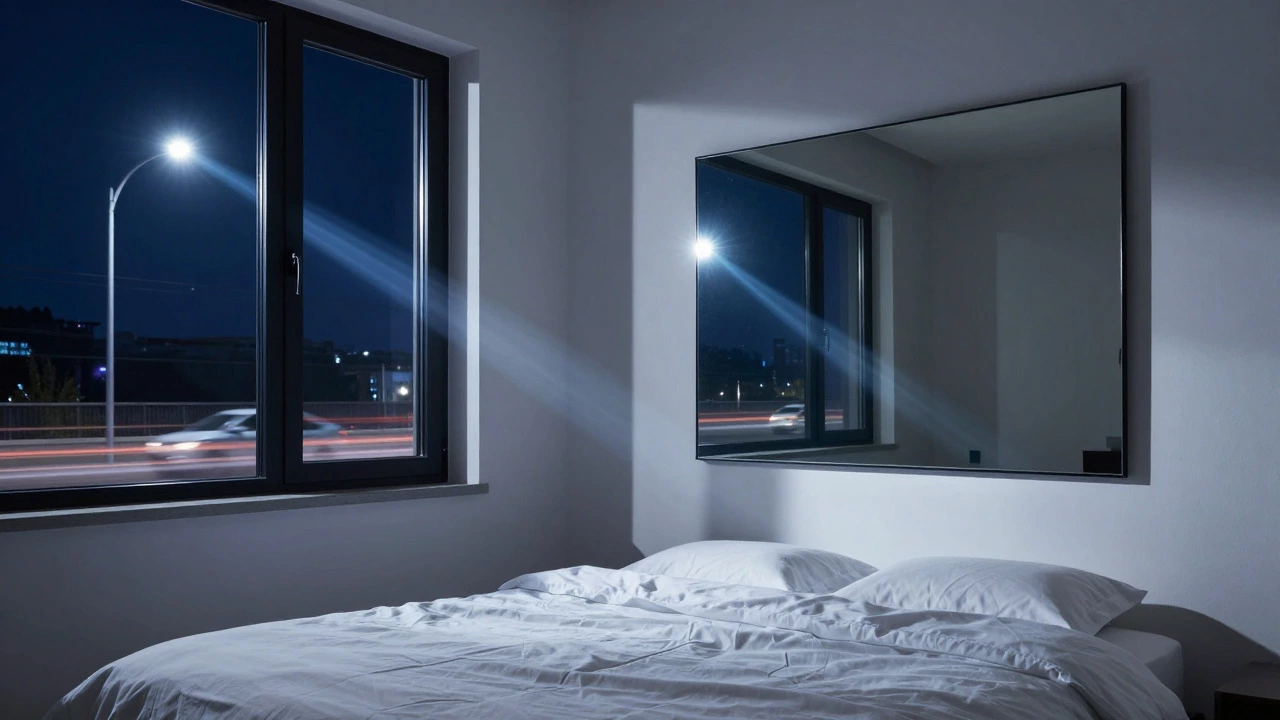
Your brain relies on consistent environmental cues to regulate Circadian Rhythms, the internal clock that controls sleep-wake cycles. When a mirror reflects light sources-such as streetlights, security cameras, or even the glow from a bedside lamp-it creates intermittent visual noise. Even if you don't consciously see the reflection, your retinas detect these shifts. This triggers a micro-awakening response, pulling you out of deep sleep stages without you realizing it.
Consider a standard urban bedroom window. At 3 AM, a passing car's headlights hit the glass. If a mirror faces that window, the beam bounces directly onto your face. This sudden burst of bright light suppresses Melatonin production, the hormone responsible for inducing sleepiness. Studies on sleep hygiene consistently show that uncontrolled light exposure reduces total sleep time by an average of 15 minutes per night. Over weeks, this accumulates into significant fatigue. The fix is simple: ensure no reflective surface aligns with external light sources during peak sleeping hours.
Feng Shui Principles: Energy Flow and Restlessness
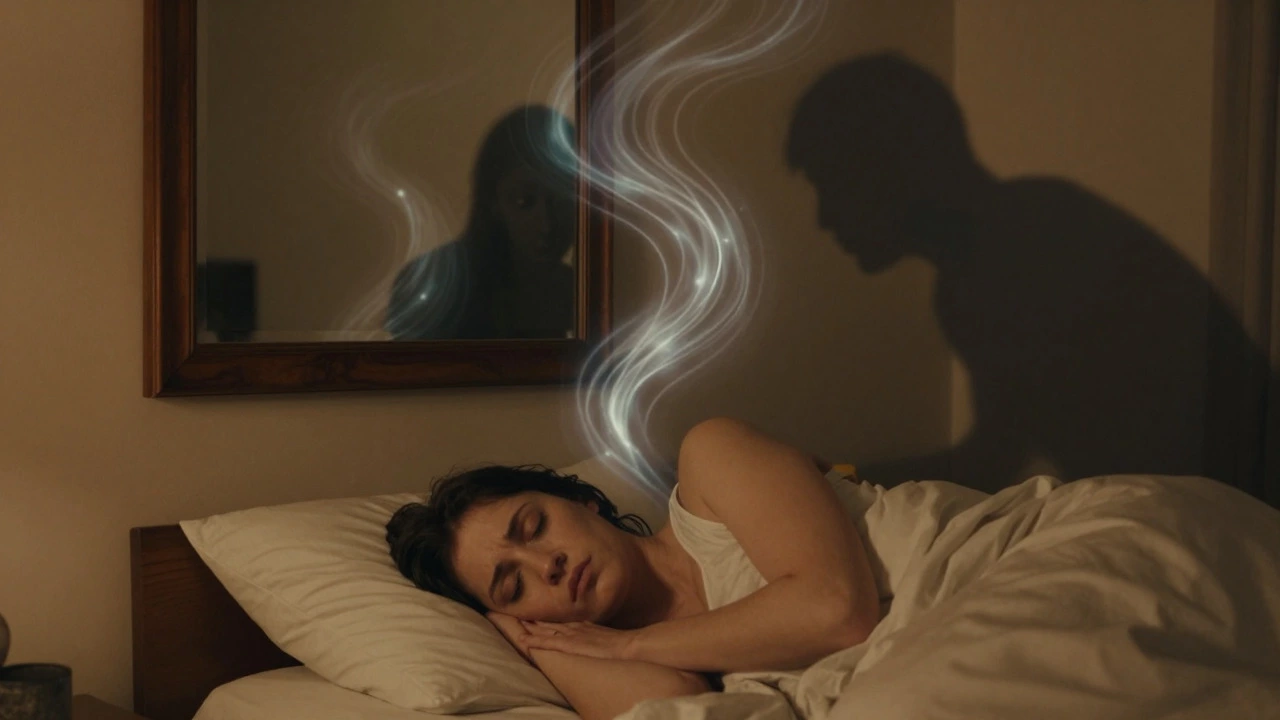
If science doesn't convince you, consider the perspective of Feng Shui, the ancient Chinese practice of arranging living spaces to harmonize with natural energy flow, known as Chi. In Feng Shui, mirrors are considered powerful amplifiers of energy. Placing one directly opposite your bed is traditionally viewed as bad luck because it reflects your image back at you while you are vulnerable and unconscious.
This concept isn't just folklore; it aligns with modern psychology regarding perceived safety. Humans evolved to stay alert to threats. A mirror facing the bed can create a subtle sense of being watched, keeping your nervous system in a low-level state of vigilance. This prevents full relaxation, leading to shallow sleep. To correct this, Feng Shui experts recommend placing mirrors where they reflect pleasant views, such as a garden or a piece of art, rather than the sleeping area. Alternatively, cover the mirror with a cloth when going to bed if relocation isn't possible.
Psychological Impact: The Uncanny Valley Effect
Beyond light and energy, there is a psychological component known as the "uncanny valley" effect applied to domestic spaces. When you glance up from sleep, seeing a distorted or dimly lit version of yourself can trigger a startle reflex. This is particularly true if the mirror is large or positioned at head height. The brain struggles to process the ambiguous visual input-is it me? Is it someone else?-causing a spike in cortisol, the stress hormone.
This phenomenon is more common than people admit. Many individuals report waking up startled by their own reflection in dark rooms. While harmless in isolation, repeated micro-stress responses degrade sleep quality over time. To mitigate this, choose mirrors with softer frames or frosted edges that diffuse harsh reflections. Avoid oversized floor-to-ceiling mirrors directly across from pillows, as they amplify this disorienting effect.
Practical Placement Guidelines for Better Sleep
You don't have to remove all mirrors from your bedroom. Strategic placement ensures you keep the functionality without the downsides. Here are specific rules to follow:
- Avoid Direct Alignment: Never place a mirror so it faces the bed directly. Instead, position it on a side wall or above a dresser that is perpendicular to the bed's headboard.
- Control Light Sources: Ensure no direct light (sunlight or artificial) hits the mirror between 9 PM and 7 AM. Use blackout curtains to block external light before it reaches the reflective surface.
- Size Matters: Smaller mirrors create less visual disturbance. A compact vanity mirror is far less intrusive than a full-length standing mirror in a small room.
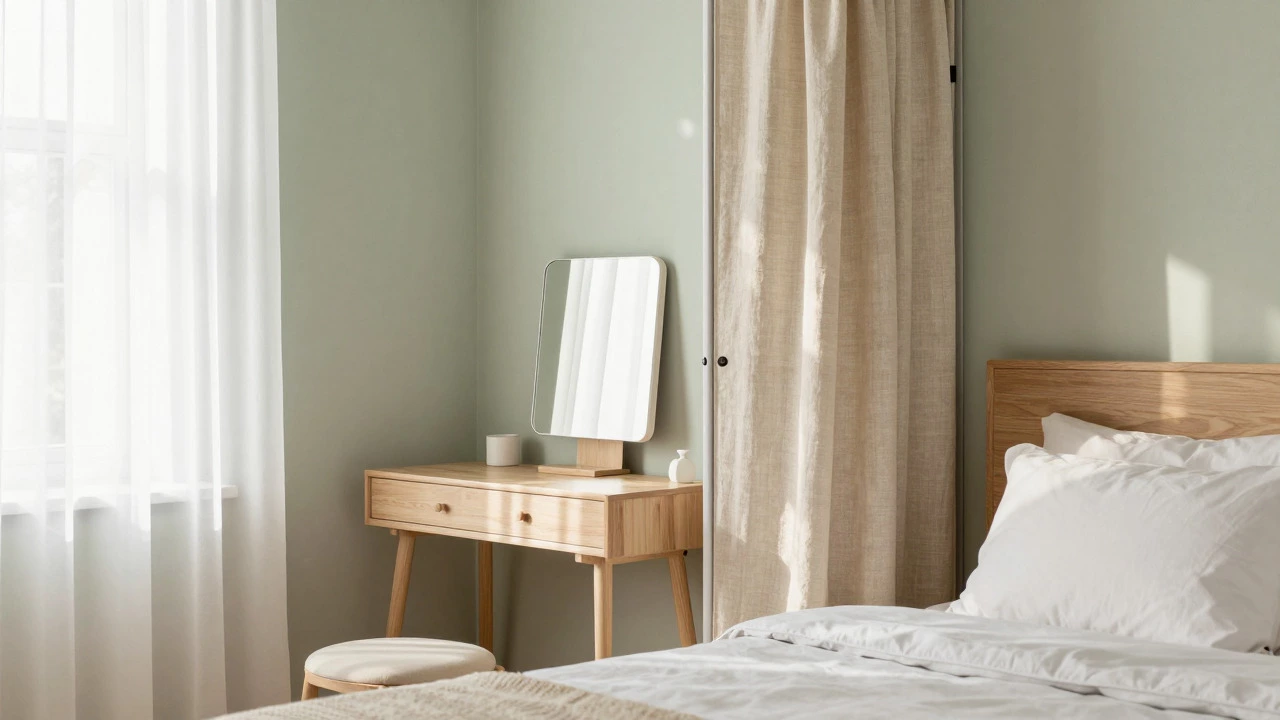
- Use Drapes: If a mirror must remain in a problematic spot, use a decorative drape or curtain that covers it completely at night. This adds texture to the room while solving the reflection issue.
Alternative Solutions: Mirrors That Work With You
If you love the look of a large mirror, consider alternatives that reduce negative impacts. Frosted or antiqued mirrors diffuse light rather than reflecting it sharply. This softens the visual impact and reduces the risk of light bouncing onto your face. Additionally, mirrored furniture, such as a chest of drawers with mirrored doors, allows you to check your appearance while keeping the reflective surface angled away from the bed. These pieces serve dual purposes: functional storage and aesthetic enhancement without the sleep-disrupting properties of a standalone wall mirror.
Another option is the "hidden" mirror. Place a mirror inside a closet door or behind a sliding panel. You only see it when you open the door, meaning it never interacts with your sleeping environment. This is a popular solution in smaller apartments where space constraints force mirrors into awkward positions. By hiding the reflection, you eliminate the potential for light interference and psychological unease entirely.
Common Myths vs. Reality
Many people believe that any mirror in the bedroom brings bad luck. This is an exaggeration. The key factor is interaction, not presence. A mirror placed high on a wall, angled away from the bed, poses no threat to sleep quality. Similarly, the idea that you must sleep under a mirror is a misinterpretation of Feng Shui principles. The concern is specifically about the *facing* relationship between the sleeper and the reflective surface. Once you understand the mechanics of light and perception, the decision becomes logical rather than superstitious.
Final Thoughts on Bedroom Mirror Etiquette
Your bedroom should be a sanctuary for restoration, not a source of subtle stress. By adjusting your mirror placement, you can improve both the aesthetic and functional aspects of your room. Test your setup: lie in bed and look around. Do you see a reflection of yourself? Is there a light source that bounces off the glass? If yes, it's time to move the mirror or add a cover. Small changes lead to better nights, and better nights lead to a more productive life. Don't let a simple piece of decor undermine your health.
Is it bad luck to have a mirror in the bedroom?
Not necessarily. It is only considered unfavorable in Feng Shui if the mirror directly faces the bed. If placed on a side wall or hidden in a closet, it is generally accepted and does not disrupt energy flow or sleep.
Do mirrors really affect sleep quality?
Yes, primarily through light reflection. If a mirror bounces streetlights or indoor lamps onto your face, it can suppress melatonin and cause micro-awakenings. Ensuring no direct light path exists between a source and the mirror prevents this.
Where is the best place to put a mirror in a small bedroom?
The interior of a closet door is the safest option. It keeps the reflection hidden during sleep. If you prefer a wall mirror, place it on a side wall perpendicular to the bed, ensuring it does not face the headboard directly.
Can I cover my mirror instead of moving it?
Yes. Using a decorative cloth, curtain, or frame cover at night is an effective temporary solution. Just ensure the covering is opaque enough to block all reflections and light transmission.
Do frosted mirrors solve the sleep problem?
They help significantly. Frosted surfaces scatter light rather than reflecting it in a focused beam. This reduces the intensity of any bounced light hitting your eyes, making them a safer choice for bedrooms near windows.