Best Month to Buy a New Couch: Timing Your Sofa Purchase for Maximum Savings
 May, 25 2026
Sofa Purchase Savings Calculator
Purchase Details
Estimated Deal Breakdown
Total Estimated Discount
Savings Potential Meter:
Select options and calculate to see advice.
Enter the regular price and your preferred shopping time to estimate how much you can save on your new couch.
Have you ever walked into a furniture store feeling confident about your budget, only to leave with a credit card maxed out because the price tag didn't match your expectations? You are not alone. Buying a couch, also known as a sofa, is often one of the most significant purchases you will make for your living room. It needs to be comfortable, durable, and stylish, but it also needs to fit your wallet.
The truth is that furniture prices are not static. They fluctuate based on seasons, holidays, and inventory cycles. If you know exactly when retailers need to clear space for new stock, you can save hundreds-or even thousands-on your next purchase. So, what is the absolute best time to pull the trigger?
The Golden Rule: September and October
If you had to pick just two months to hunt for a large upholstered seating furniture piece, those months would be September and October. This period is widely considered the sweet spot for furniture shopping, and here is why.
Furniture manufacturers operate on a strict annual cycle. Most major brands release their new collections in the spring (March through May). By late summer, retailers have been sitting on last year’s models for six months or more. As we approach autumn, stores are desperate to clear out this older inventory to make room for the upcoming spring catalogues that start arriving in early fall.
In September, you get the double benefit of back-to-school clearance events bleeding into general retail discounts. Retailers want to move units fast. In October, the urgency increases as they prepare for the holiday rush. During these months, you can typically expect discounts ranging from 20% to 40% off regular prices on floor models and previous-season styles.
Holiday Sales: The Big Four Events
Beyond the seasonal shift, specific holidays drive massive promotional campaigns. Understanding which holidays matter for furniture-and which ones don’t-can save you from chasing false promises.
- Labor Day (Early September): In many markets, this marks the unofficial end of summer. Stores slash prices on outdoor furniture and indoor sofas alike to clear warehouse space. It is often the first major sale event of the second half of the year.
- Mother’s Day (May): While primarily focused on gifts, Mother’s Day often triggers sales on smaller furniture pieces and accent chairs. However, full-sized sofas rarely see deep discounts here unless the retailer is trying to hit quarterly targets.
- Memorial Day (Late May): Similar to Labor Day, this weekend signals the start of summer. Retailers discount summer-themed decor and may offer moderate deals on living room sets to attract families preparing for outdoor entertaining.
- Black Friday and Cyber Monday (November): This is the heavyweight champion of sales. Black Friday deals on couches can reach up to 50-60% off. However, there is a catch: selection is limited. The best models sell out within hours, leaving behind lower-quality options or overstocked items that didn’t move earlier in the year.
Why January Can Be a Hidden Gem
While everyone rushes to Black Friday, savvy shoppers keep an eye on January. After the holiday rush ends, retailers are left with leftover inventory that didn’t sell during the Christmas season. To boost cash flow at the start of the new fiscal year, many stores run "post-holiday clearance" events.
You might find excellent deals on high-end brands that were featured in holiday catalogs but failed to convert enough buyers. The trade-off? You won’t have the newest colors or fabrics. But if you prioritize build quality and brand reputation over the latest trend, January is a strong contender.

When NOT to Buy a Sofa
Knowing when to buy is half the battle; knowing when to stay away is the other half. Avoid purchasing a new couch during these periods:
- February: This is historically the slowest month for furniture sales. There are no major holidays driving promotions, and retailers are holding steady on prices while waiting for spring inventory.
- June and July: Summer is peak buying season for outdoor furniture, but indoor sofas remain pricey. Retailers know people are hosting barbecues and gatherings, so they maintain higher margins on indoor living room pieces.
- December (Pre-Holiday): Unless you are looking for a gift-ready sectional, avoid buying in early December. Prices are inflated due to high demand, and delivery times are stretched thin as warehouses become bottlenecks.
Online vs. In-Store: Does Timing Matter Differently?
The rules of timing apply differently depending on where you shop. Brick-and-mortar stores like IKEA, West Elm, and local furniture outlets rely heavily on physical space constraints. They must clear floors regularly, making their sales cycles predictable and aggressive.
Online retailers such as Wayfair or Amazon operate with less spatial pressure. Their discounts are often algorithmic, driven by competitor pricing and real-time demand. While they participate in Black Friday and Prime Day (July), their daily fluctuations are harder to predict. For online purchases, setting price alerts is more effective than waiting for a specific month.
| Shopping Goal | Best Time to Buy | Expected Discount | Pros & Cons |
|---|---|---|---|
| Maximum Savings | Black Friday / Cyber Monday | 50-60% | Pros: Deepest discounts. Cons: Limited selection, high competition. |
| Best Selection + Good Price | September - October | 20-40% | Pros: Wide variety of past-season models. Cons: Not the newest designs. |
| High-End Brand Deals | January Clearance | 30-50% | Pros: Premium brands discounted. Cons: Leftover stock only. |
| Urgent Need | Anytime (Floor Models) | 10-20% | Pros: Immediate availability. Cons: Minor wear and tear possible. |
Negotiating Beyond the Calendar
Timing is powerful, but negotiation skills can amplify your savings. Even if you aren’t buying in September, you can still secure a better deal. Here is how:
First, ask about "open-box" or "floor model" items. These are couches that have been displayed in-store for weeks. They are functionally new but sold at a steep discount because they’ve seen some use. Inspect them closely for stains or fabric pilling, but don’t overlook them-they are often the best value proposition.
Second, bundle your purchase. If you are buying a couch along with a coffee table or armchairs, ask for a package discount. Retailers prefer moving multiple items at once and are often willing to shave an extra 5-10% off the total to close the larger sale.
Third, mention competitor pricing. If you found a similar model cheaper elsewhere, show it to the sales associate. Many traditional furniture stores have price-match policies or can offer additional perks like free white-glove delivery to win your business.
Quality Checks: What to Look For Regardless of Price
A cheap couch is only a good deal if it lasts. Before you hand over your credit card, perform these quick checks:
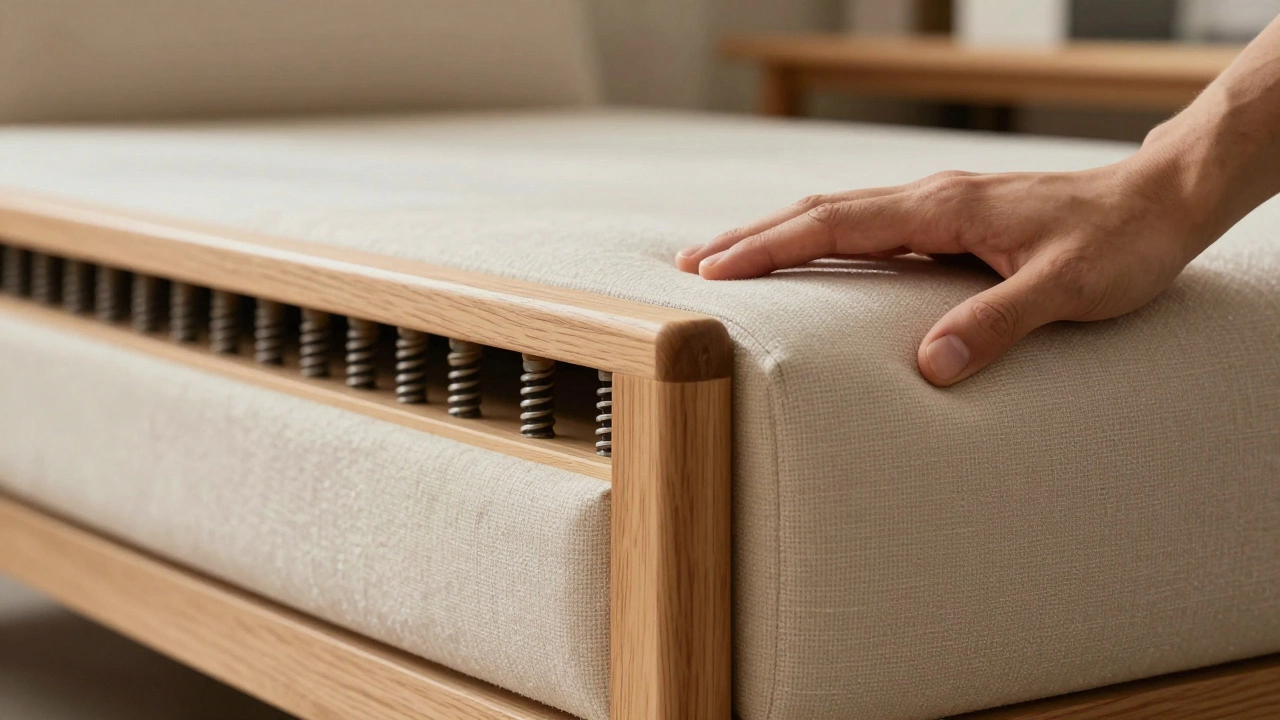
- Frame Construction: Lift the couch slightly. A solid hardwood frame (oak, maple, ash) should feel heavy and rigid. Avoid particleboard or softwoods like pine, which can sag over time.
- Cushion Fill: High-resilience foam retains its shape better than polyester fiberfill. Look for cushions labeled "high-density" (1.8 lb/ft³ or higher).
- Fabric Durability: Check the rub count. For households with pets or kids, aim for fabrics with a double-rub count of 30,000 or more. Microfiber and performance fabrics like Crypton are excellent choices for stain resistance.
- Spring System: Sit down and listen. You shouldn’t hear creaking. Eight-way hand-tied springs offer the best support, but sinuous (zigzag) springs are acceptable if tightly woven.
Regional Considerations: Auckland and New Zealand Context
Living in Auckland, New Zealand, adds a unique layer to this strategy. Our seasons are opposite to the Northern Hemisphere. Therefore, the "spring collection" launches here in September/October, meaning the clearance sales for last year’s models happen in February and March.
In New Zealand, watch out for these local sales events:
- Anzac Day Sales (April): Major retailers often run significant discounts around April 25th.
- Queen’s Birthday Weekend (June): Long weekends in winter often trigger home furnishing sales as people look to refresh their spaces during colder months.
- Christmas Pre-Sales (November): Similar to Black Friday, but starting earlier in November to capture holiday shoppers before the December rush.
Additionally, shipping costs in NZ can be substantial. Always factor in delivery fees when comparing prices. Sometimes a slightly higher-priced local option with free delivery beats a cheaper imported item with exorbitant freight charges.
Final Thoughts on Timing Your Purchase
There is no single "perfect" day to buy a couch, but there are definitely smarter windows. If you can wait, hold off until September or October for the best balance of selection and price. If you need maximum savings regardless of choice, set alarms for Black Friday. If you are in New Zealand, align your search with our local Anzac and Queen’s Birthday sales.
Remember, a couch is an investment in your daily comfort. Don’t let a small discount tempt you into buying a poorly constructed piece that will need replacing in three years. Use the timing strategies above to maximize your budget, then spend that saved money on quality materials and craftsmanship.
Is it cheaper to buy a couch online or in-store?
It depends on the brand and timing. Online retailers often have lower overheads, allowing for competitive base prices, especially during events like Amazon Prime Day. However, in-store purchases allow you to negotiate, inspect quality firsthand, and take advantage of floor model discounts that aren’t always advertised online. For big-ticket items, visiting a showroom to test comfort, then checking online prices for comparison, is usually the smartest hybrid approach.
Do furniture stores really go out of business in certain months?
No, reputable furniture stores do not shut down seasonally. However, some smaller boutiques may close for renovation or staff breaks during slower periods like February. Large chains remain open year-round but adjust their marketing focus. Beware of rumors suggesting "going out of business" sales in specific months; these are often marketing tactics rather than actual closures.
What is the difference between a floor model and a new couch?
A floor model is a display unit that has been sat on, leaned against, and exposed to store lighting for weeks or months. Structurally, it is identical to a new couch. The main differences are cosmetic: potential minor fading, slight indentation in cushions, or small fabric snags. Floor models are typically discounted by 10-20% and are available for immediate pickup, avoiding delivery delays.
Should I buy a couch before or after Christmas?
After Christmas is generally better for deals. Pre-Christmas prices are inflated due to high demand. Post-Christmas (January), retailers clear leftover holiday inventory with significant discounts. Additionally, delivery schedules are less congested in January, meaning you are more likely to receive your couch on time compared to the chaotic December period.
How long does a typical sofa last?
The lifespan of a sofa varies greatly by quality. Budget sofas made with particleboard and low-density foam may last 3-5 years. Mid-range sofas with hardwood frames and standard foam typically last 7-10 years. High-end sofas with solid hardwood frames, high-resilience foam, and durable fabrics can last 15-20 years or more. Investing in better construction upfront often results in lower long-term costs.