Do Sciatica Cushions Work? Here’s What Actually Helps
 Mar, 23 2026
Sciatica Cushion Selector
A scientifically effective sciatica cushion must have:
Is Your Cushion Effective?
Answer these 3 questions to see if your cushion meets critical design requirements
If you’ve been sitting all day and your sciatic nerve is screaming, you’ve probably seen ads for sciatica cushions promising instant relief. But do they actually work? Or are they just another overhyped product that leaves you wondering if you wasted your money?
The short answer: yes, some sciatica cushions work - but only if they’re designed right and used correctly. Not all cushions are created equal. A poorly shaped foam pad won’t fix your posture. A ring cushion might feel good at first but could make things worse over time. The key isn’t just buying a cushion - it’s understanding what your body needs.
What Causes Sciatica Pain When Sitting?
Sciatica isn’t a disease. It’s a symptom. It happens when the sciatic nerve - the longest nerve in your body - gets compressed or irritated. That usually happens because of a herniated disc, spinal stenosis, or tight muscles in your glutes (especially the piriformis). When you sit, especially on hard surfaces or with poor posture, you put pressure on that nerve. The result? Sharp pain down one leg, tingling, numbness, or a deep ache in your lower back or buttock.
Most people think the problem is their chair. But it’s not always the chair. It’s how you sit in it. Slouching, crossing your legs, sitting too far forward, or leaning to one side all make sciatica worse. A good cushion doesn’t replace good posture - it supports it.
How Sciatica Cushions Are Supposed to Help
Effective sciatica cushions work in three ways:
- Reduce pressure on the tailbone and sciatic nerve - by shifting weight away from the bony parts of your pelvis.
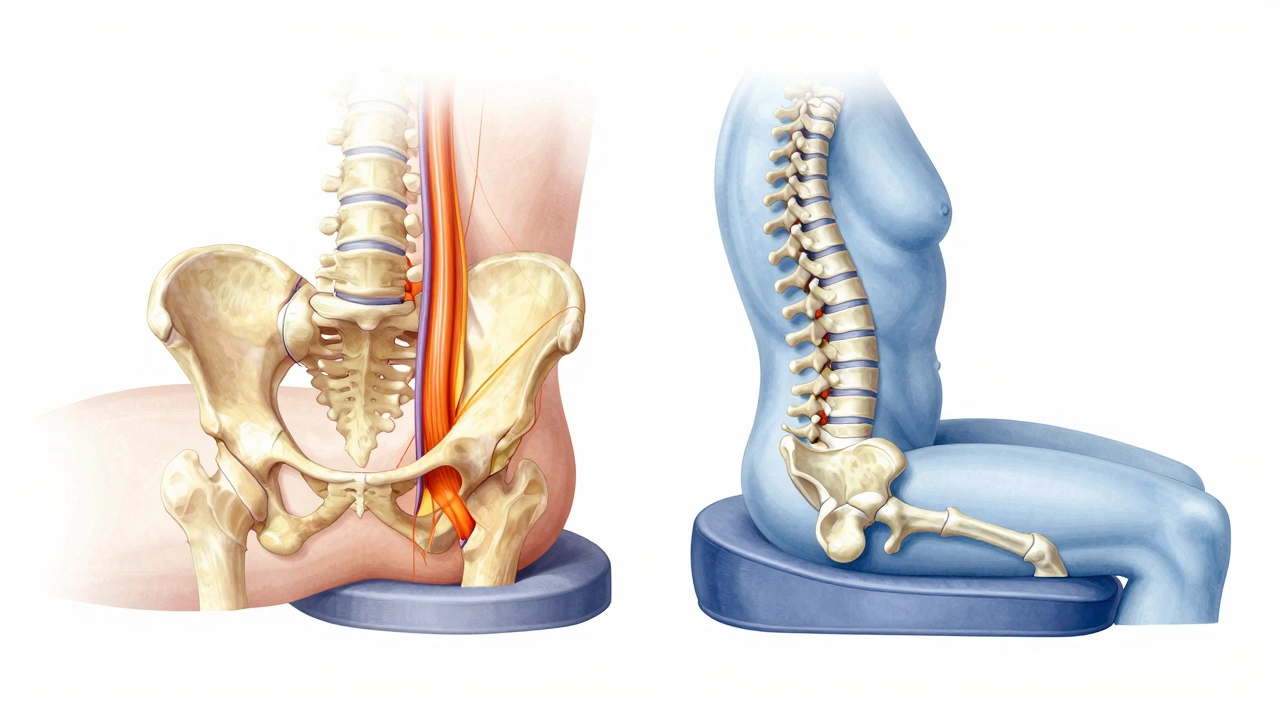
- Promote neutral spine alignment - by tilting your pelvis slightly forward so your lower back doesn’t collapse.
- Relieve muscle tension - by supporting the piriformis muscle and preventing it from squeezing the nerve.
The best designs have a cutout or wedge shape. A cutout (like a donut) removes pressure from the coccyx. A wedge lifts your hips slightly higher than your knees, encouraging a natural lumbar curve. Some combine both. Materials matter too. Memory foam contours to your body. High-density foam holds its shape. Gel inserts help with heat dissipation - important if you sit for hours.
What Doesn’t Work
Not every cushion labeled "sciatica relief" is legit. Here’s what to avoid:
- Full-ring cushions - These are the old-school donut shapes. They sound good in theory, but they actually push pressure to the sides of your sit bones and can reduce blood flow. Many users report increased numbness.
- Too soft cushions - If it sinks like a beanbag, it won’t support your spine. You need firmness, not fluff.
- Flat cushions - A regular seat pad does nothing for sciatica. It’s just padding. No alignment. No pressure relief.
- Cushions without a wedge - If it doesn’t tilt your pelvis forward, you’re still slouching. And slouching = more nerve compression.
A 2023 study from the Journal of Orthopaedic & Sports Physical Therapy tracked 127 people with chronic sciatica who used different seating aids over six weeks. Those using a wedge-shaped cushion with a coccyx cutout reported a 42% average reduction in pain. Those using flat or ring cushions saw no significant change.
What to Look for in a Real Sciatica Cushion
If you’re shopping, here’s what to check:
- Wedge angle - Look for a 10-15 degree tilt. Too steep and it strains your knees. Too shallow and it does nothing.
- Material - High-density memory foam or polyurethane foam. Avoid cheap polyester fill.
- Cutout size - Should be wide enough to clear your tailbone without touching your thighs.
- Non-slip bottom - You don’t want it sliding around on your chair.
- Removable, washable cover - Sweat and sitting all day means hygiene matters.
Brands like ComfiLife, Everlasting Comfort, and PhysioRoom have models that meet these specs. But brand doesn’t matter as much as design. Read reviews carefully - look for mentions of "reduced leg pain" or "no more numbness," not just "comfortable."
Real-Life Use: What Works in Practice
I’ve seen people in Auckland offices try every cushion under the sun. One woman, a graphic designer with recurring sciatica, tried a gel ring cushion first. It made her legs feel colder and more tingly. She switched to a wedge with a cutout. Within three days, she noticed less pain when standing up from her desk. After two weeks, she stopped needing painkillers on Mondays.
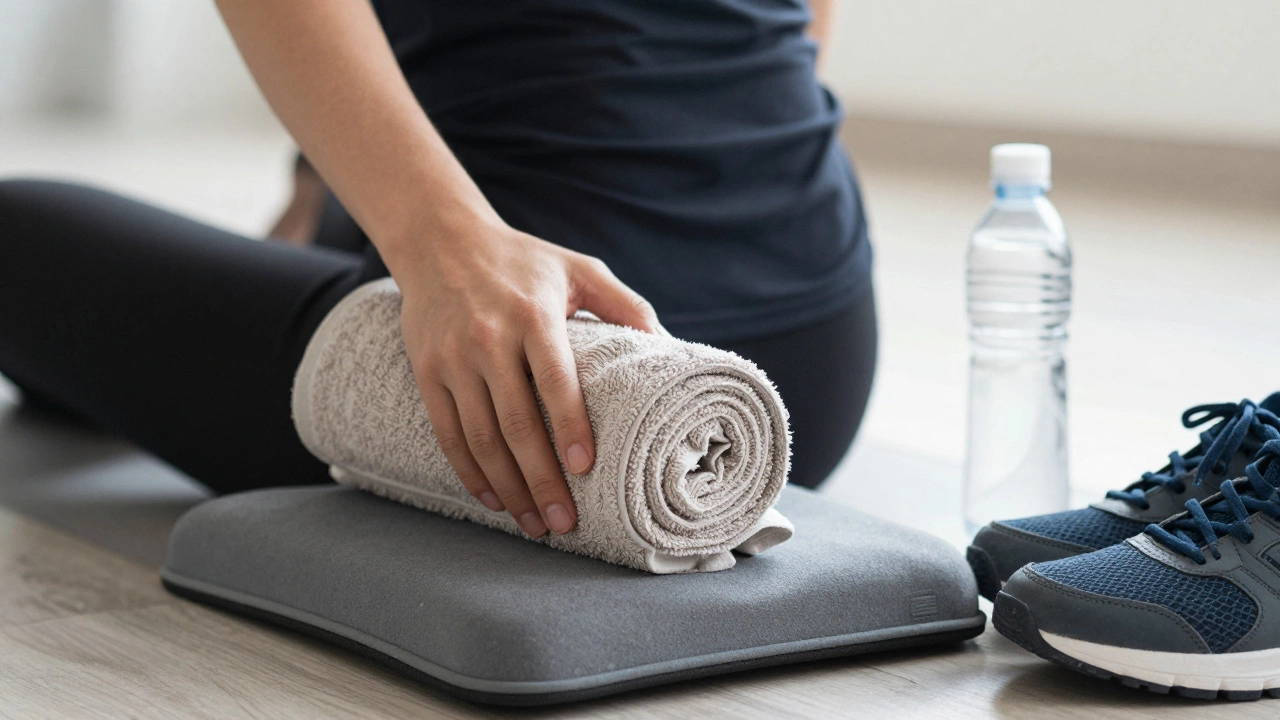
Another guy, a truck driver, used a thick foam pad because it "felt soft." His pain got worse. He switched to a contoured cushion with lumbar support built in. He now uses it with a small towel rolled behind his lower back. That combo - cushion + towel - gives him 8 hours of pain-free driving.
It’s not magic. It’s biomechanics. Your body needs alignment. Your cushion should help, not fight, that.
Other Things That Help (Besides the Cushion)
A cushion alone won’t fix sciatica. It’s one tool. You also need:
- Stand up every 30 minutes - Even 20 seconds of walking helps.
- Stretch your hamstrings and piriformis - A simple seated figure-four stretch for 30 seconds per side, twice a day, makes a big difference.
- Check your chair height - Your knees should be level with or slightly lower than your hips.
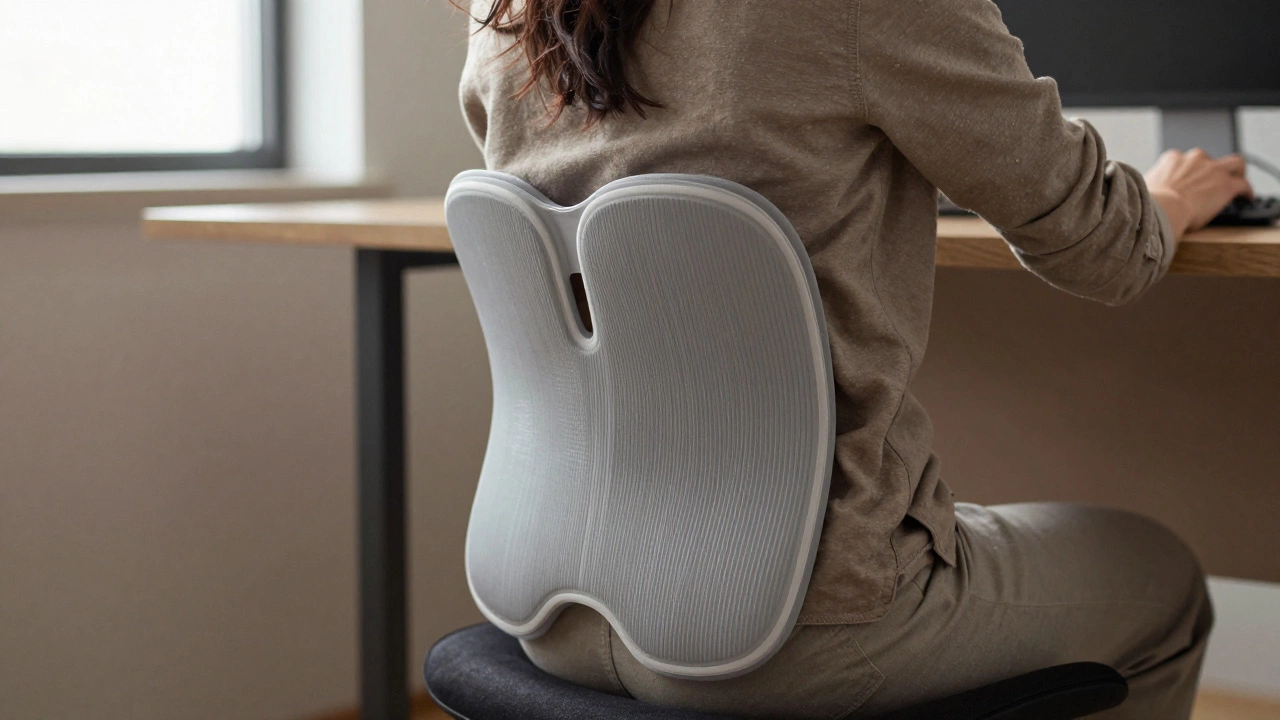
- Use a lumbar roll - If your chair has no lower back support, a rolled-up towel or small pillow behind your lower spine helps.
Some people benefit from physical therapy. Others need an MRI. But for most people with mild to moderate sciatica, the right cushion + movement habits = major improvement.
Final Verdict: Do They Work?
Yes - if you pick the right one.
A sciatica cushion isn’t a cure. But it’s one of the few affordable, non-invasive tools that can actually reduce nerve pressure and improve sitting comfort. The ones that work have a wedge and a cutout. The rest are just fancy seat pads.
If you’re spending money on this, don’t go for the cheapest. Don’t go for the flashiest. Go for the one with the shape your body needs. Test it if you can. Read reviews from people who’ve had sciatica, not just "I like how it looks."
And remember: no cushion replaces movement. Sitting for hours is the enemy. The cushion just helps you survive the hours.