How Close to the Floor Should Curtains Hang? The Perfect Length Guide
 Jul, 12 2026
Curtain Length Calculator & Visualizer
Window Measurements
Your Perfect Curtain Length:
There is nothing more frustrating than spending good money on beautiful fabric only to have it look like you bought it at a discount store because the length is wrong. You hang them up, step back, and realize they are either dragging in dust bunnies or floating awkwardly above the baseboard. It happens to the best of us. But getting that specific measurement right is the single biggest factor in making a room look expensive and intentional.
The short answer? For most rooms, your curtains should hover just one inch above the floor. This creates a clean line without sacrificing function. However, "most rooms" doesn't cover every scenario. If you want your space to feel taller, cozier, or more formal, that one-inch rule changes completely. Let’s break down exactly where that hem should land based on what you are trying to achieve.
The Golden Rule: Hovering Just Above the Floor
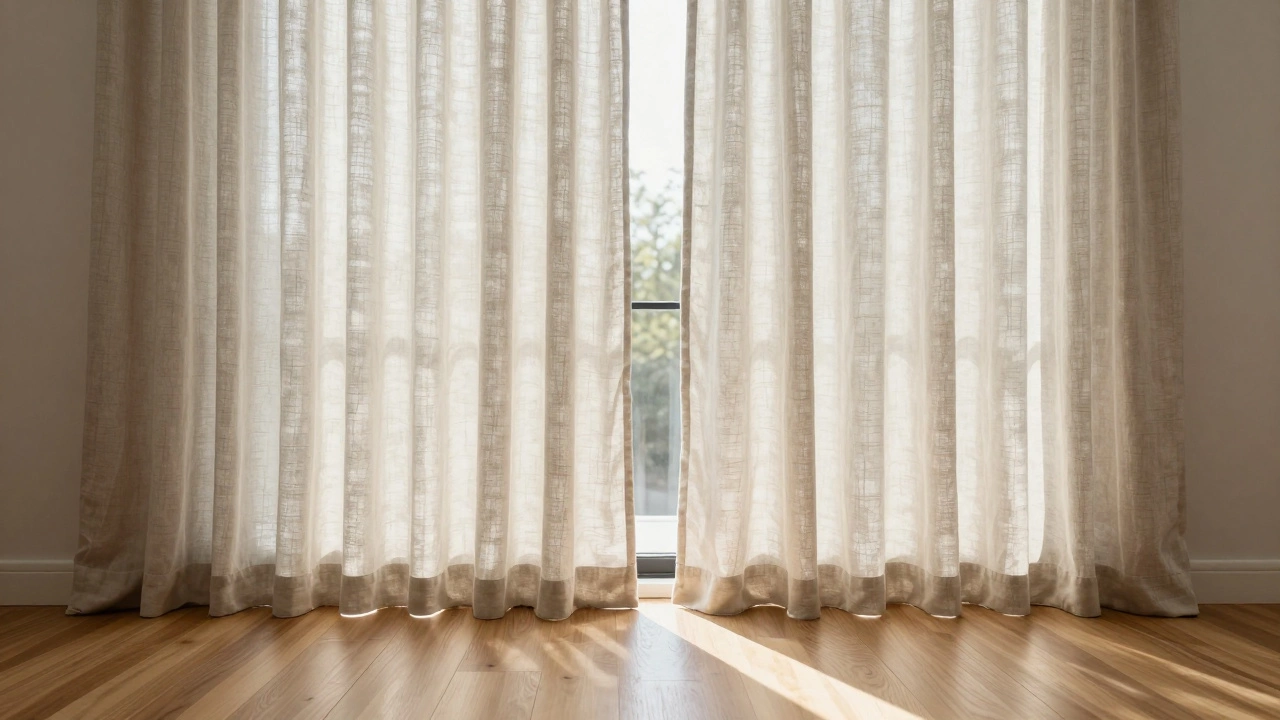
In modern interior design, the standard for living rooms, bedrooms, and dining areas is the "hover." This means the bottom edge of the curtain rests approximately 0.5 to 1 inch (1-2.5 cm) above the floor surface. Why this specific gap? It strikes the perfect balance between aesthetics and practicality.
If the curtains touch the floor, they pick up dirt, moisture from mopping, and pet hair. They become a maintenance nightmare. If they float too high, the eye catches the exposed floor or baseboard, which visually chops the height of the wall and makes the ceiling feel lower. By hovering just an inch off the ground, you create a continuous vertical line that draws the eye upward, making the room feel airy and tall. Plus, when you open them, they swing freely without snagging on the carpet or hardwood.
To get this right, measure from the bottom of your curtain rod bracket (or the rod itself if it’s decorative) down to the floor. Subtract one inch from that total. That is your finished length. Remember to account for the fabric’s weight; heavier drapes might droop slightly over time, so erring on the side of being a tiny bit longer is safer than cutting too short.
When to Break the Rules: Other Curtain Lengths
While the hover is the safe bet, there are three other distinct styles you might choose depending on the vibe of the room. Each has a specific name and purpose.
- Knee-Length (The Casual Look): These stop around mid-calf or knee height. This is rarely used in main living spaces today because it can make ceilings look low. However, it works well in small bathrooms with tubs or in kitchens where you need easy access to cabinets below the window. It feels breezy and informal.
- Baseboard-Kissers: These rest directly on top of the baseboard molding. This is a traditional choice often seen in older homes or formal dining rooms. It looks neat and tidy but requires precise measurement. If your floors aren’t perfectly level, these can look uneven quickly.
- Floor-Sweepers (The Formal Look): These pool slightly on the floor, usually by 1 to 3 inches. This is the Hollywood style. It screams luxury and drama. Think velvet drapes in a master bedroom or heavy damask in a formal parlor. The downside? You will be vacuuming those folds constantly. Also, avoid this in humid climates like Auckland, as the fabric stays damp against the floor, leading to mildew.
Why Placement Matters More Than Length
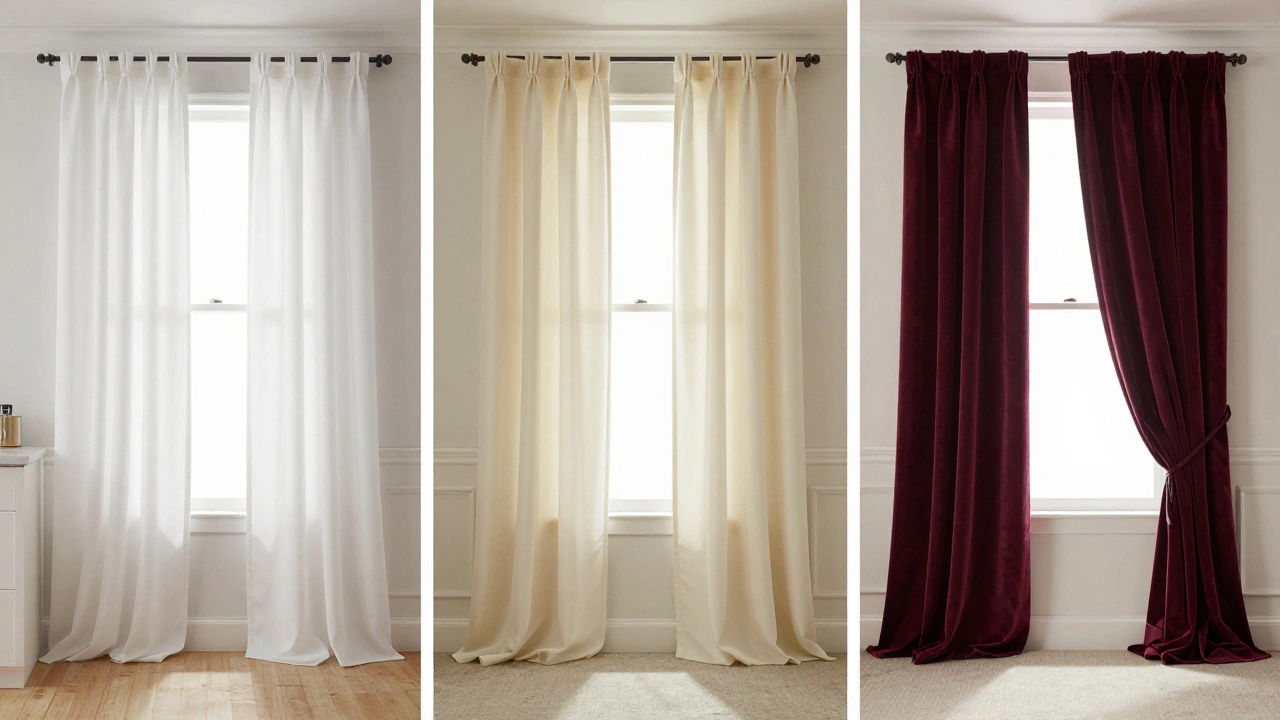
You can have the perfect length, but if you mount the rod incorrectly, the whole effect fails. A common mistake is mounting the rod too close to the top of the window frame. This cuts the visual height of the window in half.
Instead, mount the curtain rod 4 to 6 inches above the window frame, or even closer to the ceiling if you have high ceilings. This elongates the wall. When combined with a floor-hugging length, the eye travels from near the ceiling all the way down to the floor in one unbroken line. This trick instantly adds perceived square footage to the room.
Also, consider the width. Your curtains should extend beyond the window frame on both sides-usually 3 to 6 inches per side. This ensures that when the curtains are pulled open, they clear the glass completely, allowing maximum natural light. Narrow windows look wider, and wide windows look grander.
Dealing with Uneven Floors and Carpets
Here is the reality check: very few floors are perfectly level. In older houses, especially, the floor might slope slightly. If you buy ready-made curtains, you are stuck with a straight hem. If your floor dips, one side might drag while the other floats.
If you notice this issue after hanging, don’t panic. For minor variations (less than half an inch), you can often fix it by adjusting the tension of the rod or adding a slight tilt to the brackets. For larger discrepancies, custom hemming is your best friend. A local tailor can grade the hem, meaning they cut it at an angle to match the slope of your floor. It costs a little extra but saves you from looking sloppy.
If you have thick pile carpet, remember that the "floor" is not the wood underneath; it is the top of the carpet fibers. Measure to the compressed height of the carpet, not the uncompressed fluff. Otherwise, your curtains will look too short once the carpet settles under furniture.
| Style Name | Hem Position | Best For | Maintenance Level |
|---|---|---|---|
| Hover | 0.5-1 inch above floor | Living rooms, bedrooms, general use | Low |
| Baseboard-Kisser | Resting on baseboard | Traditional homes, dining rooms | Medium |
| Floor-Sweeper | 1-3 inches pooling on floor | Formal parlors, master bedrooms | High |
| Knee-Length | Mid-calf height | Bathrooms, kitchens, small nooks | Low |
Special Considerations for Bathrooms and Kitchens
Function dictates form in wet zones. In a bathroom, especially one with a bathtub, long curtains are a hazard. They can fall into the water, get wet, and become a breeding ground for mold. Here, aim for a length that stops just below the sill or at mid-shower height. Keep it simple and functional.
In the kitchen, think about your workflow. Do you have cabinets below the window? If yes, your curtains must clear the cabinet doors. Measure the height of the cabinet door plus a two-inch safety margin. If you have a sink below the window, ensure the curtains don’t dip into splashes. Shorter, lighter fabrics like linen or cotton work best here because they dry quickly if they do get wet.
DIY vs. Custom: Getting the Fit Right
If you are buying off-the-rack curtains, you will likely need to alter them. Most stores sell curtains in standard lengths like 84 inches or 96 inches. Unless your window height matches these exactly, you will need scissors and a sewing machine-or a visit to the dry cleaner.
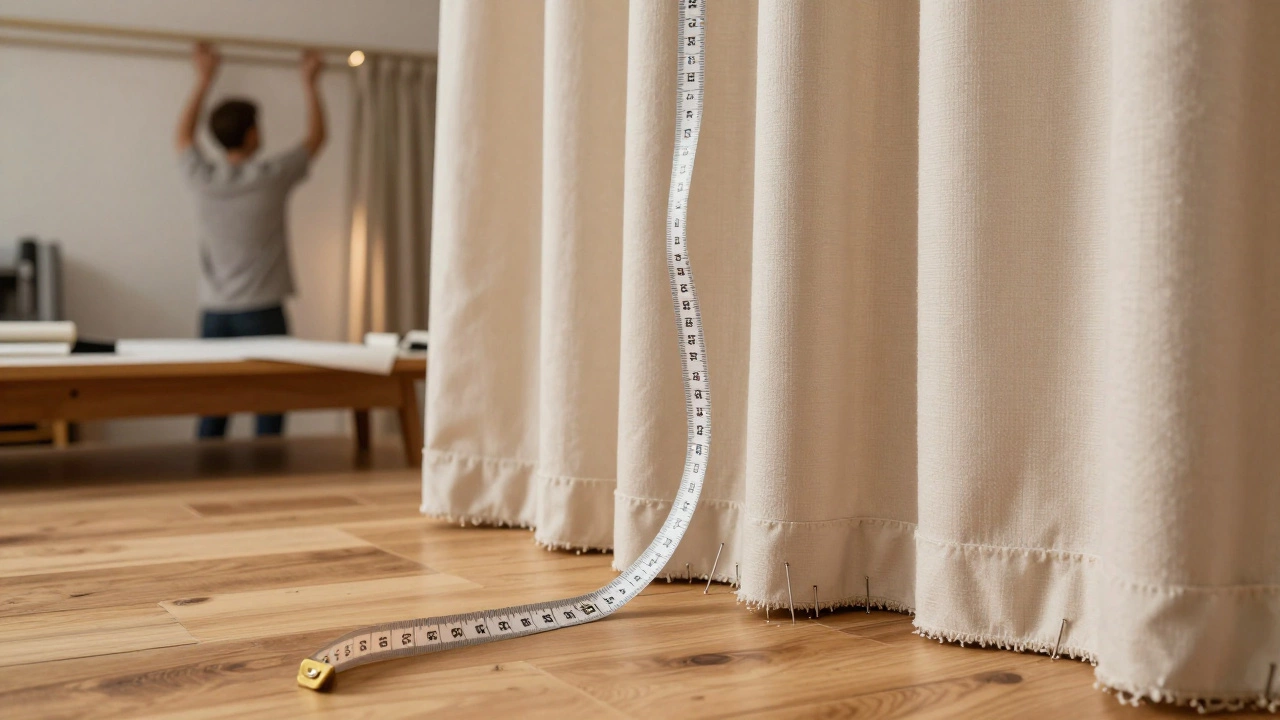
Pro tip: Always leave extra fabric when you first hang them. It is much easier to take fabric off than to add it back on. Use pins to mark the desired length, live with the pinned version for a day to see how it looks in different lighting, and then commit to the cut. If you are unsure about sewing, many tailors offer affordable hemming services for a flat rate per pair.
For new builds or renovations, order custom curtains. Yes, they cost more upfront, but you save time and frustration. You provide the exact measurements, and they deliver the perfect fit. In a city like Auckland, where humidity and salt air can affect fabric shrinkage, custom ordering allows you to pre-wash the fabric before hemming, ensuring the final length remains stable.
Should curtains touch the floor or hang above it?
For most homes, curtains should hang about one inch above the floor. This prevents them from collecting dust and moisture while maintaining a sleek, modern look. Only let them touch the floor if you want a formal, dramatic effect and are willing to deal with higher maintenance.
How do I measure for curtain length correctly?
Measure from the point where you plan to mount the rod (usually 4-6 inches above the window frame) down to the floor. Then subtract the desired clearance (e.g., 1 inch for a hover). If using rings or grommets, measure from the center of the hardware to the floor to ensure accuracy.
What if my floors are uneven?
If your floors slope significantly, standard straight hems will look crooked. Consider having a tailor "grade" the hem, cutting it at an angle to match the floor's contour. Alternatively, choose a slightly longer length and let them hover consistently above the highest point of the floor variation.
Do curtains look better when mounted high or low?
Mounting curtains high-close to the ceiling or at least 4-6 inches above the window frame-makes rooms appear taller and more spacious. Mounting them too low cuts the visual height of the wall, making the space feel cramped and shorter.
Is it okay to have curtains pool on the floor?
Yes, but only in formal settings like master bedrooms or dining rooms. Pooling (where fabric gathers on the floor) adds luxury but attracts dust, dirt, and moisture. Avoid this in high-traffic areas, bathrooms, or homes with pets and young children due to hygiene and tripping hazards.