How Much Should You Pay for a Mirror? Price Guide by Type & Size
 Jun, 14 2026
Mirror Cost Estimator
Estimated Cost Breakdown
- Select options to see details...
Walk into any home store, and you’ll see mirrors everywhere. But look at the price tags, and your head might spin. One small hand mirror costs $15, while a massive floor-standing piece demands $800. So, how much should you actually pay? The short answer is: it depends on what you’re using it for, where it’s going, and what it’s made of.
Most people overpay because they don’t know the difference between a cheap acrylic reflector and true optical glass. Others underpay and end up with distorted reflections that make their bathroom feel smaller than it is. This guide breaks down real-world pricing so you can stop guessing and start buying with confidence.
The Quick Breakdown: Average Mirror Costs
Before we get into the weeds, here is a realistic snapshot of what you should expect to pay in 2026. These prices reflect average retail costs for decent quality items, not luxury designer pieces or bargain-bin rejects.
| Mirror Type | Typical Size | Budget Range | Premium Range |
|---|---|---|---|
| Vanity/Bathroom | 30" x 40" | $40 - $80 | $150 - $300 |
| Full-Length (Leaning) | 60" x 24" | $60 - $120 | $200 - $450 |
| Wall-Mounted Full-Length | 70" x 20" | $100 - $180 | $300 - $600+ |
| Decorative/Statement | Varies | $80 - $150 | $250 - $1,000+ |
| Custom Cut (No Frame) | Per Square Foot | $15 - $25/sq ft | $30 - $50+/sq ft |
If you need a simple mirror for checking your teeth, aim for the budget range. If you want a focal point for your living room or a flawless reflection for getting dressed, lean toward the premium end. Never buy the absolute cheapest option if it looks warped; distortion ruins the purpose of the mirror entirely.
Why Glass Quality Changes Everything
You might think all glass is the same. It isn’t. The core of any mirror is a sheet of glass coated with silver or aluminum. The thickness and purity of that glass determine the price-and the performance.
Cheap mirrors often use thin, low-grade glass. Over time, this glass can warp slightly, especially in humid environments like bathrooms. You’ve probably seen those old mirrors where the edges turn black or the reflection looks wavy. That’s called "silvering failure" or edge corrosion. High-quality mirrors use thicker glass (usually 3mm to 6mm) and better sealing around the edges to prevent moisture from eating away the reflective coating.
Optical Grade Glass is glass manufactured to strict flatness tolerances, ensuring no distortion in the reflection. This type of glass is essential for makeup application or grooming tasks where accuracy matters.In Auckland, where humidity can be high, investing in a mirror with a sealed back and thicker glass is worth every extra dollar. A $50 mirror might save you cash today but cost you twice as much when it corrodes in two years. Look for terms like "first surface" (for professional use) or "sealed edges" (for home use).
Frame Materials: Wood, Metal, or None?
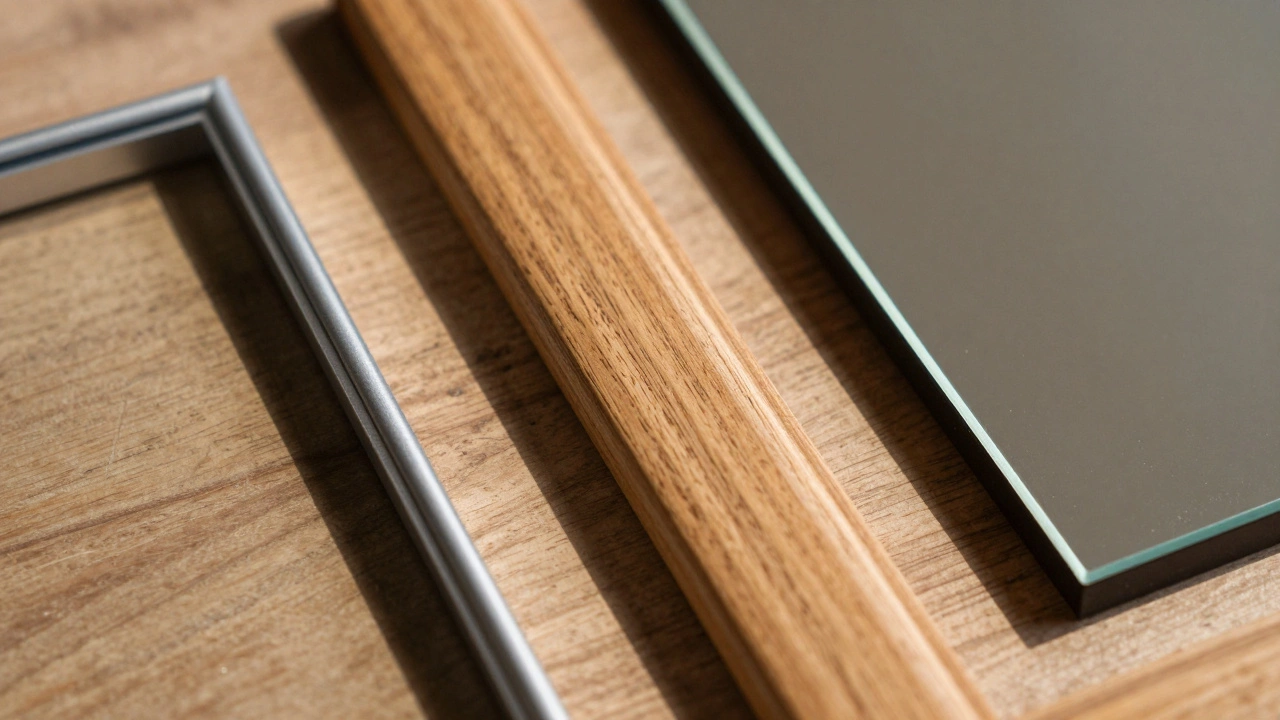
The frame adds significant cost, but it also defines the style. Here’s how framing impacts your wallet:
- No Frame (Beveled Edge): This is the most affordable option. You’re paying only for the glass and cutting labor. Beveled edges add a slight decorative touch without the bulk of a frame. Great for modern, minimalist spaces.
- MDF or Particle Board Frames: Common in budget stores. These are painted or veneered to look like wood. They’re lightweight and cheap ($30-$60 extra) but can swell if exposed to moisture. Avoid these in bathrooms unless they have a waterproof finish.
- Solid Wood Frames: Oak, walnut, or pine frames add warmth and durability. Expect to pay $100-$300 more than an unframed version. Solid wood lasts decades and can be refinished if the style goes out of date.
- Metal Frames: Aluminum, brass, or iron frames offer a sleek or industrial look. Thin metal frames are surprisingly affordable ($50-$100 extra), while ornate wrought-iron designs can double the price of the mirror.
If you’re decorating a rental property, stick to lightweight, frameless, or thin-metal options. They’re easy to hang and remove. For a forever home, solid wood or heavy metal frames become part of the architecture, adding value to the room.
Size Matters: The Square Footage Rule
Mirrors are priced by square footage, not just height or width. A tall, narrow mirror might cost less than a wide, shorter one if the total area is smaller. However, shipping costs kick in for large pieces.
For a standard bedroom vanity, a 30-inch by 40-inch mirror is the sweet spot. It fits above most dressers and provides enough field of view for styling hair. Anything larger requires careful measurement of your wall space. Remember the rule of thumb: the mirror should be about two-thirds the width of the furniture below it.
Full-length mirrors are trickier. A leaning mirror is cheaper because it doesn’t require complex mounting hardware. Wall-mounted full-length mirrors need sturdy anchors and often come with pre-drilled holes, which adds to manufacturing costs. If you’re buying a mirror over 6 feet tall, expect to pay a premium for reinforced backing and safe packaging.
Custom vs. Stock: When to DIY
Stock mirrors-pre-cut sizes available off the shelf-are almost always cheaper. Stores keep inventory of common sizes (24x36, 30x40, etc.) because they sell fast. If your space fits these dimensions, buy stock. You’ll save 20-30% compared to custom orders.
Custom mirrors make sense when:
- Your wall has an odd shape or niche.
- You want a specific architectural detail (like arched tops or scalloped edges).
- You’re replacing a broken mirror and need an exact match.
In New Zealand, local glaziers charge per square foot plus a minimum fee for cutting and edging. A small custom cut might cost $80-$120 even if the glass itself is cheap. Always ask about lead times; custom work can take 1-2 weeks, whereas stock mirrors are ready today.
Hidden Costs: Installation and Hardware
The sticker price isn’t the final price. Consider these hidden costs:
- Mounting Hardware: Heavy mirrors need D-rings, French cleats, or specialized brackets. Cheap plastic hooks won’t hold a 40lb mirror safely. Budget $10-$20 for proper hardware.
- Professional Installation: If you’re not comfortable drilling into plaster or brick, hire a handyman. In Auckland, expect to pay $50-$100 for hanging one large mirror. It’s worth it to avoid cracking drywall or damaging the glass.
- Shipping: Large mirrors are fragile and bulky. Online retailers often charge $30-$60 for oversized shipping. Pick-up from a local store saves this cost entirely.
Don’t skimp on installation. A fallen mirror is dangerous and expensive to replace. Use level screws and ensure the wall anchors match your wall type (drywall, stud, or masonry).
Where to Buy: Retailer Comparisons
Different stores cater to different budgets. Here’s where to look based on your needs:
| Retailer Type | Price Range | Best For | Pros | Cons |
|---|---|---|---|---|
| Budget Homeware (e.g., Kmart, Countdown) | Low | Temporary rentals, kids' rooms | Cheap, widely available | Thin glass, poor frames, limited sizes |
| Mid-Range (e.g., Mitre 10, Bunnings) | Medium | Bathrooms, bedrooms, DIY projects | Good quality, custom cutting services | Less stylish design options |
| Designer Home Stores (e.g., Freedom, Harvey Norman) | High | Living rooms, statement pieces | Trendy designs, durable materials | Expensive, long wait times for delivery |
| Local Glaziers | Variable | Exact replacements, unique shapes | Perfect fit, high-quality glass | Higher labor costs, no frame styles |
If you’re in Auckland, visiting a physical store allows you to check the reflection quality in person. Hold the mirror at an angle and look for waves or bubbles. If you see them, walk away. Online shopping is convenient, but you can’t inspect the glass until it arrives, and returns for damaged mirrors are a hassle.
Pro Tips for Getting the Best Value
Want to stretch your dollar? Try these strategies:
- Buy Off-Season: Home decor sales happen in January and July. Mirrors are often discounted during these periods.
- Check Clearance Racks: Department stores frequently discount mirrors with minor packaging damage. The glass is usually fine; just inspect it closely.
- DIY Framing: Buy a plain, high-quality unframed mirror and add a frame yourself. You can use molding strips from a hardware store for a fraction of the cost of a pre-framed mirror.
- Consider Acrylic for Kids: If the mirror is for a child’s room or a high-traffic area where breakage is a concern, acrylic mirrors are shatterproof. They’re cheaper and safer, though they scratch easier than glass.
Remember, the goal is longevity. A slightly more expensive mirror that lasts ten years is cheaper than three cheap mirrors that fail in three years.
Is it worth paying more for a thicker mirror?
Yes, especially for large mirrors. Thicker glass (4mm or 5mm) is stiffer and less likely to warp or vibrate. It also feels more substantial and luxurious. For small bathroom mirrors, 3mm is sufficient, but for anything over 24 inches wide, go thicker to avoid flexing.
Can I cut a mirror myself?
Technically yes, but it’s risky. Glass cutters score the surface, and you snap the glass along the line. It requires practice, steady hands, and safety gear. One mistake ruins the entire sheet. For most homeowners, paying a local glazier $20-$40 for a clean cut is safer and more precise.
Why do some mirrors distort my face?
Distortion comes from uneven glass or improper mounting. Cheap mirrors may have rolled glass that isn’t perfectly flat. Additionally, if a framed mirror is mounted too tightly, the pressure can bend the glass slightly. Always choose mirrors labeled as "optical grade" or "flat plate" for accurate reflections.
How do I prevent black edges on my bathroom mirror?
Black edges occur when moisture seeps behind the glass and oxidizes the silver coating. To prevent this, ensure the mirror has a sealed back and edges. Wipe condensation off regularly, and consider using an exhaust fan in your bathroom to reduce humidity. If your current mirror is already showing signs, replace it with one rated for wet areas.
Are LED mirrors worth the extra cost?
LED mirrors typically cost $100-$300 more than standard ones. They’re worth it if you use your mirror for detailed tasks like shaving or applying makeup, as the lighting reduces shadows. However, they require access to power outlets and can be harder to replace if the LEDs burn out. For general use, a well-lit room with a standard mirror is more cost-effective.