How to Choose a Sofa That Will Last: Expert Guide for Long-Term Comfort
 Mar, 5 2026
Sofa Durability Checker
Evaluate Your Sofa
Your Sofa Durability Rating
Score: 0/10
Your sofa has excellent durability.
Choosing a sofa that actually lasts isn’t about spending the most money-it’s about knowing what to look for. Too many people buy a sofa that looks great in the store, only to have it sag, squeak, or fall apart within a couple of years. If you’re tired of replacing furniture every few years, here’s how to pick one that’ll still be comfortable and solid in a decade.
Start with the frame
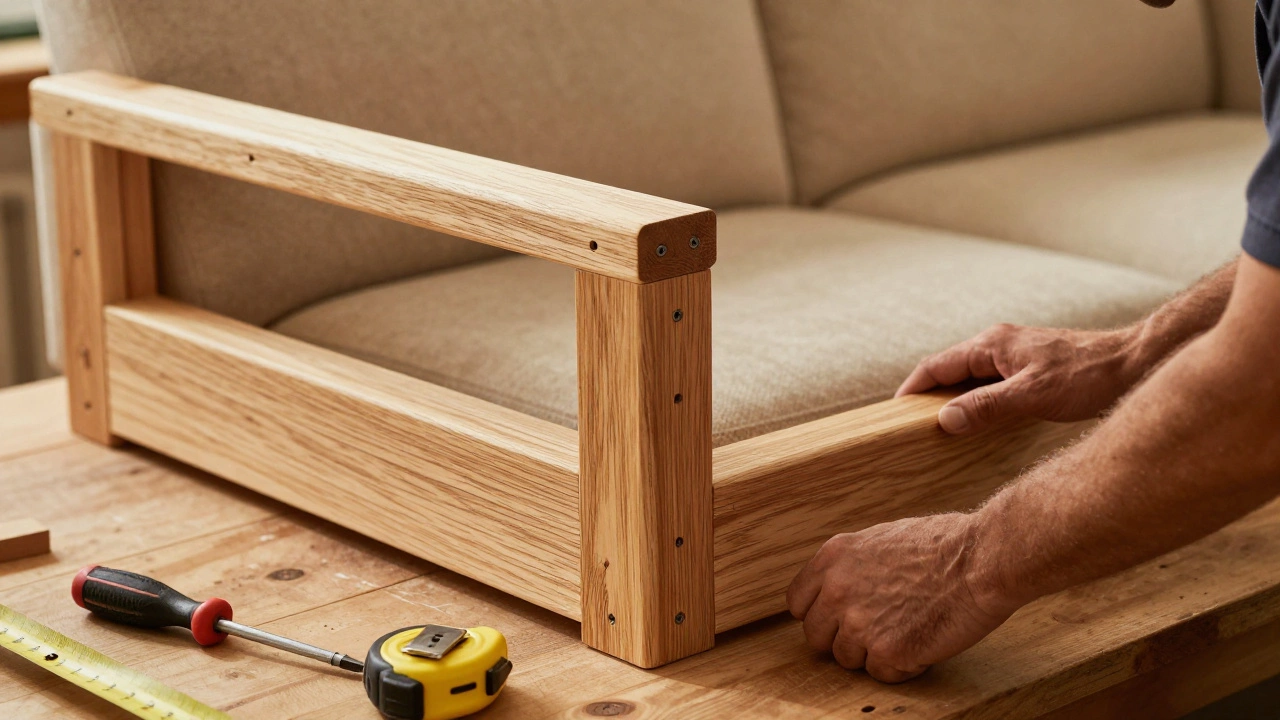
The frame is the skeleton of your sofa. No amount of plush cushions can save a weak frame. Look for hardwood like kiln-dried oak, beech, or maple. These woods are dense, stable, and resist warping. Avoid softwoods like pine-they’re cheaper but bend over time. You’ll often hear sellers say "engineered wood" or "plywood." That’s not always bad, but only if it’s thick (at least 1.5 inches) and fully glued and screwed, not just stapled. A well-built frame should feel heavy and solid when you lift one end. If it wobbles or feels light, walk away.
Check the joints. A good frame uses mortise-and-tenon or dowel joints, held together with glue and screws. Avoid sofas held together with just nails or staples. You can test this by gently shaking the sofa-if it moves or creaks, the joints aren’t tight enough. High-quality manufacturers even use corner blocks-wooden braces glued into the corners-for extra strength. That’s a small detail that makes a big difference over time.
Spring system matters more than you think
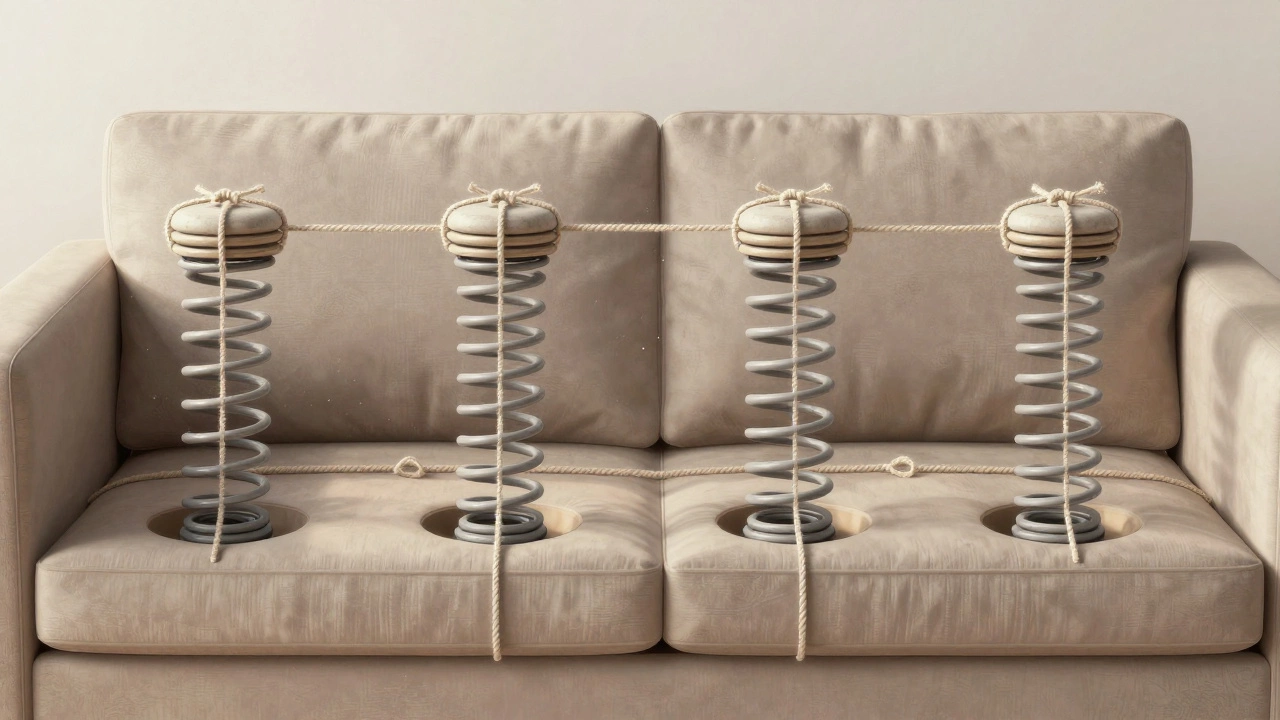
Those springs underneath your seat? They’re the unsung heroes. Most sofas use either sinuous (S-shaped) springs or eight-way hand-tied springs. Sinuous springs are common and fine for average use-they’re durable, cost-effective, and provide good support. But if you sit for long periods, want a more tailored feel, or have heavier body weight, go for eight-way hand-tied springs. These are individually tied with cotton twine and connected in a grid pattern. They respond to pressure evenly, reduce sagging, and last 15-20 years. You won’t feel them, but you’ll notice the difference in how the seat holds its shape.
Don’t be fooled by thick foam cushions alone. A sofa with poor springs will compress the foam too fast, leaving you sitting on a flat, lifeless surface. Ask the salesperson: "Are the springs hand-tied or sinuous?" If they hesitate or don’t know, it’s probably not worth the investment.
Fabric choice: durability over looks
It’s tempting to pick a sofa based on color or pattern, but fabric durability is what keeps it alive. For homes with kids, pets, or heavy use, choose tightly woven fabrics with high rub counts. Look for the Martindale test rating-this measures how many rubs a fabric can take before it wears out. For a family sofa, aim for at least 25,000 rubs. High-end options go up to 40,000 or more. Cotton blends, performance fabrics (like Crypton or Sunbrella), and tightly woven microfibers are top performers. Avoid loose weaves like linen or velvet unless you’re okay with frequent cleaning and visible wear.
Also, check the stain resistance. Some fabrics come with built-in treatments that repel spills and resist fading from sunlight. If you’re in a sunny room, ask about UV resistance. A sofa that fades after a year isn’t just ugly-it’s a waste of money.
Cushion fill: comfort that doesn’t flatten
Cushions are where comfort lives, but they’re also where most sofas fail. Foam density is key. Look for cushions with foam density of at least 1.8 pounds per cubic foot. Higher density (2.0-2.5) lasts longer and holds its shape better. You can test this by pressing down on the cushion-it should spring back quickly. If it stays flattened or takes too long to recover, the foam is too soft.
Combination fills work well too. High-resilience foam with a layer of down or fiber wrap gives you firm support with softness. Down-only cushions feel luxurious at first but flatten fast and need constant fluffing. Avoid cheap polyester fiberfill-it clumps, loses shape, and looks lumpy within months.
Removable, zippered cushion covers are a huge plus. They let you clean or replace the covers without replacing the whole sofa. Some brands even offer replacement cushions years later, which extends the life of your investment.
Feet and legs: don’t ignore the details
The legs might seem like decoration, but they’re structural. Solid wood or metal legs that are screwed in-not glued or just resting-are far more durable. Avoid plastic or hollow metal legs-they crack or bend under weight. Also, check if the legs are adjustable. In older homes with uneven floors, adjustable legs prevent wobbling and uneven wear on the frame.
Some sofas have wheels. That’s fine if you move furniture often, but make sure they’re heavy-duty metal, not cheap plastic. Plastic wheels mark floors and break easily. Metal ones with ball bearings glide smoothly and last longer.
Brand reputation and warranty
Not all brands are equal. Look for companies that specialize in furniture, not just ones that sell sofas as an afterthought. Brands with 20+ years in business usually have proven construction methods. Read reviews-not just star ratings, but comments about long-term use. Look for phrases like "still perfect after 8 years" or "no sag after 5 years."
A good warranty should cover the frame for at least 5 years, springs for 5-10 years, and cushions for 1-3 years. If a company offers only 1 year on everything, they’re not confident in their product. Some premium brands offer lifetime frame warranties-that’s a strong signal of quality.

Real-world testing
Before buying, sit on the sofa like you live there. Sit in the center, lean back, shift your weight, and pretend you’re watching TV for hours. Does it feel supportive? Do your hips sink too far? Does the backrest feel flimsy? Try pushing down on the arms-do they move or feel loose? Sit on it for at least 10 minutes. If it feels good now, it’ll still feel good in five years.
Ask if you can see the inside of the sofa. Reputable retailers will let you lift the cushion or peek under the skirt to check the frame, springs, and fabric lining. If they say no, that’s a red flag.
What to avoid
- Sofas with flimsy, plastic legs
- Low-density foam (under 1.5 lb/ft³)
- Loose-weave fabrics like linen or chenille for high-traffic areas
- Stapled frames or glued joints
- Warranties under 1 year
- Too-good-to-be-true prices under $800 for a full-size sofa
There’s a reason those cheap sofas look so tempting. They’re made to be replaced. But if you want something that stays comfortable and looks good for a decade, you need to invest in the right construction-not just the right style.
Final checklist
- Frame: Hardwood, glued and screwed joints, corner blocks
- Springs: Sinuous (minimum) or eight-way hand-tied (ideal)
- Fabric: Martindale rating 25,000+ rubs, UV-resistant if in sunlight
- Cushions: Foam density 1.8+ lb/ft³, removable covers
- Legs: Solid wood or metal, screwed in
- Warranty: Frame: 5+ years, Springs: 5+ years
If your sofa passes all these points, you’re not just buying furniture-you’re buying peace of mind. A well-made sofa doesn’t just sit in your living room. It becomes part of your life-your morning coffee spot, your movie night throne, your kid’s jumping platform. Make sure it can handle all of it.
What’s the best fabric for a sofa with pets?
For homes with pets, choose tightly woven performance fabrics like Crypton, Sunbrella, or microfiber. These resist claws, repel stains, and are easy to clean with a damp cloth. Avoid loose weaves like velvet or linen-they catch fur and show wear quickly. Look for a Martindale rating over 30,000 rubs for maximum durability.
Is a sectional sofa as durable as a regular sofa?
Yes, if built the same way. Sectionals have more pieces, so each module needs a strong frame and solid joints. Look for the same construction details: hardwood frame, quality springs, high-density foam, and metal or wood legs. The key is not the shape-it’s the build. A poorly made sectional will sag faster than a well-made two-seater.
How long should a good sofa last?
A well-built sofa with hardwood frame, quality springs, and high-density foam should last 10-15 years with normal use. With excellent materials and light use, it can last 20 years or more. The cushions will need reupholstering or replacing before the frame does, but the structure should stay solid.
Can I repair a sofa instead of replacing it?
Absolutely. Many sofas can be reupholstered, re-stuffed, or have springs replaced. If the frame is solid and the springs are still good, spending $500-$1,000 on professional reupholstering is cheaper than buying a new sofa. Look for local upholstery shops that specialize in furniture restoration-they can breathe new life into a quality frame.
Why do some sofas squeak?
Squeaking usually comes from loose joints, dry wood, or metal springs rubbing against each other. In cheap sofas, it’s often because the frame is made of plywood with staples instead of glued joints. A well-built sofa with hardwood and tight joinery shouldn’t squeak. If yours does, tightening screws or adding wood glue to joints can fix it. For springs, lubricating with silicone spray helps.