How to Identify a Prayer Rug: The Mihrab, Symbols, and Hidden Signs
 Jun, 22 2026
Prayer Rug Authenticity Checker
Select the features present in the rug you are examining. The tool will calculate how likely it is to be a genuine prayer rug.
Does the rug feature a distinct archway design (resembling a niche) at one end?
Are there lamps (fitil), trees of life, or hands (Hamsa) visible?
Is there Arabic script or verses woven into the pattern?
Is the size compact (approx. 2x3 ft to 4x6 ft)?
Is it made of wool, silk, or cotton (not synthetic)?
Is the pattern visible on the back? Are fringes part of the weave?
Picture this: you’re walking through a vintage shop in Auckland or browsing an online marketplace. You spot a beautiful rug with intricate patterns and deep reds or blues. It looks like a standard Persian or Oriental carpet, but something about the shape feels different. There’s a distinct arch at one end, almost like a doorway. Is it just a decorative piece, or is it a prayer rug? Knowing the difference matters. These rugs carry centuries of history, specific cultural meanings, and often command higher value due to their craftsmanship and rarity.
If you’ve ever wondered how to tell if a rug is a prayer rug, you aren’t alone. Many people mistake them for regular floor coverings because they share similar materials and weaving techniques. However, identifying a true prayer rug involves looking beyond the surface pattern. It requires understanding the symbols woven into the fabric, recognizing the structural differences, and appreciating the spiritual intent behind the design. Let’s break down exactly what to look for so you can identify these special pieces with confidence.
The Defining Feature: The Mihrab Arch
The most immediate giveaway is the Mihrab, which is a niche in the wall of a mosque that indicates the direction of Mecca. In the context of a rug, this translates to a prominent archway design located at one end of the textile. This arch isn’t just decorative; it serves a functional purpose. When a Muslim performs Salah (prayer), they face the Qibla, the direction of the Kaaba in Mecca. The mihrab on the rug acts as a visual guide, helping the worshiper align themselves correctly even when praying at home or in a non-religious space.
You’ll notice that the mihrab usually occupies the top third of the rug. It resembles a pointed or rounded arch, often flanked by columns or minarets. Inside the arch, you might find simpler geometric patterns, floral motifs, or even calligraphy. If you see this architectural element clearly defined at one short edge of the rug, you are likely looking at a prayer rug. Regular area rugs rarely feature such a specific, directional architectural motif unless they are explicitly designed to mimic this style.
Keep in mind that not all prayer rugs have a highly detailed mihrab. Some older or more minimalist designs use subtle lines or color changes to suggest the arch. However, the presence of any arch-like structure at one end is your first major clue. Look closely at the symmetry. The mihrab should be centered along the width of the rug, creating a balanced focal point.
Symbols That Speak: Lamps, Trees, and Hands
Beyond the mihrab, other symbols frequently appear in prayer rug designs. These elements add layers of meaning and help distinguish religious textiles from purely decorative ones. One common symbol is the oil lamp, known as a fitil or shamadan. You’ll often see hanging lamps inside or above the mihrab arch. These represent divine light and guidance. In some regions, particularly in Turkey and Central Asia, the lamp is a central motif, sometimes appearing without a strong mihrab arch.
Another frequent symbol is the tree of life. This is usually depicted as a stylized tree with roots and branches, sometimes bearing fruit or birds. It symbolizes paradise and eternal life. You might also see hands, specifically the Hamsa or hand of Fatima, which offers protection against evil. While the Hamsa appears in various Middle Eastern cultures, its inclusion in a rug alongside Islamic geometric patterns strongly suggests a religious or protective function.
Calligraphy is another key indicator. High-quality prayer rugs may feature verses from the Quran woven directly into the design. These are usually placed within the mihrab or along the borders. The text is typically in Arabic script, using styles like Thuluth or Naskh. If you can read Arabic, you might recognize phrases like "Allah" or "Muhammad." Even if you can’t read the language, the presence of structured, flowing script that doesn’t look like random decoration is a strong sign. Be careful, though-some modern decorative rugs mimic calligraphy without using actual sacred texts. Authentic prayer rugs treat the text with reverence, ensuring it is legible and correctly formed.
Size and Shape: Practicality Meets Tradition
Prayer rugs tend to be smaller than standard area rugs. Why? Because they are meant to cover the space where one person kneels and prostrates during prayer. A typical prayer rug measures between 2x3 feet and 4x6 feet. They are rarely larger than 5x7 feet. If you encounter a massive 9x12 foot rug with a mihrab design, it’s likely a decorative interpretation rather than a traditional prayer rug. The compact size makes them portable, allowing believers to take them to mosques, parks, or travel.
The shape is almost always rectangular, with the mihrab positioned at one of the shorter ends. This orientation ensures that the worshiper faces the correct direction while kneeling. You won’t find square or round prayer rugs in traditional contexts. The aspect ratio is important-it needs to accommodate the body from head to toe in a standing position, plus extra space for kneeling and bowing.
In recent years, manufacturers have created larger "mosque-style" rugs for homes, but these are exceptions. When identifying a genuine prayer rug, check the dimensions. If it’s small enough to fit under a desk or in a closet, it fits the traditional profile. Larger pieces are more likely intended for general floor covering, even if they borrow religious motifs.
Weaving Techniques and Materials
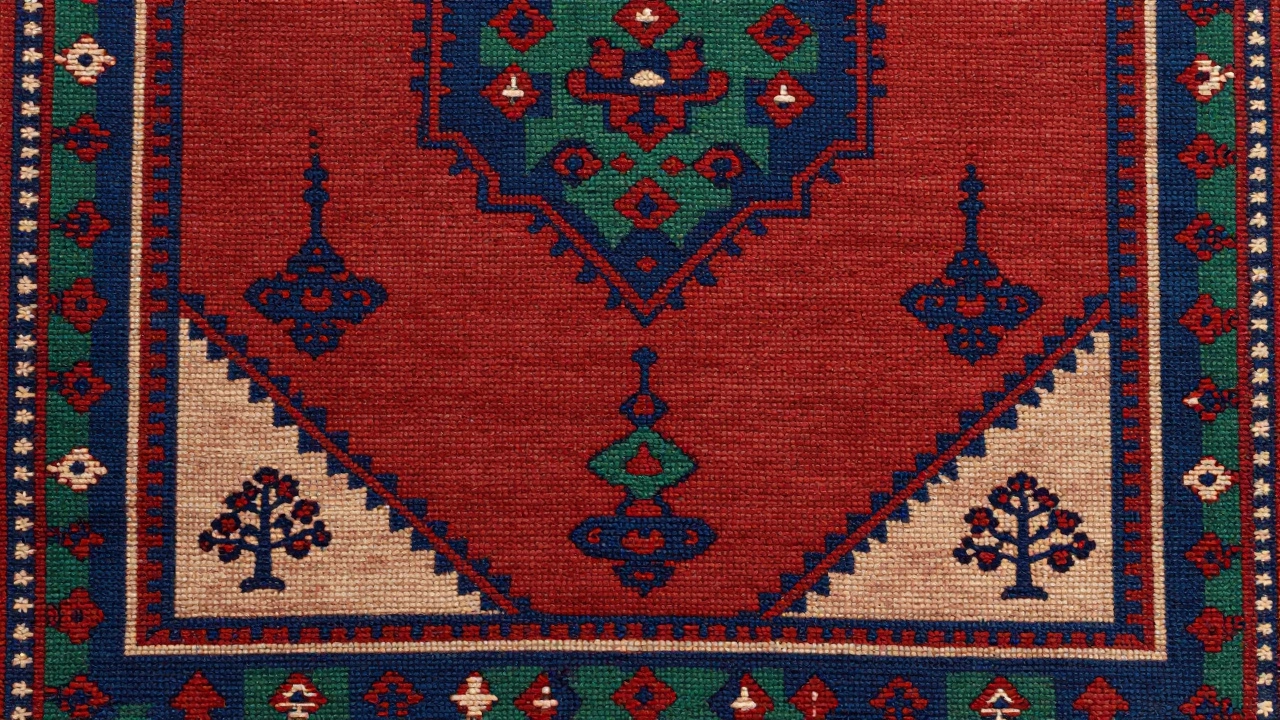
The way a prayer rug is made tells part of its story. Traditional prayer rugs are hand-knotted, a labor-intensive process that can take months or even years. Hand-knotting creates a dense, durable pile that withstands daily use. You can often identify hand-knotted rugs by examining the back. The pattern should be visible on both sides, though perhaps slightly blurred. Machine-made rugs, on the other hand, often have a latex backing or a plain reverse side.
Materials vary by region. Wool is the most common fiber, prized for its durability and softness. Silk is used for finer, more luxurious prayer rugs, often produced in Iran and India. Cotton is popular in Turkey and Pakistan, offering a flat, crisp texture that holds geometric patterns well. Synthetic fibers like nylon or polyester are generally avoided in authentic prayer rugs because they lack the natural feel and longevity valued in religious artifacts.
Look at the knot density. Higher knot counts indicate finer detail and higher quality. A high-end silk prayer rug might have over 500 knots per square inch, allowing for intricate floral designs and clear calligraphy. Coarser wool rugs might have fewer knots but still exhibit excellent craftsmanship. The tightness of the weave affects how well the symbols hold up over time. Loose weaves can distort the mihrab or blur the calligraphy, reducing the rug’s spiritual and aesthetic value.
Regional Styles: Where Does It Come From?
Different regions produce prayer rugs with distinct characteristics. Understanding these styles helps you identify the origin and authenticity of the piece.
| Region | Key Features | Common Colors | Typical Symbols |
|---|---|---|---|
| Turkey | Geometric patterns, cotton foundation | Red, blue, green | Lamps, simple mihrabs |
| Iran (Persia) | Floral motifs, silk or wool | Pastel blues, pinks, gold | Complex mihrabs, trees of life |
| Pakistan/India | High knot density, detailed calligraphy | Deep reds, burgundy | Quranic verses, intricate arches |
| Central Asia | Abstract geometric shapes | Earthy tones, indigo | Minimalist mihrabs, animal motifs |
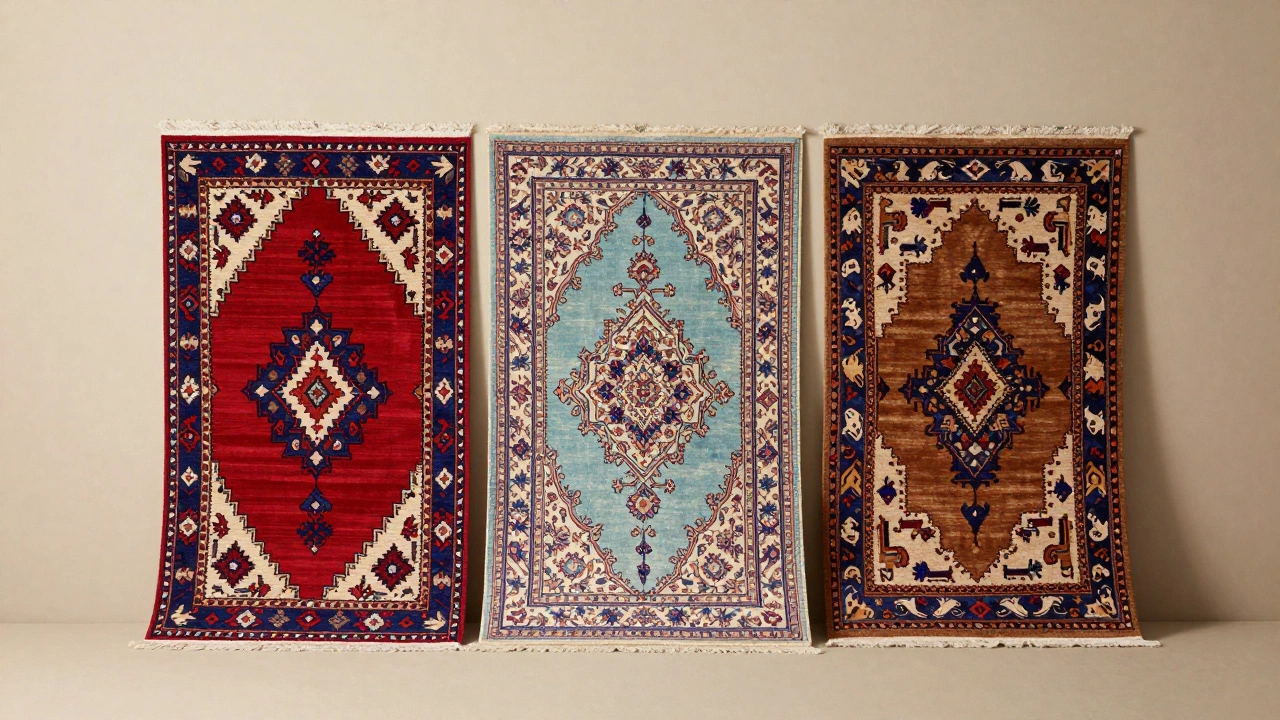
Turkish prayer rugs, for example, often feature bold geometric designs and bright colors. They are known for their durability and practicality. Iranian rugs lean toward elegance, with softer colors and complex floral arrangements within the mihrab. Pakistani and Indian rugs excel in detail, often incorporating extensive calligraphy and fine silk threads. Central Asian rugs, like those from Uzbekistan or Turkmenistan, tend to be more abstract, using repeating geometric patterns rather than realistic depictions of architecture.
Knowing the regional style helps you assess whether the rug matches its claimed origin. A rug labeled as Persian but featuring stark, angular geometry might actually be Turkish or Central Asian. Mislabeling is common in the market, so cross-referencing the design with known regional traits is a smart move.
Modern vs. Traditional: Navigating the Market
Today, many companies produce rugs that look like prayer rugs but are marketed as home decor. These pieces may include a mihrab design but lack the spiritual significance or traditional craftsmanship. They are often machine-made, using synthetic materials, and sold at lower price points. How do you tell the difference?
First, check the label. Authentic prayer rugs usually come with tags indicating the material, origin, and weaving method. Look for terms like "hand-knotted," "wool," or specific city names (e.g., Tabriz, Kashan). Decorative imitations might say "power-loomed" or "synthetic blend." Second, examine the edges. Hand-knotted rugs have fringes that are part of the warp threads, meaning they are continuous with the body of the rug. Machine-made rugs often have sewn-on fringes that can unravel easily.
Third, consider the price. Genuine hand-knotted prayer rugs require significant labor and skill. A small, high-quality wool prayer rug might cost several hundred dollars. Silk versions can run into the thousands. If you see a rug with a mihrab design for $50, it’s almost certainly a mass-produced imitation. Don’t let the low price fool you into thinking you’ve found a bargain. You’re getting a decorative item, not a traditional artifact.
However, there’s nothing wrong with buying a decorative prayer-style rug if you love the aesthetic. Just be aware of what you’re purchasing. If you want a piece with historical and cultural depth, invest in an authentic hand-knotted rug. If you just want a pretty floor covering, a machine-made version works fine. Clarity in labeling helps buyers make informed choices.
Caring for Your Prayer Rug
Once you’ve identified and acquired a prayer rug, proper care ensures it lasts for generations. Since these rugs are used for kneeling and prostration, they endure significant wear. Vacuum regularly to remove dust and debris, but avoid beating them too harshly, especially if they are old or delicate. For deeper cleaning, professional dry cleaning is recommended, particularly for silk or antique pieces.
Rotate the rug every few months to ensure even wear. Sunlight can fade colors over time, so keep the rug away from direct windows if possible. Store unused prayer rugs rolled, not folded, to prevent creases and damage to the fibers. By treating the rug with respect, you honor both its physical craftsmanship and its spiritual purpose.
Can I use a prayer rug as a regular floor covering?
Yes, you can. Many people use prayer rugs as decorative accents in living rooms or bedrooms. However, be mindful of heavy foot traffic, as these rugs are designed for gentle use during prayer. Rotating the rug and avoiding vacuum cleaners with beater bars will help preserve its condition.
Do all prayer rugs have a mihrab design?
Most traditional prayer rugs feature a mihrab, but not all. Some simpler designs rely on color blocks or minimal patterns to indicate direction. However, the mihrab is the most recognizable and common symbol. If a rug lacks any directional cues, it might be a generic decorative piece rather than a dedicated prayer rug.
How much does an authentic prayer rug cost?
Prices vary widely based on size, material, and craftsmanship. A small, hand-knotted wool prayer rug might start around $200-$300. Larger or silk rugs can range from $500 to several thousand dollars. Antique pieces sold at auction can fetch much higher prices. Always verify the authenticity before making a purchase.
Are prayer rugs only for Muslims?
While prayer rugs are primarily used by Muslims for Salah, they are appreciated globally as works of art. Non-Muslims often collect them for their beauty and cultural significance. Using a prayer rug as a decorative item is perfectly acceptable, provided it is treated with respect.
How can I tell if a prayer rug is handmade?
Examine the back of the rug. Hand-knotted rugs show the pattern on both sides, though it may be slightly less sharp than the front. The fringes should be integrated into the weave, not sewn on. Look for slight irregularities in the pattern, which indicate human craftsmanship. Machine-made rugs have perfect symmetry and often a latex or plastic backing.