How to Reduce Your Storage Cost: Practical Tips for Home and Office
 Mar, 8 2026
Storage Cost Calculator
How Much Could You Save?
See how much you could save by optimizing your storage space. Most people pay for unused space—find out if you're overpaying.
Your Potential Savings
You could save:
$0
per month
If you optimize your storage space, you could reduce your bill by 0%!
Based on average U.S. storage costs (2026 data)
Your Action Plan
Start with these steps to reduce your costs:
- 1. Declutter 50% of stored items + $45/month
- 2. Use home storage solutions + $90/month
- 3. Digitize important documents + $90/month
Storage costs add up faster than most people realize. Whether you’re paying for a climate-controlled unit, renting extra closet space, or just buying too many bins you never use, the money drains quietly-no bill reminder, no alarm, just less cash in your pocket. The good news? You don’t need to buy more shelves or upgrade your closet to cut costs. You just need to stop paying for what you don’t need.
Stop paying for unused space
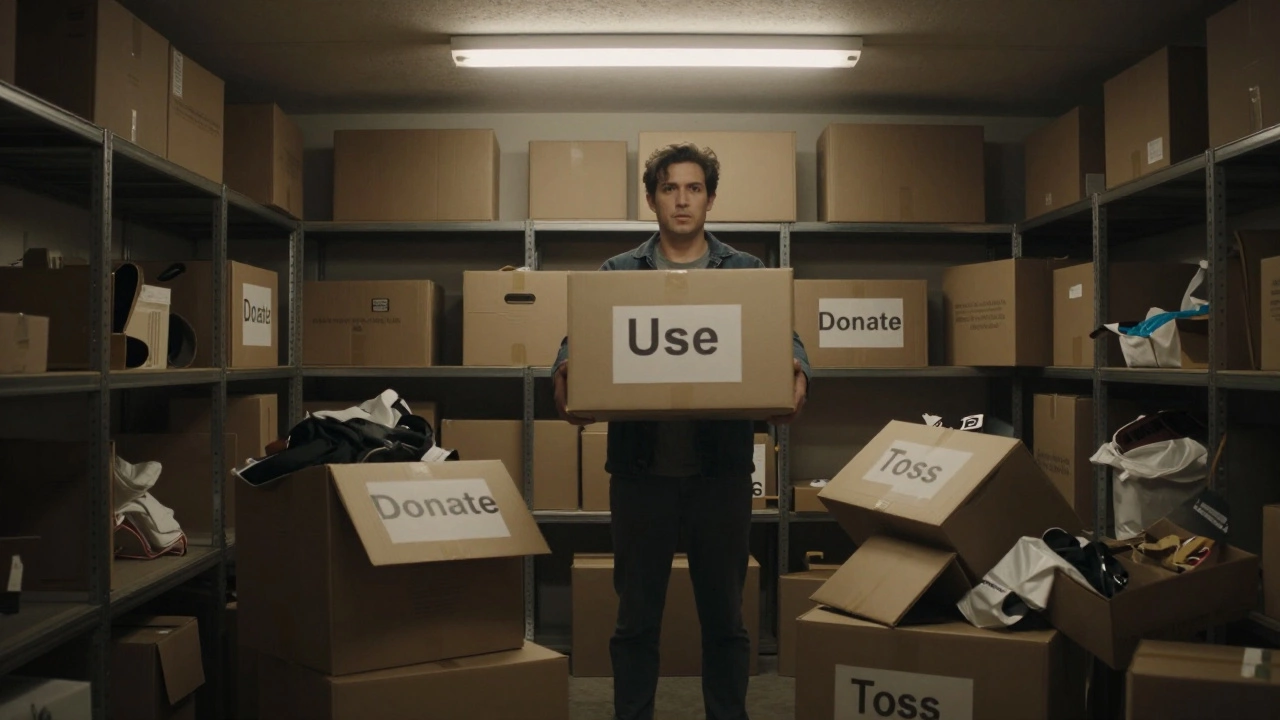
Most people who rent storage units are using less than half the space they’re paying for. A 10x10 unit costs $120 a month on average in the U.S. in 2026. But if you’re only storing a few boxes of seasonal clothes and one broken lamp, you’re overpaying. Start by taking inventory. Don’t guess-count. Open every box. Sort everything into three piles: use, donate, toss. If you haven’t touched it in 18 months and it’s not sentimental, it’s just taking up space-and money.
Here’s a simple rule: if you wouldn’t carry it out in a fire, you probably don’t need it stored. That vintage coffee maker from 2012? If it doesn’t work, donate it. The stack of old DVDs? Sell them online or drop them at a thrift store. One woman in Austin cut her storage bill from $180 to $45 a month just by clearing out 70% of her items. She didn’t buy anything new. She just stopped paying for clutter.
Use what you already have
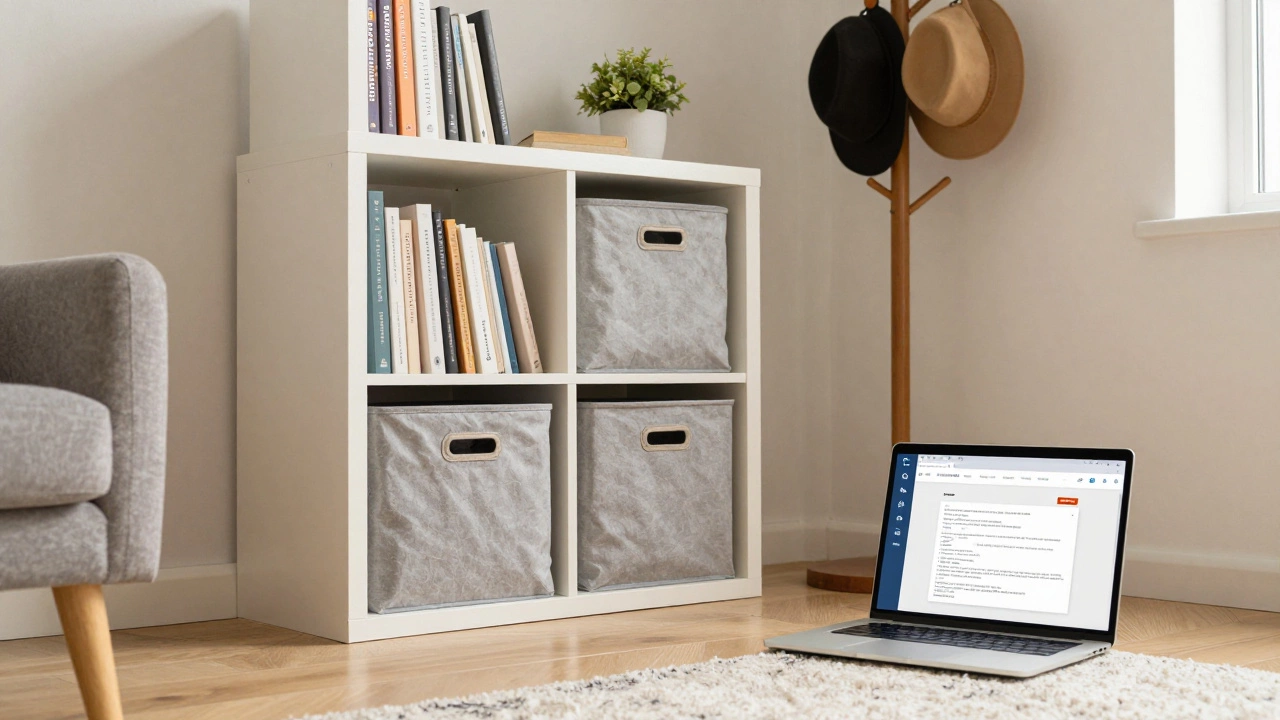
You don’t need to buy storage containers. Your existing furniture can do more than sit there. Under-bed bins are free real estate. The space under your stairs? Perfect for shoe storage or holiday decorations. Empty drawers in your dresser? Use them for socks, cables, or craft supplies. A bookshelf can hold bins if you flip it sideways. A coat rack can hang bags, hats, and even tools.
One study from the National Storage Association in 2025 found that 68% of households that reused existing furniture for storage saved over $300 in the first year. You’re not just saving money-you’re avoiding the hassle of buying, assembling, and hauling new stuff. Look around your home. What’s not being used for its original purpose? That coffee table? Put bins under it. That unused chair? Turn it into a vertical coat rack. It’s free storage, and it’s already in your house.
Go digital
Paper is one of the biggest space hogs. Receipts, manuals, old bills, photos, even your kid’s school artwork-they all pile up. But you don’t need physical copies. Scan them. Use free apps like Google Lens, Adobe Scan, or even your phone’s camera. Organize them into folders labeled “2023 Taxes,” “Car Manuals,” or “Kids’ Art.” Cloud storage like Google Drive or iCloud is free for most users up to 15GB. That’s enough for thousands of documents and photos.
One family in Ohio got rid of their 5x5 storage unit after digitizing 20 years of school reports, tax records, and photo albums. They saved $90 a month. And now, when they need a report from 2011, they find it in 12 seconds instead of digging through three boxes. Digital doesn’t mean losing memories-it means making them easier to find and safer from damage.
Rotate, don’t store
Seasonal items are the biggest trap. Winter coats in summer? Holiday decorations in January? You’re paying to keep them safe-when you could just store them where they’re used. Keep one set of winter gear under your bed or in a vacuum-sealed bag in your closet. Store holiday lights in the box they came in, taped shut, and labeled. Don’t put them in a separate unit.
Use the storage cost reduction rule: if you use it less than three times a year, store it where you use it. That means your ski boots go in the garage closet, not a climate-controlled unit. Your Christmas tree goes in the attic, not a rented box. This alone cuts storage needs by 40-60% for most households.
Share or swap
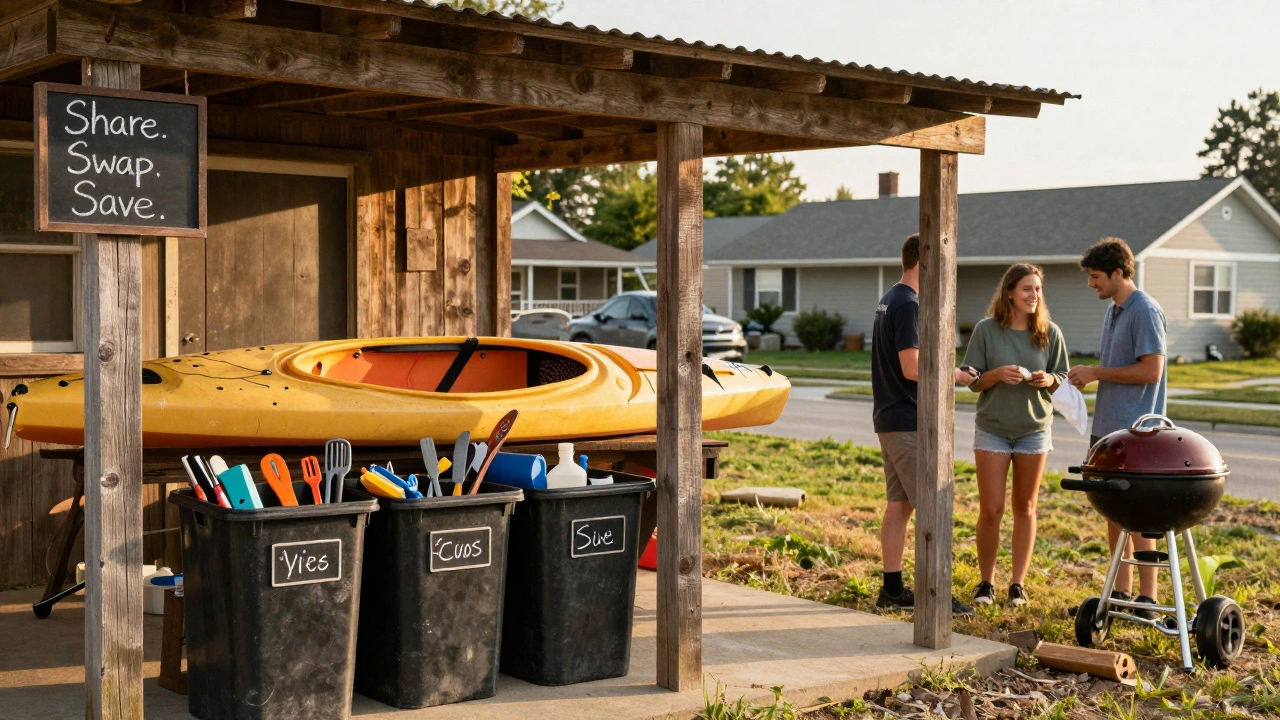
Do you have a tool you only use once a year? A pressure washer? A popcorn machine? A ladder? Chances are your neighbor does too. Instead of both of you paying to store duplicates, share. Start a simple exchange with people in your neighborhood. A WhatsApp group or Nextdoor post works. “I’ll lend you my bike pump if you lend me your step stool.” No money changes hands. Just trust and a little communication.
Communities that use tool libraries or shared storage hubs report up to 30% less spending on storage units. In Portland, a community shed lets residents store bulky items like kayaks, grills, and lawn equipment for $10 a month. No contracts. No long-term commitment. Just access when you need it.
Think long-term, not short-term
Storage units are easy to sign up for. But they’re hard to quit. Most people stay in them for years-even if they’re only using 20% of the space. That’s because canceling feels like a hassle. But here’s the truth: storage costs compound. $100 a month is $1,200 a year. Over five years? $6,000. That’s a used car. A vacation. A down payment on a better bed.
Every time you consider renting storage, ask: “Will I still need this in two years?” If the answer is “maybe,” don’t rent. Find another way. Sell it. Give it away. Store it somewhere else. If you’re unsure, put it in a box, label it “2026 Review,” and set a calendar reminder for next January. If you haven’t opened it by then, toss it.
What not to do
Don’t buy expensive storage systems before you’ve decluttered. That fancy closet organizer? It won’t help if you’re still storing things you don’t need. Don’t rent a unit because “it might come in handy.” That’s how people end up paying $200 a month for boxes of broken electronics and mismatched Tupperware.
Don’t assume climate control is necessary. Unless you’re storing leather, wood, or important documents, humidity won’t ruin your stuff. Most items-clothes, books, toys, tools-do fine in a dry garage or basement. You’re paying extra for peace of mind, not protection.
Real savings, real results
Here’s what works:
- Clear out 50% of your stored items → cut your bill in half
- Use under-bed and closet space → eliminate the need for a unit
- Digitize documents and photos → save $100+/month
- Rotate seasonal items → reduce storage needs by 60%
- Share tools with neighbors → avoid duplicate rentals
One man in Atlanta stopped paying $150/month for storage after three months of sorting. He sold 12 items online, donated 40 bags of clothes, and moved the rest under his bed and into his garage. His storage bill dropped to $0. He didn’t need more space. He just needed to stop paying for it.
Is it cheaper to store things at home or in a storage unit?
Storing things at home is almost always cheaper. Storage units cost $50-$200 a month depending on size and location. At-home storage uses space you already pay for-your house or apartment. You can use under-bed bins, closet shelves, or even the garage. The only cost is time to organize. No monthly fees. No contracts. No late penalties.
What items should never be stored in a unit?
Avoid storing perishables, flammable items, electronics without climate control, and sentimental items you might need quickly. Food attracts pests. Gasoline or paint can leak or explode. Electronics can get damaged by humidity. And if you’re storing family photos or heirlooms, keep them where you can access them easily-like a fireproof box at home.
Can I really save money by digitizing my documents?
Yes. A typical household stores 100-300 pounds of paper over time-receipts, tax forms, school papers, manuals. Scanning them takes a few hours and costs nothing. Cloud storage is free up to 15GB, which holds tens of thousands of files. You’ll save hundreds on storage units and gain instant access. Plus, digital files don’t get damaged by water or pests.
How do I know if I’m overpaying for storage?
If you haven’t accessed your storage unit in the last 6 months, you’re likely overpaying. If you’re using less than half the space you rented, you’re overpaying. If you’re storing items you don’t use more than twice a year, you’re overpaying. Ask yourself: if I lost this unit tomorrow, would I replace it? If not, cancel it.
What’s the fastest way to cut storage costs?
Start by emptying one box. Sort everything into use, donate, toss. Repeat with two more boxes. Most people realize they’re storing things they forgot they had-and 70% of it can go. Once you clear the clutter, you might not need the unit at all. That’s the fastest way to cut costs: stop paying for what you don’t need.
Next steps
Start today. Pick one closet, one drawer, or one box. Empty it. Sort it. Decide what stays, what goes, and where it lives now. Don’t wait for a weekend. Don’t wait for the perfect organizer. Just start. You’ll be surprised how quickly you can cut your storage bill-and how much space you’ll regain.