Is Thomasville Furniture Made in China? The Truth About Where Your Sofa Comes From
 Jan, 19 2026
Sofa Long-Term Value Calculator
Compare the true cost of a Thomasville sofa versus cheaper alternatives over time. Based on the article's data showing that Thomasville sofas last 15-20 years while cheaper alternatives need replacement every 3-4 years.
Your Inputs
Why This Matters
The article explains that while Thomasville sofas cost more upfront ($1,200 vs. $400), they last significantly longer. Cheaper sofas need replacement every 3-4 years, leading to higher long-term costs.
According to the article, over 20 years, you'd spend $2,000-$2,600 replacing cheap sofas versus $1,200 for a Thomasville sofa that lasts 15-20 years.
Results
When you buy a Thomasville sofa, you’re not just buying comfort-you’re buying a name that’s been around for over a century. But in 2026, with so much furniture coming from overseas, it’s natural to wonder: Is Thomasville furniture made in China? The short answer? No. Not anymore. And here’s why that matters.
Thomasville’s Roots Are Deeply American
Thomasville Furniture began in 1904 in Thomasville, North Carolina. Back then, it was a small woodworking shop making oak bedroom sets. By the 1950s, it became one of the largest furniture manufacturers in the U.S., known for solid wood frames, hand-stitched upholstery, and attention to detail. For decades, nearly every piece-sofas, chairs, dressers-was built in North Carolina factories. Even in the 1990s, when other brands started moving production overseas, Thomasville stayed put.That changed slightly in the early 2000s. Global supply chains got complicated. Labor costs rose. Some components-like metal springs, foam inserts, or decorative trim-started being sourced from overseas. But the final assembly? Still in the U.S. That’s not marketing fluff. It’s documented. Thomasville’s own website states: "All Thomasville furniture is assembled in the United States."
What Does "Assembled in the U.S." Actually Mean?
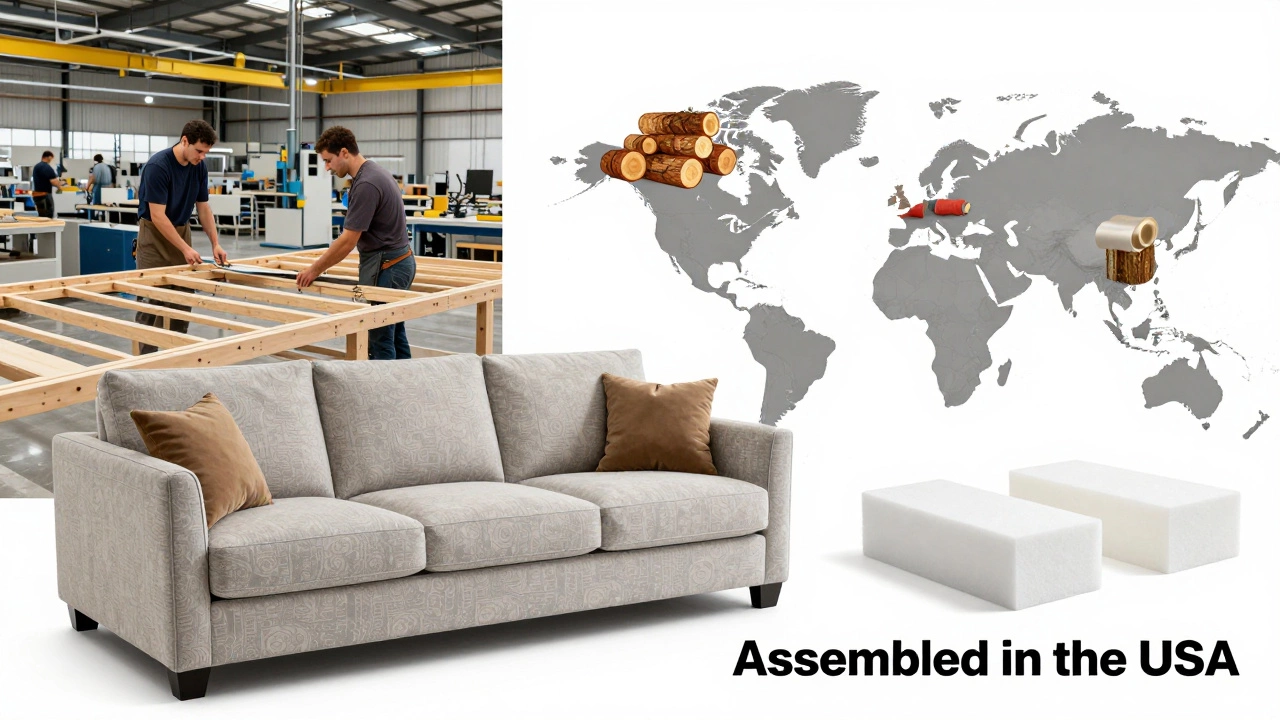
This is where confusion sets in. If you’ve ever opened a box from a big-box store and seen "Made in China" on the tag, you might assume the whole thing came from there. But furniture is rarely made in one place from start to finish.Think of it like a car. The engine might come from Japan, the tires from Germany, and the final assembly happens in Michigan. Same with Thomasville. The hardwood frames? Sourced from U.S. forests, cut in North Carolina. The foam cushions? Often made in Tennessee or Georgia. The fabric? Could be imported from Italy, Turkey, or even China. But the stitching, the frame joining, the final quality check-those happen in Thomasville’s own factories.
Here’s the key difference: if a sofa is labeled "Made in China," it means the entire process-from cutting wood to sewing fabric-happened there. With Thomasville, the core craftsmanship stays in America. The company doesn’t outsource full production. They control the final build.
Why Does It Matter Where It’s Made?
If you’re paying $2,000 for a sofa, you expect durability. And durability comes from how it’s built, not just what it’s made of.U.S.-made furniture typically uses kiln-dried hardwood frames-like oak, maple, or poplar-that are double-doweled and corner-blocked. These aren’t just glued or nailed. They’re engineered to last 15-20 years. In contrast, many imported sofas use particleboard or softwood frames that warp over time. You’ve probably seen them: the arms sag after a year, the legs creak, the fabric pulls away from the frame.
Thomasville also uses 8-way hand-tied springs in its higher-end models. That’s a traditional technique where each spring is individually tied by hand to create even support. It’s time-consuming. It’s expensive. And it’s almost never done in mass-produced Chinese factories. Those rely on serpentine springs or elastic webbing-cheaper, faster, but less supportive.
Quality control matters too. U.S. factories have inspectors checking each piece before it leaves. Chinese factories often ship in bulk with random sampling. One bad sofa out of 500 might make it to your living room. With Thomasville, that chance is much lower.
How to Spot a Real Thomasville Sofa
Not every sofa with the Thomasville name is created equal. Some retailers sell "Thomasville-style" furniture made elsewhere. Here’s how to tell the real thing:- Check the label: Look for a metal or fabric tag sewn into the underside of the seat or back. It should say "Thomasville Furniture, Made in the USA" or "Assembled in the USA."
- Look for the logo: Genuine Thomasville pieces have a small, embossed logo on the frame or armrest-not a sticker.
- Visit a certified dealer: Only authorized retailers (like Thomasville Home Stores, or major furniture chains with official partnerships) carry true Thomasville products.
- Ask for the origin certificate: Reputable dealers can provide documentation showing the manufacturing location.
If you bought it online from a third-party seller with no physical store, and the price is way below retail (under $800 for a full sofa), it’s likely not authentic.
What About Thomasville’s Budget Lines?
Thomasville does have more affordable lines-like Thomasville Home and Thomasville Essentials. These are designed to be more accessible. But even these aren’t made in China.They might use engineered wood instead of solid hardwood in some parts. The cushions could be higher-density foam instead of down blends. The fabric might be synthetic. But the assembly? Still happens in North Carolina. The same factories. The same workers. The same quality standards, just streamlined.
One customer in Ohio bought a Thomasville Essentials sofa in 2023. After two years of daily use with two kids and a dog, the frame still didn’t creak. The arms hadn’t sagged. The fabric showed minimal wear. That’s not luck. That’s U.S. manufacturing.
Why Other Brands Moved to China (and Why Thomasville Didn’t)
Many U.S. furniture brands-like Lane, Bassett, and even some smaller names-shut down their American factories between 2005 and 2015. Why? Profit margins. Labor in China costs a fraction. Shipping a whole sofa from Shanghai to New York is cheaper than paying a worker in North Carolina $18/hour to stitch a seam.Thomasville’s parent company, Furniture Brands International, tried to cut costs too. In 2013, they closed several U.S. plants. But customers revolted. People didn’t just want furniture-they wanted heritage. They wanted something built to last. So Thomasville reversed course. They kept their core assembly lines open. They invested in automation to offset labor costs. They focused on craftsmanship, not just price.
Today, Thomasville spends more on U.S. labor than competitors. But they charge more too. And people pay for it. Why? Because they know the difference.
Where Do the Materials Come From?
Let’s be clear: Thomasville doesn’t claim every material is American-made. That’s unrealistic in today’s global economy.- Wood: Mostly from U.S. forests in the Southeast and Midwest. Hardwoods like oak, cherry, and maple.
- Fabric: Can be from Turkey, Italy, or China. But all fabrics are tested for durability (minimum 30,000 double rubs for upholstery).
- Foam: Made in the U.S. by suppliers like Foam Partner or Tempur-Pedic.
- Hardware: Springs, nails, brackets-often sourced from U.S. metalworkers, but some fasteners come from Asia.
It’s not about every single screw being American. It’s about the final product being built, tested, and guaranteed by American standards.

What’s the Real Cost of Cheap Furniture?
A sofa from a discount store might cost $400. It looks nice in the showroom. But after 18 months, the cushions flatten. The seams split. The frame starts to lean. You’re not saving money-you’re paying twice.Thomasville sofas start around $1,200. But they’re designed to last 15-20 years. That’s less than $60 a year. Compare that to buying a $400 sofa every 3-4 years. Over 20 years, you’d spend $2,000-$2,600. You’re better off paying more upfront.
Plus, Thomasville offers a 1-year full warranty and a 5-year limited warranty on frames. That’s standard for U.S.-made brands. Most Chinese-made sofas come with 90-day warranties-if any at all.
Final Verdict: Is Thomasville Made in China?
No. Thomasville furniture is not made in China. The final assembly, the quality control, the craftsmanship-all happen in the United States. Some parts may come from overseas, but that’s true for nearly every American-made product, from iPhones to pickup trucks.What makes Thomasville different is that they refuse to outsource the soul of the product. The stitching. The frame. The feel. That stays home.
If you want a sofa that lasts longer than your phone, that doesn’t sag after a year, and that carries the legacy of American craftsmanship-Thomasville is still one of the few brands that delivers on that promise.
Is Thomasville furniture still made in the USA?
Yes. All Thomasville furniture is assembled in the United States, primarily in North Carolina. While some components like fabric or hardware may be sourced internationally, the final construction, quality control, and finishing are done in U.S. factories.
How can I tell if my Thomasville sofa is authentic?
Look for a manufacturer’s tag sewn into the underside of the seat or back. It should say "Thomasville Furniture, Made in the USA" or "Assembled in the USA." Genuine pieces also have an embossed logo on the frame, not a sticker. Buy only from authorized dealers to avoid counterfeit products.
Are Thomasville sofas worth the price?
If you want a sofa that lasts 15-20 years with proper care, then yes. Thomasville uses solid hardwood frames, hand-tied springs in premium models, and durable upholstery tested for heavy use. Cheaper sofas often need replacing every 3-5 years, making Thomasville more cost-effective over time.
Does Thomasville use Chinese materials?
Some materials, like certain fabrics or metal fasteners, may be sourced from China or other countries. But this is common across nearly all U.S. furniture brands. What matters is that the final product is assembled and inspected in the U.S. under strict quality standards.
What’s the difference between Thomasville and Thomasville Essentials?
Thomasville Essentials is a more affordable line with some cost-saving changes-like engineered wood instead of solid hardwood in some parts, and simpler cushion fills. But it’s still assembled in the same U.S. factories with the same quality controls. It’s not "cheap"-it’s streamlined.
What to Do Next
If you’re shopping for a new sofa and care about longevity, craftsmanship, and supporting American manufacturing, Thomasville remains a top choice. Visit a local authorized dealer. Sit on the sofas. Feel the frame. Ask about the warranty. Compare it side by side with imported brands. You’ll notice the difference.Don’t be fooled by low prices. The real value isn’t in the sticker-it’s in the years of comfort you get after.