Should Curtains Match Wall Color or Furniture?
 Mar, 19 2026
Curtain Harmony Calculator
Find Your Perfect Curtain Color
Your Ideal Curtain Color
When you’re picking out curtains, one of the biggest questions that comes up is: should they match the wall color or the furniture? It’s not about copying a magazine spread. It’s about making your space feel right. And the answer isn’t as simple as "yes" or "no." It depends on what you’re trying to do with the room.
Why matching curtains to walls feels safe - and sometimes boring
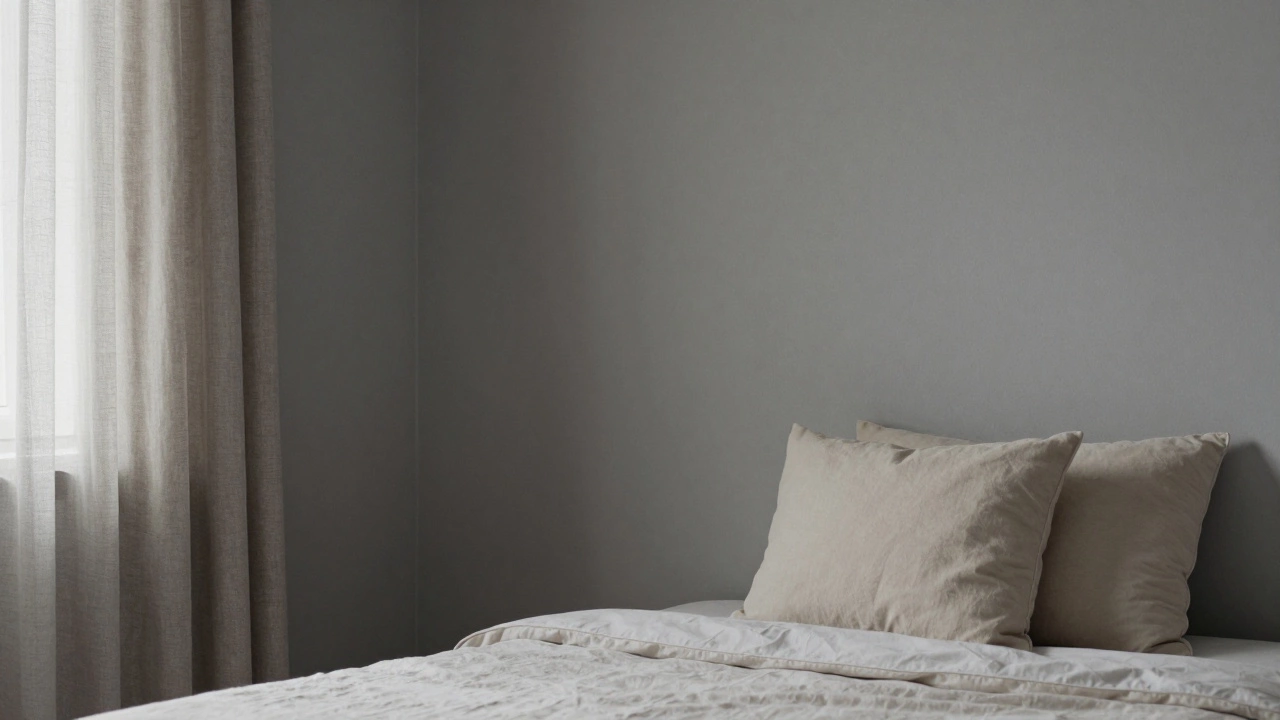
A lot of people go for curtains that match the wall color because it’s easy. Same tone, same vibe. No clashing. It creates a calm, seamless look. Think of a light gray wall with gray linen curtains. It’s soothing. It’s quiet. It works in bedrooms or living rooms where you want to feel relaxed. But here’s the catch: if everything blends together too much, the room starts to feel flat. No depth. No energy. You walk in and think, "Nice... but?" That’s because matching curtains to walls often removes contrast. And contrast is what gives a room character. In Auckland homes, where natural light changes dramatically with the seasons, rooms that rely too heavily on tonal matching can feel dull in winter. A beige wall with beige curtains in a north-facing room? You’ll need extra lighting just to see the sofa.Why matching curtains to furniture can create rhythm - if done right
Curtains that echo your sofa, armchair, or accent pillows? That’s a different kind of harmony. It pulls the eye around the room. It ties the space together. A navy blue sofa with navy blue curtains? That’s intentional. It says, "I meant for this to look like this." This approach works best in rooms with strong furniture pieces. If you’ve got a bold sectional in emerald green, or a vintage armchair in mustard yellow, matching the curtains to those colors makes them feel like part of the furniture family. But don’t go full monochrome. If your couch is deep burgundy, and your curtains are the exact same shade, you risk making the window look like a hole in the wall. Instead, try going one tone lighter or darker. A slightly lighter burgundy curtain lets the window breathe while still feeling connected.The middle ground: curtains that relate, but don’t copy
The smartest move most people make? Choosing curtains that don’t match either the wall or the furniture - but still belong. Think of it like music. A song doesn’t need every note to be the same key to sound good. It needs harmony. The same goes for curtains. Pick a color that pulls from both. If your walls are warm white and your sofa is charcoal, try a curtain in a soft taupe. It’s not a perfect match to either, but it contains hints of both. You’ll see it in high-end interiors: a cream curtain with a subtle weave that catches the same golden tones as the wood in your side table. Another trick? Use texture instead of color. A linen curtain in a neutral tone can sit beautifully against a painted wall and a patterned sofa. The fabric adds movement, while the color stays neutral enough to not compete.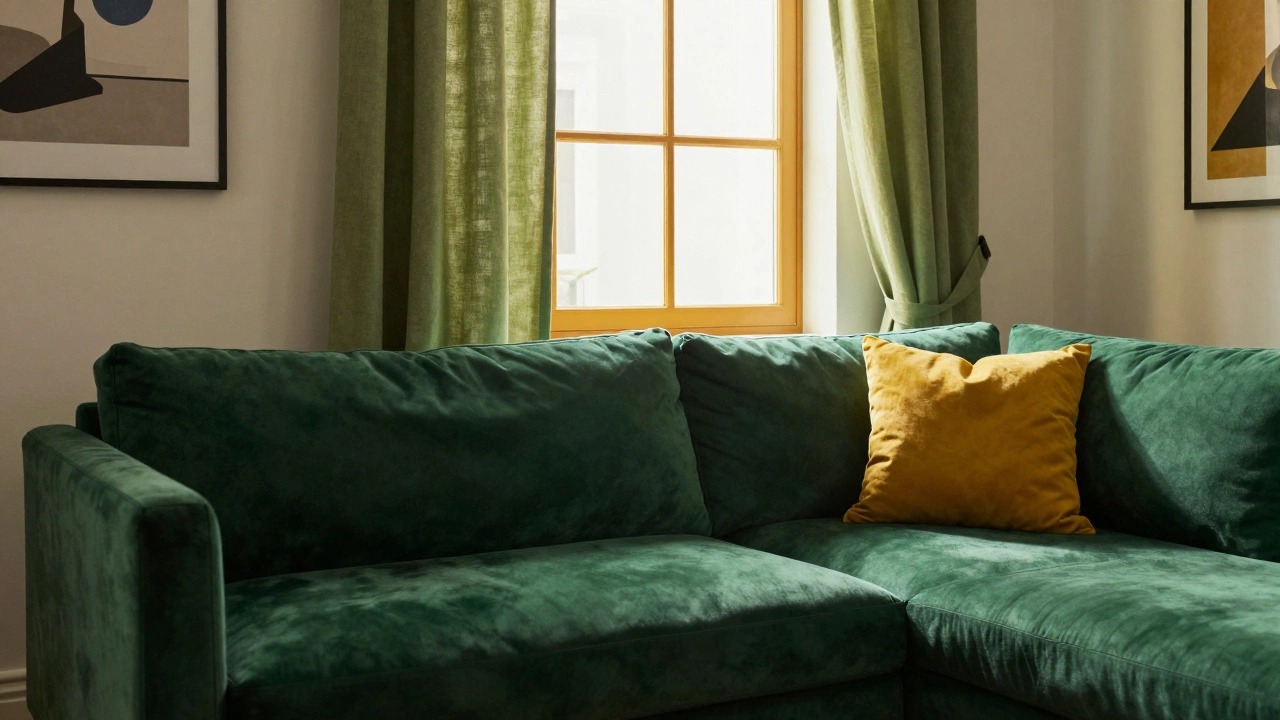
What about patterned curtains?
Patterned curtains are where things get fun - and where people get scared. A floral curtain with green leaves and coral blooms? If your walls are white and your sofa is gray, it’s not chaos - it’s a focal point. That’s the point. Patterned curtains don’t need to match anything. They need to have a color that repeats somewhere else in the room. Look for one color in the pattern that shows up in your rug, your throw pillow, or even the frame of your mirror. That’s your anchor. It doesn’t have to be the main color. Just one thread of connection. In a 2025 survey of 1,200 New Zealand homeowners, 68% said their favorite rooms had at least one "unexpected" element - like patterned curtains - that tied everything together without matching anything directly.Lighting, room size, and mood matter more than you think
A small, dark room? Don’t use dark curtains on dark walls. That makes the space feel smaller. Go lighter. Even if your furniture is bold, a pale curtain lets light in and lifts the whole room. A large, sunlit room? You can afford drama. Deep indigo curtains on a white wall? That’s a statement. It doesn’t need to match the beige armchair. It’s doing its own thing - and it works. Think about how you use the room. A bedroom? You want calm. Softer tones, less contrast. A living room? You want energy. Play with color. Let the curtains be the punctuation mark in the sentence of the room.What professionals do (and why)
Interior designers rarely match curtains to walls or furniture on purpose. They use what’s called the "60-30-10 rule" for color:- 60% dominant color (walls, large furniture)
- 30% secondary color (curtains, rugs)
- 10% accent color (pillows, art, lamps)
Quick checklist: What to ask before buying curtains
- Is the room bright or dim? Light curtains help in low-light spaces.
- Do I want the window to disappear or stand out? Matching walls makes it vanish. Contrasting colors make it pop.
- Is there a pattern in the room already? If yes, keep curtains simple.
- Do I have a bold piece of furniture? Use curtains to echo its color - but not exactly.
- Can I hold the curtain fabric next to both the wall and the sofa? Do it in natural light.
Real-life examples that work
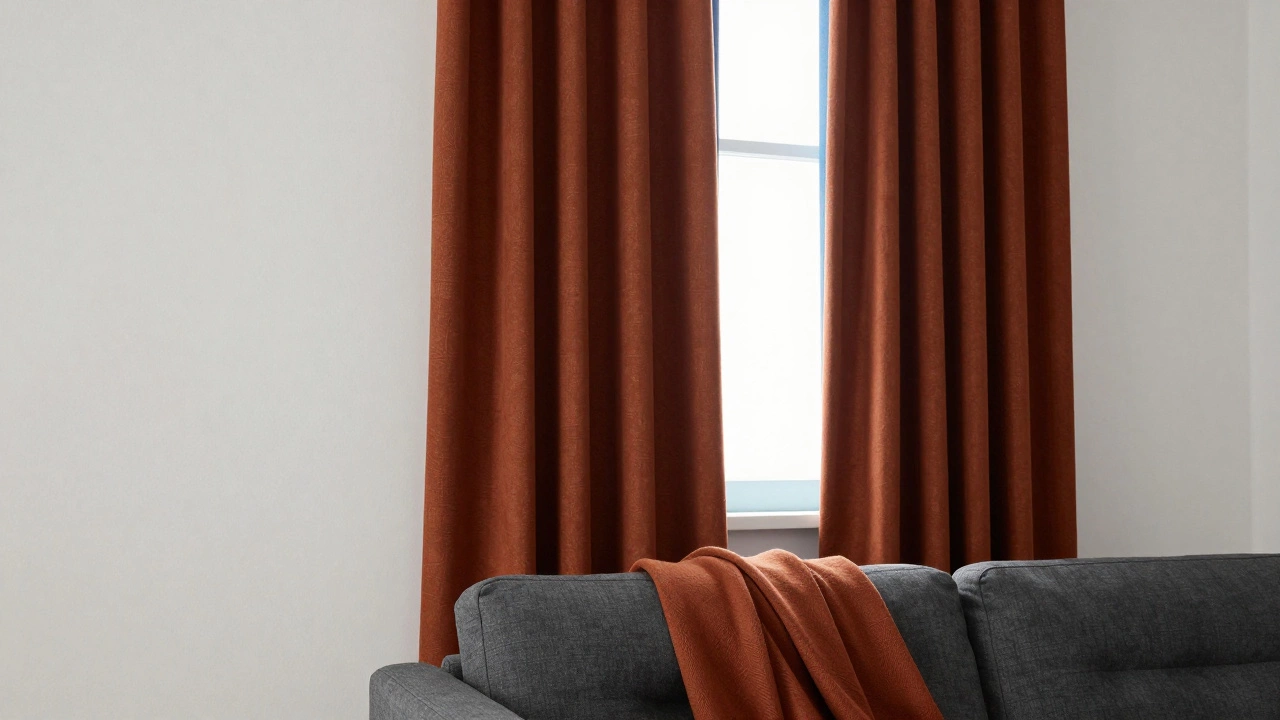
- A white wall, a dark green sofa, and cream linen curtains. The cream ties to the ceiling trim and the rug. It’s calm, but not boring. - A pale blue wall, a mustard yellow armchair, and curtains in a soft gray with a tiny blue stripe. The stripe picks up the wall. The gray balances the chair. - A charcoal wall, a light gray sectional, and curtains in a deep rust. The rust doesn’t match either - but it’s the color of the throw blanket on the sofa. Suddenly, the room feels intentional.Final thought: It’s not about matching. It’s about belonging.
Curtains don’t need to match the wall or the furniture. They need to feel like they belong. That means they should connect - through tone, texture, or a single shared color - without copying. Stop thinking "match." Start thinking "relate."Should curtains match the wall color exactly?
Matching curtains to wall color exactly can make a room feel flat or too quiet. It works in spaces meant for calm - like bedrooms - but often removes depth. Instead, try a shade lighter or darker, or use texture like linen or cotton to add interest without changing the color.
Can curtains match the sofa instead of the walls?
Yes - and it’s often a smarter choice. Matching curtains to your sofa ties the room together visually. It makes the window feel like part of the furniture. Just avoid using the exact same shade. Go one tone lighter or darker to let light in and keep the space from feeling boxed in.
Do patterned curtains need to match anything?
No - but they should have at least one color that appears elsewhere in the room. Look for a hue in the pattern that’s also in your rug, pillow, or artwork. That single connection makes the pattern feel intentional, not random.
What’s the best curtain color for a small room?
Lighter colors - like soft white, pale gray, or cream - work best in small rooms. They reflect light and make the space feel bigger. Avoid dark curtains on dark walls. Even if your furniture is bold, keep the window treatment light to open up the room.
Is it okay to have curtains that don’t match anything?
Absolutely. Many modern interiors use curtains as a design accent. As long as the color or texture has a subtle link to another element - like a shared undertone, a similar fabric weight, or a repeated pattern detail - it will feel connected, even if it doesn’t match.