Should Cushions Match Curtains? The Truth About Interior Design Rules
 Jul, 9 2026
Interior Harmony Calculator
Describe Your Room
Select your options to check your interior harmony score.
Harmony Score
0%Analysis:
Does your living room feel a bit... flat? You know that feeling when everything looks nice individually, but together it just sits there without saying anything. It’s often because we’ve fallen into the trap of making every soft furnishing match perfectly. So, should cushions match curtains? The short answer is no. In fact, if you make them identical, you might be killing the vibe in your room.
We are taught from a young age to match things up. Socks go with shoes. Ties go with shirts. But in interior design, perfect matches can look sterile, like a hotel lobby from 2010. The goal isn't uniformity; it's harmony. You want your space to feel curated, not cataloged. Let's break down why mixing textures and tones works better than copying patterns, and how you can achieve that high-end designer look without spending a fortune.
The Myth of the "Perfect Match"
Why do we even think cushions need to match curtains? It probably comes from an old-school idea that "matching sets" equal good taste. Back in the day, buying a sofa suite meant getting a coffee table and side tables made of the exact same wood veneer. It was safe. It was predictable. But safety rarely wins awards in design.
When your cushions are soft, decorative pillows used to add comfort and visual interest to seating areas are the exact same fabric as your curtains are window treatments that provide privacy, light control, and aesthetic appeal, you lose depth. Your eye has nowhere to rest because everything blends into one big block of color or pattern. It creates a visual monotony that feels unfinished, even if it technically "matches."
Think about fashion for a second. Would you wear a shirt and pants made of the exact same bold plaid fabric? Probably not. You’d likely pair a patterned shirt with solid chinos, or a textured sweater with smooth trousers. Home decor follows the same logic. Contrast creates interest. Texture adds warmth. Matching removes both.
Harmony Over Uniformity: How to Connect Them
If they shouldn’t match, how do they relate? The key is connection, not duplication. You want the cushions and curtains to feel like they belong in the same family, even if they aren't twins. Here is how you do that effectively.
1. Pull Colors from the Pattern If your curtains have a busy floral print, don't buy plain green cushions just because the leaves are green. Instead, pick out the three dominant colors in that print-maybe a deep navy, a muted sage, and a warm terracotta. Use those colors in your cushion selection. This ties the window treatment to the sofa without repeating the motif.
2. Play with Scale This is a pro tip that changes everything. If your curtains have a large-scale geometric pattern, avoid small polka dots on the cushions. It creates visual noise. Instead, go for solids or very subtle textures in complementary colors. Conversely, if your curtains are a simple, sheer linen, you can afford to go bolder with patterned cushions. Large scale meets small scale (or no scale) equals balance.
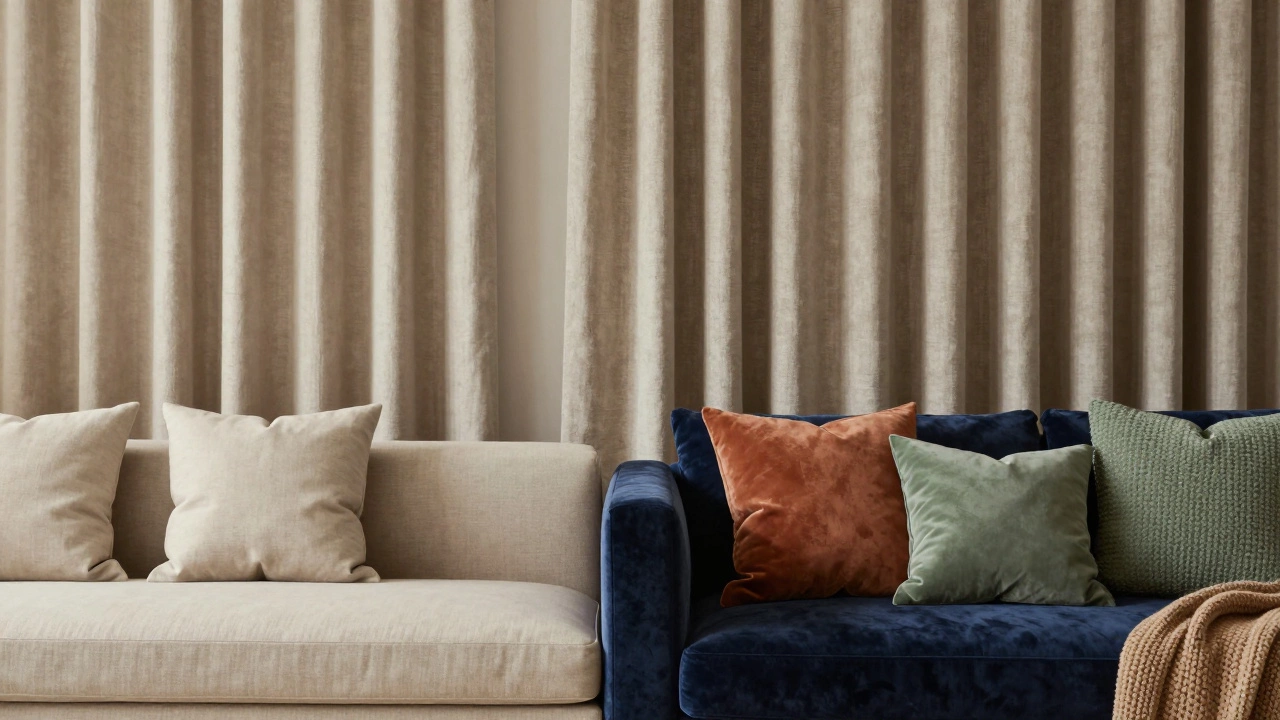
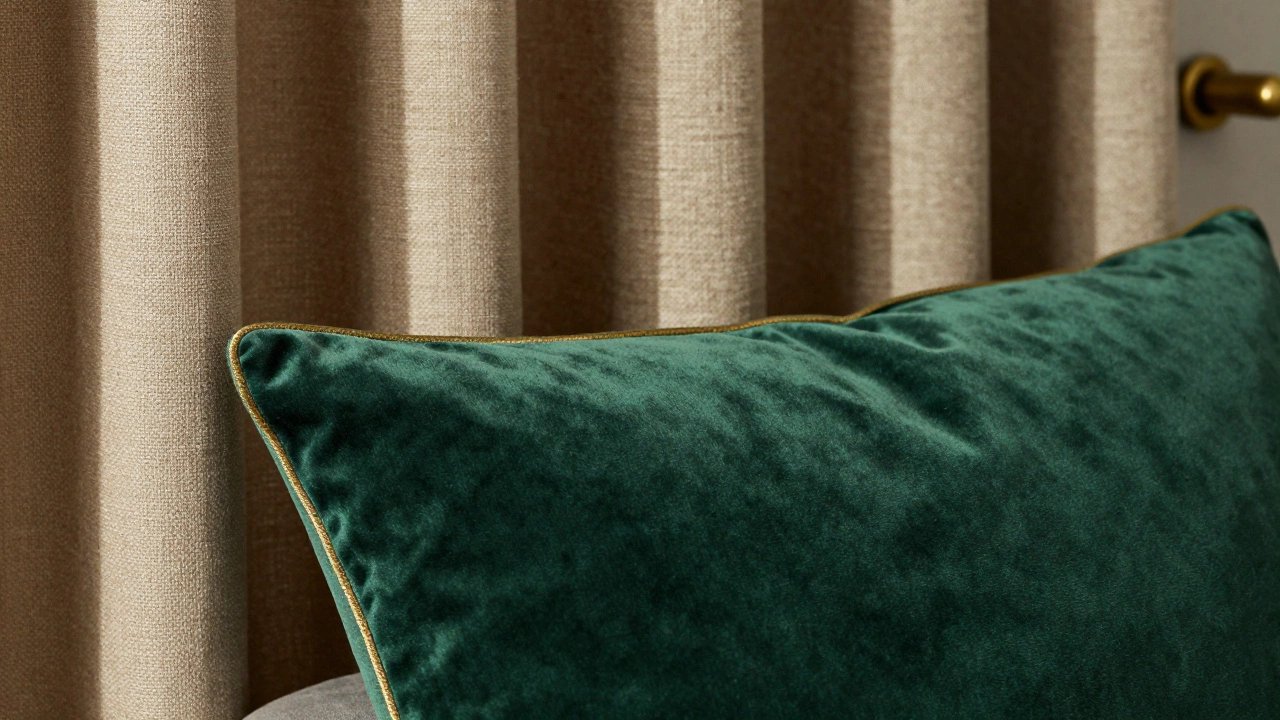
3. Texture is Your Best Friend Color fades in importance when texture takes over. A velvet cushion against a rough-hewn jute curtain creates immediate sophistication. Even if the colors are similar, the way light hits the velvet versus the matte jute makes them distinct. This adds tactile variety to the room, inviting people to touch and interact with the space.
| Strategy | Visual Effect | Best For |
|---|---|---|
| Exact Match | Flat, sterile, hotel-like | Minimalist corporate spaces |
| Color Pulling | Cohesive, layered, intentional | Living rooms, bedrooms |
| Texture Contrast | Rich, tactile, expensive-looking | Modern eclectic styles |
| Pattern Mixing | Dynamic, energetic, bold | Bohemian or maximalist interiors |
The Role of Neutrals and Anchors
Not sure where to start? Look at your walls and your floor. These are your anchors. If your walls are a stark white and your floor is dark hardwood, you have a lot of freedom. But if your walls are a warm beige and your rug is a neutral grey, your curtains and cushions need to bridge that gap.
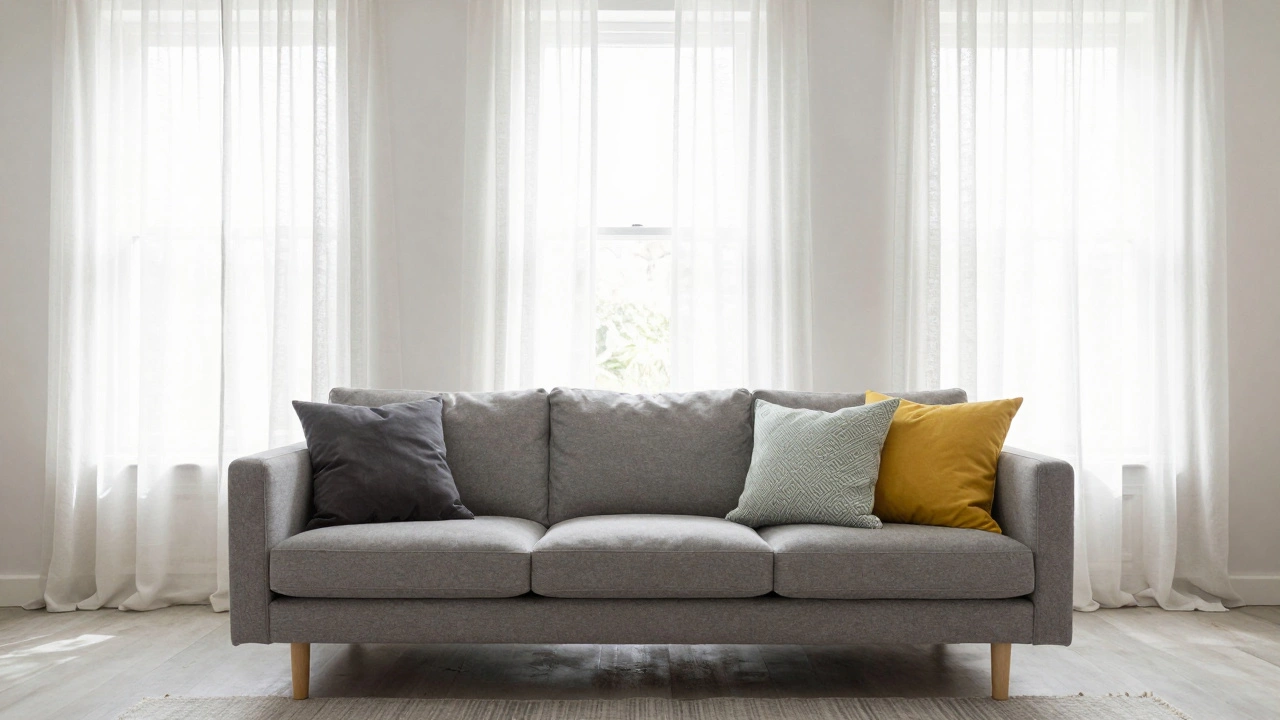
Using neutrals doesn't mean boring. Think of neutrals as the canvas. A cream-colored curtain allows almost any cushion color to pop. A charcoal grey curtain grounds bright yellow or teal cushions. The rule here is: let one element lead, and the other follow. If the curtains are loud, keep the cushions quiet. If the curtains are whisper-quiet, let the cushions shout.
Consider the lighting in Auckland, where I live. We get bright, harsh sunlight in summer and softer, diffused light in winter. Sheer curtains that match heavy velvet cushions might look odd in certain lights because the translucency changes the perceived color. Always test fabrics in natural light before committing to a scheme.
Common Mistakes to Avoid
Even with good intentions, it’s easy to slip up. Here are the most common pitfalls I see in homes that try too hard to coordinate.
- Ignoring the Sofa: The sofa is the biggest piece of furniture. If your cushions match the curtains but clash with the sofa, the room fails. The cushions should primarily complement the sofa, then nod to the curtains.
- Too Many Patterns: If your curtains are striped and your cushions are checked, you’re creating a headache. Stick to one dominant pattern source. Usually, the curtains take that role because they cover more surface area.
- Forgetting Trim and Piping: Sometimes the solution isn't the main fabric. A solid blue cushion with gold piping can tie in a gold-framed mirror and a gold accent in the curtain rod. Small details create cohesion without overwhelming the eye.
- Matching Everything Else: Don’t forget the rug. If your cushions, curtains, AND rug all match, you’ve created a triad of boredom. Keep the rug neutral or textural to break up the vertical lines of the windows and the horizontal mass of the sofa.
Practical Steps to Refresh Your Space
You don’t need to throw out your current curtains to fix this. Start with what you have. Hold your existing cushions up against the window. Do they blend in too much? Do they fight for attention? If they blend in, swap them for something with a different texture or a darker shade of the same color family. If they fight, tone them down.
Here is a quick checklist for your next shopping trip:
- Identify the primary color in your curtains.
- Find a secondary color (a minor accent) in the same fabric.
- Choose cushions in the secondary color, not the primary.
- Select a fabric with a different finish (matte vs. shine, napped vs. smooth).
- Add one "wildcard" cushion in a contrasting color for energy.
This approach ensures that your space feels collected over time, rather than bought in a single transaction. It tells a story. It shows personality. And most importantly, it invites people to sit down and stay a while.
Can I use the same fabric for cushions and curtains if I change the cut?
Technically yes, but it's risky. Using the same fabric in different shapes (e.g., pleated curtains and square cushions) still creates a monochromatic block. It's better to use a complementary fabric that shares the same color palette but differs in texture or weave to add depth.
What if my curtains are a solid color?
This gives you maximum flexibility. You can introduce pattern through your cushions. Pick up accent colors from other parts of the room, like artwork or a rug, and reflect those in your cushion choices. Solid curtains act as a calm backdrop for bolder accessories.
How many cushions should I have on a sofa?
Aim for an odd number, typically three or five, depending on the sofa size. Odd numbers feel more natural and less rigid. Arrange them asymmetrically for a relaxed look, ensuring the largest cushions are at the back and smaller ones in front.
Do curtain rods affect the matching process?
Yes, metal finishes matter. If your curtain rod is brass, consider adding small brass accents to your cushions, such as tassels or metallic thread. This connects the hardware to the soft furnishings, creating a cohesive layering effect beyond just fabric color.
Is it okay to mix modern and traditional styles in cushions and curtains?
Absolutely. Mixing styles is a hallmark of great design. Pair traditional damask curtains with sleek, modern geometric cushions. The contrast highlights the best features of both eras, preventing the room from looking dated or overly trendy.