The Hidden Meaning of Mirrors: Symbolism and Psychology
 Apr, 27 2026
Mirror Symbolism Explorer
Select a perspective to see how a mirror reflects a different aspect of the human experience.
Psychology
Spiritual
Cultural
Wellness
What do you see?
Click a card above to reveal the hidden meaning behind the reflection.
Meaning of mirrors is a rabbit hole that leads through ancient folklore, deep-seated psychological theories, and spiritual beliefs. To understand why we react to them the way we do, we have to look at how they function as a bridge between our internal identity and the external world.
Quick Takeaways on Mirror Symbolism
- Truth and Self-Reflection: Mirrors act as a tool for honesty, showing us things we might ignore.
- Duality: They represent the split between the physical self and the spiritual or hidden self.
- Portals: Many cultures view mirrors as gateways to other dimensions or the subconscious.
- Protection: In various traditions, mirrors are used to deflect negative energy or the "evil eye."
The Psychology of the Looking Glass
Ever felt a weird shiver when looking at yourself in a mirror in a dark room? There is a scientific reason for that. In psychology, there is a phenomenon called the Troxler Effect. This is a visual illusion where, if you stare at a fixed point for too long, your peripheral vision begins to fade or distort. When you do this with your own face, your brain starts to "fill in the gaps" with random imagery. This can make your reflection look like a monster or a stranger, which is why so many urban legends involve mirrors.
But beyond the tricks of the eye, we have the Looking-Glass Self. This is a sociological concept developed by Charles Cooley. It suggests that our sense of self isn't built from who we actually are, but from how we perceive others see us. In this sense, every person we meet becomes a metaphorical mirror. We look at them to see a reflection of our own social value. It is a constant cycle of observing, interpreting, and then adjusting our behavior to fit the image we want to project.
Ancient Folklore and Spiritual Gateways
If you look at history, mirrors were once seen as dangerous. In ancient times, mirrors were often made of polished Obsidian or bronze. Because they captured a likeness of a person, many believed they also captured a piece of the soul. This is where the fear of breaking a mirror comes from. The idea wasn't just about bad luck; it was the belief that you were literally shattering your soul into pieces.
In various spiritual practices, mirrors are treated as portals. In some East Asian traditions, mirrors are placed on the doors of temples to ward off evil spirits. The logic is simple: the spirit sees its own reflection and is frightened away, or the mirror reflects the negative energy back to the sender. This isn't just superstition; it's a tangible way people try to control the unseen energy in their environment.
| Culture/Tradition | Primary Meaning | Common Practice |
|---|---|---|
| Ancient Rome | Divination/Truth | Using mirrors to predict the future (Catoptromancy) |
| Feng Shui | Energy Flow (Qi) | Placing mirrors to expand space or redirect energy |
| European Folklore | Soul Capture | Covering mirrors in the house during mourning |
| Modern Psychology | Identity Construction | Using mirror therapy for self-acceptance |
The Duality of the Self: The Shadow Side
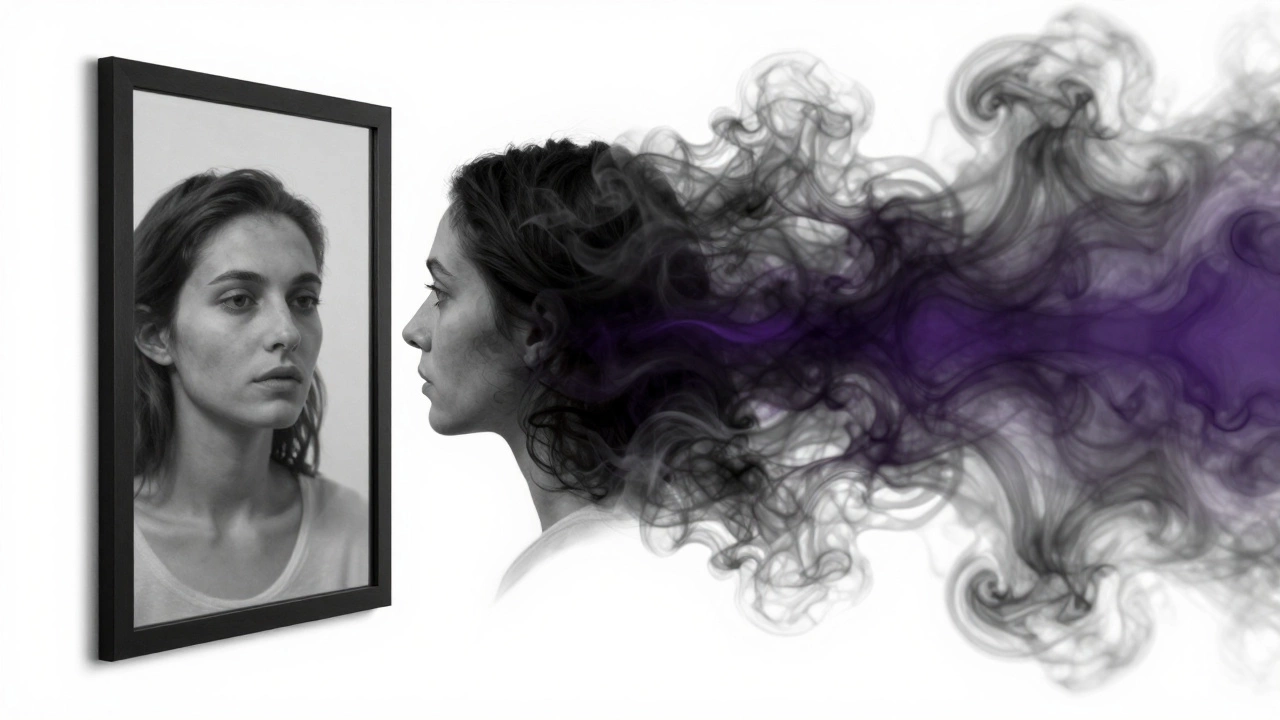
Carl Jung, the famous psychiatrist, talked a lot about the Shadow Archetype. This is the part of our personality that we keep hidden-the anger, the jealousy, or the desires we feel are "unacceptable." A mirror is the perfect symbol for the Shadow. When we look into a mirror, we see the persona-the mask we show the world. But the meaning of the mirror is often about what is not visible.
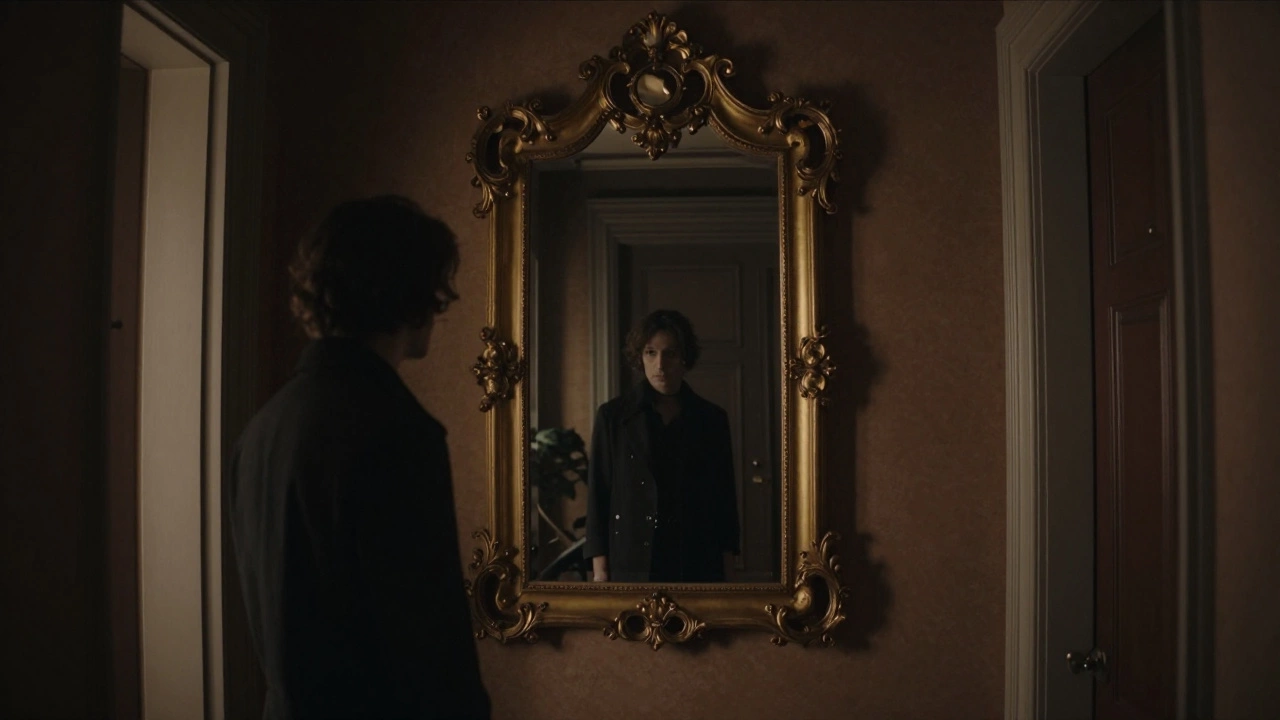
Have you ever noticed how some people hate looking in mirrors? It is often not about vanity or lack thereof. Sometimes, it is a subconscious avoidance of the Shadow. Looking directly at oneself forces a confrontation with reality. You cannot lie to a mirror. This is why mirrors are so often used in movies to show a character's mental breakdown; they are the only place where the character can see their true, unfiltered self.
Mirrors in Art and Literature
Writers and painters have used mirrors to play with the idea of perspective for centuries. Think of Lewis Carroll and the Looking-Glass world. By stepping through the mirror, Alice enters a world where everything is reversed. This serves as a metaphor for how our perceptions can flip our understanding of truth. If the mirror world is the reverse of our own, does that mean our world is the reverse of a deeper truth?
In painting, the use of mirrors often signals a desire for depth. When an artist paints a mirror within a painting, they are creating a "picture within a picture." This forces the viewer to question which version of reality is more accurate: the one we see directly, or the one reflected. It challenges the notion of a single, objective truth.

Practical Ways to Use Mirror Symbolism for Wellness
You don't have to be a mystic to use the power of mirrors. In modern wellness, Mirror Work is a technique used to build self-esteem. Instead of using the mirror to criticize a pimple or a wrinkle, you look into your own eyes and speak affirmations. It sounds cheesy, but by consciously changing the dialogue you have with your reflection, you are essentially retraining your brain's relationship with your identity.
If you feel a room has "heavy" or stagnant energy, try changing where your mirrors are placed. According to Feng Shui, a mirror facing the front door can push energy back out of the house. Instead, placing a mirror in a dining area to reflect a bowl of fruit is said to symbolically double the abundance in the home. Whether you believe in the energy or not, the act of intentionally placing mirrors changes how you perceive the flow of your living space.
Why do some people feel uneasy looking in mirrors at night?
This is often due to the Troxler Effect, where low light causes the brain to misinterpret visual data, making your reflection appear distorted. Additionally, cultural narratives about ghosts and portals in mirrors prime our brains to feel anxious in these specific conditions.
Does breaking a mirror actually bring bad luck?
There is no scientific evidence for this. The superstition stems from the ancient Roman belief that a mirror captured the soul. Breaking the glass was thought to damage that soul, leading to seven years of misfortune (the time Romans believed it took for the body to fully regenerate).
What is the difference between a physical mirror and a metaphorical mirror?
A physical mirror reflects light and images. A metaphorical mirror refers to people, situations, or art that reflects our own internal beliefs and behaviors back to us, allowing us to see patterns in our lives that we otherwise wouldn't notice.
How can mirrors be used to make a room feel larger?
Mirrors create a visual illusion of depth by reflecting the opposite side of the room. Placing a large mirror opposite a window is the most effective method, as it bounces natural light throughout the space and makes the walls feel as if they are receding.
Can mirrors really protect against negative energy?
In traditions like Vastu Shastra or Feng Shui, mirrors are believed to redirect energy (Qi). While not scientifically proven, the psychological effect of feeling "protected" by a symbolic object can reduce stress and increase a person's sense of security in their home.
Next Steps for Exploring Your Reflection
If you're curious about how mirrors affect your mood, try a simple experiment. For one week, stop using mirrors for self-criticism. Instead, every time you pass one, find one thing about your reflection that looks strong or kind. You'll likely find that the "hidden meaning" of the mirror shifts from one of judgment to one of support.
For those interested in the spiritual side, you might want to research the history of scrying-the practice of looking into a mirror or crystal ball to receive visions. While it may seem like fantasy, it reveals a lot about the human desire to find answers in the depths of the unknown.