What Color Curtains Make a Room Cooler? The Science of Heat and Light
 Jul, 13 2026
Window Cooling Efficiency Calculator
Enter your current room conditions and window treatment details to estimate how much cooler your room can get.
Your results will appear here.
Recommendations
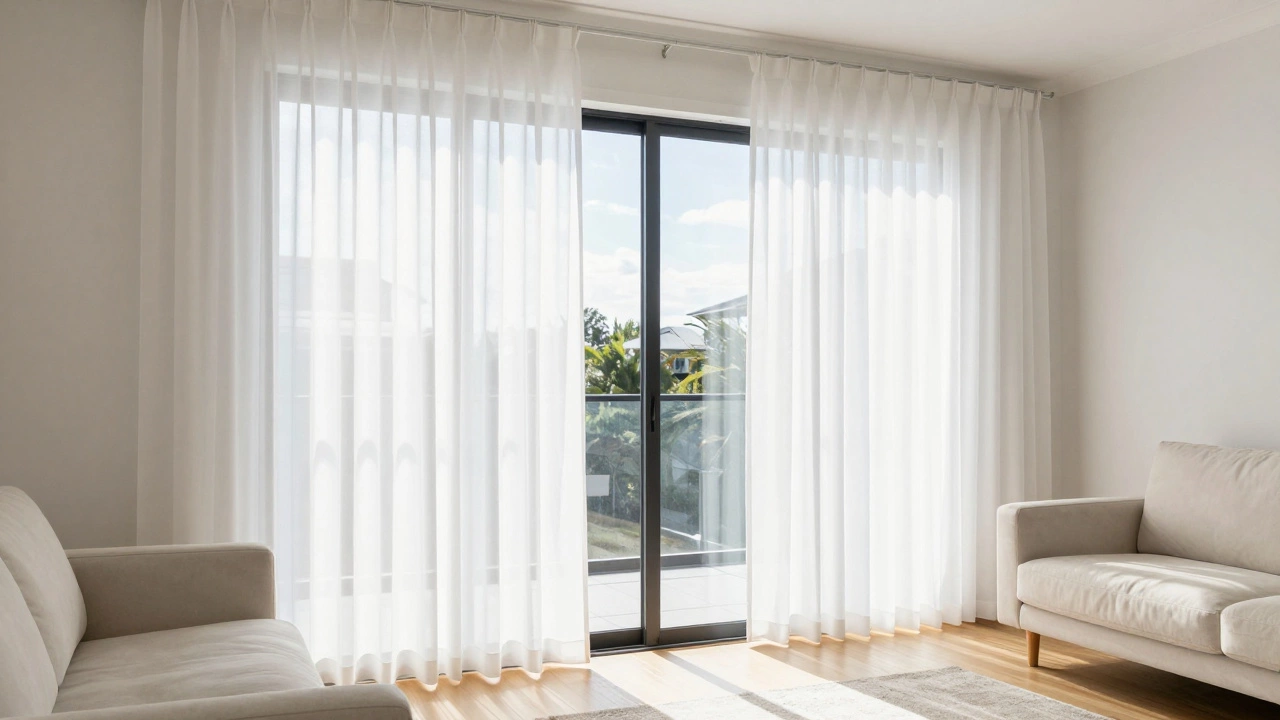
It’s mid-January here in Auckland, and the sun is beating down with that specific intensity that makes you want to retreat into a cave. You’ve closed the blinds, but the room still feels like an oven by early afternoon. It turns out, the color of your curtains isn’t just a design choice; it’s a functional tool for temperature control. If you’re wondering what color curtains make a room cooler, the short answer is white or very light pastels. But the real secret lies in how those colors interact with sunlight and the fabric behind them.
We often think about curtains as decorative drapes, but they are actually part of your home’s thermal envelope. When sunlight hits a window, it doesn’t just stop at the glass. Short-wave solar radiation passes through easily, heating up the furniture, floors, and air inside. This is called the greenhouse effect. Your job is to intercept that energy before it settles into your living space. The color you choose determines whether that energy is absorbed and radiated inward or reflected back outside.
The Physics of Light and Heat Absorption
To understand why color matters, we have to look at basic physics. Dark colors absorb light wavelengths, converting that energy into heat. Think about wearing a black t-shirt on a sunny day versus a white one. The black shirt gets hot because it absorbs almost all visible light. A white shirt reflects most of that light away from your body. The same principle applies to your windows.
Why do dark curtains get hot?
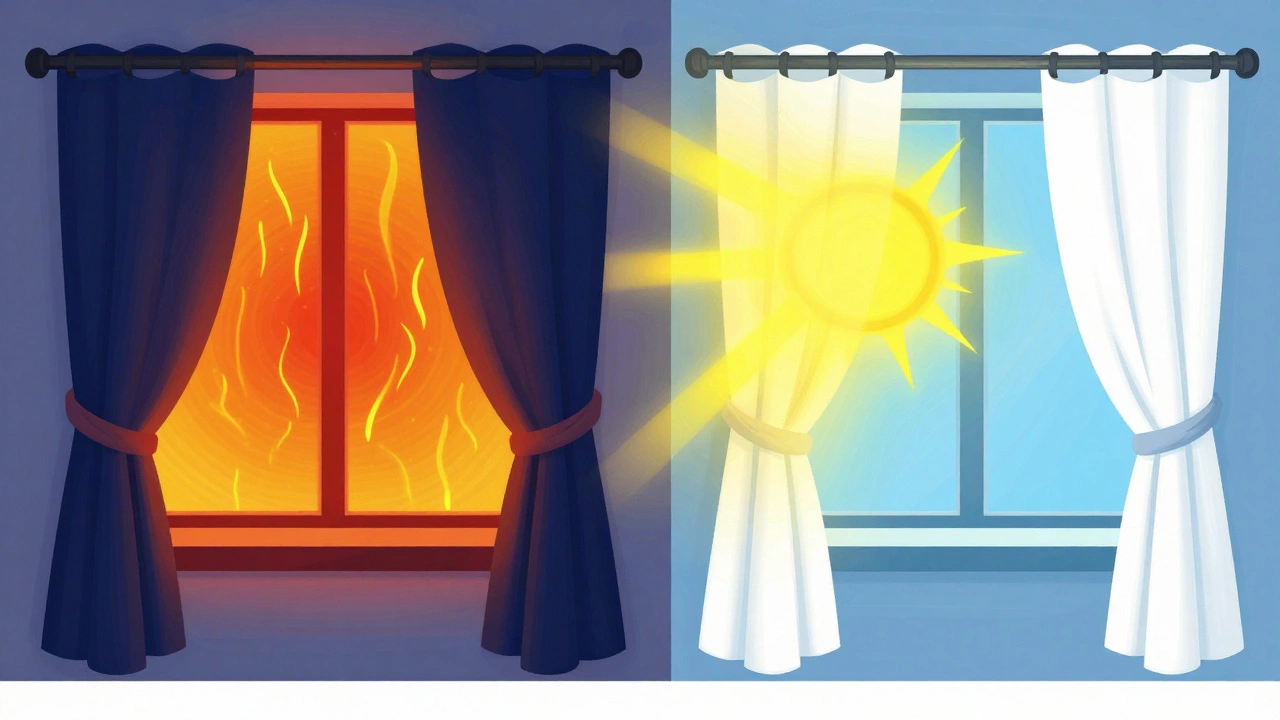
Dark fabrics, such as navy blue, charcoal gray, or deep red, have low albedo, meaning they reflect very little light. Instead, they absorb the solar radiation that passes through the window. This absorbed energy converts to thermal heat, which is then radiated into the room, raising the ambient temperature.
Light colors, specifically white, cream, and pale yellow, have high albedo. They reflect the majority of incoming solar radiation. If you hang white curtains on the side of the window facing the sun, they bounce the heat back out before it can warm up your sofa or carpet. This simple act of reflection can lower the temperature of a room significantly during peak sunlight hours.
However, there is a catch. If you put white curtains on the *inside* of the window frame, the heat has already entered the room. The white fabric might reflect some light around the room, creating glare, but it won’t stop the heat buildup. Placement is just as critical as color.
Best Colors for Cooling Your Home
When shopping for cooling solutions, prioritize these hues:
- White: The absolute best performer. Pure white reflects the broadest spectrum of light. Look for bright, crisp whites rather than off-whites if maximum reflection is your goal.
- Pastel Yellows and Beiges: These are close seconds. They still reflect a significant amount of light while adding a touch of warmth to the decor without absorbing much heat.
- Light Grays: A modern favorite. Light silver or ash gray works well, provided it stays on the lighter end of the spectrum. Darker grays will start to absorb heat.
Avoid earth tones like terracotta, olive green, or navy blue if your primary goal is keeping the room cool. These colors are beautiful, but they act like sponges for solar energy. In a north-facing room (in the Southern Hemisphere) or south-facing room (in the Northern Hemisphere), these dark tones will turn your window area into a heat radiator.
The Material Matters More Than You Think
You can buy the whitest curtains on the market, but if they are made of thin, sheer cotton, they won’t help much. The fabric density and weave play a huge role in thermal regulation. We need to talk about two types of materials: reflective linings and dense weaves.
Thermal Blackout Linings are specialized backing materials attached to curtains that block light and insulate against heat transfer. These linings are usually white on the front (facing the room) and black or silver on the back (facing the window). The black side absorbs any stray light that penetrates the main fabric, preventing it from bouncing back into the room, while the white side reflects interior light. More importantly, the lining creates an air pocket between the curtain and the glass. This trapped air acts as an insulator, similar to how double-glazed windows work.
If you don’t have lined curtains, consider the weight of the fabric. Heavy velvets and thick wool blends provide better insulation than light linens or silks. However, heavy fabrics also trap heat if not managed correctly. During the day, keep them closed to block the sun. At night, open them to let the stored heat escape if you’re trying to cool the house down, or keep them closed to retain warmth if you’re heating it.
Placement: The Secret Weapon
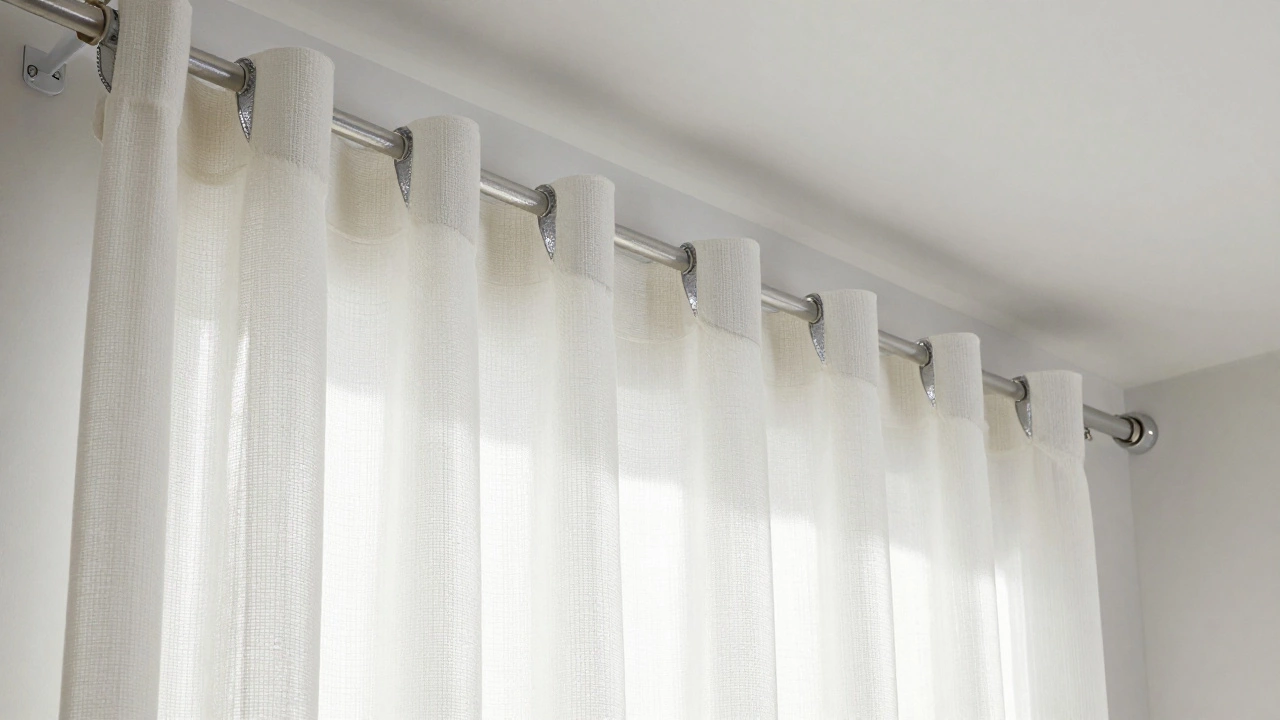
Where you hang the curtain rod changes everything. Most people hang rods directly above the window frame. For cooling purposes, this is often too late. By the time the light hits the curtain, it has already passed through the glass.
For maximum cooling efficiency, install your curtain track or rod as close to the ceiling and as wide as possible, covering the entire window opening including the wall space beside it. This prevents "edge leakage," where sunlight sneaks in from the sides and heats up the walls. Walls absorb heat and re-radiate it slowly throughout the day, making your AC work harder.
If you really want to beat the heat, consider exterior shading. Outdoor awnings, shutters, or even external blinds are far more effective than interior curtains. They stop the sun before it hits the glass. But since we are talking about curtains, remember: the closer the curtain is to the glass, the less air gap there is to insulate. The ideal setup is a tight seal around the window perimeter with a slight gap between the curtain and the glass to allow for airflow if needed, though for pure heat blocking, a flush fit against the glass with a reflective lining is best.
Natural Alternatives to Fabric
Sometimes, fabric curtains aren’t enough, or you prefer a different aesthetic. There are other window treatments that excel at cooling:
- Bamboo Blinds: Natural bamboo slats can be adjusted to angle sunlight away from the floor. They provide good shade but less insulation than heavy fabric.
- Roman Shades: These fold up neatly and can be made with thermal linings. They offer a clean look and excellent coverage when lowered.
- Reflective Window Film: This is a non-curtain option, but worth mentioning. Applying a reflective film to the glass itself blocks UV rays and infrared heat before they enter the room. It works in tandem with light-colored curtains for maximum effect.
Maintaining Your Cooling Setup
Dust and dirt reduce the effectiveness of your curtains. A layer of grime on a white curtain reduces its albedo, making it absorb more heat over time. Wash your light-colored curtains regularly according to the care label. For blackout linings, check for tears or peeling, as these compromises let heat leak through.
In summer, develop a routine. Close the curtains as soon as the sun hits the window. Open them at night when the outside air is cooler to flush out the accumulated heat. This daily cycle leverages your window treatments as active climate control tools rather than passive decor.
Summary of Best Practices
| Feature | Recommendation | Reason |
|---|---|---|
| Color | White or Pastel | Reflects solar radiation instead of absorbing it |
| Lining | Thermal Blackout | Creates insulating air pocket and blocks light penetration |
| Fabric Weight | Medium to Heavy | Denser weave provides better insulation than sheer fabrics |
| Placement | Close to Ceiling/Wall | Prevents edge leakage and maximizes coverage area |
| Cleanliness | Regular Washing | Dust reduces reflectivity and increases heat absorption |
Choosing the right curtains is a small investment that pays off in comfort and energy bills. By selecting white or light-colored fabrics with proper thermal linings and installing them correctly, you can transform your windows from heat traps into cooling shields. It’s not magic; it’s just smart physics applied to your home decor.
Do white curtains keep a room cooler than dark ones?
Yes. White curtains reflect sunlight and heat away from the room, whereas dark curtains absorb solar energy and radiate it inward, raising the room's temperature.
Are blackout curtains good for keeping rooms cool?
Yes, especially if they have a white reflective lining on the side facing the window. The lining bounces heat back out, while the dense fabric prevents heat transfer through conduction.
Should I leave curtains open or closed during the day in summer?
Keep them closed during the hottest parts of the day, particularly when direct sunlight hits the windows. Open them at night to allow cooler air to circulate and release trapped heat.
Does the fabric type affect how cool a room stays?
Absolutely. Thick, tightly woven fabrics like velvet or heavy cotton with thermal linings provide better insulation than thin, sheer materials like lace or chiffon, which allow heat to pass through easily.
Can I use existing dark curtains to cool a room?
Not effectively. While closing them blocks some light, dark fabrics will absorb heat and warm up, eventually radiating that heat into the room. Adding a white reflective liner behind them can help mitigate this issue.
How high should I hang curtains for maximum cooling?
Hang the rod as close to the ceiling as possible and extend it beyond the window frame on both sides. This minimizes light leakage from the edges and covers more wall surface, reducing overall heat gain.
Do vertical blinds work better than curtains for cooling?
Vertical blinds can be effective if angled correctly to deflect sunlight, but they often have gaps between slats that let heat in. Solid panel curtains with thermal linings generally provide superior insulation and light blocking.
Is there a difference between east-facing and west-facing window curtains?
West-facing windows receive intense afternoon sun, so they benefit most from high-reflectivity white curtains and thermal linings. East-facing windows get morning sun, which is less intense, so standard light-colored curtains may suffice.
Can painting the window frame help with cooling?
Painting the interior window frame white can help reflect some light, but the impact is minimal compared to using reflective curtains. Focus on the curtain color and lining for significant temperature reduction.
How often should I wash cooling curtains?
Wash them every 3-6 months, or more frequently if you live in a dusty area. Dust accumulation reduces the reflective properties of light-colored fabrics, diminishing their cooling effectiveness.