What happens to dementia patients with no money?
 Mar, 22 2026
Dementia Care Cost Calculator
Input Your Situation
Care Eligibility Results
Key Program
Asset Requirements
Important Notes
Warning:
When someone with dementia has no money, the system doesn’t break down-it adapts. But not always gracefully. In places like New Zealand, the U.S., the U.K., and Canada, families often assume care will be covered by insurance or government programs. But dementia isn’t just a medical condition. It’s a long-term crisis that eats through savings, patience, and sometimes, hope. And when the bank account hits zero, what’s left?
Who pays when there’s nothing left?
Most people think Medicare or Medicaid covers everything. It doesn’t. In the U.S., Medicare only pays for short-term skilled nursing after a hospital stay. Long-term care-like daily help with bathing, dressing, or eating-isn’t covered. Medicaid steps in, but only if you’ve spent down nearly all your assets. That means selling your home, cashing out retirement accounts, and sometimes even giving up your car. In New Zealand, the government provides subsidized residential care through the Accommodation Supplement and Disability Support Services, but eligibility requires a full financial assessment. If you own property, it might be assessed as an asset. If you’re single and have no family to help, you’re placed on a waiting list. And those lists? They’re long.
What does daily life look like?
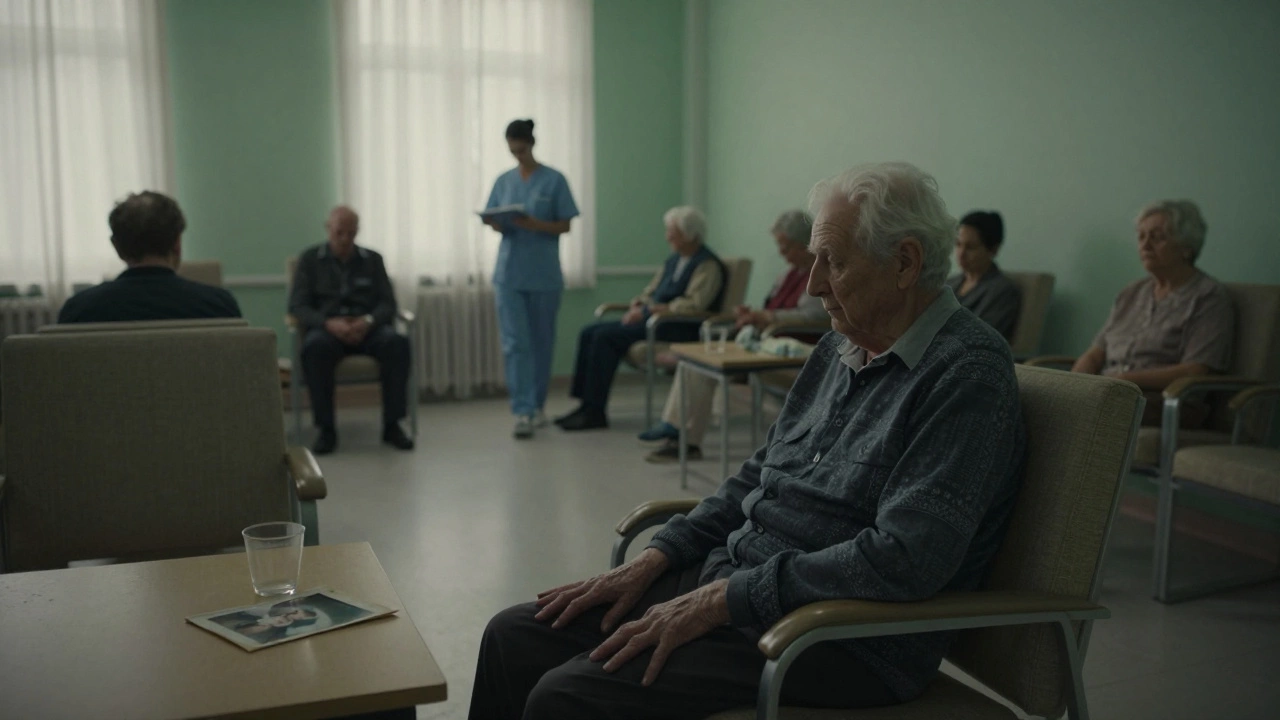
Imagine waking up in a small room with a bed, a chair, and a TV that doesn’t work. The walls are pale green. The curtains are thin. A caregiver comes in every few hours to help you eat, change your clothes, or use the toilet. You don’t remember your name anymore. You don’t recognize your daughter’s voice on the phone. You’re not alone-there are others like you. Some have families who visit once a month. Others don’t. The staff tries, but they’re stretched thin. One nurse might be responsible for 15 people. Some days, someone doesn’t get washed. Another day, someone gets the wrong medication. It’s not malice. It’s lack of resources.
The hidden cost of care
Even when care is technically free, there are costs you can’t see. Families often pay for extra blankets, special food, toiletries, or transport to visit. These aren’t covered. A simple change of mattress to prevent bedsores? That’s out-of-pocket. A communication board to help someone who can’t speak? That’s not on the government list. In many facilities, families are asked to bring in personal items-photos, favorite sweaters, cushions-to make the space feel like home. Without them, the room feels clinical. Cold. Like a warehouse for forgotten people.

What happens to people with no family?
They become someone else’s responsibility. In New Zealand, a Public Trustee or a community organization may be appointed to manage their finances and make care decisions. In the U.S., it’s often a court-appointed guardian. These people aren’t relatives. They’re bureaucrats. They don’t know your coffee preference. They don’t know you used to sing in a choir. They don’t know you hated bananas. But they decide where you live, what you eat, and who visits you. Sometimes, they do it well. Sometimes, they don’t. And if you have no money, you have no choice in the matter.
Why cushions matter
It sounds small, but cushions are a quiet symbol of dignity. A person with dementia who can’t sit upright for long needs support. A cushion keeps them from sliding off a chair. It prevents pressure sores. It makes sitting in a common room feel less like a chore and more like a moment of peace. But when money runs out, cushions aren’t prioritized. The facility buys the cheapest foam. The color fades. The fabric tears. No one replaces it. And yet, a good cushion can mean the difference between comfort and pain. Between feeling seen and feeling invisible.
How do you get help?
Start with what’s already available. In New Zealand, contact Age Concern or Alzheimer’s New Zealand. They help navigate funding, apply for subsidies, and connect families with local support groups. In the U.S., contact your local Area Agency on Aging. In the U.K., it’s Social Services or the NHS Continuing Healthcare team. Don’t wait until you’re desperate. The process takes months. You need medical reports, financial statements, and sometimes a lawyer. If you’re overwhelmed, ask for help. A social worker, a church group, a neighbor-they can file paperwork for you. You don’t have to do it alone.
What’s missing?
There’s no national system that treats dementia like a chronic illness with guaranteed, humane care. Instead, we rely on patchwork programs, charitable donations, and family sacrifice. The result? People slip through. They’re moved from one facility to another because funding ran out. They’re left in hospital beds for weeks because there’s no nursing home space. They’re forgotten because no one has the time or money to fight for them. And when you have no money, your voice is the first thing to disappear.
Can this change?
Yes-but not without pressure. Countries that treat dementia care as a public health priority-like the Netherlands or Japan-have lower rates of institutional neglect. They train staff better. They fund more home-based care. They pay caregivers a living wage. They include dementia in universal healthcare. New Zealand has made progress with its Dementia Strategy 2020-2025, but funding still falls short. The gap between policy and practice is wide. And until we treat dementia care as a right, not a privilege, people with no money will keep being treated like an afterthought.
What you can do
Donate to local dementia charities. Volunteer at a care home. Advocate for policy changes. Write to your local representative. Ask: Why do we let people with no money lose their dignity? Why do we wait until someone’s gone to notice they were gone already? Small actions add up. A single cushion. A weekly visit. A letter to a politician. These aren’t just kindnesses. They’re acts of resistance.
Can dementia patients get free care if they have no money?
Yes, but only after meeting strict eligibility rules. In New Zealand, government-subsidized residential care is available through the Accommodation Supplement, but you must first exhaust personal assets. In the U.S., Medicaid covers long-term care only after spending down assets to near-zero. The process can take months and requires detailed documentation.
What happens if a dementia patient has no family?
A court or government agency appoints a guardian or trustee to make decisions. This person handles finances, medical choices, and living arrangements. They’re not family-they’re often overworked public servants. Personal preferences (like favorite foods or music) are rarely considered. Without family, the risk of isolation and neglect increases significantly.
Do care homes provide cushions for dementia patients?
Some do, but not always. Most facilities provide basic seating with minimal padding. Specialized cushions for pressure relief or posture support are often considered "optional" and aren’t covered by funding. Families are frequently asked to bring their own. A good cushion can prevent painful sores and improve comfort, but many patients go without because their families can’t afford it.
Is dementia care covered by insurance?
Private health insurance rarely covers long-term dementia care. Medicare in the U.S. only pays for short-term rehab after a hospital stay. Long-term daily assistance-like help with eating, bathing, or mobility-is not included. Some long-term care insurance policies exist, but they require years of payments and strict eligibility. Most people don’t have them.
Can dementia patients stay at home if they have no money?
It’s possible, but extremely difficult. Home care services are often underfunded and have long waiting lists. In New Zealand, the government offers some home-based support, but hours are limited-sometimes just 2-3 hours per week. Without family or paid help, many patients are forced into institutional care simply because no one can provide the 24/7 supervision dementia requires.