What Is Another Name for Cups and Plates? Common Terms for Dinnerware
 Dec, 4 2025
Dinnerware Quantity Calculator
Estimate Your Dinnerware Needs
Calculate how many pieces you need based on household size and usage patterns
Your Dinnerware Recommendations
Standard set: 4 dinner plates + 4 salad plates + 4 bowls + 4 cups + 4 saucers (16 pieces)
Recommended for households: 1-2 extra pieces per person
When you hear the words cups and plates, you probably picture your morning coffee mug and your dinner plate. But if you’re shopping for them, browsing a catalog, or talking to a store clerk, you won’t often hear those two words used together. There’s a simpler, more accurate term that covers both - and a lot more.
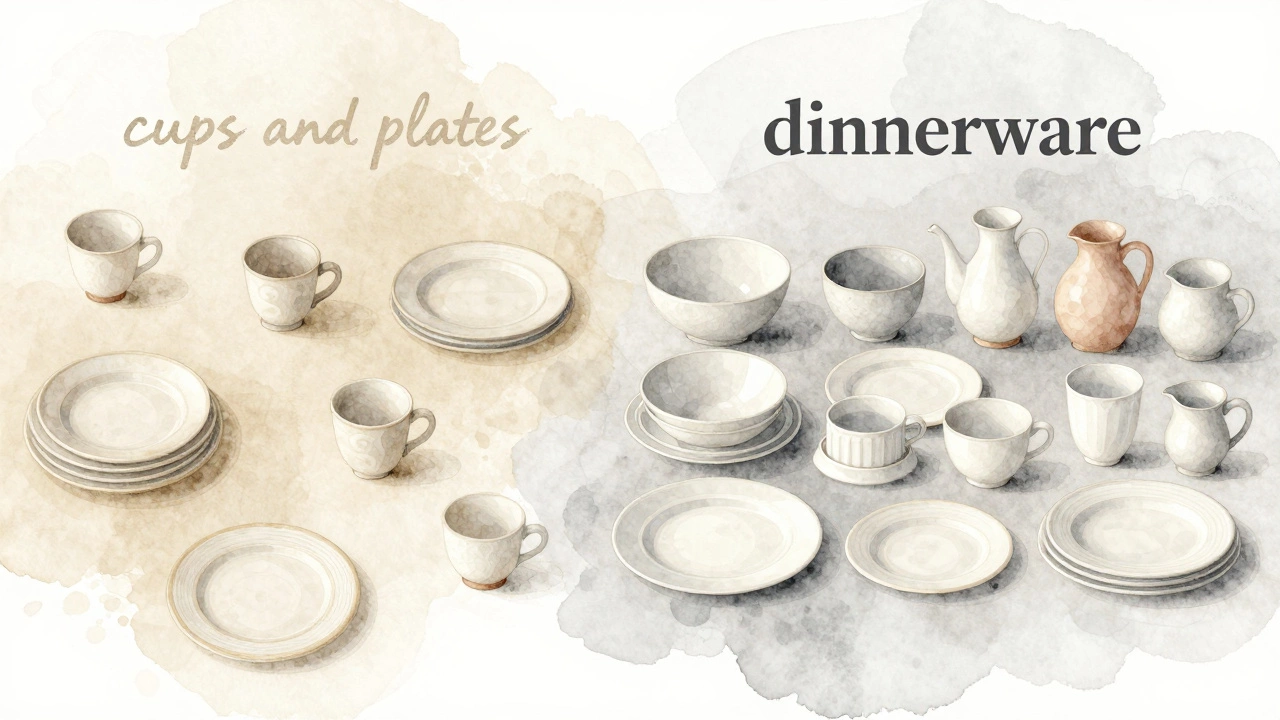
Dinnerware is the real name for cups and plates
The most common and correct term for cups, plates, bowls, and saucers is dinnerware. It’s not just a fancy word - it’s the industry standard. Whether you’re buying at a store, ordering online, or reading a product description, you’ll see dinnerware used to describe everything you eat and drink from at the table.
Think of it this way: your dinnerware set includes the plates you serve food on, the bowls for soup or cereal, the cups for tea or coffee, and sometimes even the saucers that go under them. It doesn’t include forks or knives - those are flatware. It doesn’t include glasses - those are drinkware. Dinnerware is specifically the ceramic, porcelain, stoneware, or melamine pieces you use to hold food and drink.
Why people get confused about the terms
Many people say “plates and cups” because that’s how they think about them in daily life. You grab a plate, you pick up a cup. But when you’re buying them as a set, retailers group them under one umbrella term. You don’t see a shelf labeled “Cups and Plates.” You see “Dinnerware Sets.”
Another reason for confusion? The word tableware is often used interchangeably. Tableware is broader - it includes dinnerware, flatware (forks, knives, spoons), and drinkware (glasses, mugs, tumblers). So if someone says “tableware,” they might mean the whole setup. But if they say “dinnerware,” they’re only talking about the plates, bowls, and cups.
What’s included in a typical dinnerware set
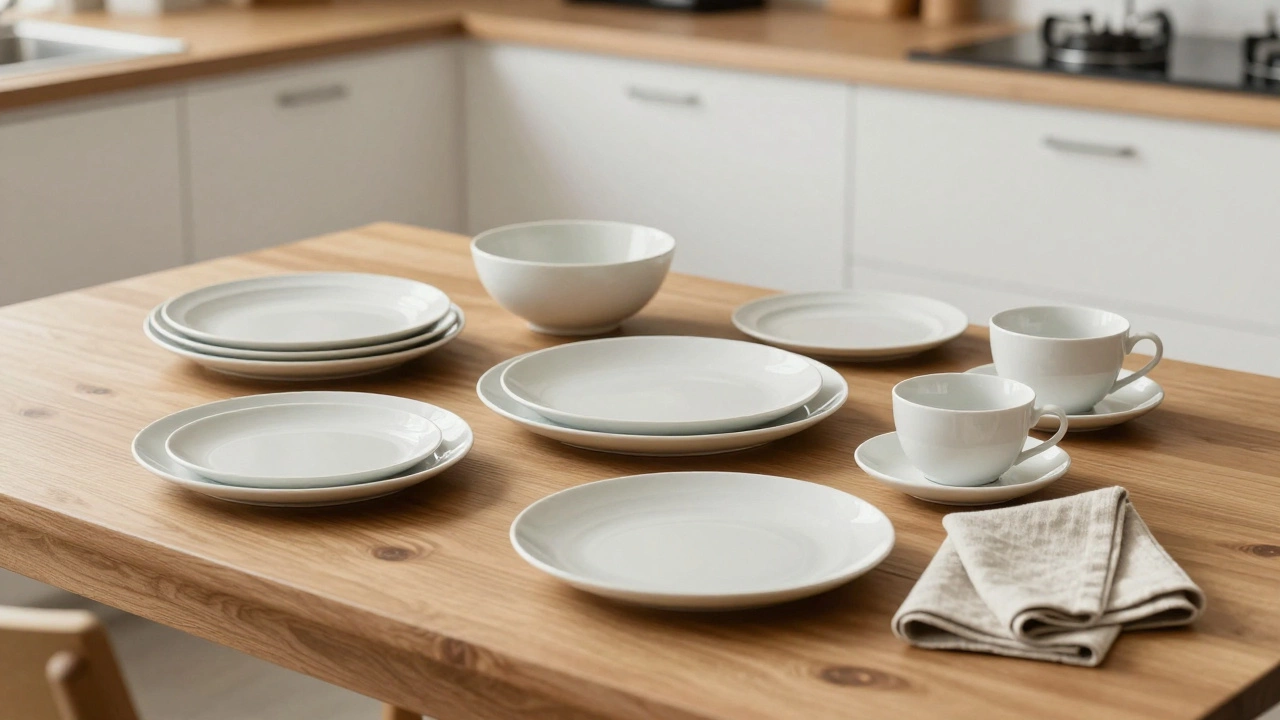
A standard dinnerware set for four people usually contains:
- 4 dinner plates (10-11 inches in diameter)
- 4 salad or dessert plates (8-9 inches)
- 4 soup or cereal bowls (6-7 inches)
- 4 coffee or tea cups
- 4 saucers (for the cups)
Some sets include serving pieces like a large platter, a gravy boat, or a punch bowl. These aren’t part of the personal dinnerware, but they’re often sold as part of the same collection.
Materials vary: porcelain is common for formal sets, stoneware is popular for everyday use because it’s durable, and melamine is used for outdoor dining or kids’ tables because it won’t break.
Dishware vs. dinnerware - is there a difference?
You might also hear the word dishware. It’s a more casual term, often used in homes or in regions like the U.S. Midwest or South. In many cases, “dishware” and “dinnerware” mean the same thing. But technically, “dishware” can refer to any dish - including mixing bowls, baking dishes, or even storage containers. So if you’re shopping for a new set to use at the table, “dinnerware” is the safer term.
For example, if you’re looking at a product on Amazon or a New Zealand store like The Warehouse, search for “dinnerware set” and you’ll get the right results. Search for “dishware,” and you might end up with mixing bowls, casserole dishes, or plastic containers - things you don’t use for serving meals at the table.
What about drinkware and flatware?
To avoid confusion, here’s how the main categories break down:
- Dinnerware: Plates, bowls, cups, saucers - anything that holds food or drink at the table.
- Drinkware: Glasses, mugs, tumblers, wine glasses - only for beverages.
- Flatware: Forks, knives, spoons - the utensils you eat with.
These three groups are often sold separately. But many stores now offer “complete table settings” that bundle all three. If you’re furnishing a new home or hosting a dinner party, knowing the difference helps you buy exactly what you need - without overpaying for stuff you already have.
Why this matters when you’re shopping
If you’re replacing old cups and plates, or setting up your first apartment, using the right term saves time and frustration. Try searching for “cups and plates” online - you’ll get scattered results. Some listings will show only cups. Others will show only plates. You’ll have to click through dozens of pages to find matching sets.
But search for “dinnerware set 4-piece” or “porcelain dinnerware set with cups,” and you’ll instantly see coordinated collections. Retailers like IKEA, Kmart, and local New Zealand brands like Melrose & Co. organize their kitchen sections this way. They know people want matching pieces - and they use the right terminology to help you find them.
Even in secondhand shops or markets, people who sell tableware will label items as “dinnerware” or “china.” You’ll rarely see “cups and plates” written on a sign - unless it’s a casual garage sale.
Real-world examples from New Zealand homes
In Auckland, you’ll see a lot of stoneware dinnerware sets in homes. They’re sturdy, dishwasher-safe, and handle daily use well. Families with kids often choose melamine dinnerware for outdoor picnics or beach trips - it’s unbreakable and lightweight. Meanwhile, older generations might still use fine porcelain sets for Sunday dinners or holidays.
At a recent house clearance in Ponsonby, I saw a full 12-piece dinnerware set from the 1980s - all matching plates, bowls, and cups in a floral pattern. The seller didn’t call it “cups and plates.” She called it “the china.” That’s another common term - especially for older, more formal sets made of porcelain or bone china.
What to look for when buying dinnerware
When you’re ready to buy, here’s what to check:
- Material: Porcelain is elegant but fragile. Stoneware is tough and great for everyday use. Melamine is ideal for kids or outdoor dining.
- Number of pieces: A 4-piece set usually means one of each: dinner plate, salad plate, bowl, and cup. Look for 16-piece or 20-piece sets if you entertain often.
- Dishwasher and microwave safe: Always check. Some glazes or metallic trim aren’t safe for microwaves.
- Style: Neutral colors like white, grey, or cream are timeless and mix well with any kitchen. Patterns are fun but harder to replace if one piece breaks.
Most good dinnerware sets come with a warranty or guarantee against chipping - especially if they’re from reputable brands like Denby, Wedgwood, or local makers like Otago Pottery.
Final takeaway
Cups and plates? They’re part of dinnerware. That’s the term you need to know. Whether you’re replacing broken pieces, upgrading your kitchen, or setting your first table, using the right word makes shopping easier and more efficient. You’ll find better matches, save money, and avoid the confusion of mismatched sets.
Next time you’re in a store, look for the sign that says “Dinnerware.” That’s where your cups, plates, and bowls all live - together, in one place.
What’s the difference between dinnerware and tableware?
Tableware includes everything you use on the table: dinnerware (plates, bowls, cups), flatware (forks, knives, spoons), and drinkware (glasses, mugs). Dinnerware is just the food-holding pieces - plates, bowls, and cups. So all dinnerware is tableware, but not all tableware is dinnerware.
Can I call cups and plates dishware?
Yes, in casual conversation, many people use “dishware” to mean cups and plates. But technically, dishware can also include baking dishes, mixing bowls, and storage containers. If you’re shopping, “dinnerware” is more precise and will give you better search results.
Do I need saucers with my cups?
Saucers aren’t always necessary today, especially with travel mugs and insulated cups. But if you’re using traditional teacups or fine china, saucers help catch drips and add a touch of formality. Most dinnerware sets include them - and they’re easy to replace if one breaks.
What’s the best material for everyday dinnerware?
Stoneware is the top choice for daily use. It’s durable, microwave-safe, dishwasher-safe, and resists chipping better than porcelain. It’s also affordable and comes in lots of colors and finishes. If you have young kids or a busy household, stoneware is your best bet.
Why do some dinnerware sets have different sized plates?
Different plate sizes serve different purposes. A dinner plate (10-11 inches) is for main courses. A salad or dessert plate (8-9 inches) is for appetizers or sweets. Having both lets you layer meals neatly without overloading one plate. It also makes the table look more intentional and polished.