What is Mirrors on Netflix About? Plot, Cast, and Ending Explained
 Jul, 2 2026
Mirrors Ending Analyzer
Analyze Your Interpretation
The ending of Mirrors is famously ambiguous. Select your interpretation for each key element to see what theory best matches your viewing experience.
Your Analysis Result
Have you ever stared into a mirror and felt like something was staring back? That unsettling feeling is exactly what Mirrors is a 2008 supernatural horror film directed by Alexandre Aja that explores the terrifying idea that mirrors are portals to another dimension. Based on the 2005 Spanish film Mirrors (originally titled Carriers, but more accurately adapted from Cracks or specifically Mirrors / Cuervos? No, it's based on Mirrors (2005) also known as Cuervos in some regions, but primarily credited as Mirrors), the American remake starring Kiefer Sutherland brings a fresh layer of dread to the classic horror trope.
If you clicked this title, you probably want to know if the movie is worth your time, what actually happens in the plot without getting spoiled immediately, and how the confusing ending ties everything together. Let’s break down the story, the characters, and the lore behind the glass so you can decide if this is the kind of scare you’re looking for.
The Premise: Why Are Mirrors Dangerous?
The core concept of Mirrors is that reflections are not just light bouncing off a surface, but actual gateways to a dark parallel world. In the film, these dimensions are connected, and malevolent entities can cross over through reflective surfaces. This isn’t just about seeing your reflection; it’s about the reflection having its own will, its own malice, and the ability to pull you into its realm.
This idea taps into a primal fear called specular anxiety is the fear of mirrors or one's own reflection, often rooted in the uncanny valley effect where the reflection behaves slightly differently than expected. The movie leans heavily into this psychological discomfort. Every time a character looks into a window, a spoon, or a polished floor, the tension spikes because the audience knows the rules: if you see something wrong in the reflection, it’s already too late.
Plot Summary: Ben Carson’s Nightmares Begin
The story follows Ben Carson is a former police officer played by Kiefer Sutherland who suffers from severe PTSD after witnessing his wife and daughter die in a car accident caused by his own negligence. Haunted by guilt and recurring nightmares, Ben takes a night security job at an abandoned department store called Benedict’s Department Store. He thinks the isolation will help him cope with his trauma, but he soon discovers the store holds a much darker secret.
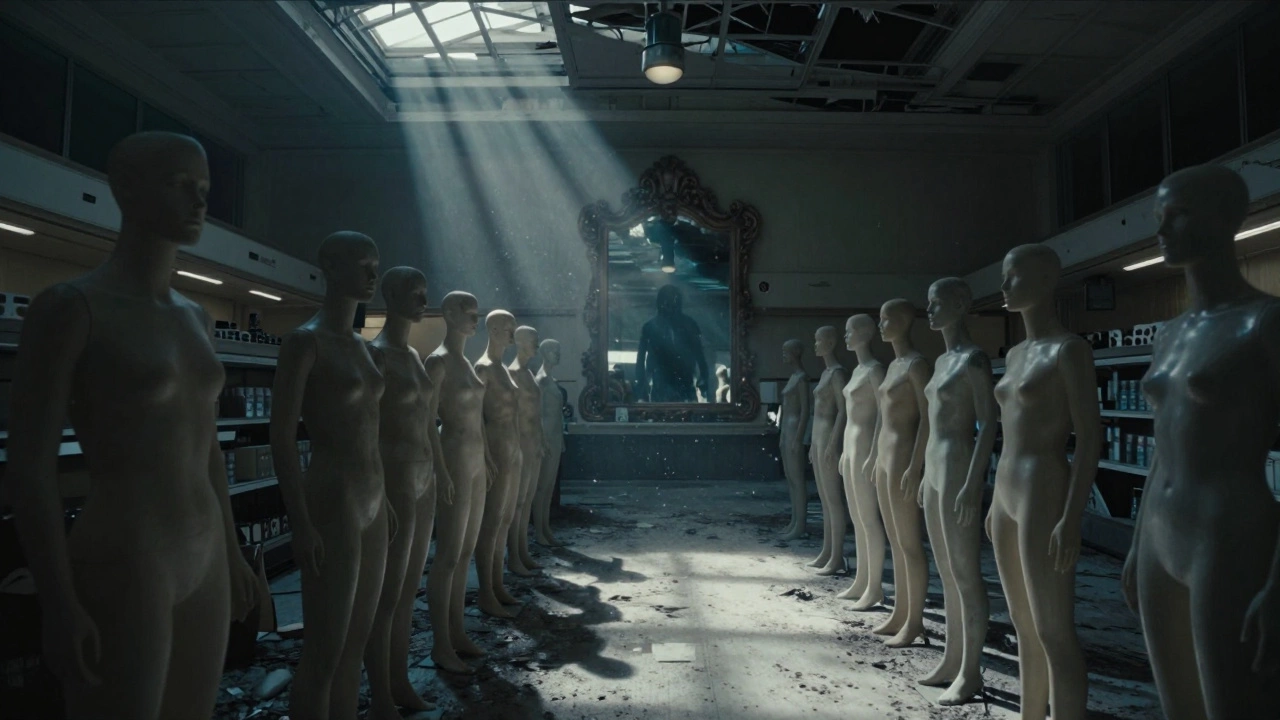
On his first night, Ben encounters strange occurrences. Mannequins seem to move when he isn’t looking. Reflections in the store’s many mirrors show things that aren’t there-shadowy figures, distorted faces, and glimpses of past tragedies. As he investigates, he learns that the store was built on land with a grim history, and the mirrors themselves were crafted using methods that trapped evil spirits within the glass decades ago.
- Isolation: Ben works alone at night, amplifying the sense of vulnerability.
- Paranoia: His PTSD makes it hard to distinguish between hallucinations and real supernatural events.
- Discovery: He finds journals and records detailing previous employees who disappeared or died under mysterious circumstances.
The Antagonist: Who Is Behind the Glass?
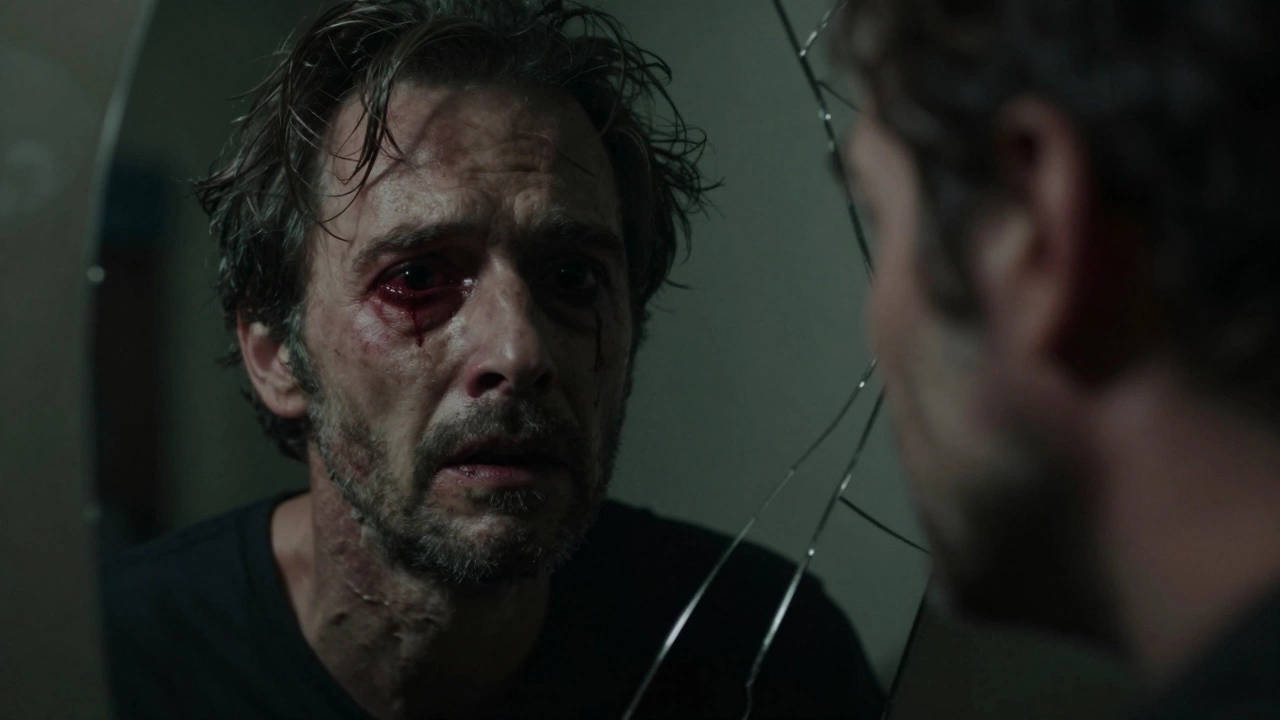
The main villain isn’t a person you can shoot or run from. It’s an ancient, demonic entity that has been trapped in the mirrors for centuries. This entity feeds on human misery and uses the reflections to lure victims. It doesn’t just want to kill them; it wants to replace them. By pulling people into the mirror world, it can wear their skin and walk among the living.
The entity manipulates Ben’s deepest fears. It shows him visions of his dead family, twisting his grief into a tool for possession. This psychological warfare is what makes Alexandre Aja's direction in Mirrors stands out because it blends visceral jump scares with deep psychological horror, forcing the protagonist to confront his guilt while fighting a literal demon. The director uses tight close-ups and shaky camera work to make the viewer feel Ben’s disorientation.
Key Characters and Their Roles
While Ben is the central figure, other characters play crucial roles in unraveling the mystery and adding stakes to the narrative.
| Character Name | Actor | Role & Significance |
|---|---|---|
| Ben Carson | Kiefer Sutherland | The protagonist whose guilt makes him vulnerable to the entity’s influence. |
| Chloe Bennett | Paula Patton | A social worker who helps Ben reconnect with his past and provides emotional grounding. |
| Julie Carson | Arielle Kebbel | Ben’s deceased daughter, whose spirit becomes a key element in the climax. |
| Detective Vargas | Marshall Bell | An old colleague who helps Ben investigate the store’s history and previous deaths. |
The Ending Explained: Did Ben Survive?
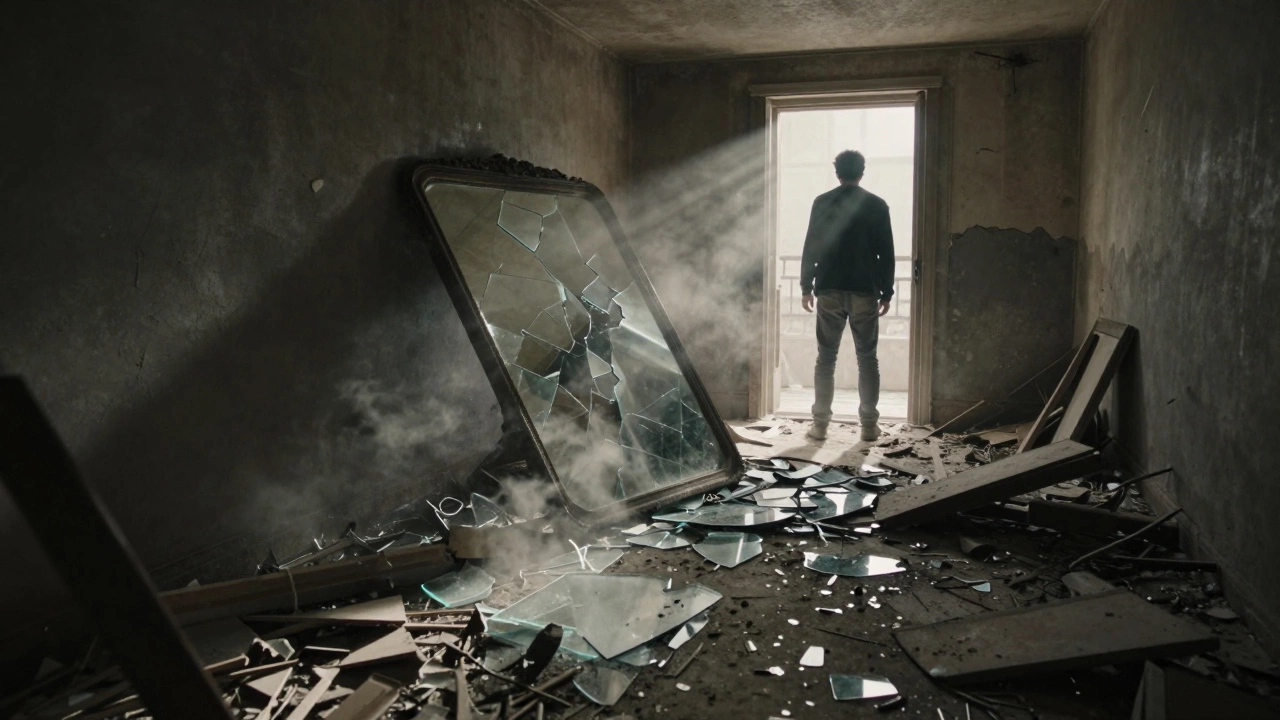
The finale of Mirrors concludes with a sacrificial act where Ben destroys the original mirror to trap the entity, but at the cost of his own life, leaving ambiguity about whether he escaped or remained trapped. After realizing that the entity is trying to possess his daughter’s spirit to escape into the real world, Ben makes a desperate choice. He shatters the central mirror in the store’s basement, which acts as the primary portal.
In the final moments, Ben appears to be pulled into the mirror world. However, the last shot shows him walking away from the store, seemingly alive, only for his reflection to smile wickedly as he walks away. This twist suggests two possibilities:
- Ben Died: He sacrificed himself to save Chloe and Julie, and the smiling reflection is the entity now wearing his face.
- Ben Was Possessed: He survived physically, but the entity took control of his mind, meaning the danger isn’t over-it’s just moved with him.
This ambiguous ending is typical of modern horror films, leaving viewers to debate whether hope remains or if the darkness has won. For fans of psychological thrillers, this open-ended conclusion adds a lingering sense of unease long after the credits roll.
Why Watch Mirrors on Netflix?
If you enjoy horror that relies on atmosphere rather than just gore, Mirrors offers a tense, visually striking experience that uses practical effects and sound design to create genuine scares without relying solely on CGI monsters. The film benefits from strong performances, particularly from Kiefer Sutherland, who conveys raw emotion and desperation throughout the runtime.
Additionally, the movie serves as a great entry point for those interested in the subgenre of "haunted object" horror. Unlike ghosts that haunt houses, here the threat is portable and ubiquitous. Any reflective surface becomes a potential death trap, which creates constant tension. Whether you’re watching it for the jumpscares or the deeper themes of guilt and redemption, Mirrors on Netflix delivers a solid, entertaining fright.
Is Mirrors on Netflix based on a true story?
No, Mirrors is not based on a true story. It is a fictional adaptation of the 2005 Spanish horror film Mirrors (also known as Cuervos). While the concept draws on urban legends and folklore about haunted mirrors, the specific plot and characters are entirely invented for cinematic purposes.
Who plays the main character in Mirrors?
The main character, Ben Carson, is played by Kiefer Sutherland. He is well-known for his role as Jack Bauer in 24 and brings a gritty, intense performance to this horror role.
What is the rating of Mirrors on Netflix?
Mirrors is rated R by the MPAA for strong bloody violence, language, and some sexual content. This means it is intended for mature audiences due to its intense horror elements and graphic scenes.
Does the demon win in the end?
The ending is ambiguous. Ben appears to sacrifice himself to destroy the mirror, but the final shot implies the demon may have taken over his body. This leaves it up to interpretation whether the evil was defeated or merely transferred.
Are there any sequels to Mirrors?
As of 2026, there are no official direct sequels to the 2008 film Mirrors. However, the franchise includes the original Spanish film and various related media. Fans often discuss spin-offs or remakes, but none have been produced yet.