What is the Slang for 100 Bills? A Guide to Money Terms and Secure Storage
 Apr, 13 2026
Cash Stash & Slang Calculator
Calculation Results:
Enter an amount to see advice.
Pro Tip: As mentioned in the guide, avoid "cliché" spots like under the mattress. For amounts over $1,000, consider diversifying your storage across multiple secure locations to reduce risk.
Quick Takeaways: Money Terms and Storage
- Common slang for $100 bills includes Benjamins, C-notes, and Blue notes.
- Storing large amounts of cash requires specialized furniture, such as fireproof safes or hidden compartment shelving.
- Diversifying storage locations reduces the risk of total loss during home emergencies.
- Avoid using obvious hiding spots like under the mattress, which are targets for burglars.
Breaking Down the Most Popular Terms for a $100 Bill
If you've spent any time watching movies or listening to music, you've probably heard these terms. But why do we call them that? It usually comes down to who is on the bill or what the bill looks like.The most frequent term is Benjamins. This is a direct reference to Benjamin Franklin, the Founding Father featured on the portrait of the $100 bill. When someone says they're "chasing Benjamins," they aren't looking for a history lesson; they're talking about making a lot of money.
Then there's the C-note. This one is a bit more old-school. The 'C' comes from the Roman numeral for 100. In the early 20th century, this was standard shorthand in banking and accounting, but it eventually leaked into the general public's vocabulary.
In recent years, you'll hear Blue notes or "Blues." This refers to the subtle blue security ribbon woven into the newer series of U.S. currency to prevent counterfeiting. If you're holding the updated version of the bill, the blue strip is the most defining visual characteristic.
Other terms you might encounter include "big ones" or "yards." A yard is an old gambling term, specifically from the world of horse racing and poker, where $100 was a common unit of betting. While these terms aren't as common among Gen Z, they still pop up in professional circles or older crowds.
The Physical Problem: How to Store Stacks of Cash
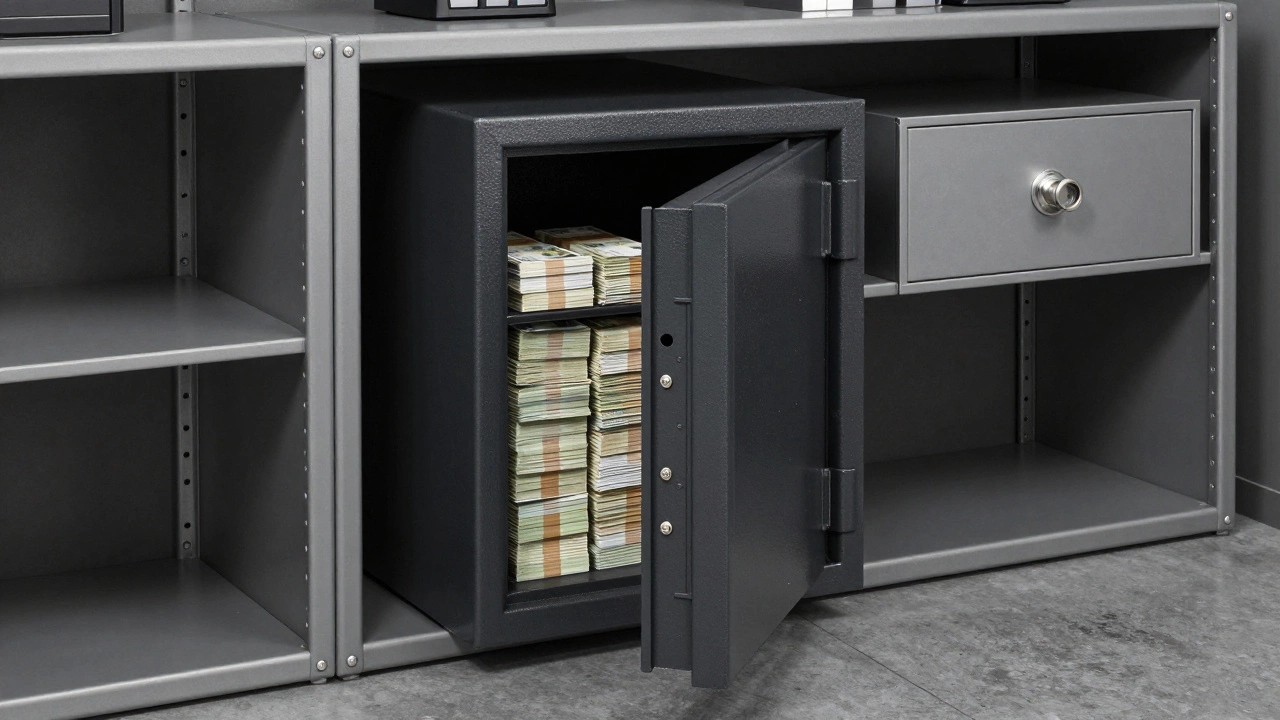
Knowing the slang is fun, but let's talk about the reality of holding a physical stack of hundred-dollar bills. The more you have, the more you realize that a wallet isn't enough. When you move into the territory of "stacks," you need actual storage infrastructure. This is where your choice of shelving and home organization becomes a security measure.Many people make the mistake of using "diversion safes"-like a fake soda can or a hollowed-out book. While these work for a few bills, they aren't practical for larger sums. If you have a significant amount of cash, you need something that offers structural protection. Fireproof Safes are the gold standard here. A cheap metal box won't cut it; you want something rated for at least one hour of fire protection to ensure your money doesn't turn into ash during a house fire.
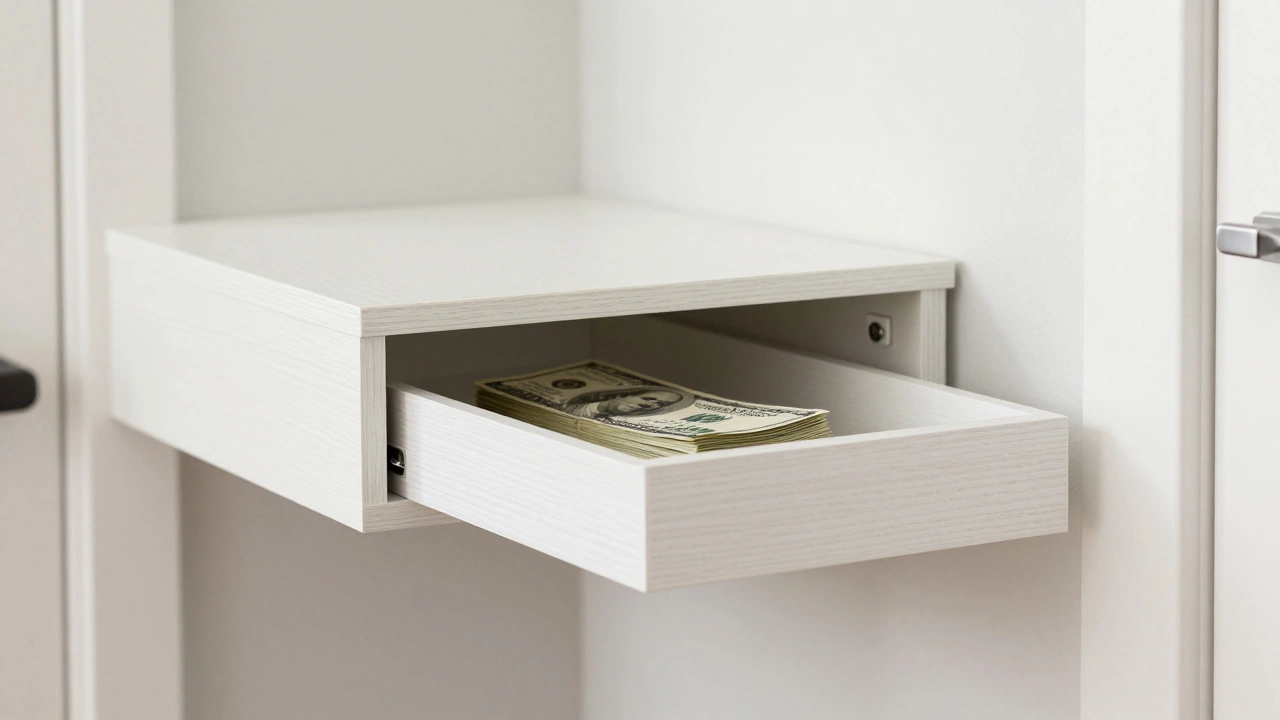
If a safe feels too obvious, consider Hidden Compartment Shelving. This involves using furniture with false bottoms or secret drawers. For example, a floating shelf in a hallway that looks like a simple piece of decor but has a magnetic latch and a hollow core is an excellent way to keep "Benjamins" out of sight. The key is to place these in areas that don't attract attention-avoid the master bedroom, as that's the first place a thief looks.
Comparing Storage Options for High-Value Bills
Not all storage is created equal. Depending on whether you prioritize security, stealth, or quick access, your choice will change. Here is how the most common options stack up.| Storage Type | Security Level | Stealth Level | Best For... |
|---|---|---|---|
| Standard Wallet | Low | Low | Daily spending |
| Diversion Safe | Low | High | Small emergency funds |
| Fireproof Safe | High | Medium | Large sums / Long-term |
| Secret Shelving | Medium | Very High | Hidden reserves |
| Bank Safety Deposit Box | Very High | N/A | Maximum security |
Strategic Placement: Where to Hide Your Money
If you're opting for the slang for 100 bills route and keeping a "stash," you need to think like a burglar. Professional thieves have a mental checklist. They check the master bedroom dresser, under the mattress, the jewelry box, and the freezer. To truly secure your money, you have to go off the beaten path.One effective method is integrating storage into your home's functional areas. Think about the laundry room or the pantry. A reinforced shelf in the pantry with a hidden sliding panel is far less likely to be searched than a bedside table. Another great option is the use of "dead space" in the home, such as the area behind a baseboard or inside a fake air vent. These are the types of modifications that turn a standard house into a secure vault.
If you're using shelving, look for modular systems that allow you to add custom inserts. Some high-end shelving units come with lockable drawers that can be recessed into the frame, making them nearly invisible from the outside. This combination of accessibility for the owner and invisibility for the intruder is the goal.
Common Mistakes When Storing Physical Cash
It's easy to get overconfident about your hiding spot. I've seen people put money in the toilet tank or inside a vacuum cleaner bag. While creative, these spots are risky. Moisture in a toilet tank can ruin the linen paper of a bill, and a vacuum bag is an accidental toss-out waiting to happen.Another mistake is keeping all your eggs in one basket. If you have $5,000 in C-notes, don't put them all in one secret shelf. Split them up. Put $2,000 in a fireproof safe and $3,000 in a hidden compartment in the kitchen. This way, if one spot is compromised, you haven't lost everything. This is the same logic a financial advisor uses for a stock portfolio, but applied to physical cash.
Lastly, avoid using patterns. If you hide money in a specific book every month, you might forget which one. Keep a digital, encrypted note on your phone that only you can access, listing your storage locations. It sounds overkill, but after a year of moving your "blues" around, you'll be glad you have a map.
What is the most common slang for $100 bills today?
The most common terms are "Benjamins" (referring to Benjamin Franklin) and "Blue notes" (referring to the blue security ribbon on the new bills). "C-notes" is also widely understood as a classic term for a hundred-dollar bill.
Is it safe to store large amounts of cash in home shelving?
It can be safe if you use professional-grade hidden compartment shelving. Standard shelves provide no security, but custom-built units with false bottoms or magnetic locks can hide money effectively. However, for maximum security, a fire-rated safe is always recommended.
Where is the worst place to hide money at home?
Avoid the "clichés": under the mattress, in the sock drawer, in the freezer, or in jewelry boxes. Burglars check these spots first. Also, avoid areas with high moisture or heat, as this can degrade the physical quality of the currency.
What does "C-note" actually mean?
The "C" in C-note stands for the Roman numeral for 100. It is an old banking term that evolved into general slang for a $100 bill.
How can I tell if a $100 bill is the "Blue note" version?
Look for a vertical blue 3D security ribbon woven into the paper of the bill. If it has this ribbon, it's part of the newer series of U.S. currency.