What Thickness of Mirror Is Best? A Practical Guide
 Oct, 12 2026
Mirror Thickness & Weight Calculator
Enter your mirror details below to find the recommended glass thickness and estimate its weight. This tool helps prevent warping, cracking, or installation failures.
Fill in the specifications to see recommendations.
Recommended Thickness
You’re standing in the hardware aisle or staring at a catalog online, trying to pick out a mirror. You see options for 3mm, 4mm, 5mm, and even 6mm glass. It feels like splitting hairs, but getting this wrong can lead to warped reflections, cracked glass, or a mirror that falls off your wall three months later. The truth is, there isn’t one "best" thickness for every situation. The right choice depends entirely on where you’re putting it, how big it is, and what kind of support it has.
Why Mirror Thickness Actually Matters
Most people think of mirrors as just glass with a reflective coating. But in reality, a mirror is a structural element in your home. If it’s too thin for its size, gravity will pull on it over time, causing distortion. This is known as "wave" or "pillowing," where straight lines in your reflection look curved. If it’s too thick without proper support, it becomes dangerously heavy for standard adhesives or clips. Understanding the physics helps you make a smarter buy.
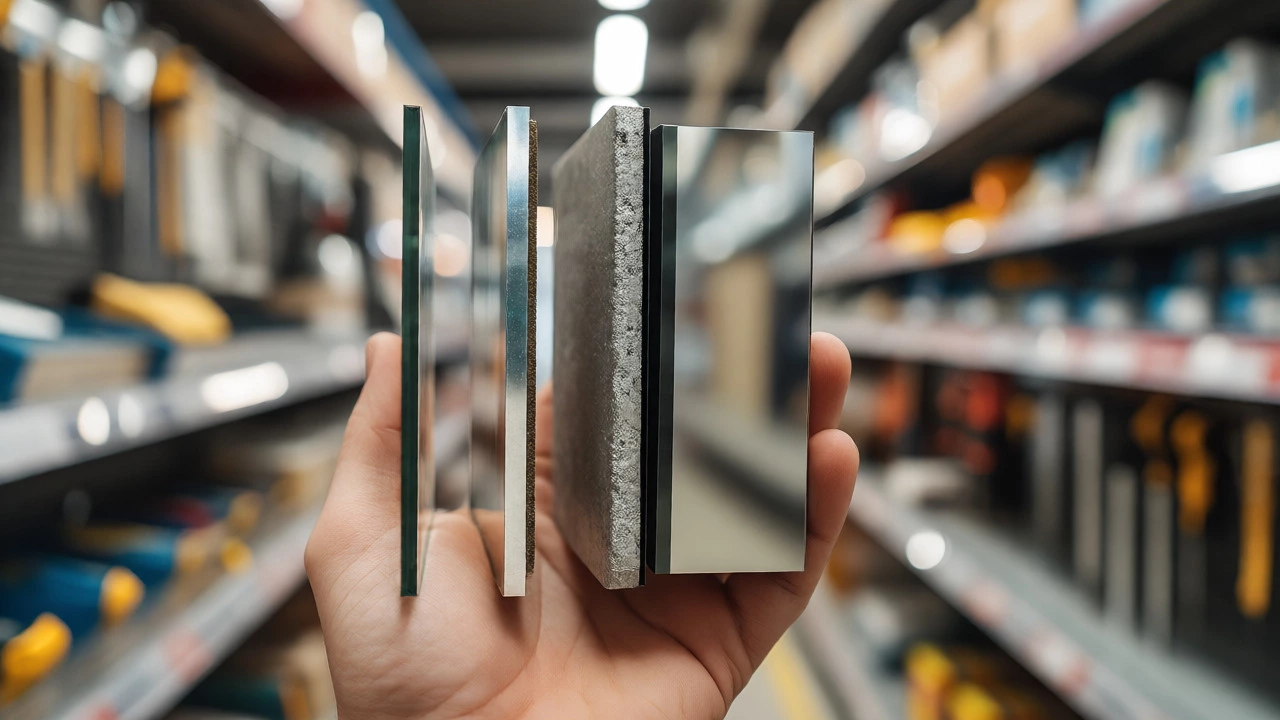
Mirror thickness is measured in millimeters (mm) and refers to the depth of the glass substrate before the silvering process. Common residential sizes range from 3mm to 6mm, while commercial or large-scale installations may use 8mm or thicker. Choosing the correct gauge ensures clarity, safety, and longevity.
The Standard Options: 3mm vs. 4mm vs. 5mm vs. 6mm
Let’s break down the common thicknesses you’ll encounter. Knowing the specific attributes of each helps you match them to your project needs.
| Thickness | Best For | Max Recommended Size (Unsupported) | Pros | Cons |
|---|---|---|---|---|
| 3mm | Small decorative pieces, cabinet doors, furniture inserts | Up to 40x40cm | Lightweight, cheap, easy to cut | Distorts easily if larger; fragile edges |
| 4mm | Standard wall-mounted mirrors, small bathroom vanities | Up to 60x90cm | Good balance of cost and rigidity | May warp on uneven walls without backing |
| 5mm | Larger wall mirrors, frameless shower screens, vanity tops | Up to 100x150cm | Rigid, minimal distortion, safe for frames | Heavier; requires stronger mounting |
| 6mm+ | Floor-standing mirrors, large feature walls, table tops | No limit (with support) | Extremely rigid, premium feel, no warping | Expensive, very heavy, hard to install |
Matching Thickness to Location and Size
Context is king here. A 3mm mirror might be perfect for a jewelry box but disastrous for a full-length hallway piece. Here is how to decide based on where the mirror lives.
Bathroom Mirrors
Bathrooms are humid environments. Moisture can seep behind the mirror if the sealant fails, leading to black spots (desilvering). While humidity doesn’t directly change the ideal thickness, the weight does matter for mounting. For most standard bathroom vanity mirrors under 60cm wide, 4mm mirror glass is the industry standard. It provides enough rigidity to stay flat against the wall without requiring heavy-duty anchors.
If you have a large statement mirror above a freestanding tub or a double vanity, bump up to 5mm. The extra stiffness prevents the glass from flexing when someone leans near it or when temperature changes cause slight expansion in the wall structure.
Wall-Mounted Decorative Mirrors
Living rooms and bedrooms often feature larger, unframed mirrors. Without a frame to hold the glass flat, the mirror relies entirely on its own thickness and the adhesive method. For any frameless mirror wider than 80cm, go with 5mm or 6mm. Anything thinner will likely show waves in the reflection, especially if your plasterboard isn’t perfectly flat.
Pro tip: If you’re using mirror mastic (adhesive), ensure the wall is primed and flat. A 4mm mirror glued to a bumpy wall will eventually crack along stress points. A 5mm or 6mm mirror bridges minor imperfections better due to its higher modulus of elasticity.
Furniture and Cabinet Inserts
This is where 3mm shines. If you’re replacing a broken panel in an IKEA wardrobe or adding a mirror to a dresser drawer front, 3mm is ideal. It’s light enough not to strain hinges and slides into existing grooves easily. Just remember: never use 3mm for a free-standing floor mirror. It’s too flexible and prone to shattering if bumped.
The Impact of Framing on Your Choice
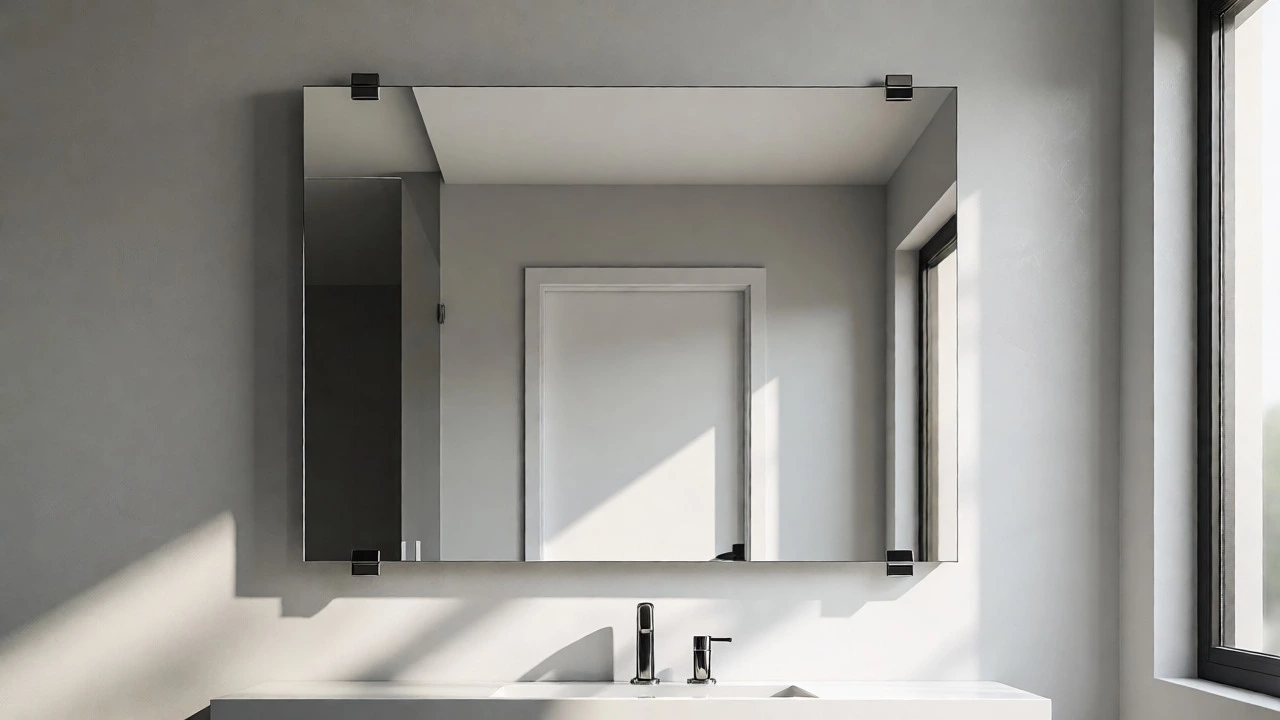
A frame changes everything. It acts as a brace, holding the glass taut and distributing stress around the perimeter. Because of this, you can sometimes get away with thinner glass if it’s well-framed.
- Framed Mirrors: You can safely use 3mm or 4mm glass for framed mirrors up to 1 meter in height. The frame absorbs the tension that would otherwise distort the glass.
- Frameless Mirrors: These require thicker glass. Without a frame, the edges are vulnerable, and the center is unsupported. Stick to 5mm minimum for anything over 60cm wide.
- Semi-Frameless: Think of shower screens with metal clamps. These usually use 6mm tempered glass for safety and rigidity, but decorative semi-frameless wall mirrors can work with 5mm.
If you’re buying a pre-made framed mirror, check the back. Sometimes manufacturers use 3mm to save costs. If the mirror looks wavy when you tilt it, ask if they offer a 4mm or 5mm upgrade. It’s worth the extra $20-$50 to avoid visual distortion.
Installation Methods Dictate Thickness Needs
How you hang the mirror matters as much as how thick it is. Different mounting systems have different load-bearing capacities.
Adhesive Mounting
Using mirror tape or mastic is popular for DIYers because it hides hardware. However, adhesives struggle with heavy loads. A 6mm mirror covering 1 square meter weighs roughly 15kg. That’s a lot of shear force on glue. For adhesive installs, keep it under 5mm thickness unless you’re using high-strength construction adhesive rated for glass. Always clean the wall and mirror back with rubbing alcohol before gluing to ensure a bond.
Clip-On Systems
Clips grip the edges of the mirror. Thicker glass (5mm+) holds clips better because there’s more material to bite into. Thin 3mm glass can chip or crack if clips are overtightened. If you prefer clips, 4mm is the sweet spot for smaller mirrors, while 5mm offers better security for medium-sized ones.
French Cleats and Hooks
For heavy mirrors (6mm+), mechanical fasteners are non-negotiable. French cleats distribute weight across two surfaces, making them ideal for large, thick mirrors. Hooks and wires work for lighter framed mirrors (3-4mm). Never rely on wire alone for a 6mm frameless mirror-it lacks the edge strength to hold the tension.
Special Cases: Safety Glass and Tempering
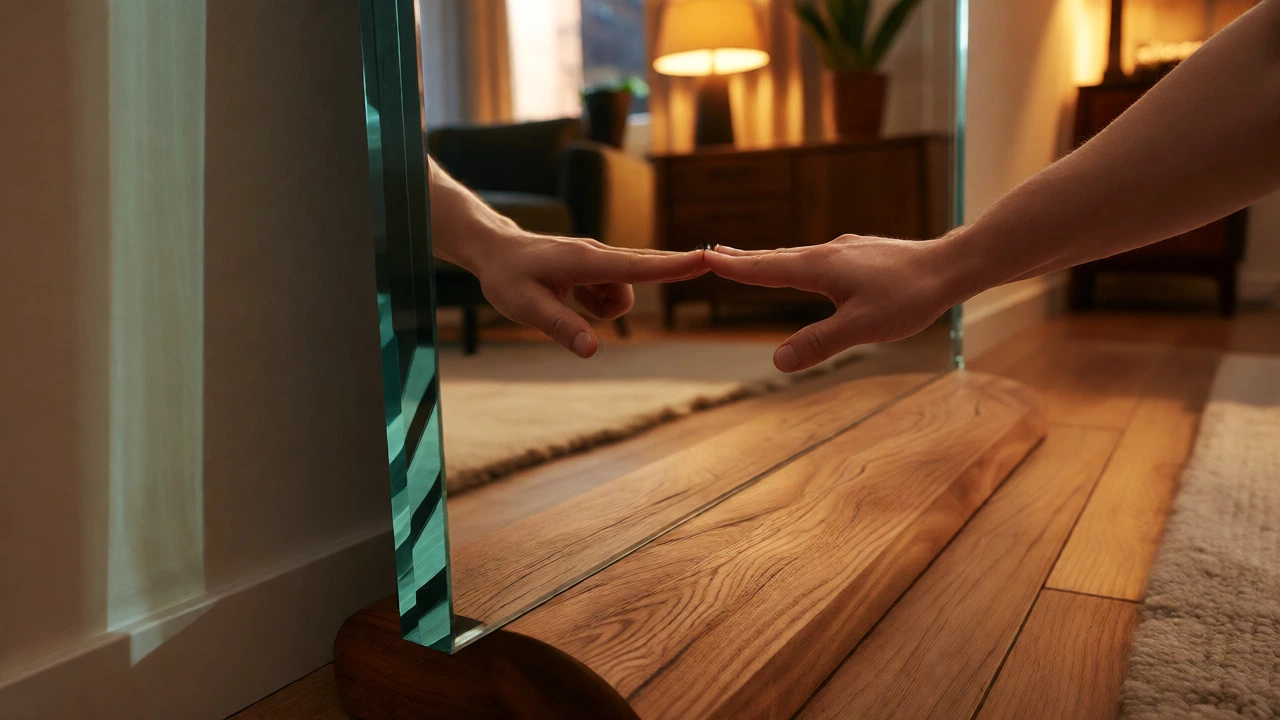
In certain areas, building codes require safety glass. In New Zealand, mirrors near wet areas or low-level positions often need to be toughened (tempered). Tempering increases strength but doesn’t necessarily change the optical quality. However, tempered glass must be cut to size before tempering, so custom orders take longer.
Toughened glass is heat-treated to increase its strength by four to five times compared to annealed glass. When it breaks, it shatters into small, blunt cubes rather than sharp shards, reducing injury risk. If you’re installing a large mirror in a family home with kids, consider 5mm or 6mm toughened glass. It’s safer and more durable against accidental impacts.
Common Mistakes to Avoid
Even with the right thickness, poor execution ruins the result. Here are pitfalls I’ve seen repeatedly in Auckland homes.
- Ignoring Wall Flatness: Plasterboard isn’t always flat. If you glue a 4mm mirror to a wavy wall, it will conform to the waves, creating a funhouse effect. Use a straightedge to check the wall first. If it’s uneven, choose thicker glass (5mm+) which resists bending, or use spacers to create a gap.
- Underestimating Weight: A 1m x 1m 6mm mirror weighs about 15kg. Add the weight of clips or a frame, and you’re looking at 17-18kg. Standard drywall anchors rated for 10kg will fail. Use toggle bolts or fix directly into studs.
- Cutting at Home: Don’t try to cut 5mm or 6mm mirror glass yourself unless you have professional tools. It’s brittle and prone to chipping. Order it pre-cut and polished.
Final Recommendation Cheat Sheet
To simplify your decision, follow these quick rules:
- Under 40cm x 40cm: 3mm is fine. Great for cabinets and small decor.
- 40cm to 80cm (Framed): 4mm is sufficient and cost-effective.
- 40cm to 80cm (Frameless): Go for 5mm to prevent warping.
- Over 80cm (Any Type): Minimum 5mm. For frameless or large feature walls, 6mm is best.
- Shower/Bath Surrounds: 5mm or 6mm toughened glass only.
- Floor Standing: 6mm minimum, ideally with a weighted base or wall tether.
Remember, the goal is a clear, stable reflection. Spending a little more on thickness saves you from the headache of distorted images or dangerous falls. Measure twice, check your wall condition, and choose accordingly.
Is a thicker mirror always better?
Not always. Thicker mirrors are heavier and more expensive. For small, framed applications, a thinner mirror is easier to mount and less likely to strain lightweight fixtures. Choose thickness based on size and support method, not just preference.
Can I use 3mm mirror for a bathroom vanity?
You can, but it’s risky. 3mm is quite flexible and can distort if the wall isn’t perfectly flat. For bathrooms, 4mm is the recommended minimum to ensure stability and resistance to moisture-related warping.
Does mirror thickness affect price significantly?
Yes, but not linearly. Moving from 4mm to 5mm might add 10-15% to the cost, while jumping to 6mm could double the price due to handling and shipping difficulties. The value lies in durability and optical clarity, so it’s often worth the investment for permanent installations.
How do I know if my mirror is warped?
Look at straight lines in your reflection, like door frames or tiles. If they appear curved or wavy, your mirror is either too thin for its size or mounted on an uneven surface. Try pressing gently on the center; if it flexes noticeably, it’s likely too thin.
Should I use toughened glass for all mirrors?
It’s recommended for safety, especially in high-traffic areas, bathrooms, or low-level installations. However, it’s more expensive and cannot be re-cut after manufacturing. For small, high-up decorative mirrors, standard annealed glass is acceptable.