What Type of Rug Is Best on Top of Carpet? Expert Guide for 2026
 Mar, 16 2026
Rug on Carpet Compatibility Checker
Find the Perfect Rug for Your Carpet
Enter your rug and carpet details above to see if it's compatible.
Putting a rug on top of carpet sounds simple-until you try it and the rug slides around, bunches up, or feels like walking on a trampoline. It’s not just about style. The wrong rug can become a tripping hazard, wear out fast, or ruin your carpet underneath. So what type of rug actually works on carpet? The answer isn’t what you think.
Why Most Rugs Fail on Carpet
People assume any rug will sit fine on carpet. But carpet isn’t flat. It has pile-fibers that give under pressure. When you lay a standard rug on top, the backing doesn’t grip. It slides. Even heavy rugs move because the carpet fibers shift under weight. You’ve probably seen this: a runner rug at the foot of a bed that’s halfway to the door after a few weeks. Or a round rug in the living room that’s twisted like a pretzel after vacuuming.
It’s not the rug’s fault. It’s the mismatch between the rug’s design and the carpet’s texture. Most rugs are made for hard floors. Their backings-latex, rubber, or woven fibers-are built to stick to wood, tile, or laminate. On carpet, they do nothing.
The Right Backing Makes All the Difference
The single most important factor? The rug’s backing. Not the material on top-the bottom. For rugs on carpet, you need a backing that grips both the carpet fibers and the rug’s own weave.
Look for rugs with non-slip rubberized backing or high-density synthetic fibers woven into the base. These are designed to anchor into carpet pile. Brands like Safavieh, Ruggable, and Mohawk use this tech. It’s not just a coating-it’s a grid of tiny, flexible nubs that dig into carpet fibers like Velcro. The result? No sliding. No shifting. No bunching.
Avoid rugs with:
- Latex-only backings (they dry out and crack on carpet)
- Woven jute or cotton backings (too smooth, no grip)
- Thin, flimsy polyester backings (they slide even when heavy)
Test a rug before buying: flip it over. If the backing looks smooth or shiny, skip it. If it looks textured, bumpy, or has a grid pattern, it’s likely designed for carpet.
Thickness and Pile Height Matter
Not all carpets are the same. Low-pile carpets (like commercial-grade or Berber) are easier to layer on. But if you have a plush, high-pile carpet-think shag or deep-pile wool-you need a thinner rug. Why? Two layers of thick pile create a dangerous slope. Your foot sinks into the carpet, then hits the rug edge. That’s a stumble waiting to happen.
For high-pile carpets, aim for rugs under 0.5 inches thick. For low-pile or medium-pile carpets, 0.5 to 0.75 inches works fine. The goal isn’t comfort-it’s safety. A rug that’s too thick on top of carpet acts like a ramp. It’s a hazard.
Also, avoid rugs with long fringe. Fringe gets caught in carpet fibers and pulls loose. It’s a nightmare to clean. Stick to bound edges or machine-woven borders.
Material Choices: What Works and What Doesn’t
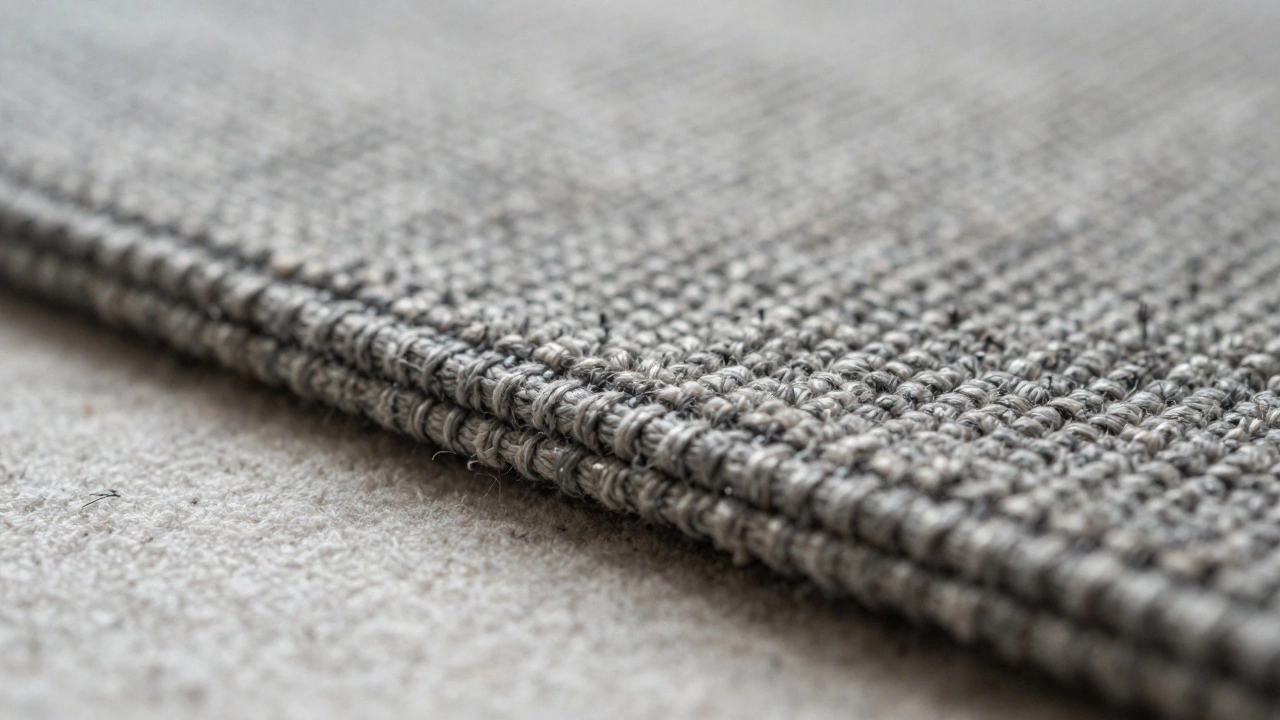
Top materials for rugs on carpet:
- Wool: Naturally grippy, durable, and moisture-resistant. Wool fibers have a slight texture that helps grip carpet. It’s also easy to clean and doesn’t flatten over time.
- Synthetic blends (polyester, nylon, polypropylene): Modern synthetics are engineered for grip. Look for ones with anti-slip backing. They’re affordable, stain-resistant, and hold up well under heavy use.
- Cotton: Only if it has a non-slip backing. Pure cotton rugs are too smooth and slide easily. But cotton with rubberized backing? Solid choice.
Avoid:
- Jute: Too rough. It doesn’t grip carpet-it digs into it, tearing fibers over time.
- Viscose: Slippery when wet. It looks luxe but wears out fast on carpet.
- Silk: Too delicate. Even a little foot traffic on carpet will crush the fibers.
Size and Placement Tips
Don’t go too big. A rug that covers the whole room on top of carpet looks cluttered. It also traps dirt between layers and makes vacuuming harder. Stick to:
- 8x10 or smaller for living rooms
- 5x8 for bedrooms
- Runner rugs (2.5x8) for hallways
Placement matters too. Avoid placing rugs directly over high-traffic zones like doorways or under heavy furniture. The pressure crushes both the rug and the carpet. Instead, use rugs to define zones-like a seating area or a reading nook.
Use a Rug Pad (Even on Carpet)
You might think a rug pad is only for hard floors. Wrong. A thin, non-slip rug pad (under 0.25 inches) adds extra grip and cushioning. It prevents the rug from sliding sideways and protects the carpet from wear. Choose a pad made of felt and rubber blend-like the ones from Ruggable or Mohawk. Avoid thick foam pads. They make the rug too soft and unstable.
Pro tip: Buy a rug pad that’s 1 inch smaller than the rug on all sides. That way, it doesn’t peek out from under the edges.
Real-World Examples
Here’s what works in real homes:
- Living room: A 9x12 wool rug with rubberized backing on a medium-pile carpet. It anchors the sofa set without overwhelming the space.
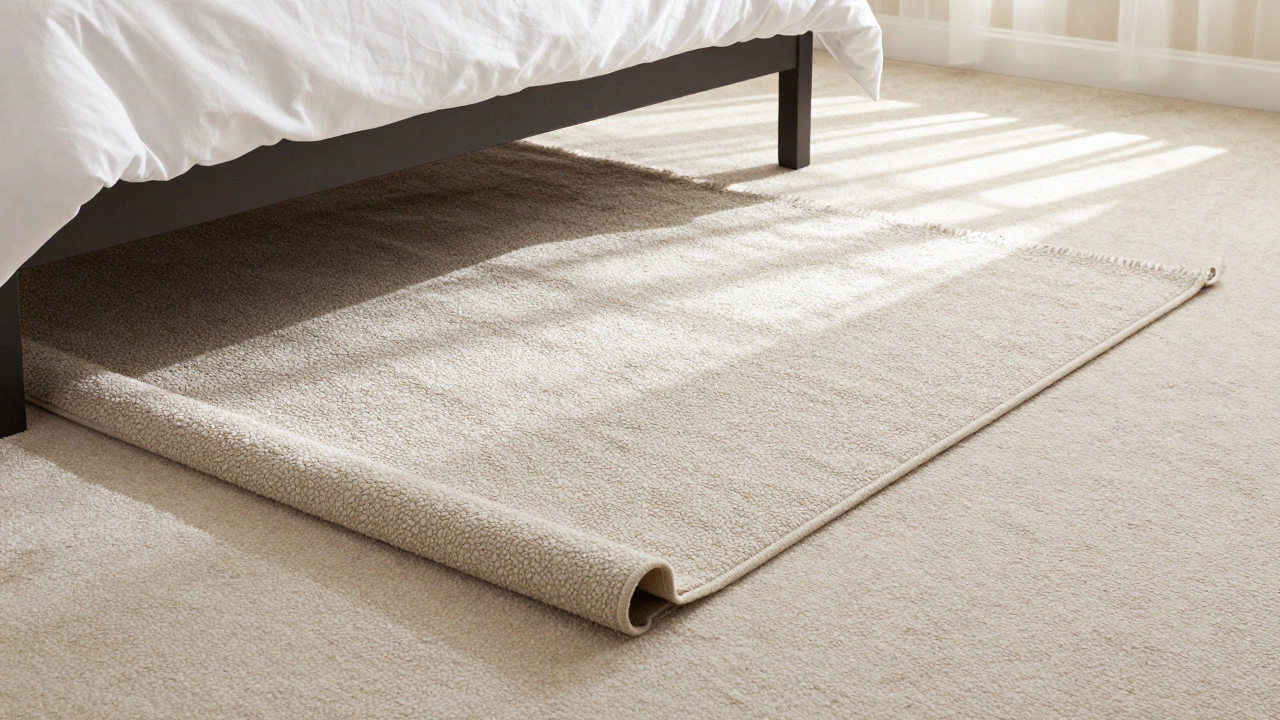
- Bedroom: A 5x8 synthetic blend rug with non-slip backing under the bed. No more sliding when you get up in the morning.
- Hallway: A 2.5x8 cotton runner with bound edges on low-pile carpet. Easy to vacuum, stays flat.
These aren’t designer choices. They’re practical, tested solutions.
What to Avoid
Don’t try to layer two thick rugs. It creates a slope. Don’t use decorative rugs without grip on high-pile carpet. They’re dangerous. Don’t assume price equals performance. A $300 rug with a smooth backing will slide more than a $120 rug with a grippy base.
And never skip the test. If you can, take the rug home first. Lay it on your carpet for a day. Walk on it. Move furniture over it. See if it moves. If it does, return it.
Final Checklist: Choosing Your Rug
Before you buy, ask yourself:
- Does the backing look textured or bumpy? (If yes, good.)
- Is the rug under 0.75 inches thick? (If yes, safe.)
- Is the material wool or synthetic? (If yes, durable.)
- Does it have bound or machine-woven edges? (If yes, no fringe issues.)
- Will a rug pad fit under it without peeking out? (If yes, extra grip.)
If you answered yes to all five, you’ve got a winner.
Can I put a rug on top of shag carpet?
Yes, but only if the rug is thin (under 0.5 inches) and has a strong non-slip backing. Shag carpet is very deep, so a thick rug will create a dangerous slope. Stick to low-profile rugs-like flat-weave or tightly woven synthetics. Avoid anything with fringe. A rug pad is highly recommended to keep it flat and secure.
Do I need a rug pad if the rug has a non-slip backing?
Not always, but it helps. A rug with a built-in non-slip backing usually works fine on its own. But if you have high-pile carpet or heavy furniture, adding a thin (0.25-inch) felt-rubber pad gives extra stability and protects the carpet from long-term wear. It’s a small investment that prevents damage and slipping.
What’s the best rug material for high-traffic areas on carpet?
Nylon or wool. Nylon is tough, stain-resistant, and holds its shape under heavy use. Wool is naturally resilient and has a slight grip that helps it stay in place. Both work well with non-slip backing. Avoid viscose or silk-they flatten fast and become slippery.
How do I clean a rug on top of carpet?
Vacuum the rug and carpet together once a week. Use the lowest suction setting to avoid pulling on the rug’s backing. For deep cleaning, lift the rug and clean the carpet underneath first. Then flip the rug and vacuum the back. Spot-clean spills immediately. Never use steam cleaners on rugs with rubberized backing-it can melt the adhesive and ruin the grip.
Can I use a rug on top of a carpet with underfloor heating?
Yes, but choose a thin rug (under 0.6 inches) with a breathable backing. Avoid thick, dense rugs or ones with plastic or foam backings-they trap heat and reduce efficiency. Wool and synthetic blends with rubberized backing are safe. Make sure the rug doesn’t cover more than 70% of the heated area to allow heat to rise properly.