Utensils vs Kitchenware: The Difference Explained (With Examples)
 Jul, 16 2026
Kitchen Item Classifier
Type an item above and click Classify to see its category.
You’ve probably stood in a store aisle or scrolled through an online catalog wondering why some items are labeled utensils while others fall under the broader umbrella of kitchenware. It’s a common confusion. Both terms describe objects you use to prepare food, but they aren’t interchangeable. Understanding the distinction helps you organize your kitchen better, shop more efficiently, and even communicate clearer instructions when hosting dinner parties.
The short answer? Kitchenware is the broad category that includes everything used in a kitchen. Utensils are specific handheld tools used for preparing, cooking, or serving food. Think of it like this: all utensils are kitchenware, but not all kitchenware are utensils. A frying pan is kitchenware; a spatula is a utensil. Let’s break down exactly where the lines are drawn.
Defining the Core Concepts
To clear up the confusion, we need to look at how these terms function in everyday language versus retail classification. In the culinary world, precision matters. If you’re writing a recipe or designing a kitchen layout, knowing which bucket an item falls into saves time and mental energy.
Kitchenware acts as the parent category. It encompasses every object found in a kitchen environment. This includes large appliances like refrigerators, storage solutions like cabinets, cleaning supplies like sponges, and yes, the tools you use to chop and stir. When you buy a "kitchenware set," you might get a mix of pots, pans, and gadgets. It’s a catch-all term for the ecosystem of your cooking space.
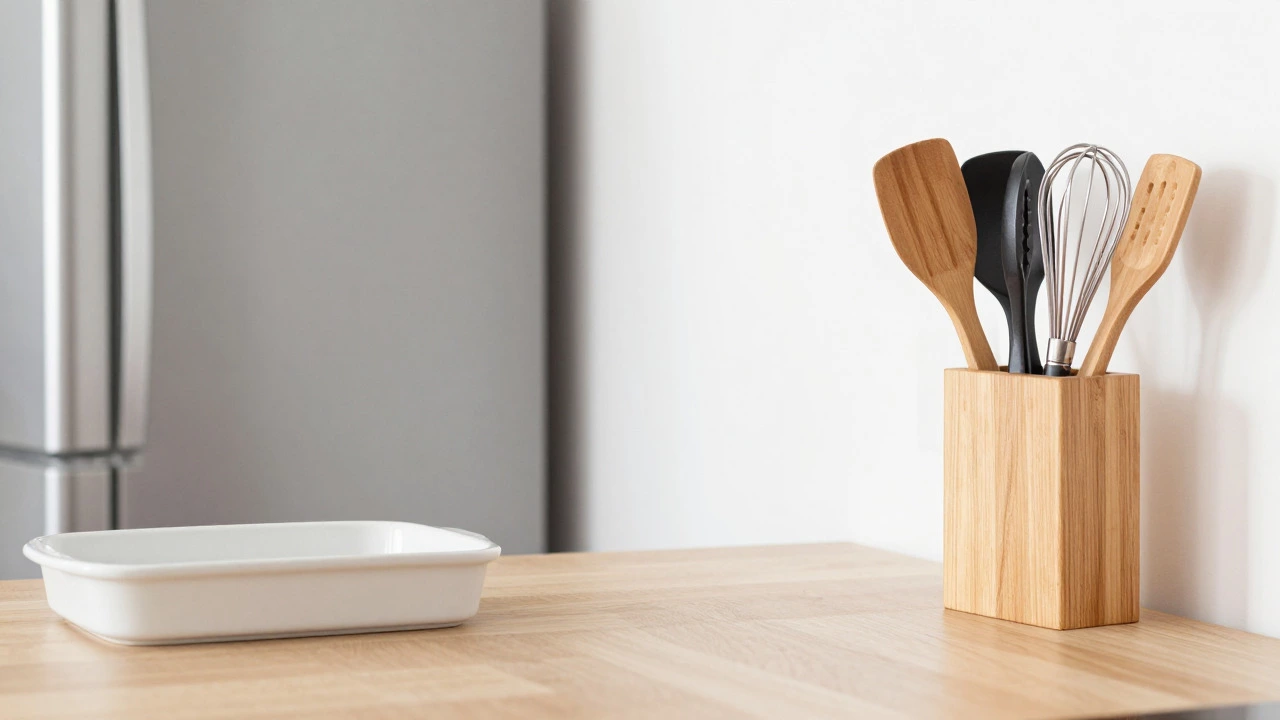
Utensils, on the other hand, are specific. They are handheld implements designed for direct interaction with food during preparation or service. You hold them. You move them. You don’t usually plug them in (though electric mixers blur this line slightly). A wooden spoon, a pair of tongs, and a whisk are classic examples. They are the extensions of your hands in the cooking process.
The Hierarchy: How They Fit Together
Visualizing the relationship between these terms makes the difference obvious. Imagine a Venn diagram where one circle is completely inside another. The big outer circle is Kitchenware. Inside it sits a smaller circle called Utensils. But there are other circles inside Kitchenware too, like Cookware and Cutlery.
| Category | Definition | Examples | Primary Function |
|---|---|---|---|
| Kitchenware | All items used in the kitchen | Fridge, knives, pots, sponges | General kitchen operation |
| Utensils | Handheld prep/cooking tools | Spatulas, ladles, whisks | Food manipulation |
| Cookware | Vessels for heating food | Pots, pans, baking sheets | Heat application |
| Cutlery | Eating tools | Forks, knives, spoons | Consumption |
This hierarchy explains why you can’t swap the words. If you ask someone to pass the kitchenware, they might look confused because that’s too vague. If you ask for the utensils, they’ll likely hand you the drawer contents containing spoons and spatulas. Context dictates clarity.
Key Differences in Usage and Material
Beyond definitions, the way we use and maintain these items differs significantly. Utensils are generally lightweight and made from materials that won’t scratch surfaces or conduct heat dangerously to your hand. Common materials include silicone, wood, nylon, and stainless steel. You wash them after every use because they touch raw ingredients directly.
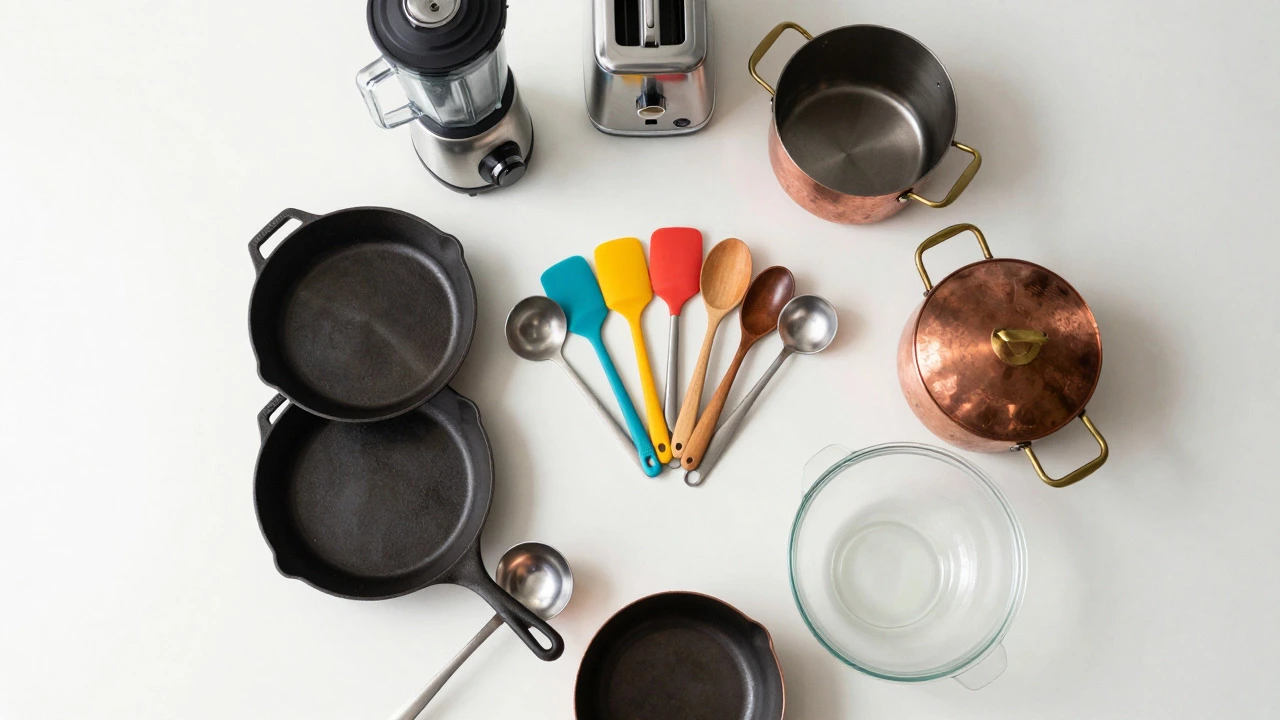
Kitchenware, being a broader group, includes heavy-duty items. Your cast-iron skillet (cookware) requires seasoning and careful drying to prevent rust. Your blender (an appliance, also kitchenware) needs disassembly and thorough cleaning of blades. The maintenance routine for a simple plastic measuring cup (a utensil) is vastly different from that of a ceramic oven-safe dish (cookware/kitchenware).
Consider the material constraints. Utensils often prioritize non-reactivity and ease of handling. You want a spatula that doesn’t melt when scraping a hot pan. Kitchenware items like pots and pans prioritize heat conductivity and durability. A copper pot conducts heat evenly but is expensive and requires polishing. A silicone spatula is cheap, flexible, and dishwasher safe. These functional differences drive their categorization.
Common Misconceptions: Where People Get It Wrong
One frequent mix-up involves cutlery. Many people refer to forks and knives as utensils. Technically, in strict culinary terminology, Cutlery is flatware used for eating, while Utensils are for cooking. However, in casual conversation, calling a fork a utensil is widely accepted. Retailers often group them together in "flatware and utensil" sections, which adds to the confusion.
Another misconception is treating appliances as utensils. A toaster or a microwave is definitely kitchenware. Is it a utensil? No. You don’t hold a microwave in your hand to manipulate food. It’s a stationary device. Confusing these leads to awkward phrasing, like "I need a new utensil to bake my cake," when you really mean a baking pan (cookware) or a mixer (appliance).
Also, consider storage. Utensils typically live in drawers or hanging racks within arm’s reach of the stove. Kitchenware includes items stored in closets, under sinks, or on countertops. If it fits in your hand and stays in a drawer, it’s likely a utensil. If it takes up shelf space or counter real estate, it’s broader kitchenware.
Practical Implications for Shopping and Organization
Why does this distinction matter to you? First, it affects how you shop. Online stores categorize products differently. Searching for "kitchenware" might return a massive list including blenders and cutting boards. Searching for "utensils" narrows it down to spoons, tongs, and peelers. Knowing the right term gets you to the product page faster.
Second, it impacts kitchen organization. Efficient kitchens separate tasks. Keep your utensils near your cooking zone. Store your cookware (pots/pans) in accessible cabinets. Place your cutlery near the dining area. Mixing these up creates clutter. For example, storing your mixing bowls (cookware/bakeware) with your spatulas (utensils) makes both harder to find when you’re in a rush.
If you’re moving or downsizing, understanding these categories helps you decide what to keep. You might have ten spatulas (utensils) but only two pots (cookware). Do you really need ten spatulas? Probably not. But you can’t cook without pots. Prioritizing based on category function prevents hoarding redundant small tools while neglecting essential large ones.
Special Cases: Blurring the Lines
Not every item fits neatly into a box. Take a chef’s knife. Is it a utensil or kitchenware? It’s handheld, so it feels like a utensil. But it’s also a primary tool for prep, distinct from cooking utensils like ladles. Most experts classify knives as cutlery or separate prep tools, though they fall under the kitchenware umbrella. Similarly, a rolling pin is a utensil for baking, but rarely used in savory cooking.
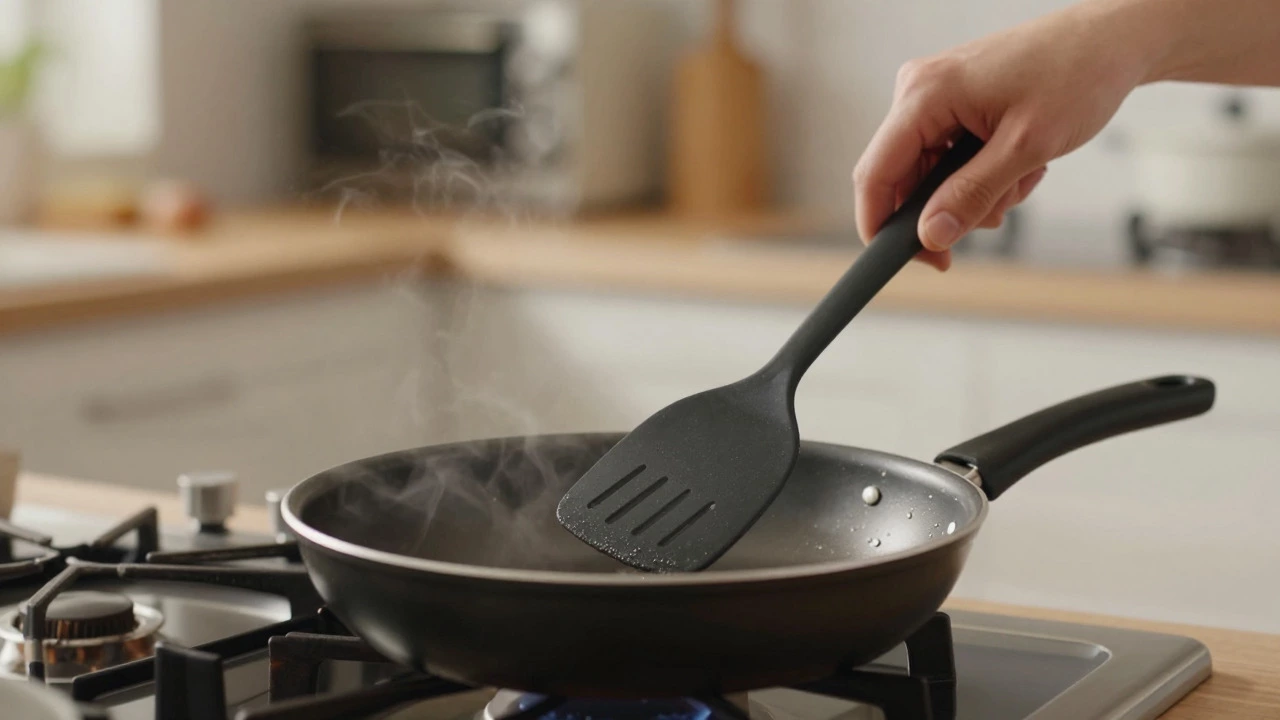
Electric gadgets complicate things further. An immersion blender is handheld like a utensil, but it’s powered like an appliance. We usually call these "handheld appliances" rather than utensils. The key is intent: if it has a cord or battery, it’s likely an appliance, not a traditional utensil. If it relies solely on manual force, it’s a utensil.
Measuring cups and spoons sit in a gray area. They are handheld and used for prep, so they lean toward utensils. But they don’t manipulate food texture or temperature directly; they measure volume. Some chefs group them with bakeware tools. Regardless, they are always kitchenware.
Summary of Key Distinctions
To wrap this up, remember the scope. Kitchenware is the universe of kitchen items. Utensils are a specific planet within that universe. When in doubt, ask yourself: Can I hold this easily in one hand to move or mix food? If yes, it’s likely a utensil. Does it require heat, electricity, or significant storage space? Then it’s broader kitchenware, possibly cookware or an appliance.
This clarity isn’t just about semantics. It’s about building a functional, organized kitchen. By labeling and storing items according to their true category, you streamline your cooking process. Next time you’re shopping or tidying up, use these definitions to make smarter choices. Your future self, standing in front of a messy drawer looking for a spatula, will thank you.
Is a knife considered a utensil?
Technically, no. Knives are classified as cutlery or prep tools. While they are handheld like utensils, their primary function is cutting, not stirring or serving. However, in casual speech, many people group knives with utensils because they are stored in the same drawer.
What is the difference between cookware and utensils?
Cookware refers to vessels used to cook food over heat, such as pots, pans, and baking dishes. Utensils are handheld tools used to manipulate food, like spatulas, ladles, and whisks. You use utensils *with* cookware.
Are plates and bowls considered kitchenware?
Yes. Plates and bowls fall under serveware or dinnerware, which are subcategories of kitchenware. They are not utensils because you do not hold them to prepare food; they are passive containers for serving.
Can an appliance be called a utensil?
No. Appliances, such as blenders, toasters, and microwaves, are electrical devices. Utensils are manual, handheld tools. Even handheld electric mixers are classified as small appliances, not utensils, due to their power source.
Why do stores group utensils and cutlery together?
Retailers group them for convenience. Both items are small, handheld, and often stored in similar drawers. While technically distinct (cutlery for eating, utensils for cooking), consumers expect to find forks and spatulas in the same section, so stores merge the categories.