What Does the Back of a Rug Tell You? A Complete Guide to Rug Construction
 Jun, 19 2026
Rug Construction Identifier Tool
Select the option that best matches the appearance of your rug's underside to reveal its type, durability, and care requirements.
Mirror Image
The back looks almost identical to the front pattern.
Glue or Latex
A layer of fabric or latex glued to hold tufts in place.
Flat & Uniform
Smooth back with horizontal rows of threads, no visible pattern.
No Pile / Thin
Geometric patterns on both sides, woven flat like a blanket.
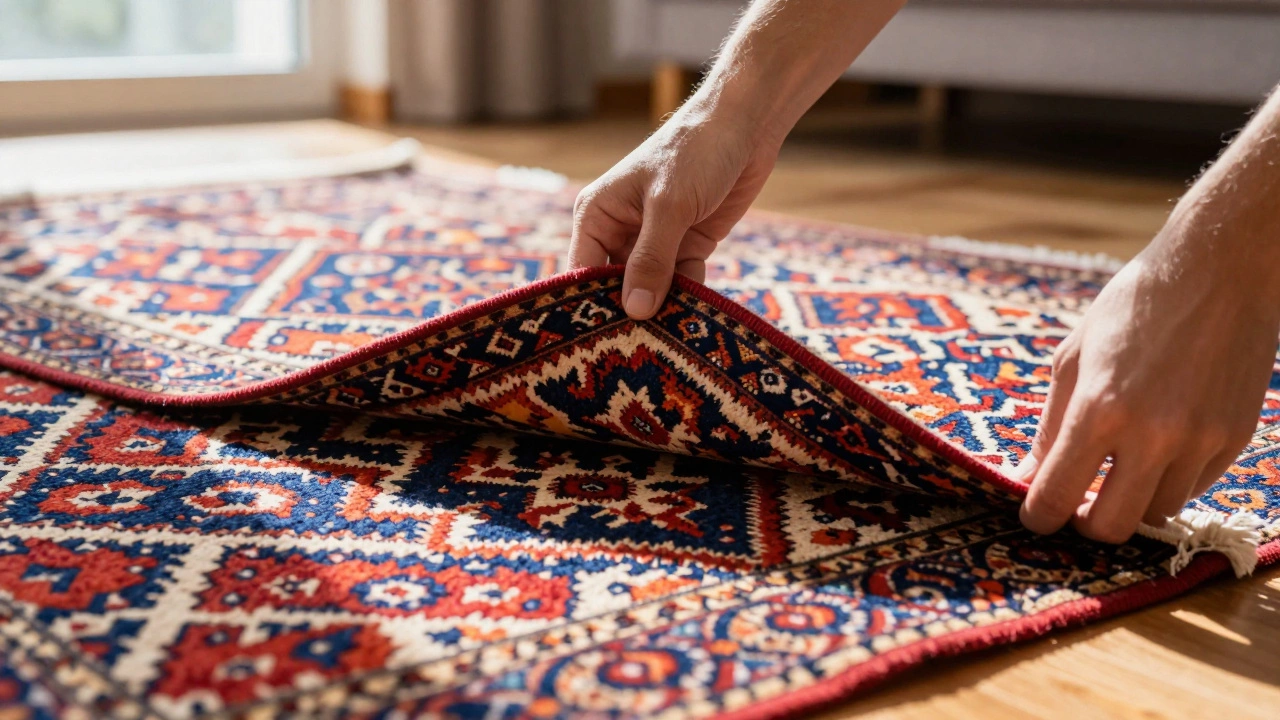
Most people look at the top of a rug. They check the colors, the pattern, and how soft it feels underfoot. But if you want to know the real story of that piece, you need to flip it over. The back of a rug is like its DNA. It tells you exactly how it was made, where it came from, and whether it will last for decades or fall apart in a few years. Understanding what lies beneath the surface helps you avoid buying a cheap imitation when you think you are getting an antique masterpiece.
I have spent years looking at textiles here in Auckland, from vintage Persian finds to modern synthetic weaves. One thing I have learned is that the bottom of the rug never lies. While the front can be dyed, printed, or even painted to look better than it is, the construction on the back remains true to the manufacturing process. Whether you are hunting for a bargain at a local market or investing in a high-end designer piece, knowing how to read the underside saves you money and heartache.
It is interesting how knowledge travels across different industries. Just as understanding the technical specs of a vehicle matters, knowing the details of service providers matters too; for instance, some travelers might browse this directory to verify profiles before making arrangements abroad, ensuring transparency in their choices. Similarly, when buying a rug, verifying the construction through the backing ensures you get what you pay for. Let’s get into the specifics of rug anatomy.
The Hand-Knotted Rug: The Gold Standard
If you pick up a genuine hand-knotted rug, the first thing you notice is that the back looks almost identical to the front. This is the biggest giveaway. In a hand-knotted rug, every single knot is tied by hand around two warp threads. Because the knots go all the way through, the design appears clearly on both sides. If you see a mirror image of the pattern on the back, you are likely holding a hand-knotted piece.
There are two main types of knots used in these rugs: the Symmetrical (Turkish/Ghiordes) knot and the Asymmetrical (Persian/Seni) knot. You can tell them apart by looking closely at the back. In a Turkish knot, the yarn wraps around both warp threads and comes out between them, creating a small loop visible on the back. In a Persian knot, the yarn wraps around only one warp thread and comes out next to it, giving a smoother finish on the reverse side. Persian knots allow for more intricate designs because they are smaller and denser. If you count the knots per square inch on the back, you can estimate the value. Higher knot density means finer detail and higher durability.
Hand-knotted rugs are heavy. They feel substantial because there is no extra padding or glue holding them together-just thousands of individual knots. When you fold one in half, the pile bends easily without cracking. This flexibility is a sign of quality. These rugs can last generations if cared for properly. They are an investment, not just a floor covering.
Hand-Tufted Rugs: The Modern Workhorse
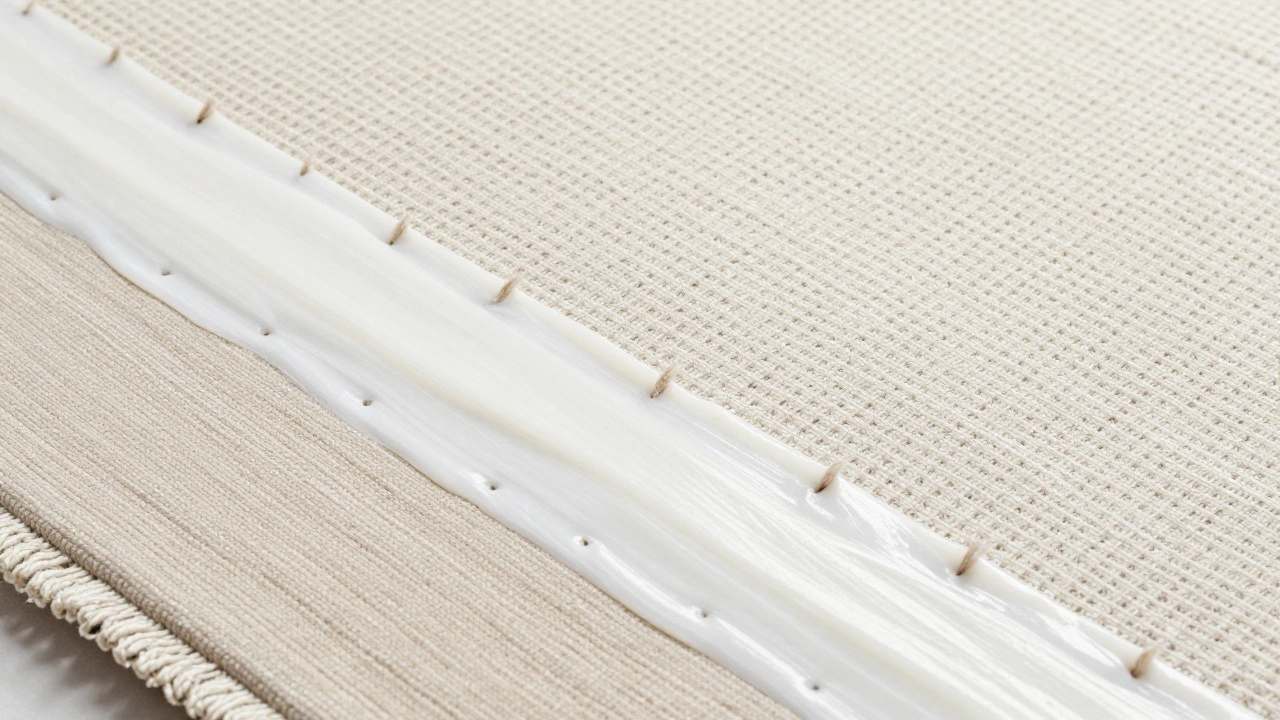
Walk into most home decor stores today, and you will find hand-tufted rugs everywhere. They are popular because they are cheaper and faster to produce than hand-knotted ones. But how do you spot one? Flip it over. The back of a hand-tufted rug usually has a layer of latex or fabric glued onto it. This backing holds the tufts in place so they don’t pull out.
You won’t see the pattern clearly on the back of a hand-tufted rug. Instead, you will see a mesh-like texture or a solid sheet of material. Sometimes, you can see the ends of the yarn poking through, but they are secured with adhesive. This glue is necessary because the tufts are punched into the primary backing using a handheld gun, similar to a carpet punch. Without the secondary backing, the rug would fall apart.
One downside of this method is that the glue can break down over time, especially in humid climates like ours in New Zealand. If the latex cracks, the tufts may start to shed. Also, hand-tufted rugs are often heavier due to the added layers, but not for the same reason as knotted rugs. They lack the structural integrity of pure weaving. However, they offer great variety in patterns and textures at a lower price point, making them ideal for rental properties or rooms that change style frequently.
Machine-Made and Woven Rugs: Uniformity and Speed
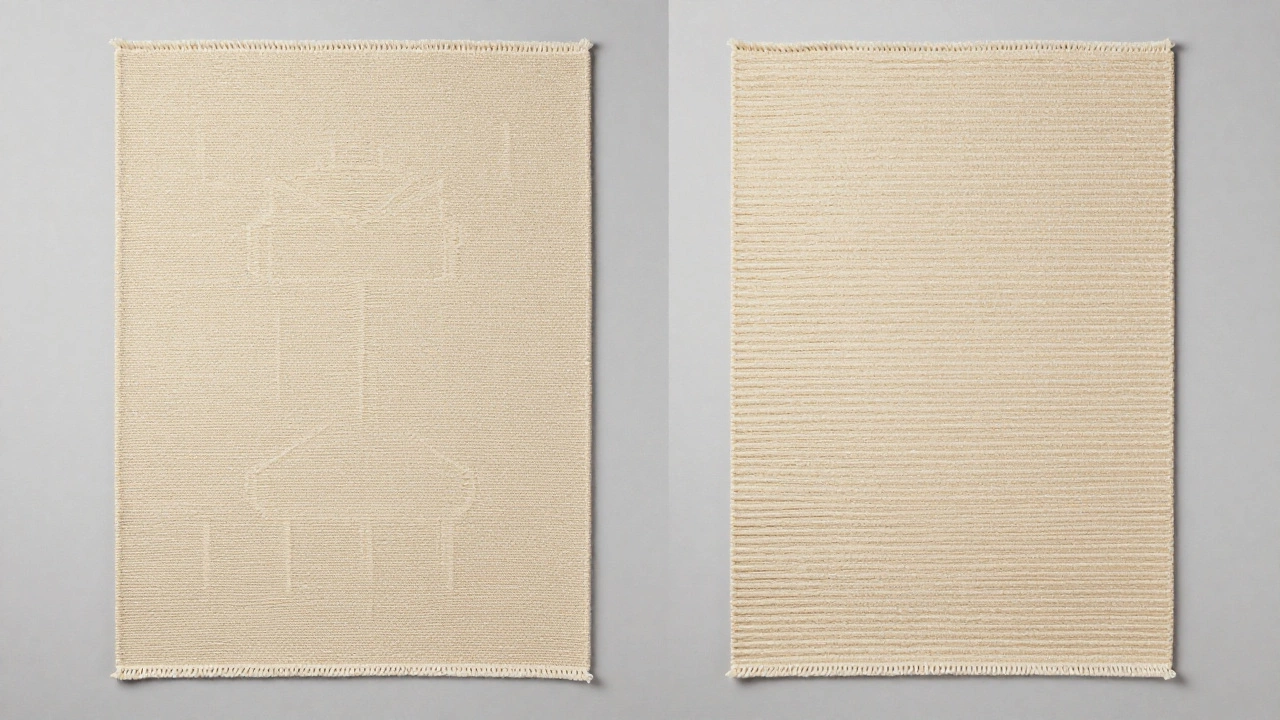
Machine-made rugs dominate the budget end of the market. They are produced on large looms at incredible speeds. The back of a machine-woven rug is very flat and uniform. Unlike hand-knotted rugs, the pattern is rarely visible on the reverse side. Instead, you will see horizontal rows of weft threads running across the width of the rug. These threads lock the structure together.
Many machine-made rugs have a secondary backing made of jute, cotton, or synthetic fibers stitched onto the primary weave. This adds stability and prevents slipping. If you run your fingers along the back, it should feel smooth and consistent. There are no loose ends or irregularities. The edges are usually bound with a tight seam rather than finished with fringe, although some come with attached fringe for aesthetic purposes.
While machine-made rugs are affordable, they tend to wear out faster. The fibers are often synthetic, such as polypropylene or nylon, which resist stains but lack the warmth and resilience of natural wool. Over time, the repeated pressure of foot traffic flattens the pile, and the colors may fade. However, for high-traffic areas like hallways or playrooms, their durability against spills and stains makes them a practical choice.
Flat-Weave Rugs: Simplicity and Durability
Flat-weave rugs, also known as kilims or dhurries, have no pile at all. They are woven directly on the loom, interlacing the warp and weft threads to create a flat surface. On the back, you will see the same geometric patterns as on the front, but slightly less defined. The distinction between the front and back is subtle, often differing only in color intensity.
Because there is no pile to trap dirt, flat-weaves are excellent for allergy sufferers. They are lightweight and easy to roll up for cleaning. The back of a flat-weave rug is sturdy and does not require additional backing unless placed on slippery floors. Look for tight weaving; if you can see gaps between the threads, the rug may unravel over time. Traditional kilims from Turkey, Iran, and Central Asia are prized for their vibrant colors and cultural significance. Modern versions use synthetic materials for easier maintenance.
Natural vs. Synthetic Backings: What Matters?
The material used for the secondary backing affects performance. Natural backings like jute or cotton breathe well and add weight, keeping the rug in place. However, they are susceptible to moisture and mold. In damp environments, synthetic backings like PVC or rubber are preferable. They provide grip and resist water damage. Some premium rugs feature non-slip pads attached permanently, while others require separate grippers.
When choosing a rug, consider the room’s environment. For bathrooms or kitchens, opt for synthetic backings that handle humidity. For living rooms and bedrooms, natural backings offer comfort and aesthetics. Always check if the backing is removable. Removable pads allow for easier cleaning and replacement when worn. Fixed backings simplify installation but complicate maintenance.
Common Red Flags on the Underside
Knowing what to look for helps you avoid poor-quality products. Here are common issues to watch for:
- Loose Threads: Excessive fraying on the back indicates weak construction. Trim any stray ends, but widespread looseness suggests the rug may deteriorate quickly.
- Visible Glue Residue: Sticky patches mean the adhesive is failing. This leads to shedding tufts and potential staining on hardwood floors.
- Inconsistent Pattern: If the design on the back does not align with the front, it could be a printed rug rather than a woven one. Printed rugs fade faster and lack depth.
- Heavy Weight Discrepancy: A rug that feels unusually light for its size might have thin fibers or sparse knotting. Conversely, excessive weight from thick glue layers hints at inferior materials.
Inspecting the corners and edges is crucial. Fringe should be integrated into the body of the rug, not sewn on later. Integrated fringe strengthens the structure, while sewn-on fringe is purely decorative and prone to tearing.
Maintenance Tips Based on Backing Type
Caring for your rug depends on its construction. Hand-knotted rugs need professional cleaning every few years to preserve the knots. Vacuum regularly without a beater bar to prevent pulling fibers. For hand-tufted rugs, avoid wet mopping as water can seep into the latex layer and cause rot. Spot clean stains immediately with mild detergent. Machine-made rugs tolerate more aggressive cleaning methods, including steam cleaning, provided the manufacturer approves. Flat-weaves can be shaken out outdoors or washed gently in a bathtub if small enough.
Rotate your rugs every six months to ensure even wear. Sunlight fades colors, so use curtains or blinds to protect direct exposure. Address spills promptly to prevent permanent stains. Using a rug pad underneath extends life by reducing friction and absorbing impact. Choose a pad compatible with your flooring type to avoid damage.
How can I tell if a rug is hand-knotted?
Look for a clear mirror image of the pattern on the back. Hand-knotted rugs show the design on both sides because each knot goes through the entire thickness. Additionally, the rug will feel flexible when folded, and you will see individual knots rather than a solid backing layer.
Why does my rug have glue on the back?
Glue is typically found on hand-tufted rugs. It secures the tufts punched into the primary backing. While effective, old glue can crack and cause shedding. Ensure the glue is evenly applied and free of sticky residue to maintain longevity.
Are machine-made rugs worth buying?
Yes, for budget-conscious buyers or high-traffic areas. Machine-made rugs are durable, stain-resistant, and affordable. They lack the artistic value of hand-knotted pieces but serve functional purposes well. Check for tight weaving and secure edges to ensure quality.
What is the best backing for humid climates?
Synthetic backings like PVC or rubber perform best in humid conditions. They resist moisture and mold growth, unlike natural materials such as jute or cotton. Consider removable synthetic pads for easy maintenance and replacement.
Does fringe indicate higher quality?
Not necessarily. Integrated fringe, which is part of the rug’s weave, adds strength. Sewn-on fringe is decorative and less durable. Focus on the overall construction and knot density rather than fringe presence alone.